
Oakland Police Commission Sets Course for 2025–2027, Demands Better Overtime Tracking
Police Commission • OaklandDecember 11, 2025
Locunity is an independent informational service and is not an official government page for this commission. All information is sourced from public footage and an analysis of official agendas with the aid of responsible, fact-checked AI. to report an error or omission.
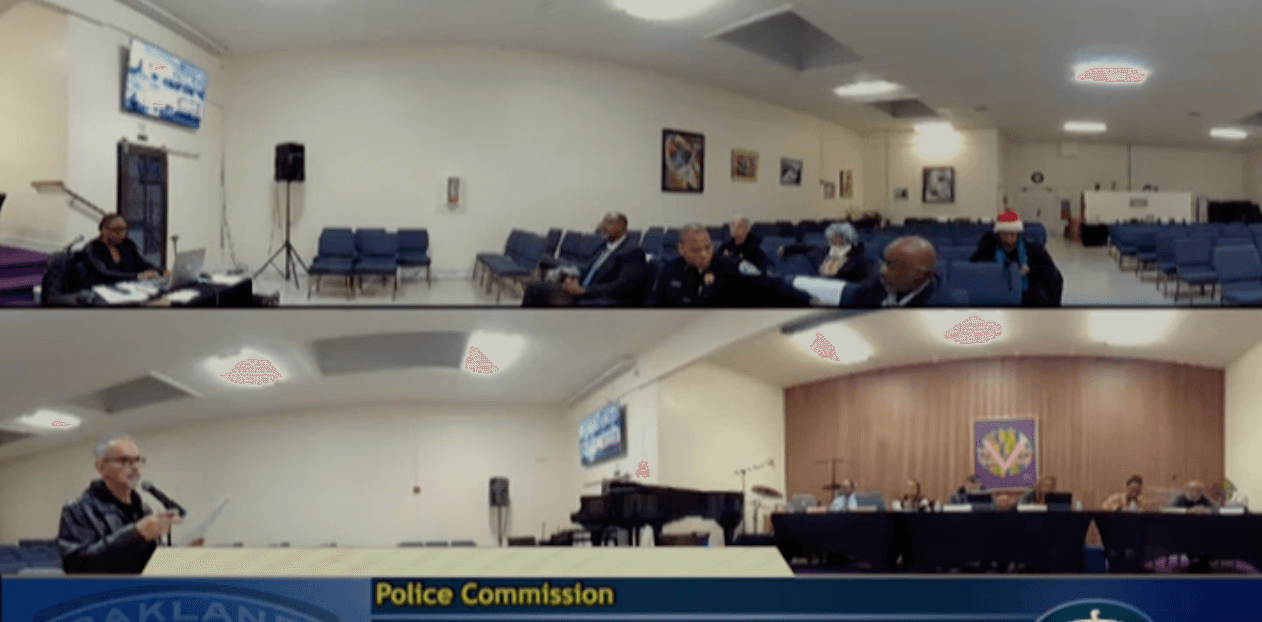
Oakland's civilian police oversight body gathered at the East Bay Church of Religious Science to approve a sweeping strategic plan, press the department for detailed overtime data, and signal that immigration enforcement policies will get dedicated attention in the new year.
- Strategic plan adopted unanimously: Commission locks in five focus areas through 2027, covering policy development, community outreach, internal operations, federal oversight, and mental health support.
- OPD overtime under microscope: Commissioners demand tracking codes, sample approval slips, and clearer governance of third-party reimbursable overtime assignments.
- Skelly hearing backlog gets resources: Community Police Review Agency reports new funding and staffing to accelerate the disciplinary pre-hearing process.
- Immigration/ICE policy session planned: Public pressure prompts commitment to a focused meeting on OPD's engagement with federal immigration enforcement.
- Public commenter flags patrol car '1488': Resident raises concern about potential white supremacist symbolism in vehicle numbering.
Overtime Tracking Takes Center Stage
The Commission drilled into the department's overtime spending during an extended discussion of budget recommendations, with commissioners and public speakers questioning whether Oakland truly understands where its police overtime dollars go.
Why it matters: Police overtime has long been a pressure point in Oakland's budget, with costs sometimes outpacing projections and straining general fund resources. Better tracking could enable data-driven decisions about staffing, third-party assignments, and overall fiscal accountability.
State of play: Staff explained that the Commission held a budget hearing last month and received OPD's final request, then drafted recommendations around wellness staffing, reimbursable overtime governance, and tracking granularity.
"We did have the hearing and then we got from OPD last month in preparation for doing this today, their final request for the budget... in that we created the document, the recommendation based on what they said they need and that's what you're looking at," said Police Commission Staff Mykah Montgomery.
Commission Chair Ricardo Garcia-Acosta acknowledged the gap between aspirations and funding realities: "Thank you, Michael, for that clarification... specifically around technology there's a lot of stuff that we want to recommend, but is there money for that?"
Commissioner Wilson Riles challenged a common assumption about the relationship between staffing and overtime: "If you look at the manning and deployment levels of the city of Oakland, they have no relationship to the amount of overtime from the department."
An OPD staff representative described the department's current system: "We have tracking codes that we use on overtime slips. And those tracking codes are generated for specific things. For example Home Depot there'll be a specific tracking code..." OPD committed to providing tracking code documentation and sample overtime slips to the Commission.
The other side: A public commenter named Latricia suggested the focus should be on recruiting rather than tracking. She cautioned that granular tracking "might divert manpower without solving root staffing challenges."
Another commenter, Millie Cleveland of the Coalition for Police Accountability, took the opposite view: "Overtime is killing this city police. Overtime is killing the city people." Cleveland urged commissioners to add recommendations for GPS tracking in patrol cars and to advocate publicly for additional oversight resources.
A third public commenter critiqued the lack of Inspector General funding and called for examining costs from vehicle collisions and union contract constraints.
Decisions: Discussion continued with deliverables requested from OPD, including tracking codes, reporting capabilities, and sample approvals.
What's next: OPD data deliverables will return to a future meeting; commissioners indicated the budget recommendation document will be refined based on what the department provides.
Strategic Plan Locks In Five Priorities Through 2027
The Commission unanimously approved a multi-year strategic plan after a section-by-section review and public input, giving the body a formal roadmap for its oversight work.
Why it matters: A codified strategic plan creates accountability benchmarks and aligns commissioners, staff, and the public around shared priorities—particularly important as Oakland remains under federal oversight through the Negotiated Settlement Agreement.
Commissioner Angela Jackson-Castain outlined the framework: "So as I mentioned, there are five focus areas." Those areas are:
- Policy development
- Community engagement and strategic communications
- Internal operations
- Federal oversight
- Mental health support
Public commenters offered concrete suggestions for the engagement pillar. Millie Cleveland recommended specific outreach venues: "KPFA shows, Allen Temple meetings, groups like All of Us or None and EOYDC" to boost community awareness of the Commission's role.
Decisions: Vice Chair Shawana Booker announced, "Motion passes unanimously for the draft." The plan sets the Commission's workplan through 2027, including policy cataloging, communications improvements, and mental health key performance indicators.
Charter Reporting Obligations Remain Murky
Commissioners debated whether a charter-mandated "oversight report" is distinct from the existing annual report or represents duplicative work.
Why it matters: Unclear reporting requirements can lead to wasted staff time or, worse, unmet legal obligations. The Commission is trying to establish clarity before committing resources.
State of play: Staff and commissioners expressed uncertainty about the charter's intent. The matter was referred to the policy/oversight ad hoc committee and legal counsel for guidance.
What's next: Legal clarification to be sought; follow-up will return through the ad hoc process to refine the Commission's approach.
Chief of Police Search Coordination Continues
Chair Garcia-Acosta reported ongoing coordination with the City Administrator's office and collaboration with the Mayor's Office on criteria for the police chief search. No timeline or candidate details were shared.
Immigration Enforcement Session Planned
Public commenters urged the Commission to hold a focused meeting on OPD's engagement with ICE and clearer policies for crowd management and interagency coordination. Commissioners indicated they would schedule a dedicated session, potentially as a special meeting.
Skelly Hearing Backlog Gets New Resources
CPRA staff reported that the agency received funding and hired an administrative program manager to help reduce the backlog of Skelly hearings—the pre-disciplinary due process meetings required before officers can be terminated or suspended.
"We've said we had several hundred thousand dollars for participation in trying to reduce the Skelly hearing process and with that money I've hired an administrative program manager," CPRA staff told the Commission.
CPRA also suggested it could take over administrative duties for Skelly hearings currently handled by OPD—a move public commenters supported, with one calling for Skelly officer qualifications to extend beyond OPD sergeants.
Minor Items
- Chair and vice chair elections: Scheduled for January.
- Patrol car numbering concern: A public commenter raised alarm about an OPD vehicle numbered "1488," noting the number's association with white supremacist symbolism. The commenter said the city indicated it could not promptly change the numbering.
What to Watch
The Commission's next steps will test whether OPD delivers the overtime data commissioners requested—and whether that information leads to actionable recommendations. The planned immigration/ICE policy session will be closely watched by advocates and could put the Commission at the center of a politically charged debate over local-federal law enforcement coordination. Meanwhile, the strategic plan's five focus areas now carry the weight of a formal vote; commissioners will be measured against them through 2027.