
Newark Fossil Fuel Facility Ban Clears First Vote as Advocates Demand Clarity
Municipal Council • NewarkNovember 5, 2026
Locunity is an independent informational service and is not an official government page for this commission. All information is sourced from public footage and an analysis of official agendas with the aid of responsible, fact-checked AI. to report an error or omission.
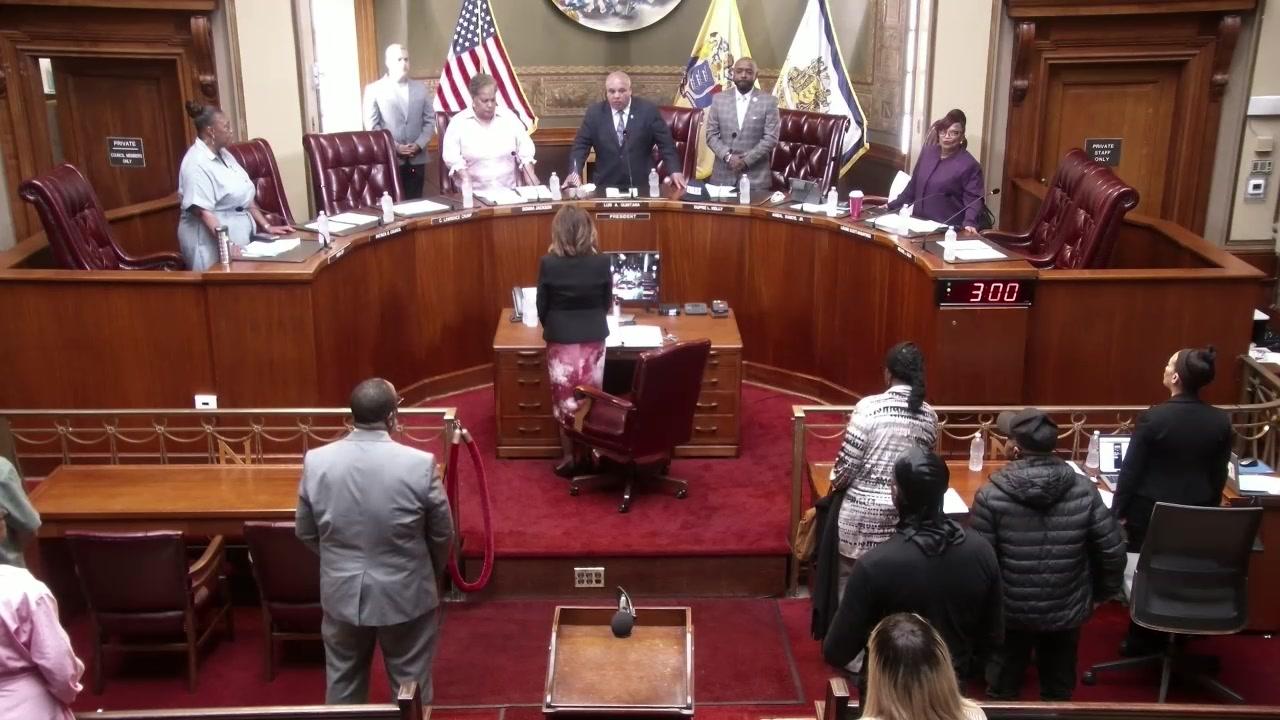
Newark's Municipal Council voted 9-0 on Nov. 5, 2026, to advance a ban on new or expanded fossil fuel facilities, about eight months after environmental justice groups began pressing for it. The final vote moves to a Nov. 24 public hearing. In the same session, the council tightened housing and dumping enforcement, returned the 2026 budget amendment and the chief financial officer nomination to the administration, and backed a motion for an independent budget audit.
- Fossil fuel facility ban passes first reading 9-0, while South Ward and Ironbound advocates say the process has been confusing.
- Faster court entry for illegal conversions passes 9-0 after heated tenant testimony.
- 25-year Clinton Avenue tax abatement for 40 units passes 9-0 despite objections to its affordability tiers.
- Illegal dumping penalties rise, with arrest powers for repeat offenders and a planned resident reward.
- Budget amendment and CFO pick returned to the administration 9-0, and the council backs Jackson's audit motion.
Fossil Fuel Ban Advances, Process Draws Fire
Why it matters: The ordinance would bar new or expanded fossil fuel facilities in a city where South Ward and Ironbound residents have long organized against industrial pollution. Its final passage would be one of the council's most significant environmental actions.
Where things stand: Councilmember C. Lawrence Crump moved the measure on first reading as item 6FC, and Councilmember Patrick O. Council seconded. It passed (For: 9, Against: 0, Absent: 0). The council also voted 9-0 to return a duplicate fossil fuel item to the administration. Advocates said renumbered items on the agenda left them unsure where the ordinance stood.
Dr. Leah Owens, a courts and policy analyst with the South Ward Environmental Alliance, pressed for answers: "Has it been adopted? Is it going to Central Planning Board, or was it reintroduced and why?"
Crump replied that "it will become law as of next meeting with the council's vote." Members thanked Kim Gaddy of the South Ward Environmental Alliance and partner groups for the advocacy behind the ordinance.
The other side: Advocates welcomed the vote but criticized the eight-month timeline and the lack of public updates.
- "We are not asking to be spectators. We are asking for a seat at the table," said Lorraine Scales, Environmental Justice Ambassador, South Ward Environmental Alliance. She asked for timelines and for the alliance to be included in decisions.
- Gaddy urged the council to act on environmental justice in substance: "It's not just for the cameras."
- Alejandra Torres, Assistant Director of Advocacy and Organizing, Ironbound Community Corporation, asked for transparency on a data-center moratorium, the incinerator host agreement and the Doremus Avenue plan. She said sending the data-center moratorium to a redevelopment study was "disrespectful to your directive, frankly, from my perspective."
Decisions and stakeholder impacts: The vote is a clear win for the South Ward Environmental Alliance, the Ironbound Community Corporation and allied groups. Fossil fuel developers would face a citywide prohibition if the ordinance is adopted. The data-center moratorium remains unresolved. Patrick Council asked the clerk to find where it stands and said that "if they're not going to send it to the planning board, then to send it back to council so that we can vote on it."
What's next: The public hearing and final vote are set for Nov. 24, 2026.
Right of Entry Rule Targets Illegal Conversions
Why it matters: Illegal conversions are single buildings secretly carved into extra units. They can leave tenants in unsafe housing, and inspectors often cannot get inside to document them.
Where things stand: Councilmember Anibal Ramos, Jr. drafted the Housing Code amendment, which passed (For: 9, Against: 0, Absent: 0). It creates an expedited court process for right of entry, and a judge has 24 hours to act. Ramos said observable signs such as multiple mailboxes, meters or doors could support an application, which still goes through the courts.
The other side: Public commenters supported the goal but questioned whether the city can enforce it.
- Deborah Salters, a public commenter, asked for parameters to prevent misuse and for adequate enforcement staff.
- Another resident said the ordinance lacks enforcement language. She described unpermitted construction and illegal conversions near her home.
- Speakers cited Nadira Brown's case at 200 Chadwick Avenue as an example of slow entry leaving tenants harmed.
Part of the hearing turned into a dispute over Councilmember Council's handling of one tenant's three-year case. Council President Luis A. Quintana ruled that line of comment off-topic and kept speakers to the ordinance.
Decisions and stakeholder impacts: Tenants in suspected illegal units gain a faster legal path to inspection. Owners running unpermitted conversions face quicker scrutiny. Residents made clear the measure will be judged by staffing and follow-through, not just the new rules on paper.
Clinton Avenue Abatement Passes Over AMI Objections
The basics: AMI, or area median income, sets the income caps for affordable units. A unit priced at 80% AMI rents for more than one priced at 20% AMI.
Why it matters: The 25-year abatement for Clinton Heights Residence Urban Renewal, LLC, at 722-728 Clinton Avenue in the South Ward, commits decades of tax treatment to a 40-unit mixed-use project. Half the units are affordable at tiers ranging from 20% to 80% AMI.
Where things stand: Deputy Mayor Allison Ladd, Director of Economic & Housing Development, said the Tax Abatement Committee considered the project May 20, 2026. She told members "it does comply with our inclusionary zoning ordinance." The ordinance passed (For: 9, Against: 0, Absent: 0).
The other side:
- Felicia Austin Singleton, a public commenter, said the multiple tiers double-dip on market rate and that "80% should be off the table."
- Salters asked whether the developer was vetted and what happened to promised set-asides. She also asked about parking ratios and when the abatement committee last met.
- George Tillman Jr., a public commenter, did not oppose abatements but urged the council to enforce the resident-hiring ordinance and route recruitment through NewarkWORKS. He warned that "the Office of Affirmative Action is able to grant exemptions under that ordinance."
Decisions and stakeholder impacts: The developer secures long-term tax certainty. South Ward residents gain 20 affordable units. Critics say the mix of tiers favors developers and confuses renters, and local job seekers depend on hiring rules being enforced.
Dumping Fines Rise, Enforcement Takes Center Stage
Why it matters: Illegal dumping is a visible quality-of-life problem across neighborhoods, and residents told the council that higher fines mean little without enforcement.
Where things stand: The Title XV solid waste amendment passed (For: 9, Against: 0, Absent: 0). Business Administrator Eric S. Pennington said "if there are individuals who are repeat offenders, the ability of police to arrest is enhanced." He said community service penalties are also enhanced and a task force meets weekly.
Pennington said fine revenue is not placed in a trust fund. He added that "we are going to enhance the reward to residents." The reward under discussion is at least $250, possibly a percentage of up to $5,000.
Ramos said "we set up a pilot program through our improvement district" to place cameras at dumping hotspots.
The other side: Salters said that "if there's no enforcement, it's a moot point." Lamont Vaughn, a public commenter, proposed a direct incentive: "Pay the residents in this city to film the people that's dumping."
One commenter raised a suspected sewage operation near schools. Quintana noted it was unrelated to the ordinance and asked that it be investigated.
What's next: Watch for details of the resident reward program.
Budget, CFO Sent Back; Audit Motion Wins
Why it matters: The council has sent both the city's spending plan and its top finance appointee back to the administration while budget questions remain open.
Where things stand: The council voted 9-0 to return the amendment to the 2026 Municipal Budget, introduced June 3, 2026. It also voted 9-0 to return the appointment of Vincent Buono as chief financial officer. Those votes cast doubt on a budget hearing noticed for Nov. 12 at 10 a.m.
Councilmember Donna Jackson asked for an evening hearing instead. She also said, "I'd like to make a motion that we get an independent auditor in here to audit the entire city budget," covering the last three years. Councilmember Dupré L. Kelly seconded.
Jackson's motions package also sought letters to UMDNJ on ambulance response times, to Newark Housing Authority Director Leonard Spicer on conditions and vacancies, and to the state Department of Community Affairs and the Board of Public Utilities (BPU) on LIHEAP heating aid and utility shutoffs. A 9-0 roll call followed, though the record does not specify every motion it covered.
The other side: Lisa Mitchelson Parker, a public commenter, criticized the late budget submission, city debt, tax abatements and revenue reporting by quasi-governmental agencies. Commenters also attacked proposed salary ranges in a Mayor's Office and Finance salary ordinance, which advanced on first reading 9-0.
Minor Items
- $16M HUD plan: Council accepted $16,015,599.27 for the 2026 One-Year Action Plan (For: 7, Against: 0, Abstain: 2, Jackson and Ramos) and a $25,000 state BPU energy planning grant 9-0.
- Services funding: Council approved a $739,005 sickle cell appropriation, a $750,000 senior nutrition contract, $500,000 for fleet collision repair and a $1M pool contract. Members also eyed higher nonresident pool fees in 2027.
- Tethys transfers deferred again: Two ordinances moving financial agreements for 120 affordable units were deferred 9-0. Councilmember Amina Bey wants open violations at Georgia King Village and Zion Towers documented first.
- City land sales: Council approved the $1,277,800 South 12th Street and $900,000 North Munn Avenue sales and a $676,000 housing trust grant. The $240,000 Broadway auto-lot sale was deferred for facade language.
- Bethany Baptist lease: The $30,000 senior-center lease passed with eight recorded yes votes. Director Donnell M. Redding said the department is "also looking for another home in the Central Ward."
Looking Ahead
The Nov. 24 public hearing covers the fossil fuel ban and a 25-year Summer Avenue abatement in the North Ward. Still pending are a construction-zone traffic ordinance, deferred to protect emergency repairs; a city towing and impound ordinance, which advanced 7-0 with Ramos and Silva abstaining; and a 215-unit Central Ward housing resolution.