
Millburn Board Seeks $200 Historic Review Fee, Backs Data Center Ban
Planning Board • MillburnOctober 21, 2026
Locunity is an independent informational service and is not an official government page for this commission. All information is sourced from public footage and an analysis of official agendas with the aid of responsible, fact-checked AI. to report an error or omission.
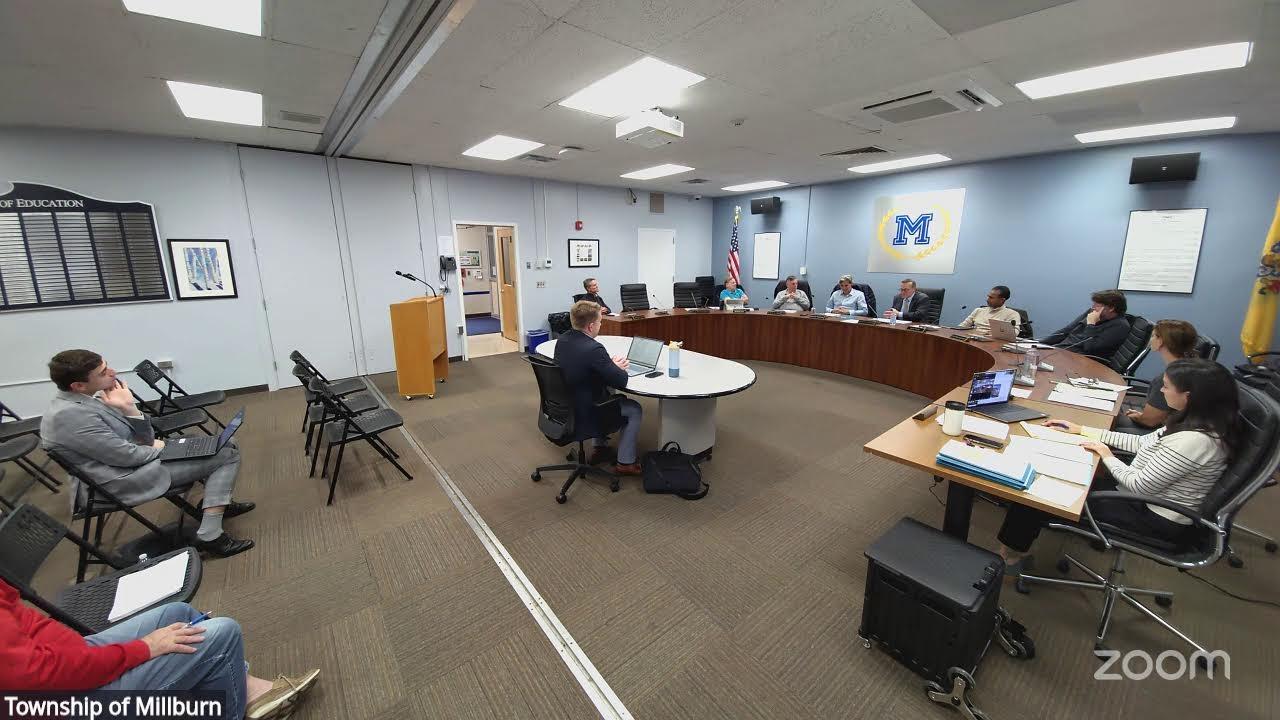
Millburn's Planning Board used its Oct. 21, 2026, meeting to send the governing body a list of fixes for a new historic preservation checklist, including a $200 charge for concept reviews that are now free. The board also unanimously found a revised townwide data center ban and a tiered stormwater ordinance not inconsistent with the master plan. These are advisory votes, but they shape what lands on the governing body's desk.
- Historic checklist cleared 7-0, with recommendations to align conflicting fees and add a $200 concept review fee
- Revised data center ban clears 7-0 after the board dropped limits on types of computing in favor of size and power caps
- Stormwater Ordinance 2779-26 found consistent, replacing a 2.0 safety factor with three requirement tiers
Historic Checklist Clears, With a Fee Twist
The basics: Ordinance 2780-26 sets the checklist applicants use to seek a certificate of appropriateness from the Historic Preservation Commission. The Planning Board reviews ordinances for consistency with the master plan, and its recommendations are advisory.
Why it matters: Concept reviews currently cost applicants nothing, but they still generate consultant costs for the township. The board's recommendation would shift those costs onto applicants.
Where things stand: The board's planner found several places where the checklist conflicts with existing code or with itself:
- The checklist lists a $200 fee for minor applications. DRZ 410.5 sets that fee at $100.
- The checklist sets a $1,500 escrow for full applications. Other provisions set it at $750.
- The "homeowner" wording does not match the scale of work the checklist covers.
- The timing for submitting 15 copies affects when an application is deemed complete.
- The text refers to a "Board of Trustees."
Board Member Allison Canfield went further. She proposed a $200 fee for historic concept reviews, which have been free under a 2016 ordinance.
The other side: One member questioned whether fee levels belong in a master plan consistency review. The board attorney said the board's discretion is broad and that its recommendations are advisory either way.
Decisions and stakeholder impacts: Canfield moved to find the ordinance not inconsistent with the planner's four recommendations. Her motion expanded the first recommendation to add the $200 concept review fee, and the board chair seconded. The motion passed by roll call (For: 7, Against: 0).
If the governing body adopts the recommendations, owners of historic properties would pay $200 for early-stage feedback they now get for free. The township would recover part of its consultant costs. Applicants would also get one consistent fee and escrow schedule instead of conflicting figures.
What's next: The ordinance and recommendations go to the governing body, which decides whether to adopt the fee changes.
Data Center Ban Returns, Minus the Computing Test
The basics: Ordinance 2783-26 amends the definitions in DRZ 304 and the prohibition in DRZ 604.J to bar data centers in all zones. It carves out two exclusions:
- Limited-scale computing: up to 20% of a building's area or 5,000 square feet, and up to 1 megawatt of power.
- Residential computing: up to 25 kilowatts.
Why it matters: The ordinance positions Millburn between towns with broad bans and towns with no regulation at all. It also replaces activity-based limits with objective thresholds for size and power.
Where things stand: This is a revised version of an ordinance the board reviewed previously. The earlier draft restricted certain types of computing. The revision removes that test but keeps limits on power, floor area and substations. It also directs the Planning Board to review the ordinance within two years.
The other side: One member who voted against the earlier version explained his objection. He said that draft was inconsistent with the master plan because it regulated types of computing rather than land use impacts, which he called an arbitrary distinction. The revision removed that language.
The board chair said research on the electric grid and input from the Environmental Commission had addressed members' concerns.
Who's watching the clock: Members asked who would make sure the two-year review actually happens. Staff said the review would also be logged in the master plan reexamination, so it would not depend on anyone's memory.
Decisions and stakeholder impacts: The chair moved to find the ordinance not inconsistent with the master plan. The board agreed by roll call (For: 7, Against: 0).
The effects fall into three groups:
- Commercial property owners and developers lose data centers as a permitted use anywhere in town.
- Businesses with in-house servers can keep operating within the 5,000-square-foot and 1-megawatt limits.
- Residents running home computing setups under 25 kilowatts are unaffected.
What's next: The ordinance moves to the governing body for action. The Planning Board's own review is due within two years of adoption.
Stormwater Rules Get Tiers, Lose Safety Factor
The basics: Ordinance 2779-26 amends DRZ 525.3, the township's stormwater control section. The board's planner said the ordinance came from engineering services, not the zoning code subcommittee.
Where things stand: The ordinance replaces enhanced facility sizing with three tiers and repeals the 2.0 safety factor:
- Tier 1 remains under state rules.
- Tier 2 covers high-impact minor development.
- Tier 3 requires 4 inches of onsite storage for residential minor development.
The planner tied the changes to the 2018 master plan's goals on sustainability and flood mitigation. A member asked whether the township engineer had reviewed the ordinance. Staff said the engineer had an advance look and sent no objections.
Decisions and stakeholder impacts: The chair moved to find the ordinance not inconsistent with the master plan, and seven members voted yes by roll call. Builders of townhouses, commercial projects, and one- and two-family homes would face new onsite runoff standards.
Minor Items
- Minutes corrected: The board struck a sentence from the Sept. 16, 2026, minutes that misread a member's remark about a de minimis residential exception. "There's a statement attributed to me that's not accurate," said Jonathan Baxter, Board Member. Regular and executive session minutes then passed unanimously.
- Beechcroft extension: 33 West Beechcroft LLC received 60 more days, to Dec. 21, to record its lot line adjustment deed (For: 7). The applicant expects county approval on the Oct. 27 county agenda.
- School turf fields: The board memorialized its earlier finding that the Board of Education's field conversion is not inconsistent with the master plan (For: 6, Against: 0). The finding recommends long-lasting materials and no PFAS, the so-called "forever chemicals." One member was ineligible because he did not vote on the original determination.
- Carried to November: Resolutions for Applications 26006 (JFK SH Phase 2 LLC) and 26007 (Consulting G2 LLC) were carried to November.
Looking Ahead
The board meets next in November, when the two carried resolutions return. Meanwhile, the governing body takes up all three ordinances. Its decision on the historic checklist will settle whether concept reviews stay free.