
Mill Valley Adopts Ban on All Commercial Tobacco Sales
City Council • Mill ValleyOctober 5, 2026
Locunity is an independent informational service and is not an official government page for this commission. All information is sourced from public footage and an analysis of official agendas with the aid of responsible, fact-checked AI. to report an error or omission.
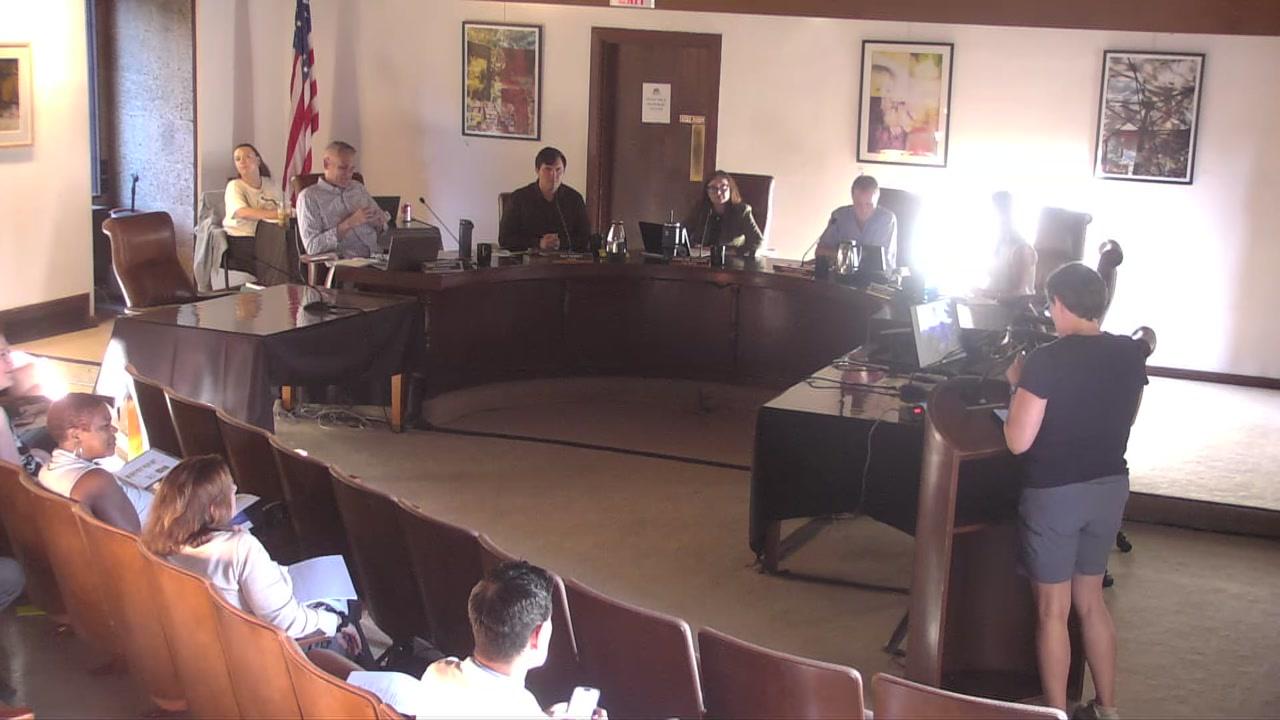
Mill Valley gave final approval Oct. 5 to an ordinance ending all retail and delivery sales of commercial tobacco and e-cigarettes. The 4-0 vote gives five local retailers until Feb. 1, 2027, to stop selling. The council also approved a $2M affordable housing loan with tighter council oversight, heard a mixed climate report card, and faced residents angry about slurry seal debris ahead of the rainy season.
- Tobacco and e-cigarette sales ban adopted 4-0, operative Feb. 1, 2027, over objections from a convenience-store trade group
- Up to $2M loan to EAH Housing approved 4-0, with a two-member council subcommittee shaping terms
- Emissions down 41% since 2005, but EV adoption and building gas use lag their targets
- Residents press the city over slurry seal grit near storm drains; the city manager orders a citywide cleanup review
Mill Valley Ends Tobacco Sales
The basics: The ordinance amends Chapter 7.20 of the Mill Valley Municipal Code. It replaces the city's tobacco retailer licensing program with a prohibition on in-person and delivery sales of commercial tobacco products and electronic smoking devices. It does not bar possession or use. FDA-authorized cessation products are exempt.
Why it matters: The ordinance goes beyond the flavor bans many cities have adopted. Health advocates framed it as a national precedent. Retailers warned it will push sales elsewhere and hurt small stores.
Where things stand: This was the second reading, pulled from the consent calendar for a separate vote. "The prohibition on tobacco sales would be operative on February 1st, 2027," said Kelsey Rogers, Deputy Director of Administration. Staff said the five affected retailers will get a transition period with outreach from county health officials.
Supporters dominated public comment. John Ma, a 2018 president of the San Francisco Marin Medical Society, spoke on the society's behalf. He cited patient cases and tobacco industry politics and called the ordinance "really the strongest action ever in the history of America."
Holly Thier, former Mayor of Tiburon, cited youth vaping rates and cigarette butt litter. She also claimed an earlier milestone for her town: "I as mayor brought the first-in-the-nation ban on the sale of all tobacco products."
Jeremiah Mock, a UCSF professor, said retailers in Beverly Hills and Manhattan Beach adapted to similar bans, with few hardship exemptions and only three closures. "You are setting a precedent that will be seen across the world," he said.
Written comments from Bob Curry of Smoke Free Marin and Pam Granger of the Smoke-Free Marin Coalition also backed the ban. Curry pointed to a surge in nicotine pouches. Granger described prevention, education, enforcement and cessation as a "four-legged stool." Liz Couch, a UCSF adjunct researcher, supported the ban but urged help for affected retailers.
The other side: Brock Ryan Lamb of the California Fuels and Convenience Alliance asked the council to reconsider. He argued the ban will shift sales outside city limits, cost small retailers up to 30% of in-store revenue and grow an illicit market. He also challenged the limits of the Beverly Hills and Manhattan Beach research. If the council proceeded, he asked it to "include a 1-year sunset date from the date of implementation." The council did not adopt a sunset.
Decisions and stakeholder impacts: Councilmembers noted the ordinance carries no significant fiscal impact. "I do believe this is an ordinance that advances our commitment to protecting young people, reducing nicotine addiction, and then addressing the environmental impacts of the tobacco product waste," said Vice Mayor Caroline Joachim, who moved adoption. Councilmember Urban Carmel seconded.
Mayor Max Perrey cast an "enthusiastically yes" vote and framed the ordinance as regional momentum. "This is a huge moment for not just Mill Valley but also for Corte Madera that's joined us in this action," he said.
The five retailers carry the direct cost. Health groups and neighboring jurisdictions gain a working model to watch.
Vote: For: 4 (Jones, Carmel, Joachim, Perrey), Against: 0, Absent: 1 (Burke).
What's next: Sales end Feb. 1, 2027. County health outreach to the five retailers continues during the transition.
Climate Report Card: Good Trend, Hard Sectors
Why it matters: Mill Valley is on trend to meet its goal of cutting emissions 47% below 1990 levels by 2030. The remaining gap runs through driveways and water heaters, where the city has the least direct control.
Where things stand: "Emissions are down 41% since 2005," said Christine O'Rourke, sustainability coordinator for the Marin Climate and Energy Partnership, presenting the 2024 community inventory.
The sector breakdown is lopsided:
- Transportation produces about 61% of emissions.
- Natural gas in buildings produces nearly a third.
- Waste produces 4%, and electricity produces 1%.
Some trends are falling short. Building gas use is down 20% since 2005, against a 38% target. Vehicle miles traveled are down 15%. Zero-emission vehicles make up 16% of Mill Valley's vehicles, against a 2030 target of 35%. The current projection is about 28%.
City sustainability staffer Grace outlined partnerships with BayREN, Zero Waste Marin, TAM and TMAC. She also covered a fleet transition plan, SB 1383 organic waste compliance and new state laws SB 222, AB 1738 and SB 868. The city's REACH code, a local building standard stricter than state code, remains stuck at the state building standards commission under AB 130. The city also earned a 2026 Beacon Platinum Spotlight Award. Grace flagged a capacity limit: "I am one person shared between 2 towns."
Council pushback: Councilmember Katherine Jones asked what comes after the easy gains: "Do you see other actions that the city would need to take in order to maintain that trend?"
Councilmember Carmel distilled the plan to "Electrify your ride and take CAT." He cited heat pump water heater bids of $6,000 to $16,000. He also flagged charging cables across sidewalks as a liability issue, noting "sidewalk tripping is a big thing in the risk pool." Staff said a grant for EV chargers at a Southern Marin Fire District station is held up at the federal level.
Mayor Perrey urged staff to look at other lots and ask "where can we find public-private partnership" for charging.
What's next: No action was taken. The Mayor said an ordinance streamlining heat pump permitting could come in the new year.
$2M Housing Loan Gets Council Guardrails
Why it matters: The loan draws from the city's Affordable Housing Trust Fund. Staff acknowledged the loan's specific terms were not before the council, so councilmembers inserted themselves into the drafting.
Where things stand: Staff sought authority to amend the city's Lease Disposition, Development and Loan Agreement with EAH Housing. The amendment allows a pre-development loan of up to $2M. Item 9 was pulled from consent. "It's a $2 million loan," the city manager said in clarifying the scale.
After a conversation with the Vice Mayor, staff added a request for a council subcommittee. The subcommittee will work with staff and the city attorney on the agreement, and signing authority will then go to the city manager.
Decisions and stakeholder impacts: Vice Mayor Joachim moved for "a subcommittee that is formed that includes myself as vice mayor as well as Councilmember Urban Carmel." Councilmember Carmel seconded. The structure gives two elected officials a direct hand in setting terms for the trust fund money, rather than leaving the details entirely to staff. No public comment was offered.
Vote: For: 4 (Jones, Carmel, Joachim, Perrey), Against: 0, Absent: 1 (Burke).
What's next: The subcommittee will negotiate terms with EAH and staff before the city manager signs.
Slurry Seal Grit Sparks Rainy-Season Alarm
Why it matters: Residents said petroleum-based debris from the city's 10.73-mile slurry seal project is sitting near storm drains. With the rainy season imminent, they warned it could wash into local creeks.
Where things stand: Public commenter Sarah said she swept up dozens of pounds of grit and brought samples to the meeting. She said required stormwater pollution prevention measures were not followed and Public Works had not responded satisfactorily. "The cleanup did not happen," she said.
A Catalpa resident said traffic was let onto the freshly sealed street too soon. The resident called for accountability from both the city and the slurry seal company.
Written comments raised similar concerns. Tina Gabby, MD, and Daniel Moynihan, Warner Creek residents, asked for removal of road base gravel near Old Mill Creek. Business owner Wendy Nieman asked Public Works to reassess affected streets, citing risks to waterways and wildlife.
Decisions and stakeholder impacts: The city manager said he had emailed the Public Works team that morning. He directed a review of all slurry-sealed streets, including vacuum sweeping. "We hear you loud and clear, and we'll get on it," he said.
What's next: The city manager committed to follow up with each commenter and to post an update on Nextdoor.
Minor Items
- Consent calendar approved 4-0: The package included September minutes and a $27,000 state Office of Traffic Safety grant for selective traffic enforcement running Oct. 1, 2026, through Sept. 30, 2027.
- Hispanic Heritage Month: The council recognized Sept. 15 to Oct. 15, 2026, on consent, the city's first such proclamation.
- Chris Reiff honored: The council recognized about 40 years of running the Boyle Park public tennis program.
- County services annex: Marin Health and Human Services opened a weekday office at 630 Drake Ave. in Marin City. Weekend hours are not planned.
- United Against Hate Week: Events run Oct. 18-24, followed by a Trunk or Treat on Oct. 30. Tam High students are leading a parallel Tam Unity Week.
Looking Ahead
Vice Mayor Joachim warned of a state "package of new housing laws that will further limit local discretion and require changes to permitting procedures." She also flagged new laws on public records deadlines, AI and the Brown Act, and local authority over e-bike speed limits.