
Mayor's Press Conference - Aug 25, 2026 - Meeting

Mayor's Press Conference - Aug 25, 2026 - Meeting

Mayor's Press ConferenceSan FranciscoAugust 25, 2026

Sources:

Locunity is a independent informational service and is not an official government page for this commission.We use AI-assisted analysis and human editorial review to publish information.

SF Expands After-School Programs by 20%, Adding 650 Spots for Working Families

Mayor Daniel Lurie used a press conference at Hamilton Recreation Center to announce a significant expansion of the city's most waitlisted youth program — a 20% boost in San Francisco Recreation and Parks after-school capacity that opens more than 100 new enrollment spots across 19 sites. Five supervisors showed up to back the move, framing affordable after-school care as a make-or-break issue for families deciding whether they can afford to stay in San Francisco.

  • Rec and Park after-school programs expand 20%, adding 100+ spots across 19 sites to serve 650 children citywide
  • Mayor claims San Francisco is first major U.S. city where all families have access to childcare from ages 0 to 5
  • Five supervisors rally behind expansion, with several citing personal experience as parents and youth workers
  • Supervisor Chen pushes for before-school programs, citing District 11's 14,000 school-age children and a 9:30 a.m. school start gap

650 Kids, 19 Sites, One Waitlist Problem

Mayor Daniel Lurie announced that the San Francisco Recreation and Parks Department has expanded its after-school program capacity by 20%, opening more than 100 new enrollment spots for children who had been stuck on the department's longest waitlist. The programs — spread across 19 recreation centers and clubhouses near schools — offer homework help, academic support, sports, STEM and arts activities, with needs-based scholarships to keep costs manageable for working-class families.

"We have expanded that after-school program capacity by over 20% across 19 sites. With this expansion, 650 children have a safe and welcoming place to go," said Mayor Daniel Lurie.

Why it matters: After-school care is one of the sharpest cost pressure points for San Francisco families with school-age children. The waitlist for Rec and Park's program has consistently been the department's longest, and the gap between demand and supply has been a factor in the city's well-documented struggle to retain working- and middle-class families.

Where things stand: General Manager Sarah Madlin of the San Francisco Recreation and Parks Department confirmed the program is the department's most sought-after offering and signaled that more expansion is coming. "This is our most in-demand program. It has the most people registering and our longest waitlist. And so we are so proud of this increase. And there is more to come," she said.

Maggie Scott, coordinator of the Tennis and Learning Center program, detailed operations across five sites, describing a model that includes school pickup, homework support, and enrichment activities. "By opening up more spaces, we're not just expanding a program, we're giving more kids a chance to learn, grow, build confidence and feel supported. Those experiences can stay with a young person for years," she said.


Supervisors Frame After-School Care as a Retention Strategy

Five members of the Board of Supervisors appeared at the press conference — an unusual show of cross-district support that underscored how family affordability has become a unifying political theme at City Hall.

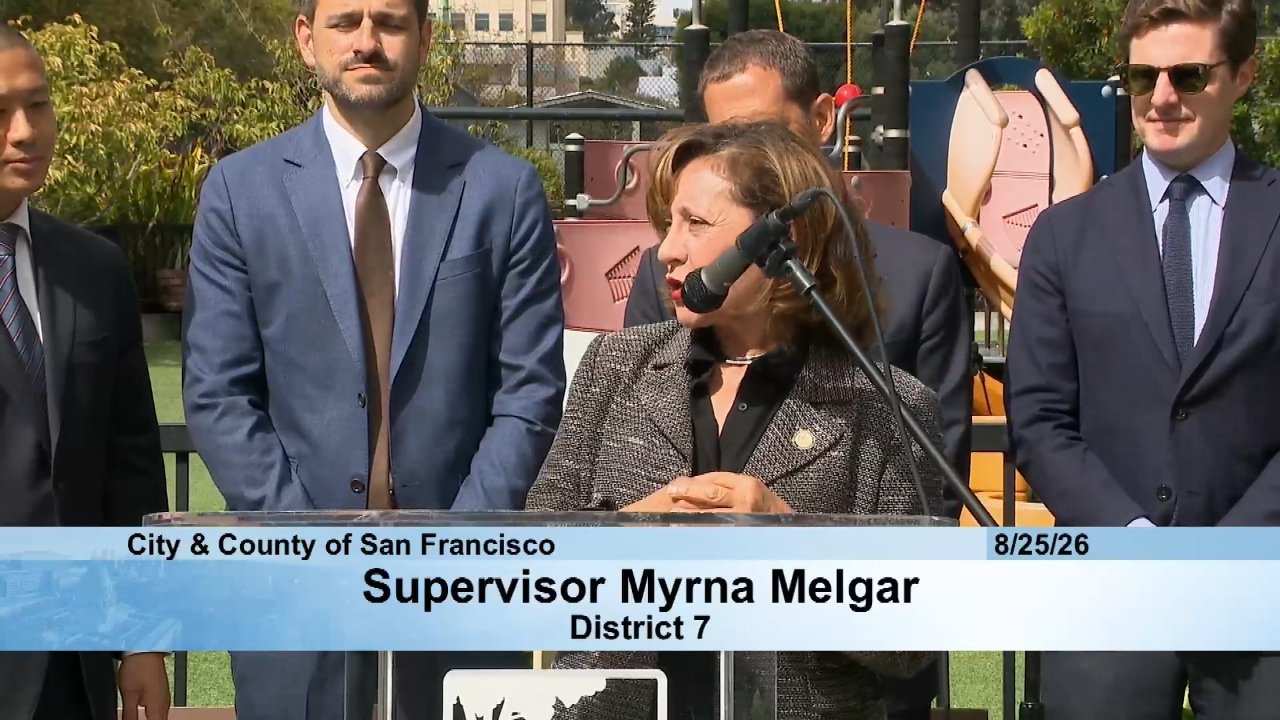
Supervisor Myrna Melgar, District 7, a former youth program director, grounded her support in research. "There is all kinds of data out there about the cumulative effect of having a place that is safe and nurturing and connected to the community for kids to go after school. Kids are more likely to go to school, to feel like they're connected to the community," she said.

Supervisor Stephen Sherrill, District 2, connected after-school programming to a broader support system for working parents. "When working parents have a 9-to-5 job, we gotta make sure kids have a 9-to-5 solution as well. And quite frankly, it's more like 8 to 6. And this is a key component of that," he said.

Supervisor Danny Sauter, District 3, praised the expansion as making the most of existing city infrastructure. "We have a rec park system, a set of facilities, playgrounds, parks that is quite literally the envy of other cities around the country. And this expansion today makes these resource centers, these playgrounds, even stronger," he said.

Supervisor Cheyenne Chen, District 11, brought a personal lens as a public school parent and pushed the conversation further — calling for before-school programs to address a scheduling gap that many working parents face. "In District 11 we have over 14,000 under-age-14 school-age kids enrolling in SFUSD. So having expansion, even just 100 slots, means a lot to our working families and keeping our families to be able to stay and thrive in San Francisco," she said. Chen noted that the 9:30 a.m. school start time creates a coverage gap for parents who need to be at work earlier, and urged the city to expand programming on both ends of the school day.

Supervisor Wong drew on his experience as an AmeriCorps volunteer at the Indochinese Housing Development Corporation in the Tenderloin, where he walked children from their schools to a community center through difficult neighborhood conditions. "We really took them to a safe environment in the neighborhood where they could learn, grow, play. It was the oasis for the youth," he said.


The Bigger Picture: Family Opportunity Agenda

The after-school expansion is one piece of Mayor Lurie's broader Family Opportunity agenda, which aims to lower costs across childcare, housing, food, healthcare and transportation for working families. The mayor said the city has added nearly 750 early childcare seats across San Francisco neighborhoods, and declared that San Francisco is the first major U.S. city where all families have access to childcare from ages 0 to 5.

What's next: GM Madlin indicated that additional after-school expansion is planned, though she did not specify a timeline or number of new sites. Supervisor Chen's call for before-school programs could emerge as a next frontier, particularly in districts like District 11 with large school-age populations and early-morning childcare gaps. Recent facility investments — including the opening of the Gene Friend Recreation Center in SoMa and the reopening of the Tenderloin Recreation Children's Play Area with expanded weekend hours — suggest the administration is building physical capacity alongside programming.