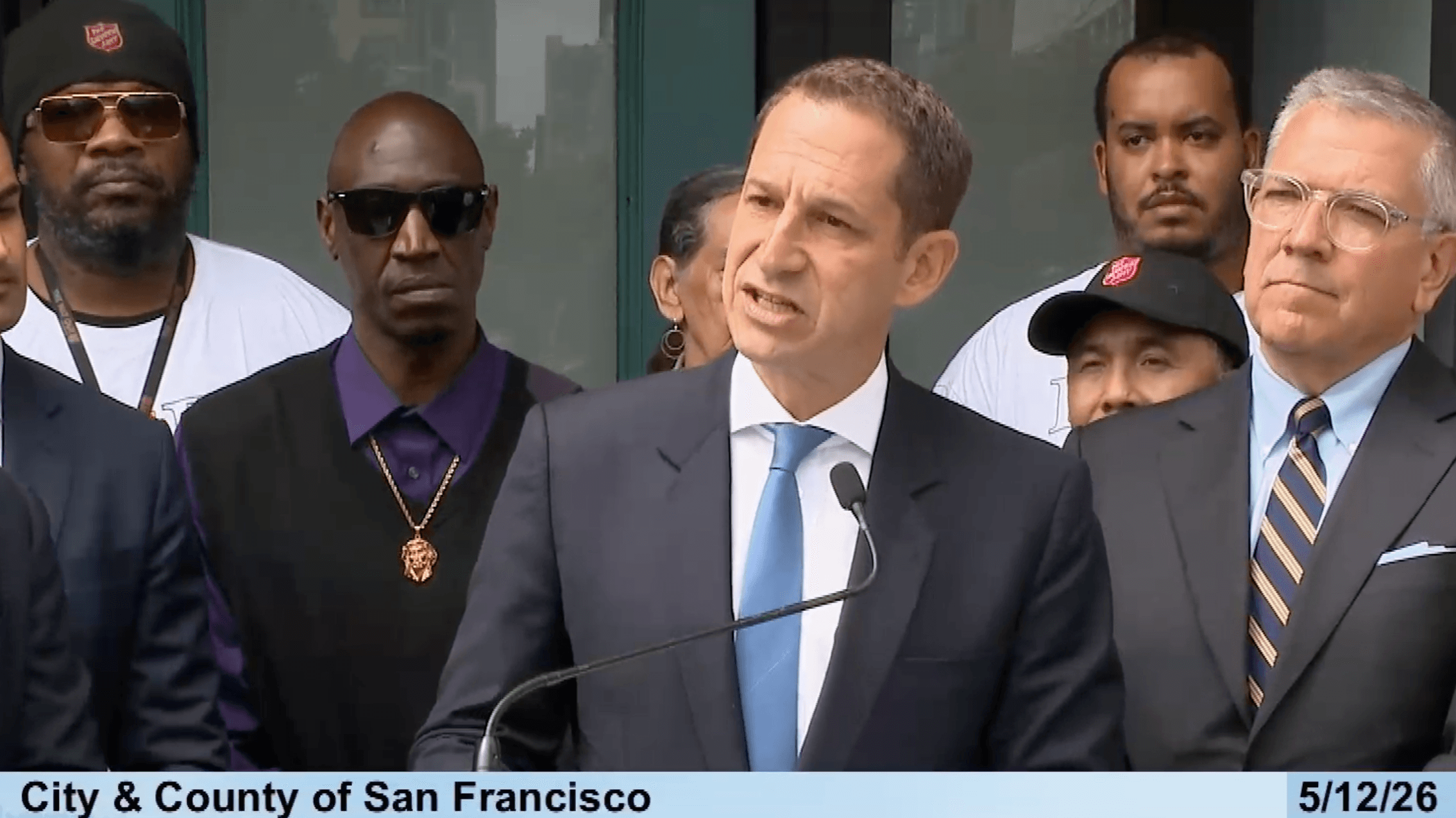
Mayor's Press Conference - May 12, 2026 - Meeting
Mayor's Press Conference • San FranciscoMay 12, 2026
Locunity is a independent informational service and is not an official government page for this commission.We use AI-assisted analysis and human editorial review to publish information.
SF Unsheltered Homelessness Drops 22% to 15-Year Low
Mayor Daniel Lurie announced preliminary results from the 2026 Point-in-Time Count showing nearly 1,000 fewer people sleeping on San Francisco's streets — the city's lowest unsheltered homelessness numbers in 15 years. But the headline gains mask a troubling counter-trend: family homelessness climbed 15%, and a structural budget deficit growing toward $1 billion threatens the very programs driving the progress.
Unsheltered homelessness down 22% since 2024; tent encampments down 85%, per preliminary 2026 Point-in-Time Count data
Family homelessness up 15%, tracking statewide and national trends as rising rents, groceries, and gas outpace city prevention efforts
Structural deficit could hit $1 billion in year four; union leaders threaten action over anticipated cuts as labor contracts expire next year
$50 million raised privately through the Breaking the Cycle fund; Reset Center opened nine days before the announcement
Resident confidence surges from 22% to 65% saying the city is on the right track
Lowest in 15 Years — but Not for Families
Mayor Daniel Lurie held a press conference at Hope House to unveil what his administration is calling a breakthrough in the city's homelessness crisis: preliminary 2026 Point-in-Time Count (PIT) data showing unsheltered homelessness at its lowest level since 2011.
Why it matters: The numbers represent the most concrete validation yet of the city's Breaking the Cycle strategy, an integrated approach launched under Lurie that combined a fentanyl state of emergency, consolidated street outreach teams, expanded shelter capacity, and nearly $50 million in private fundraising. For a city where more than 800 people died of overdoses in 2023 alone, the data suggests momentum — though the gains are uneven.
Where things stand: Since 2024, unsheltered homelessness is down 22%, the number of people living in tents is down 85%, and youth and veteran homelessness also declined. The city has maintained over 600 shelter and treatment beds, reduced RV homelessness to its lowest recorded level, moved 132 families from RVs into shelter or housing, and reconnected more than 100 people with support networks through the Journey Home program in the most recent three-month period. The 822 Geary stabilization center operates 24/7, and the Reset Center — designed to send a message against open drug use — opened nine days before the press conference.
"Unsheltered homelessness in San Francisco is now at its lowest level in 15 years. Since 2024, unsheltered homelessness is down 22%. The number of people in tents is down 85%," said Lurie.
Tyrone Lewis, a Hope House resident who struggled with addiction and homelessness for 15 years, offered personal testimony about the role structured recovery environments played in his path to sobriety.
"I need a sober environment, a supportive environment for me to get and stay sober. I need structure. I need an order and accountability. I found that here," Lewis said, adding he hopes to see more places like Hope House open for others.
Counting Differently
Chief of Health and Human Services Kunal Modi detailed significant methodological improvements to the 2026 count, drawing on a RAND study of other jurisdictions including Los Angeles. The city started its count earlier in the morning, engaged individuals directly rather than relying on visual-only estimates, and conducted the associated survey during the count itself rather than weeks later.
"A big difference was previous counts had been a visual count, in which case a lot of outreach workers were making assumptions or potentially double counting individuals. We actually engaged with folks," Modi said.
He added that the city cross-checks the PIT Count with its own management data to ensure that the data reflects what the city observes on the streets.
A city official also addressed a common misconception, stating that the PIT Count is not tied to federal funding allocations.
"The Point-in-Time Count is not tied to the numbers, to the number of dollars that we get from the federal government. That's a myth," the official said.
Family Homelessness Rises 15%, Exposing a Gap in the City's Progress
The other side: While the top-line numbers dropped, the same count revealed a 15% increase in family homelessness since 2024 — a rise Mayor Daniel Lurie acknowledged tracks trends across California and the nation. Most affected families were in shelter, but among those unsheltered, many were living in RVs. Lurie pledged that every family with a permitted vehicle would be in shelter or housing by the end of 2026.
Chief of Health and Human Services Kunal Modi framed the challenge as a cost-of-living crisis outrunning city intervention:
"How do we keep more families housed at a time when rents are rising, gas prices are rising, grocery prices are rising, so that we head off entries into homelessness in the first place?"
Modi outlined a two-pronged strategy — prevention, through benefits enrollment and cost support to keep families housed, and rapid exit, through transitional housing and rapid rehousing programs. He connected the work to broader city initiatives:
"Some of this work that we're talking about in the homeless response system sits alongside the other work around family zoning or efforts to keep people enrolled in their benefits so they can continue to have access to groceries."
What's next: Lurie committed to further investment in family homelessness prevention in the upcoming budget cycle — a promise that will immediately collide with the fiscal realities discussed minutes later.
A Billion-Dollar Deficit Looms Over the Gains
Why it matters: The homelessness progress Mayor Daniel Lurie touted depends on continued city spending at a moment when the fiscal picture is worsening dramatically. Reporters pressed the mayor on the structural budget deficit, and he did not sugarcoat it.
"We have a really incredibly difficult budget deficit, structural budget deficit. If we do nothing, grows to a billion dollars in year four," Lurie said.
He added that the city faces hundreds of millions of dollars in federal cuts to health care and food access programs — the same benefit pipelines that Chief of Health and Human Services Kunal Modi identified as critical to keeping families housed.
The other side: When asked about union leaders threatening to "shut down the city" over anticipated budget cuts, Lurie struck a conciliatory tone while making clear he would not be driven by political calculations.
Lurie said he would work with DPH Director Dan Tsai, Chief of HHS Kunal Modi, and the Board of Supervisors — singling out Board President Rafael Mandelman and Supervisor Matt Dorsey — to keep residents enrolled in benefits and maintain core services through the cuts.
Where things stand: The mayor pointed to one data point as evidence that the city's direction has broader support: resident confidence that San Francisco is on the right track has risen from 22% two years ago to 65% now.
"I would be hard pressed if there's another city in the country that has its residents feeling this optimistic," Lurie said.
What's next: The upcoming budget cycle will test whether the administration can sustain the Breaking the Cycle investments while closing a deficit that grows every year it goes unaddressed. With public-sector union contracts expiring next year, the stage is set for potentially contentious negotiations that could affect city services across the board.