
Mayor's Press Conference - Sep 01, 2026 - Meeting

Mayor's Press Conference - Sep 01, 2026 - Meeting

Mayor's Press ConferenceSan FranciscoSeptember 1, 2026

Sources:

Locunity is a independent informational service and is not an official government page for this commission.We use AI-assisted analysis and human editorial review to publish information.

Muni Hits Record Ridership as City Leaders Rally Voters to Save Transit Funding

San Francisco kicked off its 10th annual Transit Month with a show of political force, as Mayor Daniel Lurie, four supervisors, transit agency heads, labor, and disability advocates gathered to celebrate Muni's strongest performance in years — and to deliver a unified warning: without voter-approved funding this November, the gains could vanish. The press conference doubled as a campaign launch for upcoming ballot measures aimed at closing a $307 million transit budget gap.

  • Muni now averages over 500,000 weekday trips, with weekend ridership surpassing pre-pandemic levels and customer satisfaction at an all-time high
  • Market Street subway delays down 60% since the 2019 Muni Performance Working Group, according to Board President Mandelman
  • November ballot measures framed as make-or-break — the mayor, supervisors, transit union president, and Caltrain's leader all urged voters to pass transit funding measures
  • Transit workers union says SFMTA can't add buses on high-demand routes like the 8, 38, 41, and 3 without new revenue
  • Caltrain named America's fastest-growing transit agency following electrification, transitioning to all-day regional service
  • Disability advocate calls for co-designing transit with riders who are blind, use wheelchairs, or face mobility challenges

Muni's Best Numbers in Years — and a $307 Million Problem

Why it matters: The city's transit system is posting numbers that would have seemed unlikely during the pandemic hollowing-out of public transit. But city leaders used the celebratory moment to frame the system's financial future as precarious.

Where things stand: Mayor Daniel Lurie opened by touting Muni's recovery, noting that "weekend ridership has surpassed pre-pandemic levels. Rail ridership is growing, and customer satisfaction is the highest in Muni's history." Weekday ridership now averages more than 500,000 trips.

But Lurie pivoted quickly to the budget. "We do also know that Muni faces a serious financial challenge," he said, adding that "SFMTA has worked hard to prioritize reliable, efficient service and worked with our regional and state partners to close a $307 million budget gap."

Board President Rafael Mandelman reinforced the urgency, crediting SFMTA Director of Transportation Julie Kirschbaum and agency staff for the turnaround while putting the onus on voters. "The Market Street subway delays are down 60%. Customer satisfaction is at record levels," he said. "But we know this November is really, really important for our ability to continue to deliver at Muni and across the Bay Area."

Kirschbaum herself acknowledged the transformation is real but recent. "Nine, 10 years ago when this event started, it was a day that I was a little nervous about. We had a lot of eyes on the system, and the system was not running to our expectations or standards," she said. "I am thrilled that today we were so excited to share a system that is now fast, frequent, reliable, clean and safe." She credited 75 miles of transit lanes and the transit division under Brent Jones, and noted that nearly half of SFUSD high school students now ride Muni to school.

What's next: The November ballot measures have not yet been detailed publicly at this event, but every speaker treated their passage as essential to sustaining current service levels — and any hope of expanding them.


Transit Workers Say the System Is Stretched Thin

Why it matters: The labor perspective adds a ground-level dimension to the budget debate. If the people driving the buses say the system can't cover its routes, the ridership numbers only tell part of the story.

Where things stand: Pete Wilson, president of TWU Local 250A, representing Muni transit operators, described a pattern of the union asking for more service and being told the money isn't there. "Sometimes the union's like, hey, we need another bus on the 8. We need another bus on the 38. You know what their answer is? We're juggling trying to cover as much as possible," he said, adding that management has asked the union to help advocate for the November measures.

Wilson also called for restoring or expanding service on routes like the 41 and 3, noting they serve diverse communities — including Pacific Heights residents who choose transit over taxis. He praised the impact of red transit lanes and encouraged voters to fully fund the system.


Free Youth Muni: An Equity Bet That's Paying Off

Why it matters: Making Muni free for all youth — not just low-income students — removed a financial and psychological barrier to transit use, and the ridership data suggests it is shaping how an entire generation moves through the city.

Where things stand: Supervisor Myrna Melgar, District 7, described authoring the 2021 legislation during the pandemic. "In 2021, during the pandemic, I authored the legislation that made Muni free youth. And that was a unanimous vote by the Board of Supervisors in a collaboration with then-Mayor London Breed," she said. Melgar called the policy transformational and framed transit as foundational to San Francisco's identity: "The opportunity to be here and move up and be able to be your true self and found this wonderful city is all dependent on Muni, on affordable housing and Muni."

Supervisor Cheyenne Chen, District 11, connected the policy to her own experience. "26 years ago, when my family came here, Chinatown was too expensive to find housing. So we have to be in District 11," she said. "But in District 11, we also don't have jobs that is available to immigrants that do not speak English. So my parents raised a family and needed to use public transit." Chen noted that her district has the highest number of SFUSD students riding Muni daily.

Supervisor Alan Wong recalled growing up in the Sunset without a car: "For many years my family didn't have a car. It simply wasn't something that we could afford." He described joining Lowell High School students celebrating improvements to the 28R route and hearing them speak up about their transit experiences.


Caltrain's Electric Transformation

The basics: After a 30-year electrification effort, Caltrain launched electric service nearly two years ago and has since been named America's fastest-growing transit agency.

Where things stand: Michelle Bouchard, leading Caltrain, described the agency's evolution from a traditional commuter railroad into what she called "the Bay Area's regional railroad," now offering all-day, seven-day-a-week service across the peninsula. She highlighted Caltrain's role moving hundreds of thousands of riders during FIFA World Cup events over the summer and referenced the upcoming connection to the Salesforce Transit Center.

Bouchard emphasized the interdependence of Bay Area transit systems. "None of us survive or thrive without each other," she said. "I think it's really important this Transit Month to acknowledge the place that we live in is so incredibly special because of all of the transit that works together increasingly better and better." Like other speakers, she tied Caltrain's future growth to November's outcome.


Blind Advocate Calls for Transit Co-Designed With Disabled Riders

Why it matters: Accessibility improvements — functioning announcements, wheelchair ramps, clear signage — benefit not only people with disabilities but also parents with strollers, tourists, and anyone navigating an unfamiliar system.

Where things stand: Saga Gupta, an advocate with Senior and Disability Action and the National Federation of the Blind, shared a deeply personal account. "Two years ago I became legally blind and it really transformed the way I live my life. I lost my independence. I had to rely on my friends and family to get me from place to place and I started to feel like a burden," he said. "Earlier this year I learned how to navigate the world non-visually and it's all thanks to public transit."

But Gupta also identified specific gaps: overcrowding that prevents seniors and people with disabilities from finding seats, wheelchair users left at the curb, and broken wayfinding systems. "We need announcements to help when signs are not working or obstructed. We need wheelchair ramps to help people with strollers and carts get on without having to do any lifting. And we also need good signage that can help tourists and new transit riders join us," he said, urging transit leaders to "partner with members of our community with disabilities to test and design the system that works for all of us."


The Ghost Bus and the Red Lane

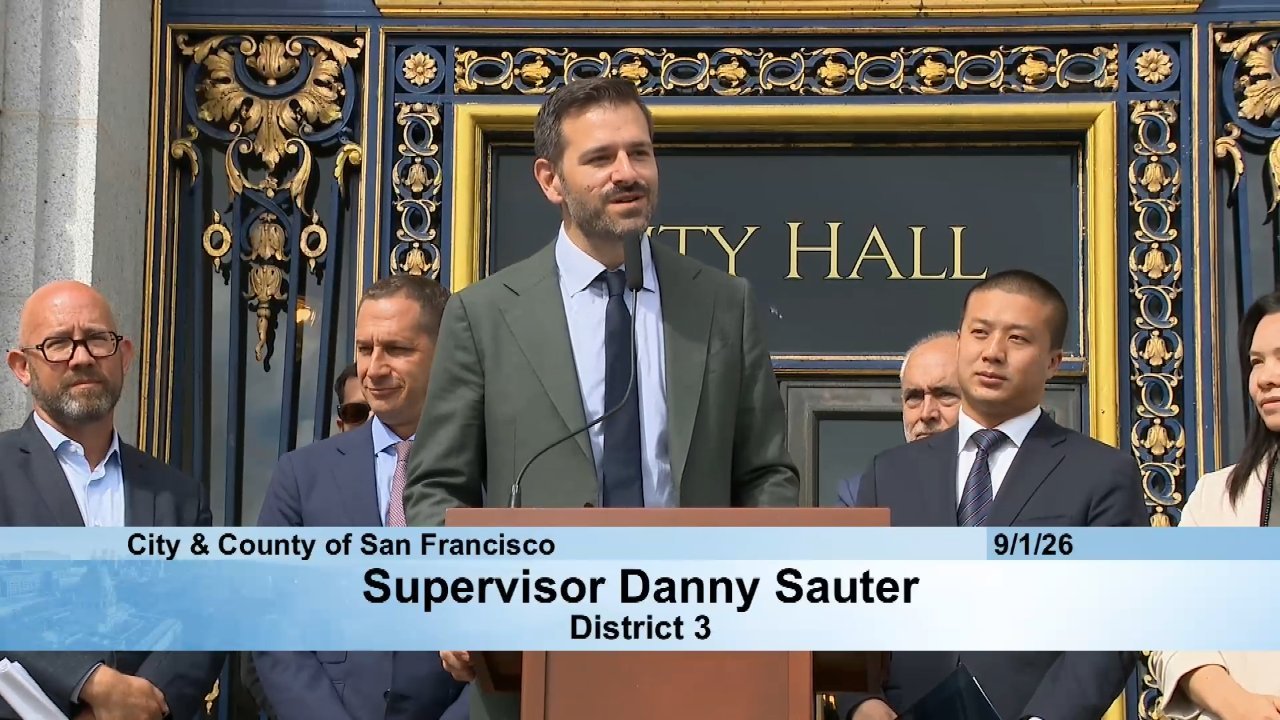
Supervisor Danny Sauter, District 3 and vice chair of the County Transportation Authority, offered the event's most candid moment about transit's imperfections. "We don't fight for transit because it's perfect. It is something that is sometimes maddening and frustrating when you miss the bus or when it's a ghost bus," he said. "But we do it because we know there's so many magical moments on transit when those connections work perfectly, when we're flying in the new red lanes on Van Ness." Sauter urged attendees to knock doors and spread the word at bus stops ahead of November.


  • Transit Month events: San Francisco Transit Riders announced over 100 events statewide throughout September. Sarah Johnson, executive director of San Francisco Transit Riders, described how Transit Month grew from a one-week celebration of Muni in 2016 to a month-long statewide initiative. Riders can log trips at ca transitmonth.org.
  • SFMTA Board Chair Janet Tarlov was credited by Director Kirschbaum for leadership but did not speak at the event.