
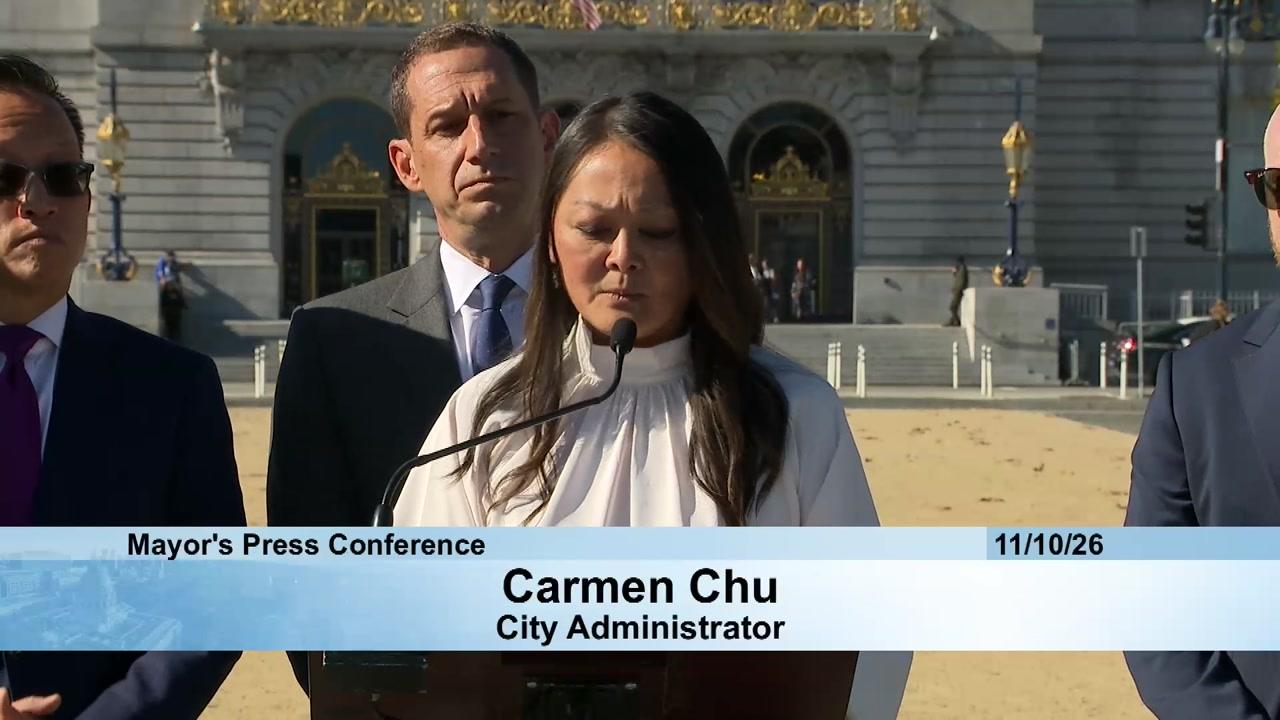
Lurie Unveils Unified Ethics Code for $6B in City Contracting
Mayor's Press Conference • San FranciscoNovember 10, 2026
Locunity is an independent informational service and is not an official government page for this commission. All information is sourced from public footage and an analysis of official agendas with the aid of responsible, fact-checked AI. to report an error or omission.
San Francisco spends roughly $6 billion a year on purchasing, and the ethics rules governing that money are scattered across city law. At a Nov. 10, 2026, press conference, Mayor Daniel Lurie and City Administrator Carmen Chu announced legislation to consolidate those rules into a single administrative code chapter. The legislation has not yet been adopted.
- One rulebook proposed for conflict-of-interest, recusal, disclosure and bid-splitting rules
- Bid splitting banned citywide, closing gaps between contract types and grants
- Violations would count as official misconduct under the proposal
- First action after Prop E, framed as depoliticizing city contracting
- City Attorney and small-business advocate back the plan; no vote taken
One Code to Govern $6 Billion in Contracts
Why it matters: The city buys roughly $6 billion in goods, services and work each year. Consistent rules are meant to prevent corruption and make contracting easier for city employees, small businesses and nonprofits.
The basics: Bid splitting means breaking one large purchase into smaller pieces. Buyers typically do this to stay under dollar thresholds that would trigger competitive bidding or added oversight. City officials said San Francisco's rules on the practice are inconsistent. Today, ethics requirements vary by department and by contract type.
Where things stand: Lurie presented the proposal as follow-through on voter-approved Proposition E. "We are taking our first action to centralize and depoliticize contracting so it serves San Franciscans, not insiders," said Mayor Daniel Lurie.
The proposed administrative code chapter would:
- Ban bid splitting across all city contracting
- Bar giving any vendor an unfair advantage, including sharing nonpublic information
- Require officials to disclose conflicts of interest and recuse themselves
- Make violations grounds for official misconduct
The last provision matters most. Ethics lapses would become a basis for official misconduct, not just a compliance problem.
The patchwork problem: During questions from reporters, Chu walked through how the city defines bid splitting differently under Chapter 6, under Chapter 21 and for grants. In the grants code, she said, the prohibition is simply absent. "You would think that applies universally. It doesn't exist within our current code with our grants," said City Administrator Carmen Chu.
City Attorney David Chiu backed the effort. He stressed that fair competition and ethical "tone from the top" are central to clean contracting.
The small-business case: Sharky Laguana, former president of the Small Business Commission, argued the reform could level the field for smaller firms that lack relationships at City Hall. "We don't want the folks with the best connections. We want the best businesses," said Laguana.
The other side: No one at the event opposed the proposal. Reporters asked for examples of past abuse, raised public trust and pressed officials on how the plan fits with the city's budget pressures. The press conference did not surface any organized opposition or detailed critiques of the legislation.
Decisions and stakeholder impacts: No vote occurred. If adopted, the code would affect several groups:
- City employees and contracting officers would follow one consistent rulebook and face misconduct exposure for violations.
- Small businesses could gain from rules that reward merit over connections, a point Laguana emphasized.
- Nonprofits and grant recipients would come under a bid-splitting ban that does not exist in the grants code today.
- Well-connected vendors would lose any advantage that comes from access to nonpublic information.
What's next: The legislation is announced, not adopted. Officials did not set a hearing date or a timeline for approval. Readers tracking the plan should watch for:
- How the final text defines bid splitting across Chapter 6, Chapter 21 and grants
- What enforcement role, if any, the Ethics Commission plays
- Whether small-business and nonprofit groups weigh in when the proposal reaches a formal hearing
- What other Prop E follow-up actions the administration brings forward, since officials called this the "first"
Looking Ahead
The proposal was announced at a press conference and has not been adopted. Expect detail on enforcement and implementation once the legislation is formally introduced and scheduled for a hearing.