Council Approves Churchill Downs Tax Deal, Rejects Mask Amendment After Marathon Session
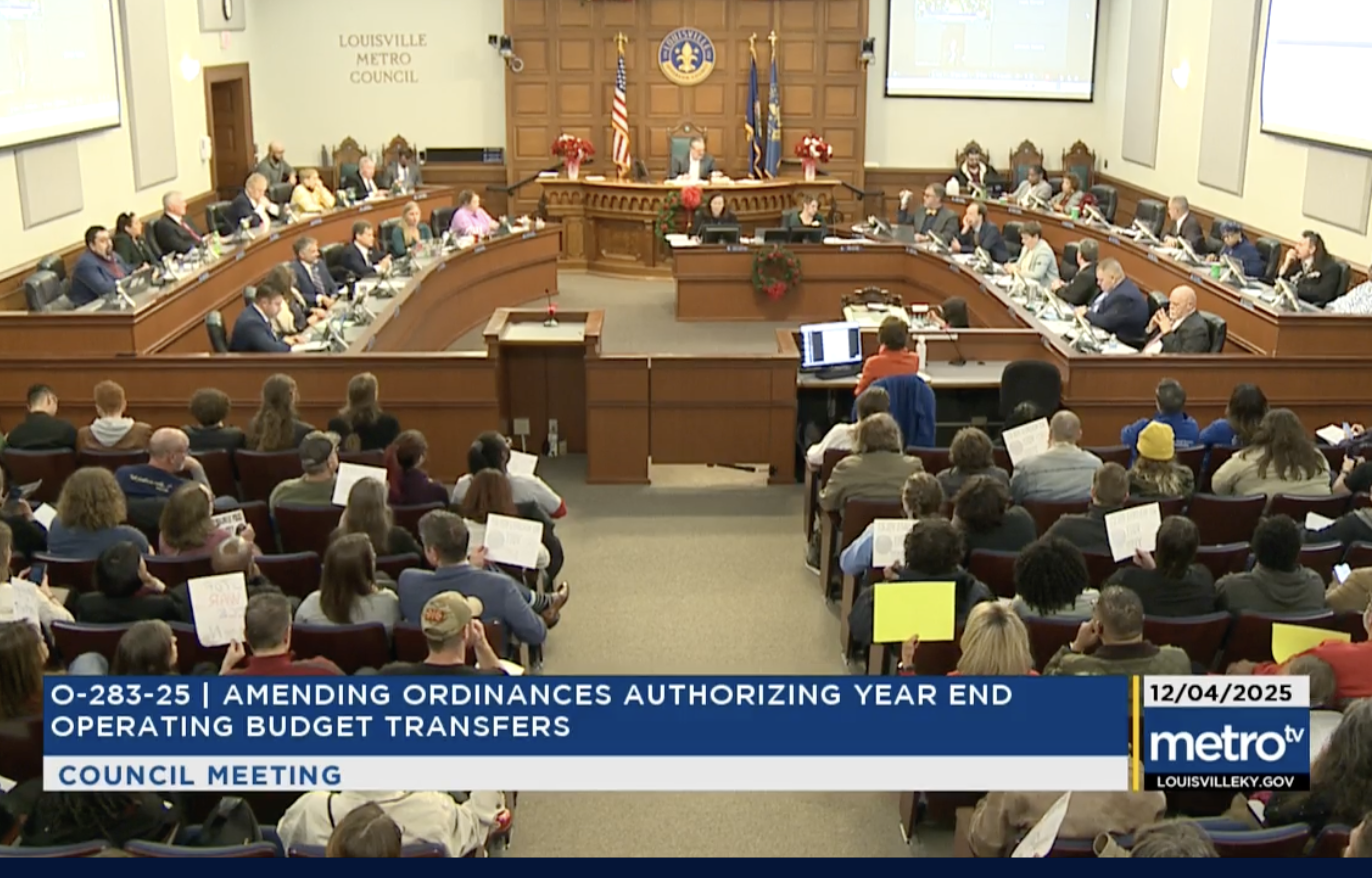
Louisville's Metro Council ended 2025 with a packed December session that revealed the competing pressures shaping the city's future: corporate incentives versus community demands, employee benefits versus budget constraints, and civil liberties versus law enforcement operations. The four-and-a-half-hour meeting produced consequential votes on economic development, social services, and a contentious immigration-related policy that split the council down the middle.
Churchill Downs secures preliminary approval for industrial revenue bonds despite calls for stronger community commitments
Year-end budget deal directs surplus funds to community centers, crisis services, and food security
Metro employee tuition assistance doubles from $2,000 to $4,000 annually
Proposed amendment requiring masked law enforcement to identify themselves fails by a single vote
Council pools district funds to boost support for food pantries, youth education, and arts programs
SBA officials announce disaster loan assistance for businesses affected by UPS plane crash
Churchill Downs Gets Tax Break, But Critics Want More
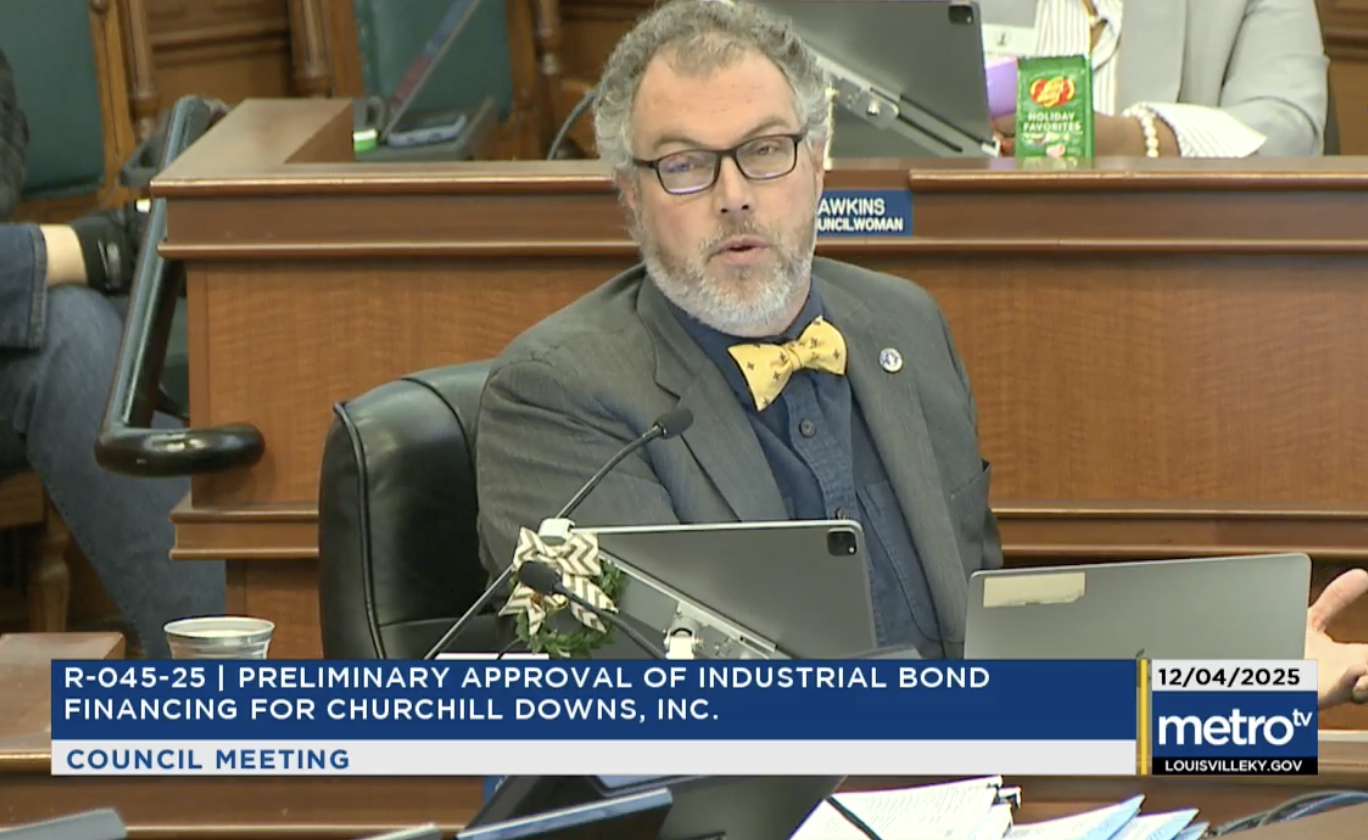
The council's 18–7–1 vote to advance preliminary industrial revenue bond terms for Churchill Downs became the meeting's most contentious debate, exposing a rift between members who view the track as an irreplaceable economic anchor and those who see a missed opportunity to extract binding community commitments.
Why it matters: Industrial revenue bonds allow companies to finance projects with tax-exempt debt, reducing borrowing costs. For Churchill Downs, the arrangement preserves an existing Payment in Lieu of Taxes agreement with Jefferson County Public Schools - meaning the school district continues receiving revenue—while extending favorable terms for up to 30 years on future capital investments.
State of play: Supporters framed the vote as essential to keeping Louisville's most iconic employer invested in the city. Council Member Anthony Piagentini argued the deal delivers substantial returns through jobs and occupational taxes without the massive giveaways seen in other corporate incentive packages.
"This is net, net a tremendous opportunity for this city to show off," said Piagentini.
Council Member Markus Winkler warned colleagues against alienating major employers during uncertain economic times. "Alienating our employers, to me, is a bad strategy," he said.
The other side: Critics wanted written guarantees tied to the bond approval—commitments on keeping corporate headquarters in Louisville, contributions to homelessness initiatives, and other community investments.
Council Member Jennifer Chappell led the opposition, arguing the city held leverage it wasn't using. "I see no reason why Louisville Metro should approve this legislation tonight," she said, pressing for formal commitments before extending a three-decade arrangement.
Council Member Ken Herndon echoed those concerns: "I do not support our community signing on to a 30 year obligation without significant commitments."
Decision: The resolution passed 18–7 with one member voting present. The preliminary approval moves the bond structure forward, with final terms still to be negotiated.
What's next: The administration will continue discussions with Churchill Downs on final bond parameters. Critics signaled they may push for community benefit requirements in future economic development deals.
Year-End Budget Deal Funds Crisis Center, Food Security
A negotiated amendment-by-substitution passed 24–2, directing year-end surplus funds to priorities including community center improvements, a 23-hour mental health crisis center, and food security initiatives through Dare to Care.
Why it matters: Year-end budget adjustments determine how unspent or surplus dollars get reallocated before the fiscal year closes. This package represented a compromise between the council and administration on how to deploy available funds.
State of play: The deal emerged from Budget Committee negotiations and included funding for supportive housing, community facility upgrades, and the crisis services that advocacy group CLOUT had requested during public comment earlier in the meeting.
Decision: With only two no votes, the package reflected broad consensus on investing in social infrastructure.
Tuition Assistance Expansion Clears Legal Hurdle
After a brief delay to resolve tax questions, the council unanimously approved expanding employee tuition reimbursement from $2,000 to $4,000 annually—positioning Louisville more competitively with peer cities seeking to retain government workers.
Why it matters: Local governments compete with private employers and other jurisdictions to attract and retain staff. Enhanced education benefits can reduce turnover and improve workforce quality without direct salary increases.
State of play: The ordinance initially stalled when Chair Brent Ackerson tabled it pending county attorney review of IRS implications. "I'm going to ask for a motion to table this issue," Ackerson said, citing the need for clarity on tax treatment.
Council Member Kevin Kramer explained the item's path: "This came out of the Budget committee with a no vote."
Once legal questions were addressed, Council Member Paula McCraney framed the increase as reasonable. "To go from 2000 to offering 4000 for each employee is quite generous," she said.
The final version included an amendment allowing any unspent funds from the tuition pool to be redistributed evenly among participating employees.
Decision: Adopted 26–0 after the amendment.
Mask Amendment Fails by One Vote After Lengthy Debate
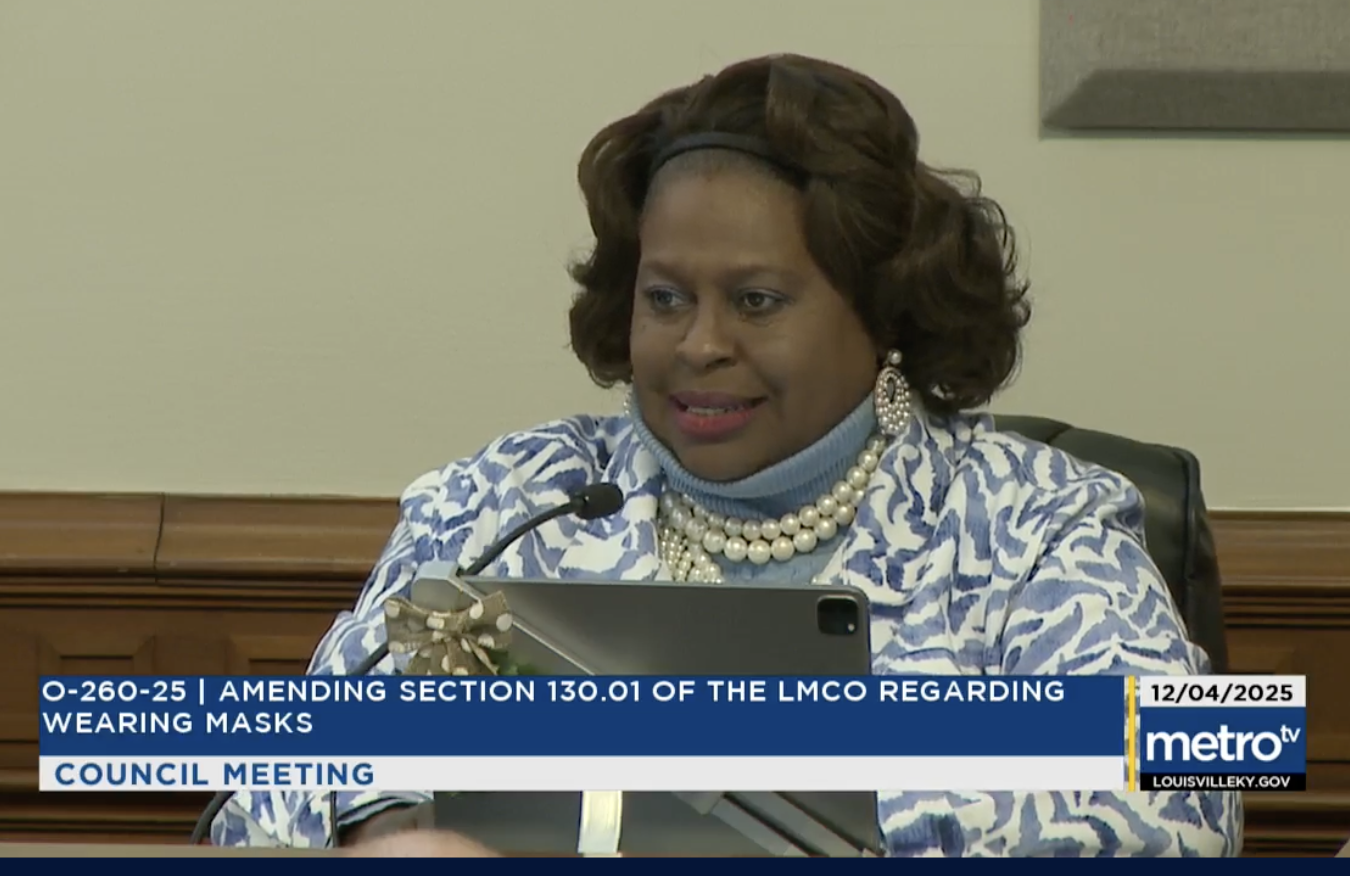
The meeting's longest debate ended with a 12–13–1 defeat for an amendment that would have required law enforcement officers wearing face coverings to identify themselves upon request.
Why it matters: The proposal emerged amid national concerns about immigration enforcement tactics, specifically reports of plainclothes federal agents conducting operations without clearly identifying themselves. Supporters saw it as a basic accountability measure; opponents called it unworkable and potentially dangerous.
State of play: Council Member J.P. Lyninger sponsored the amendment, citing alarming reports from other cities. "Masked law enforcement agents in plain clothes are dragging people to unmarked cars," he said, arguing Louisville residents deserve to know who is exercising police powers.
Public comment reflected the community divide. Andrea Parr supported the amendment to protect accountability and prevent impersonation. Ann Yeisser opposed it, defending immigration enforcement and citing risks to ICE officers.
An attempt by Council Member Paula McCraney to add an exemption for masks worn due to respiratory illness also failed, 11–13 with 2 abstentions.
Decision: The underlying amendment failed 12–13–1. A motion to call the question also failed, requiring a supermajority. The existing mask ordinance remains unchanged.
What's next: The narrow margin suggests this issue may return. Advocates on both sides demonstrated organized turnout, and immigration enforcement remains a flashpoint in cities nationwide.
District Funds Pool to Support Nonprofits
Multiple council members contributed from their Neighborhood Development Funds during the meeting, boosting allocations for three organizations serving vulnerable populations.
Exodus Family Ministries Food Pantry: Originally proposed at $7,000, the appropriation grew as members added district contributions to support food pantry operations in Southwest Louisville. Adopted 26–0.
Junior Achievement of Kentuckiana: Council Member Andrew Owen led the push for curriculum materials supporting JA BizTown and other financial literacy programs. "They've requested 50,000, hoping we can do as well as we can here," Owen said. Multiple districts contributed, and the amended ordinance passed unanimously.
Louisville Folk School: The Folk Musicians in Residence program, which brings traditional music education into schools, received additional district contributions before passing 26–0.
Minor Items
Consent calendar: Items 24–34 adopted 25–0, covering appropriations, resolutions, public health grants, animal services, and boundary adjustments
Trees Louisville proclamation: Council recognized the organization's 10th anniversary of urban forestry work
Youth sports honors: Hudson and Shawnee Middle School football teams received recognition for their seasons
University of Louisville interns: Council acknowledged student contributors to Metro operations
Rezoning at 9115–9119 Preston Highway: Approved 25–0 for one-story retail/restaurant development; MSD review completed
District 1 park activities ($17,000): Shawnee Park event funding adopted after process discussion
What to Watch
The Churchill Downs debate previews a larger conversation about what Louisville should demand from its biggest employers. With a 30-year bond horizon, this won't be the last time council members push for codified community benefits alongside tax advantages.
The mask amendment's single-vote defeat signals the issue has staying power. Immigration enforcement policy continues roiling local politics nationwide, and Louisville's council now has a clear baseline showing where members stand.
Meanwhile, the expanded tuition assistance and year-end budget investments reflect a council willing to direct resources toward workforce retention and social services—priorities that will face pressure in future budget cycles as the city balances competing demands.