Council Greenlights Ethics Rules, Zoning Review After Massage Therapists Sound Alarm
Louisville Metro Council moved swiftly through a packed January agenda, adopting new conflict-of-interest standards for boards and commissions, exercising a rarely used tool to pull back a unanimous Planning Commission zoning case for further review, and approving a construction-traffic compromise for a south-end apartment project—all while licensed massage therapists warned that a pending ordinance could shutter their businesses.
New ethics ordinance sets universal conflict-of-interest rules for all Louisville boards and commissions.
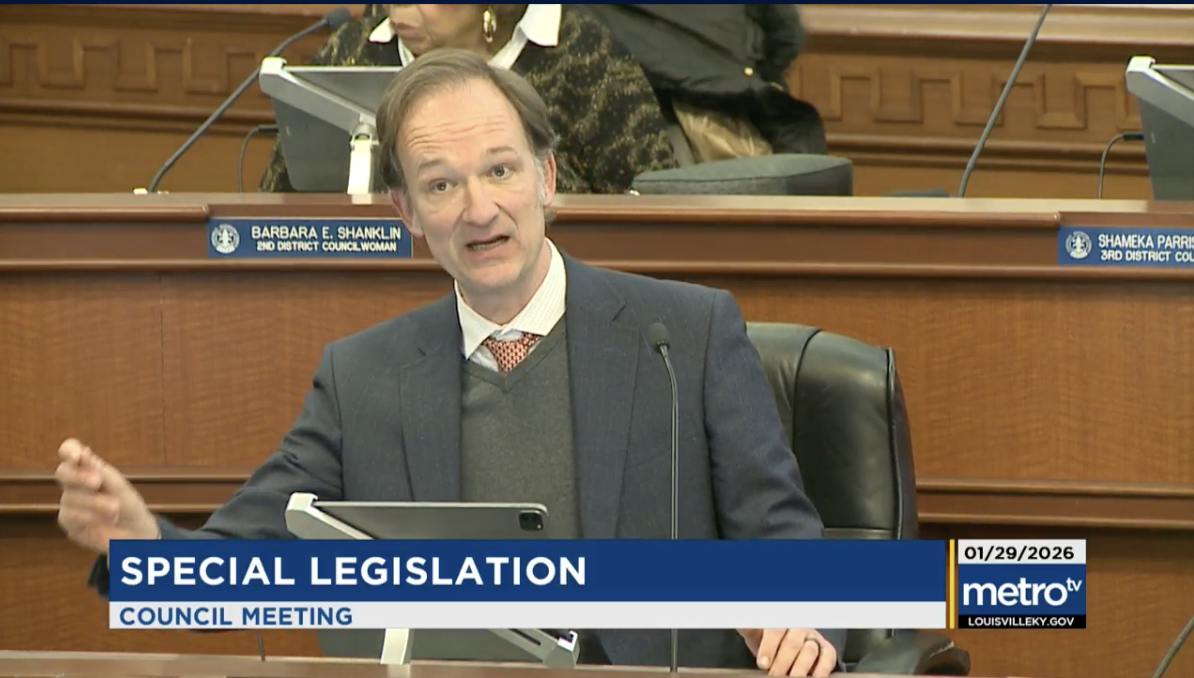
Council uses emergency procedure to review unanimous Planning Commission case at 4700 Westport Rd.
Rosegate Apartments development amended to route construction trucks away from residential streets.
Three massage therapists urge changes to proposed facility regulations, citing privacy and staffing concerns.
Multi-district funding secures Forest Fest Bluegrass Festival at Jefferson Memorial Forest.
Public commenter calls for strong data center zoning to protect neighborhoods from noise and water impacts.
Massage Therapists Warn Ordinance Could Force Closures
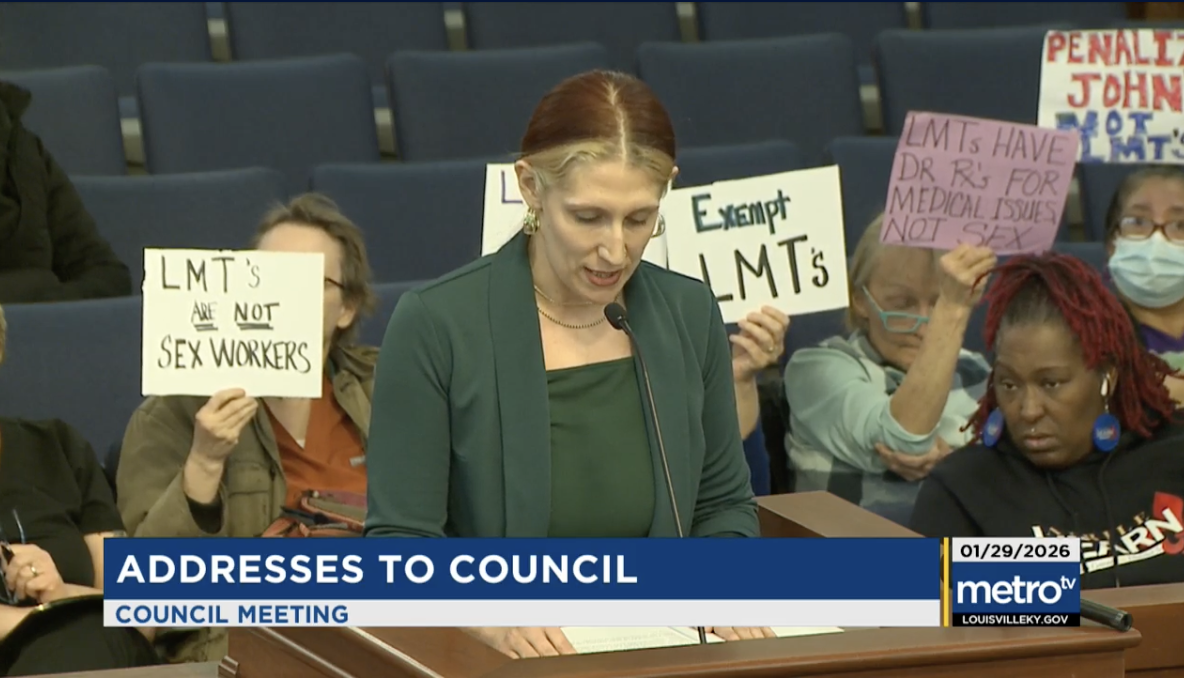
Three licensed massage therapists dominated public comment, urging the Council to reconsider provisions in a pending facility ordinance they say would be impossible for sole practitioners to meet.
Jennifer Coyle, a licensed therapist, told Council members that inspection and operational requirements designed to combat human trafficking would instead harm legitimate practitioners working by appointment.
"I urge the Council to amend this ordinance by adopting a different approach to sole practitioners," Coyle said.
Jordan Duvall expressed support for the ordinance's intent but warned the unlocked-door mandate would require hiring multiple employees simply to maintain safety.
"Under this ordinance, I would be required to hire at least three additional employees simply to safely keep doors unlocked during operating hours," Duvall said, adding the cost could make continuing in business impossible.
Waveney Taylor focused on a separate provision requiring clients to present government-issued identification before receiving services, arguing it invades privacy without evidence that such requirements deter trafficking.
"My concern this evening is with provisions related to patron registration, specifically any requirement or expectations that clients provide government issued identification in order to receive any of our services," Taylor said.
Why it matters: The ordinance, still working its way through committee, reflects a broader national effort to regulate massage facilities as a tool against human trafficking. But the comments highlight a recurring tension: crafting rules tough enough to deter bad actors without crushing small, legitimate operators who lack the staffing and resources of larger establishments.
What's next: The ordinance was not on the Jan. 29 voting calendar; expect further committee discussion as sponsors weigh the sole-practitioner concerns.
Council Pulls Unanimous Zoning Case Back for Review
In the first use of a new procedure, Council members voted to initiate review of a Planning Commission decision that had passed unanimously—ensuring a contested property at 4700 Westport Rd. and 913 Fountain Ave. returns to the legislative body before any change in use.
The emergency resolution, which required a two-thirds vote to consider and a subsequent voice vote to adopt, applies to Case 25-ZONE-0087. Staff explained the move was prompted by concerns that the property could transition to a car wash without further Council scrutiny if not flagged now.
Travis Feaster, from the County Attorney's Office, noted the novelty of the process: "I just want to note that this is the first one of these." He flagged a minor technical correction involving a standard binding element.
Council Member Andrew Owen supported Councilwoman McCraney's resolution but urged restraint. He praised last year's policy allowing unanimous Planning Commission decisions to bypass Metro Council, noting it freed up staff and cut weeks off development timelines in what had been "one of the worst jurisdictions in the country" for process length. His concern: the recall tool could undermine those gains if overused. "What I don't want to happen is every single unanimous vote at the Planning Commission gets brought back over... just to put the standard binding element on," he said, calling for a "thoughtful discussion" on when the procedure should be reserved.
Why it matters: The new procedure gives the Council a safety valve for unanimous Planning Commission cases that raise late-emerging concerns. But overuse could undermine the efficiency goals that led to the rule change in the first place.
Decisions: Emergency consideration passed by voice vote (two-thirds achieved); resolution adopted by voice vote.
Construction Traffic Compromise Clears Beulah Church Road Project
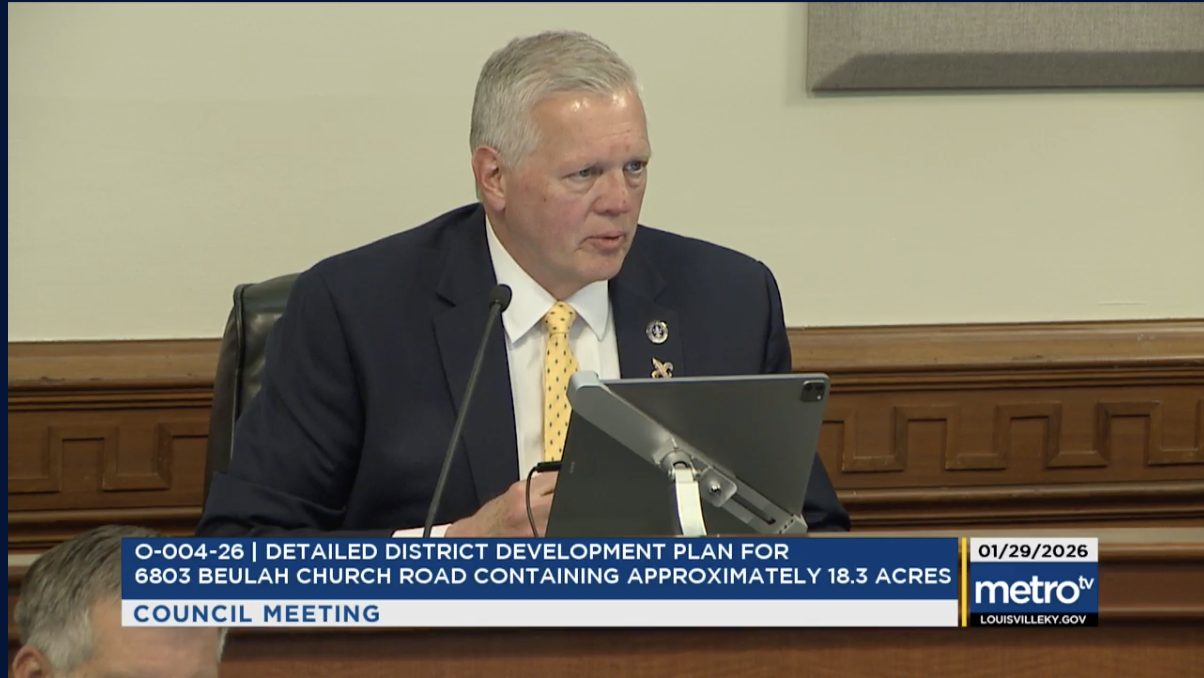
A detailed district development plan for a 6803 Beulah Church Road apartment project cleared Council after members added a binding element to address neighborhood traffic concerns.
The amendment directs construction vehicles for the Rosegate Apartments project to use Fox Chase Rd. and Hall Place Blvd. to reach Beulah Church Rd., keeping heavy trucks off nearby residential streets during the build-out.
Why it matters: Construction traffic is a perennial flashpoint in development disputes. The binding element gives residents an enforceable commitment—and a template for future projects.
Decisions: Amendment adopted by voice vote; final ordinance adopted 25–0.
New Ethics Rules for Boards and Commissions
Council unanimously adopted an ordinance creating standardized conflict-of-interest rules for all Louisville boards and commissions under LMCO Chapter 32.
Sponsors described the measure as an effort to establish universal standards while preserving the subject-matter expertise that makes boards effective. The ordinance passed 24–0 with one member voting "present."
Why it matters: Boards and commissions shape everything from zoning appeals to library policy. Uniform ethics rules reduce ambiguity and help members navigate potential conflicts before they become scandals.
Decisions: Adopted 24 yes, 1 present.
Data Center Zoning Draws Early Warning
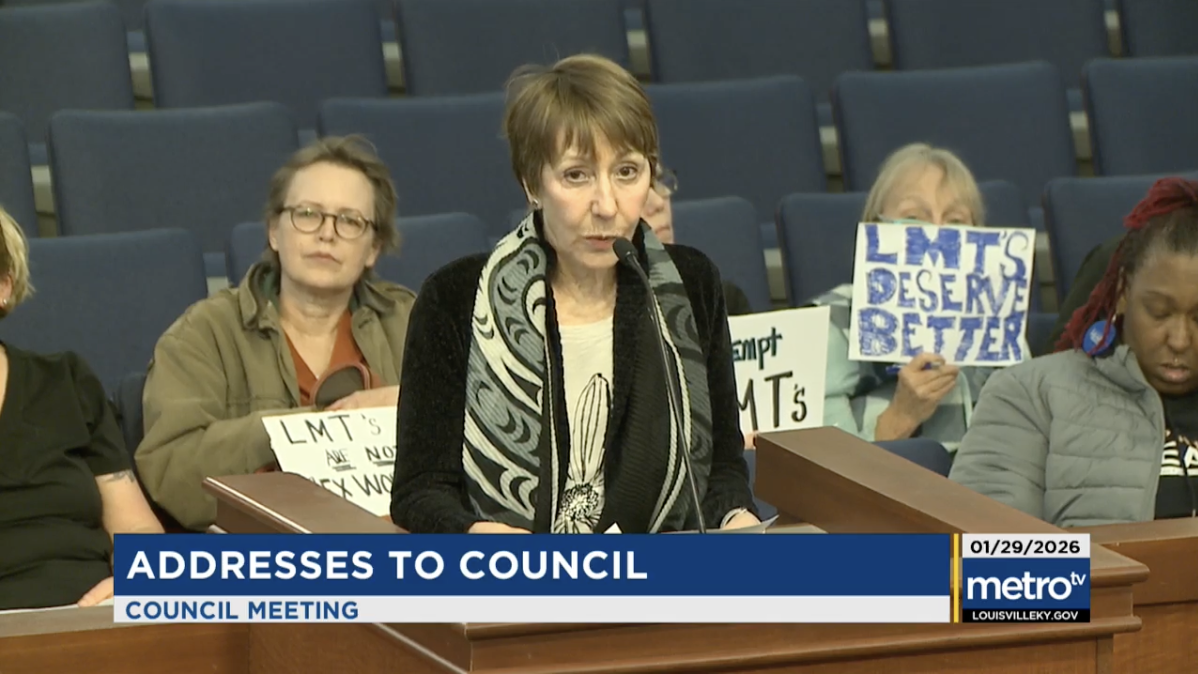
Roxanne Sturtevant urged the Council to adopt a strong data center zoning ordinance based on a model developed by the Kentucky Resources Council, warning that without safeguards, neighborhoods could face noise, air pollution, and heavy water use from the facilities.
"I ask you all the members of the Council to work together with community input to pass the best possible set of local ordinances so that we can benefit financially without harming the health and well being of our residents," Sturtevant said.
Why it matters: Data centers are a growing economic development target across the country, but their infrastructure demands—backup generators, massive cooling systems, and high water consumption—have sparked neighborhood opposition in other communities. Louisville's approach will shape whether the city can attract investment without repeating those conflicts.
Forest Fest Funding Secured
Council members from multiple districts pooled Neighborhood Development Fund contributions to fully fund the Forest Fest Bluegrass Festival, scheduled for May 16, 2026, at Jefferson Memorial Forest.
The ordinance was amended on the floor to reflect the additional contributions before passing 25–0.
Minor Items
Minutes approved: Council and committee minutes from January 2026 special meetings adopted by voice vote.
Consent Calendar: Items 14–25, including appropriations, capital transfers, street closures, and an alley naming resolution, adopted 23–0.
2026 Committee Schedule: Resolution setting meeting dates for the year adopted by voice vote.
Board and Commission Appointments: Mayor's letters regarding appointments and reappointments read into the record.
New Business: Items 31–46 read and assigned to committees for future consideration.
Veterans Event: Jay Crosswaite of Irreverent Warriors described a planned veterans hike and ongoing programming to reduce isolation and suicide among veterans, seeking city collaboration.
What to Watch
Massage facility ordinance: Sole-practitioner concerns may force sponsors to revisit key provisions before the measure returns for a vote.
Data center regulations: Early public pressure signals a contested path ahead as the Council considers zoning rules for a fast-growing industry.
Unanimous case reviews: Council members signaled caution about overusing the new procedure—watch whether future requests meet resistance.