
Los Altos Adopts First Formal BMR Rules, Rewrites Commission Playbook
City Council • Los AltosOctober 14, 2026
Locunity is an independent informational service and is not an official government page for this commission. All information is sourced from public footage and an analysis of official agendas with the aid of responsible, fact-checked AI. to report an error or omission.
Los Altos now has written rules for who gets first shot at its below-market-rate homes. On Oct. 13, 2026, the City Council unanimously adopted its first comprehensive BMR guidelines, which add a local-employee priority and replace first-come, first-served sales with a lottery. Members also spent nearly half an hour redlining the handbook that governs city commissions, a rewrite that would let a short-handed parks commission meet again.
- BMR guidelines adopted unanimously: two-category priority, a lottery and a 6-month relocation window for over-income renters
- Private school employees excluded from local-employee priority; Councilmember Pete Dailey objected but voted yes
- 5150 El Camino Real stays under the old process; 140 Lyle Street is the first unit under the new rules
- Commission handbook redline: council moves to put work plans under staff guidance and remove an "independence" sentence
- Three-member parks commission could meet once handbook changes are adopted on consent
- Cal Cities debrief: e-bike impoundment, litigation costs and a disputed 234-0-1 vote tally
Council Writes the Rulebook for Affordable Units
The basics: Below-market-rate (BMR) units are homes priced for lower-income households, typically produced as a condition of market-rate development. Staff said Los Altos had no comprehensive administrative guidelines for running the program.
Why it matters: The guidelines decide who moves to the front of the line for scarce affordable homes and how winners are chosen. They replace informal practice with a written, public framework.
Where things stand: Stephanie Williams, Development Services Director, presented guidelines that carry forward council direction from a Sept. 8 study session. The package:
- Extends the relocation period for over-income rental households from 90 days to 6 months
- Keeps a two-category priority structure instead of a live-work-only preference
- Excludes private school employees if the local-employee priority is kept
- Replaces first-come, first-served with a lottery
Staff also recommended finding the action exempt from the California Environmental Quality Act (CEQA).
Councilmembers had raised fair housing concerns about giving priority to particular workers. Jolie Houston, City Attorney, relayed outside counsel's view: "She has advised that it is all above board in terms of fair housing."
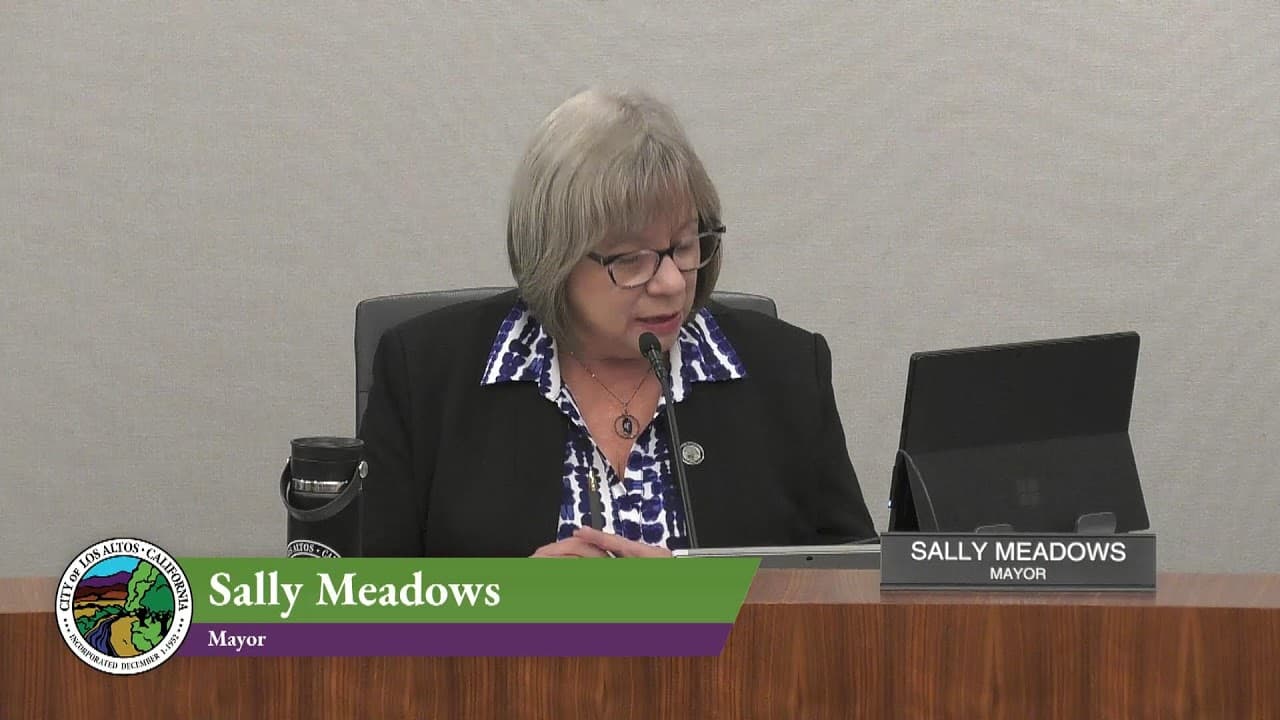
Mayor Sally Meadows backed the tiered approach. "I would prefer the opportunity to offer the public employees the first priority and have the second tier," said Meadows, Mayor. Vice Mayor Larry Lang noted that future councils could narrow the structure. "I'm comfortable with the 2-tier," said Lang, Vice Mayor.
The other side: Dailey opposed carving out private school workers, though he said he would still vote yes. "I don't think we should be carving out and excluding private school employees," said Dailey, Councilmember.
One public commenter, longtime resident Anki Van Dursen, praised staff and council for comprehensive guidelines that she said improve transparency for all parties.
Decisions and stakeholder impacts: Councilmember Jonathan D. Weinberg moved to adopt the resolution, authorize staff to implement the guidelines and find the action CEQA-exempt. The clerk declared the electronic vote unanimous. Individual tallies were not announced.
- Public employees: gain first priority under the tiered structure Meadows and Lang favored
- Private school employees: lose access to the local-employee priority
- Over-income renters: get 6 months, up from 90 days, to relocate
- Prospective buyers and renters: a lottery replaces first-come, first-served
The timing matters. Staff said 5150 El Camino Real falls under the old process. Weinberg asked staff to encourage Prometheus, the developer there, to adopt the new standards voluntarily. He also asked for annual demographic reporting on BMR households, posted on the city website.
What's next: The first unit under the new rules is a three-bedroom, low-income for-sale home at 140 Lyle Street.
Handbook Rewrite Redraws the Commission Chain of Command
Why it matters: The Commission and Committee Handbook sets conduct rules and lines of authority for the city's advisory bodies. Members said confusion in those areas has caused problems in the past.
Where things stand: Meadows asked colleagues to skip wordsmithing from the dais and flag only problematic redlines. No one spoke during public comment.
The sharpest edits targeted who steers commission work. Dailey wanted the work-plan section to make staff's role explicit. "I would like to see something in that paragraph that says the work plan is to be prepared and executed under the guidance of staff," said Dailey, Councilmember. Under his proposal, the council liaison would serve as the voice of record on council intent.
Lang agreed but warned against sidelining commission leaders. He said the language should ensure "chairs feel empowered to run their meetings." Dailey then proposed adding a list of chair duties.
Dailey also targeted a sentence saying commissions act independently and that liaisons do not influence policy. "I hate that sentence, and I think we should just eliminate it," said Dailey, Councilmember.
The other side: Weinberg pushed to keep language that lets liaisons provide historical context. "I wouldn't get rid of some of the language that's there," said Weinberg, Councilmember. The group agreed to cut the independence sentence and the "therefore" that followed it.
Decisions and stakeholder impacts: No vote was taken. Council gave direction on these items:
- Perceived conflicts of interest: members favored language urging commissioners to use resources, including the city attorney. They noted that a perceived conflict can be grounds for removal. "I think we need a statement there that says seek the advice of the city attorney and then follow it," said Dailey, Councilmember.
- Working pairs: Lang asked for a reminder that Brown Act open-meeting rules apply to working pairs, which are distinct from ad hoc committees.
- Format: Houston asked for numbered sections. The clean version has them.
For commissioners, the net effect is more staff direction and clearer conflict expectations.
Parks commission sidelined: During council reports, Weinberg raised an urgency ordinance or code change to make the seven-seat Parks and Recreation Commission a five-member body. Only three members are seated, and he had been told the commission could not meet. The delay has stalled a mosaic bench, an art reception and a library mural.
City Manager Gabriel Engeland said the handbook would base quorum and votes on seated members. "Assuming these changes are adopted, then they can meet with 3, and it takes 2 to move it forward," said Engeland, City Manager. Lang noted that the changes are not yet in effect. Weinberg accepted that no separate action was needed.
What's next: The clean handbook returns on a future consent calendar. Melissa Thurman, City Clerk, said "during our Brown Act training, which will happen in November, I'm going to be speaking about disruptions."
Cal Cities Debrief: E-Bikes, Lawsuits and a Mystery Tally
Where things stand: Lang and Weinberg reported back from the League of California Cities conference.
Lang described Carlsbad's e-bike enforcement approach, in which "they impound the bike for up to 48 hours." He also flagged AB 1821, which changes a 10-day timeline to 10 business days, and Santa Barbara's utility user tax on streaming services.
At the General Assembly, a Murrieta resolution on local control of housing and land use had been revised to drop a reference to a constitutional amendment. Lang voted no, as the council had instructed, and the resolution passed on a voice vote. He questioned a Cupertino memo that reported a 234-0-1 tally. "I have no idea where that came from," said Lang, Vice Mayor. He concluded that "nothing actually gets discussed at the General Assembly."
Meadows asked how the city's voting instructions could apply to a revised item. "What the General Assembly was asked to vote on was different than what we actually had in our packet," said Meadows, Mayor.
Weinberg credited the city attorney's constitutional warnings for the revision. He also discussed:
- Treating Class 3 e-bikes like motor vehicles, and AB 2234
- Private equity funding of lawsuits against cities
- Underinsurance
- The need for cities to communicate proactively
Why it matters: The reports point to e-bike regulation and rising litigation and insurance costs as issues to watch. They also show that the General Assembly leaves little room for debate on the resolutions cities instruct their delegates to vote on.
- Consent calendar (items 1–7) passed unanimously with no public comment; staff said a misspelled name in the minutes had been corrected.
- Rinconada Court oak: resident Steve Larson disputed the arborist report used to remove a 200-year-old oak and submitted 50 photographs.
- Larson's account: two of three arborist reports recommended advanced testing; the Gilloran report recommended immediate removal after a visual inspection.
- Ada's Cafe: Engeland reported progress, with plans being resubmitted ahead of approval.
- Closed session produced no reportable action.
Looking ahead: Watch for the clean commission handbook on an upcoming consent calendar. Its adoption would let the parks commission meet with three members. Brown Act training on meeting disruptions is set for November.