
Livermore Council Approves Raises for City Manager, City Attorney
City Council • LivermoreOctober 27, 2026
Locunity is an independent informational service and is not an official government page for this commission. All information is sourced from public footage and an analysis of official agendas with the aid of responsible, fact-checked AI. to report an error or omission.
The Livermore City Council on Oct. 27, 2026, unanimously approved new contract terms for its two top appointed executives, the city manager and city attorney, and pushed back against online criticism of executive pay. The council also approved a citywide salary plan update that includes a minimum wage increase, put a price tag on the city's sewer system, and voted to simplify how it updates its conflict-of-interest rules.
- City manager and city attorney get 4% COLAs plus added deferred compensation, approved unanimously
- Salary plan update extends the 4% COLA to executive leadership and raises the minimum wage effective Dec. 28, 2026
- Sewer system replacement value estimated at $715M, with operations costing about $28M a year
- Conflict-of-interest filer list can now be updated by resolution rather than ordinance
Executive Pay Raises Clear Council Without Dissent
Why it matters: The city manager and city attorney are the only staff members who report directly to the council. Their raises are pegged to what the city's broader management ranks receive, and councilmembers used the vote to answer online criticism of executive pay.
Where things stand: Administrative Services Director Dustin Clausen laid out the package, which followed performance evaluations held Oct. 12. "The city manager is due a 4% cost of living," said Clausen, matching the increase for the Livermore Management Group, the city's management employee unit.
On top of the cost-of-living adjustment (COLA), the council's evaluation subcommittee recommended "an increase of $346.15 per pay period in a contribution to the city manager's deferred compensation account," Clausen said. That increase is meant to offset the effects of PEPRA, California's Public Employees' Pension Reform Act, on the manager's retirement benefits.
The city attorney's package includes:
- A 4% COLA, with ongoing contract language tying future COLAs to the management group
- A 2% merit increase
- $191 per pay period in deferred compensation
- Additional vacation accrual
Both contract amendments take effect Nov. 16.
The salary plan changes: A separate resolution updates the city's salary plan. It extends the 4% COLA to executive leadership, adds a minimum wage increase effective Dec. 28, 2026, and retitles the maintenance and golf operations manager position as maintenance services manager.
The other side: No members of the public spoke on the item. Councilmember Evan Branning addressed criticism circulating online directly. He said the council looks at how salaries diverge and at comparable jurisdictions before setting pay. "It's a very fair compensation for the return we're getting on the work," said Branning.
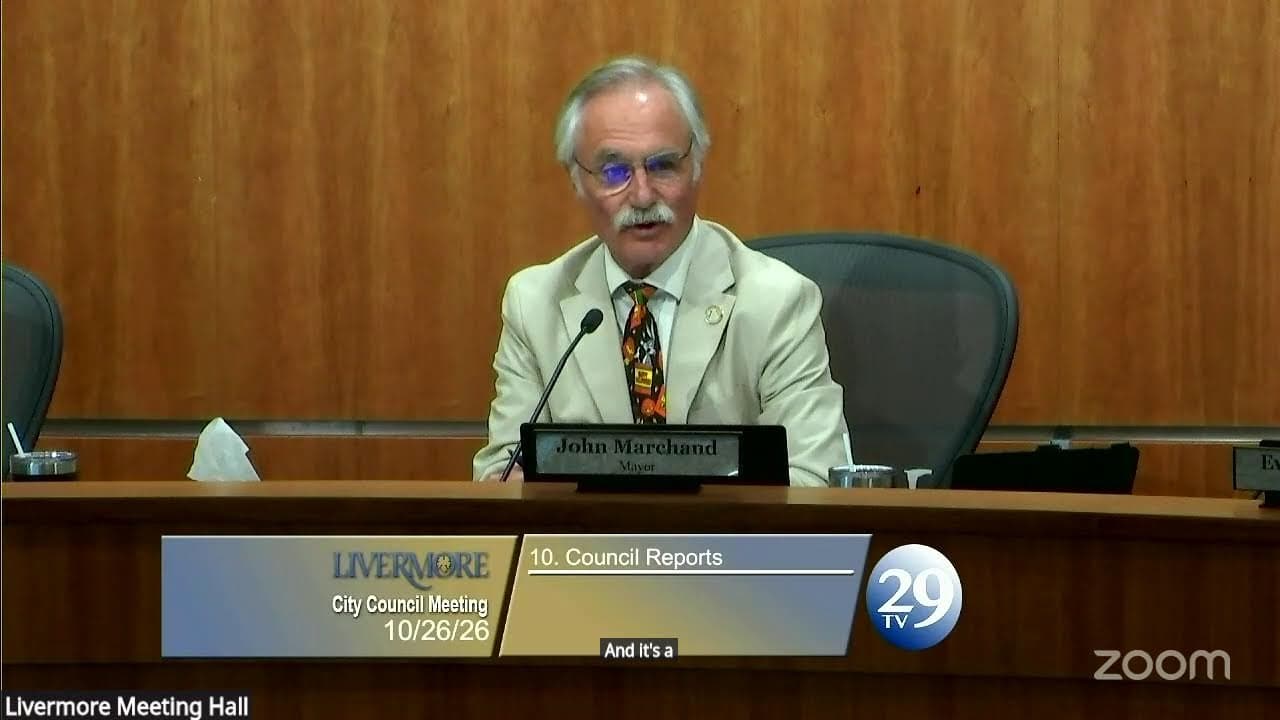
Mayor John Marchand framed the jobs in private-sector terms. He compared the city to an organization with a budget of roughly $170M and about 500 employees.
Councilmember Steven Dunbar pointed to the recent reviews. "We know that we have two outstanding public servants in front of us here," said Dunbar.
Decisions and stakeholder impacts: Vice Mayor Kristie Wang moved approval of both resolutions, and Councilmember Ben Barrientos seconded. The mayor declared the motion passed unanimously on a voice vote. Individual votes were not recorded.
Because the executives' COLAs are tied to the management group, future management pay deals will flow through to the top two jobs automatically. That reduces one-off negotiations, but it also means executive pay will rise whenever management pay does. The minimum wage change will reach the city's lowest-paid workers before year's end.
What's next: The contract amendments take effect Nov. 16, and the minimum wage increase takes effect Dec. 28, 2026.
A $715 Million Sewer System, by the Numbers
Why it matters: The council approved wastewater plant work on the consent calendar without debate. Before the vote, though, the mayor asked staff to put the system's scale on the record, using the figures to explain sewer charges and the value of long-term maintenance planning.
Where things stand: At the mayor's request, Assistant City Manager Paul Spence gave replacement estimates. "The cost of replacement is in the neighborhood of $180 million," Spence said of the wastewater reclamation plant. "Whole sewer system is in the neighborhood of $715 million." He put annual operations and maintenance at about $28M.
Marchand translated that figure into household terms: "So that runs to just around $900 per year per household in Livermore," he said.
The policy backbone: Marchand credited an asset management plan the city began in 2015. Such plans schedule repairs and replacements before systems fail and fund them through renewal and replacement reserves. He contrasted Livermore's approach with a fiscally strained nearby city. A councilmember noted that the current work is being funded partly with money reappropriated from projects that came in under budget.
Decisions and stakeholder impacts: Dunbar moved the consent calendar and Branning seconded. It passed unanimously on a voice vote. Ratepayers carry the system's costs, so the city's reserve planning directly shapes future sewer bills.
Conflict-of-Interest Updates Move to Resolution
Where things stand: The list of city positions required to file financial disclosures is currently written into the Livermore Municipal Code, so any change requires an ordinance. The city must review the code every two years. Staff recommended amending Section 1.28.06 of Chapter 1.28 to "authorize the adoption and amendment of the list of designated positions by City Council resolution," said City Clerk Olivia Nashid.
Decisions and stakeholder impacts: No public comment was received. One councilmember called passing an ordinance every two years unnecessary. Dunbar moved the staff recommendation, and the mayor declared it passed unanimously on a voice vote. The change trims recurring paperwork for the clerk's office. Future changes to who must disclose would come by council resolution.
What's next: This vote introduced the ordinance. It has not yet been adopted.
Minor Items
- Domestic Violence Awareness Month: The council proclaimed October 2026 Domestic Violence Awareness Month. Tri-Valley Haven Executive Director Christine Dillman said the region's only confidential shelter is being rebuilt "from 30 beds to 45 beds."
- Midway School Museum: City historian Jeff Caskey said "all of our contractors are currently locked down," and the project is nearing the building permit response stage.
- Downtown noise: Public commenter Trish Monroe asked for enforcement of noise ordinances on First Street, citing loud vehicles and music.
- Free software: Public commenter Jolie urged the city to favor free software, citing auditability and the ability to share tools with other cities.
- Proposition 39: Public commenter Alan Marling opposed the measure, saying it would make voting harder. Marchand said moving city elections to even years "increased the voter turnout 30%."
Looking Ahead
Tri-Valley Haven's Rotary benefit is Thursday, Oct. 29, at Three Seas Winery. A councilmember's request to expand Springtown Library hours will be analyzed in the budget process for the fiscal year beginning July 2027; staff made no commitment.