
Land Use and Transportation Committee - Jun 01, 2026 - Regular Meeting
Land Use and Transportation Committee • San FranciscoJune 1, 2026
Locunity is a independent informational service and is not an official government page for this commission.We use AI-assisted analysis and human editorial review to publish information.
Committee Pauses New Convenience Stores in Tenderloin While Advancing Renter Protections and Housing
San Francisco's Land Use and Transportation Committee cleared a packed five-item agenda June 1, sending a divisive 18-month moratorium on new convenience stores in the Tenderloin and South of Market to the full Board of Supervisors after heated public testimony. The same session advanced a state-level tenant protection push and design changes meant to keep the long-awaited 1,100-unit Balboa Reservoir project on schedule.
18-month pause on new convenience stores in the Tenderloin and SOMA advances after supporters cite drug ties and opponents warn of harm to immigrant business owners
Committee backs state bill extending California's 3-day renter eviction notice to 14 days after SF's own local ordinance was struck down
Balboa Reservoir design tweaks approved to help 1,100-unit, 50%-affordable project break ground on market-rate buildings next year
Transportation Code cleanup adopted and continued one week for additional public notice
Geneva Avenue infrastructure accepted for completed 130-unit affordable housing project in District 11
Convenience Store Zoning Ignites Debate Over Safety and Immigrant Livelihoods
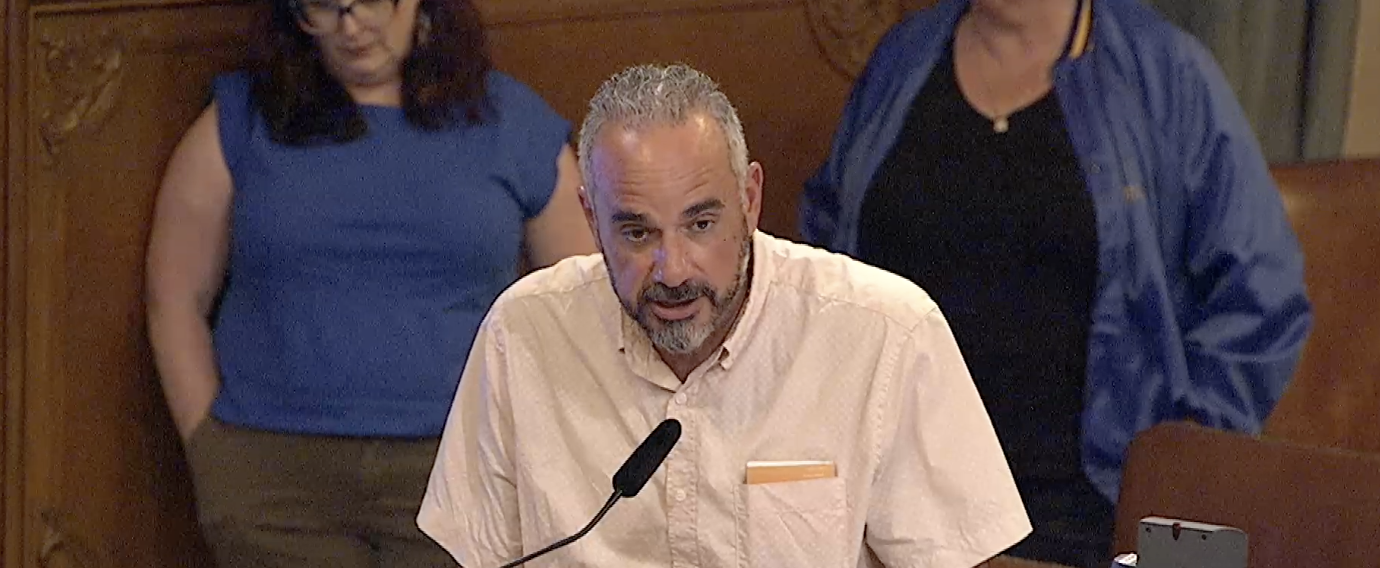
The committee's longest and most contentious discussion centered on a resolution imposing 18-month interim zoning controls requiring conditional use authorization for any new convenience store in the Tenderloin and South of Market public safety zone. The measure, authored by Supervisor Matt Dorsey, drew six public commenters — four in support and two opposed — and exposed a fault line between public safety advocates and immigrant business owners.
The basics: The Planning Code does not currently define "convenience store" as a distinct land use category. Most are classified as retail sales and service uses and are principally permitted — meaning they can open without special review. The resolution creates an interim definition and requires new applicants to go through a conditional use authorization process before the Planning Commission for the next 18 months while permanent zoning changes are studied.
Why it matters: More than 75 convenience stores already operate in the area, including eight on 6th Street alone. Law enforcement has linked late-night gatherings near some stores to drug activity, and the resolution is part of a broader effort to reshape commercial corridors in San Francisco's most challenged neighborhoods.
Where things stand: Dominica Donovan, Chief of Staff to Supervisor Matt Dorsey, framed the challenge bluntly: "The Planning Code does not currently define convenience stores as a distinct land use category. Most are treated as retail sales and service uses and are generally principally permitted in the subject area." She added that the neighborhoods already contain "a significant concentration of convenience stores, more than 75 throughout the area, including eight along the 6th street corridor alone."
Supervisor Bilal Mahmood, a co-sponsor, underscored the neighborhood's demographics: "This is a neighborhood of 3,500 children and yet we don't have a wholesale grocery store. We don't have a toy store, we don't even have an ice cream store." He stressed the measure does not affect existing businesses: "Existing corner stores and existing stores will continue to be able to operate as they currently do. This is really about putting a pause on future openings so that we can take that scalpel and review through long term changes potentially to our zoning."
Supporters brought institutional weight. Kate Robinson of TLCBD described problematic stores that sell meth pipes, run illegal gambling operations, and function as nodes in the drug trade, while emphasizing the resolution does not target every store owner. Fernando Buhalz, Executive Director of the Mid Market Business Association, acknowledged it was unusual for his organization to support making business harder, but said conditions forced their hand after seeing new stores acting negatively on the neighborhood, some linked to previously shut-down bad actors. Pratiba Teke of Tenderloin Housing Clinic argued the community deserves a say over what retail opens nearby. Kim Jackson of Local 2 Hotel Workers Union noted that hospitality workers traverse Tenderloin and SOMA streets late at night and deserve to feel safe.
The other side: Two public commenters pushed back sharply. A commenter named Andrew argued convenience stores serve critical food access needs for late-night workers, played a vital role providing PPE during the pandemic, and that open drug use should be treated as a public health issue rather than addressed through land use restrictions. Selma was more pointed, arguing the measure punishes mainly Arab and immigrant business owners for the city's failure to address public safety and public health, and invoked San Francisco's sanctuary city status as requiring support for immigrant business owners' ability to make a living.
Decisions: The committee voted 3-0 (For: Supervisor Myrna Melgar, Supervisor Bilal Mahmood, Supervisor Chyanne Chen; Against: none; Absent: none) to recommend the resolution to the full board.
What's next: The full Board of Supervisors will take up the resolution. If adopted, any new convenience store application in the Tenderloin/SOMA public safety zone would require a conditional use hearing before the Planning Commission for 18 months, during which the city would develop permanent zoning regulations.
Committee Urges Sacramento to Extend Renter Eviction Notice to 14 Days
Three tenant advocacy organizations turned out to urge the committee to support SB 436, the Keeping Californians Housed Act authored by State Senator Aisha Wahab, which would extend California's pay-or-quit notice period from 3 days to 14 days before landlords can begin eviction proceedings.
Why it matters: San Francisco's Board of Supervisors unanimously passed a 10-day local ordinance in 2022, but a court found it preempted by state law. That makes SB 436 the only viable path to a longer notice window in the city. Thirty other states already allow tenants more than three days.
Where things stand: Chair Myrna Melgar laid out the history: "Back in '22, our Board of Supervisors unanimously passed a similar ordinance to extend it to 10 days. However, the court determined that the local ordinance was preempted by the state."
Supervisor Bilal Mahmood called the current timeline untenable: "Three days, as I think all of us can attest, is nowhere near enough to respond to a notice of termination of tenancy. And it's not a fair setup today when a landlord can initiate eviction procedures after waiting just 72 hours for their tenants to respond."
All three public commenters spoke in support. A speaker from the Anti-Displacement Coalition warned that evictions in San Francisco are at a 10-year high, mostly for non-payment, and that the bill must clear the State Assembly by early July or die in committee. Jeantal Aberinto of the REP Coalition argued that in rent-controlled cities without vacancy control like San Francisco, landlords are financially incentivized to evict rather than accept late payment because they can reset rents to market rate. Aileen Mejia, lead organizer at the Housing Rights Committee of San Francisco, described the barriers monolingual tenants face in responding to time-sensitive three-day notices, including connecting with attorneys and translating legal documents.
No opposition was voiced.
Decisions: The committee voted 3-0 (For: Melgar, Mahmood, Chen; Against: none; Absent: none) to send the resolution to the full board as a committee report.
What's next: The resolution heads to the full Board of Supervisors. The bill faces a critical State Assembly deadline in early July.
Balboa Reservoir Design Tweaks Keep 1,100-Unit Project on Track
The committee advanced minor Planning Code amendments to the Balboa Reservoir Special Use District, allowing a connecting element between two Phase 1 market-rate buildings and establishing new design parameters and height limits.
Why it matters: The project, located in District 7 adjacent to City College of San Francisco and Archbishop Riordan High School, will deliver up to 1,100 units with 50% affordable housing, educator housing, a childcare center, nearly 2 acres of open space, and a community room. Rising construction costs have threatened the timeline, and these modifications offer a workaround to get market-rate buildings built faster alongside affordable units already under construction.
Chair Melgar detailed the project's long history, crediting former Board President Norman Yee, the Office of Economic and Workforce Development, and the Planning Department. She highlighted the scope: "The project will include up to 1,100 units with 50% of them being affordable, including educator housing, a child care center, nearly 2 acres of open space and a community room."
Jeff Horn from the Planning Department confirmed the Planning Commission unanimously recommended approval on May 7 with no changes. Supervisor Chyanne Chen added herself as co-sponsor, noting: "I'm very pleased to see construction now is underway for this project and also the new street and the first 200% affordable buildings."
No public comment was received. The committee voted 3-0 (For: Melgar, Mahmood, Chen; Against: none; Absent: none) to recommend the ordinance to the full board.
Minor Items
Geneva Avenue infrastructure accepted: The committee voted 3-0 to accept new street and sidewalk paving and curbs on Geneva Avenue built as part of the Capuso at the Upper Yard affordable housing project at 2340 San Jose Ave., transferring maintenance to the Department of Public Works. The 130-unit project, sponsored by Mission Housing Development Corporation and completed in 2021, sits at one of the city's most transit-rich intersections where three Muni Metro lines and BART converge. Kira Guyman from the Mayor's Office of Housing and Community Development presented the item. Supervisor Chen co-sponsored the legislation.
Transportation Code cleanup continued to June 8: The committee voted 3-0 to adopt amendments reorganizing Transportation Code Division 1, Article 6 — governing the Interdepartmental Staff Committee on Traffic and Transportation (ISCOTT) and temporary street use permits — and continued the item one week for additional public notification. Chava Cronenberg from SFMTA explained the code had become "generally illegible" after decades of piecemeal changes. Chair Melgar praised the effort: "I love being able to clean stuff up that has gunked up for many years because then it gets in the way of progress on the actual thing."