
Land Use and Transportation Committee - Mar 16, 2026 - Regular Meeting

Land Use and Transportation Committee - Mar 16, 2026 - Regular Meeting

Land Use and Transportation CommitteeSan FranciscoMarch 16, 2026

Sources:

Locunity is a independent informational service and is not an official government page for this commission.We use AI-assisted analysis and human editorial review to publish information.

SF Fast-Tracks Affordable Housing, Revives Iconic Flower Stands

The San Francisco Land Use and Transportation Committee moved with unusual speed on March 16, clearing a 100% affordable housing project and a century-old flower stand overhaul for full board consideration the very next day. All four items on the agenda passed unanimously with three members present; Chair Myrna Melgar was excused.

  • 100% affordable housing at 1270 Mission Street fast-tracked to meet a May state tax credit deadline, with height limit raised to 200 feet

  • Century-old sidewalk flower stand rules overhauled to open permits beyond family transfers, ban formula retail, and revive 100+ dormant downtown locations

  • "Ed Decker Way" approved to honor the founder of San Francisco's premier queer theater

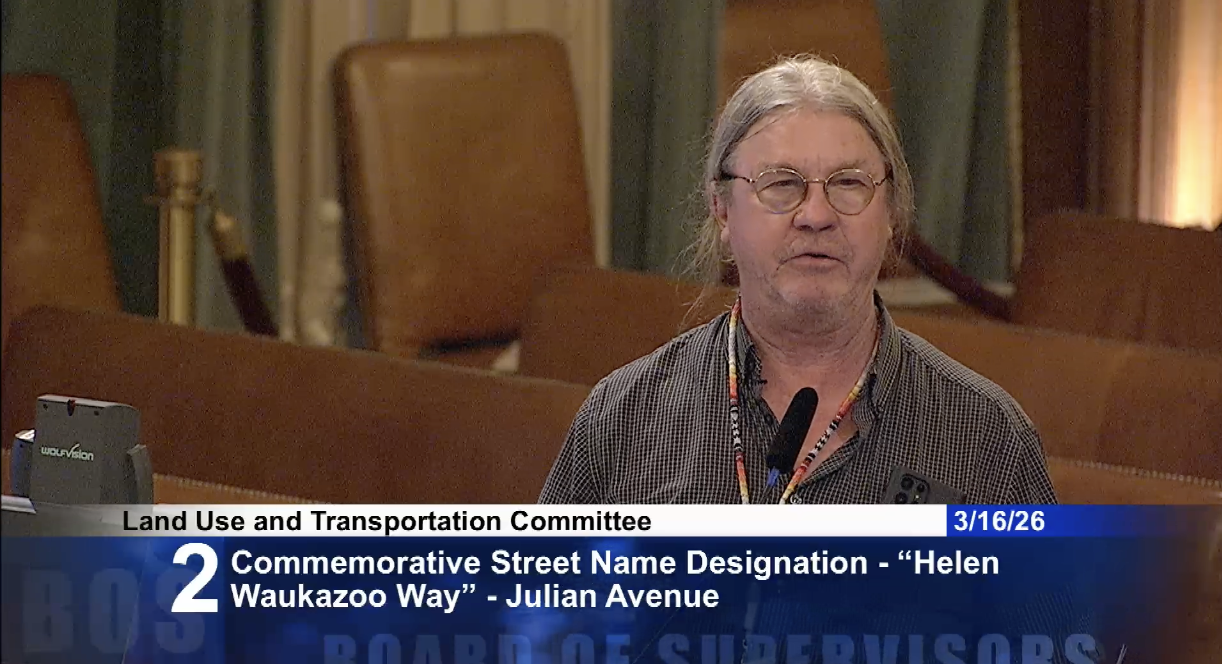
  • Helen Waukazoo Way naming delayed as sponsor requests more time to refine legislation


Affordable Housing Races the Clock at 1270 Mission

Why it matters: A 100% affordable housing project on one of San Francisco's busiest transit corridors needs the Board of Supervisors to act immediately — or risk missing a state funding window worth millions.

Supervisor Matt Dorsey, the item's sponsor, told the committee that the project requires renewal and modification of the expired 2017 Mission and 9th Street Special Use District, raising the height limit from 120 to 200 feet for the site. The project intends to use state low-income housing tax credits, and the developer must demonstrate code compliance before a May application deadline.

"This item renews and makes some changes to an expired special use district from 2017 that supports the production of a 100% affordable housing project intending to use state low-income housing tax credits," said Supervisor Dorsey. He explained the urgency plainly: "This project actually needs to demonstrate that it's code compliant in time for a May funding application. So it has been agendized as a committee report."

The committee report designation is the key procedural move — it sends the ordinance directly to the full board the following day, March 17, bypassing the typical two-week waiting period.

Veronica Flores from the San Francisco Planning Department confirmed that the Planning Commission heard the item on Feb. 26 and voted unanimously to adopt the ordinance, providing the committee with a clean recommendation.

Vice Chair Chyanne Chen asked to be added as a co-sponsor. "I'm also very pleased to see 100% affordable project. It's the preferred alternative for the project sponsor. And I'm supportive of this legislation to amend the special use district to make that the project is possible," she said.

Decisions: The committee voted 3-0 (For: Supervisors Mahmood, Dorsey, Chen; Against: none; Absent: Melgar) to recommend the ordinance to the full board as a committee report.

What's next: The full Board of Supervisors is expected to consider the ordinance on March 17. Approval would clear the way for the developer to submit the state low-income housing tax credit application before the May deadline.


SF Overhauls 1920s-Era Rules to Revive Sidewalk Flower Stands

The basics: San Francisco's sidewalk flower stand permit program dates to the 1920s and hasn't been meaningfully updated in decades. Under the old rules, permits could only pass between family members — a restriction that strangled new entry and left the vast majority of permitted locations dark.

Why it matters: The city once had more than 120 downtown flower stands. Today, only four remain. The mayor-sponsored ordinance opens this historically closed program to any licensed San Francisco small business, potentially creating over 100 new micro-enterprise opportunities on downtown corridors at a time when the city is fighting to reactivate street-level commercial life.

Esther Lee, Government Affairs Liaison for San Francisco Public Works, delivered the most detailed presentation of the morning. "Once, downtown alone had more than 120 outdoor flower stands in the early 1900s. Vibrant, fragrant hubs that became part of the city's character and gave countless immigrants and entrepreneurs an entry point into small business ownership. Unfortunately, today only four stands remain," she said.

Lee framed the legislation as part of a broader downtown recovery strategy. "Flower stands may seem like a small thing. However, this legislation is part of Mayor Lurie's commitment to getting the small things right on the path to San Francisco's broader comeback. Flower stands represent something bigger, the kind of vibrant street life that makes San Francisco worth coming back to."

Where things stand: Key reforms in the ordinance include:

  • Opening permitting to any licensed San Francisco business, eliminating the family-only transfer requirement

  • Clear succession rules where permits revert to the city upon a holder's death

  • Transferring permit approval from the Board of Supervisors to the Director of Public Works

  • Requiring 75% of goods to be cut flowers or plants

  • Minimum 35-hour weekly operating hours

  • Annual permit fees set at $1,299 plus an assessment fee

Supervisor Dorsey, a co-sponsor alongside Supervisors Sauter and Board President Mandelman, introduced two floor amendments requested by Public Works. The first strikes language that would have prohibited flower delivery. The second bans formula retail businesses from obtaining permits: "No business or person that engages in any retail sales or service activity that constitutes formula retail as defined in Planning Code Section 303.1 shall be eligible to obtain a sidewalk flower stand permit," Dorsey read into the record.

Vice Chair Chen praised the legislation's potential for small operators. "I support creating a simplified permit process with a low barrier to entry, especially for our micro enterprises. I think this legislation will create entrepreneurial opportunity and foster more diverse small business ownership," she said, and asked to be added as co-sponsor.

Decisions: The committee voted 3-0 (For: Supervisors Mahmood, Dorsey, Chen; Against: none; Absent: Melgar) to amend the ordinance and forward it to the full board as a committee report.

What's next: The amended ordinance heads to the full Board of Supervisors on March 17. The Office of Small Business has reportedly received dozens of inquiries from entrepreneurs eager to operate under the new rules.


"Ed Decker Way" Honors 45 Years of Queer Theater

Why it matters: Ed Decker founded the New Conservatory Theater Center 45 years ago and built it into a nationally recognized home for queer and allied theater — overseeing more than 50 world premieres, employing thousands of Bay Area theater professionals, and launching a groundbreaking youth HIV/AIDS education program.

Board President Rafael Mandelman presented the resolution to add the commemorative street name "Ed Decker Way" to the block of Oak Street between Van Ness and Franklin. He detailed Decker's legacy as a trailblazer in LGBTQ theater and progressive arts education. "In 1986, he created the landmark Youth Aware touring educational theater program to educate and raise awareness among young audiences about the impact of HIV AIDS, an effort that reached more than 800,000 students in the Bay Area and Northern California," Mandelman said.

Barbara Hodgin, Executive Director of the New Conservatory Theater Center, testified in public comment, describing NCTC as the premier queer and allied theater in San Francisco, housed at 25 Van Ness since 1984. She noted an outpouring of community support when news of the naming appeared in the Bay Area Reporter and announced that the organization plans to unveil the new street sign at its 45th birthday celebration on May 19.

Vice Chair Chen asked to be added as a co-sponsor, praising everyday heroes receiving recognition.

Decisions: The committee voted 3-0 (For: Supervisors Mahmood, Dorsey, Chen; Against: none; Absent: Melgar) to recommend the resolution to the full board.


Minor Items

  • Helen Waukazoo Way naming continued. A resolution to add the commemorative street name Helen Waukazoo Way to Julian Avenue — honoring the founder of Friendship House, a cornerstone institution for the Native American community — was continued to the call of the chair at the request of sponsor Supervisor Fielder, who is refining the legislation. Dr. Paul Masodi, Director of Research at the Native American Health Center, testified that empirical research documented by the California Department of Public Health demonstrates that Friendship House's cultural programs produce measurable health benefits. The committee voted 3-0 to continue.