
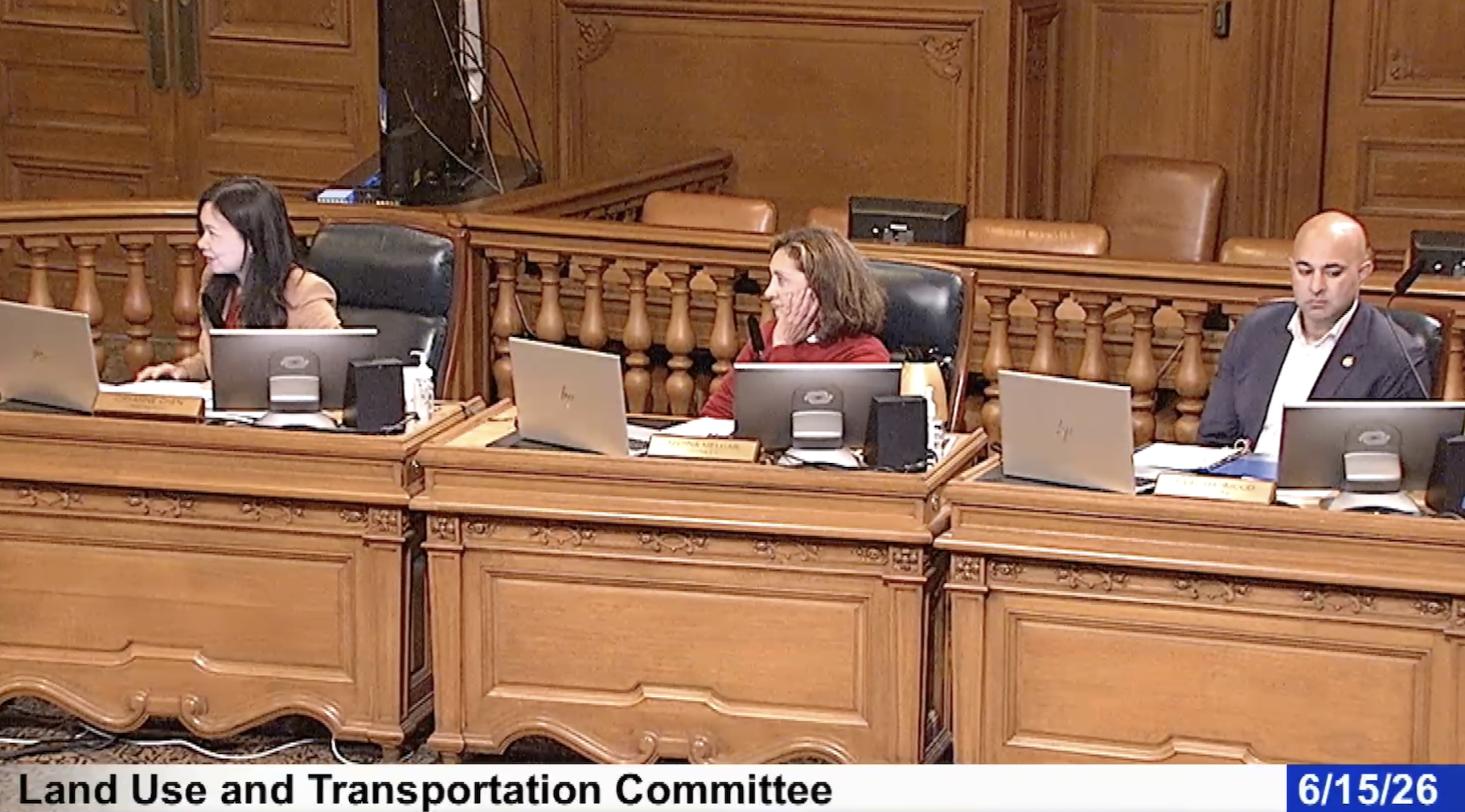
Land Use and Transportation Committee - Jun 15, 2026 - Regular Meeting
Land Use and Transportation Committee • San FranciscoJune 15, 2026
Locunity is a independent informational service and is not an official government page for this commission.We use AI-assisted analysis and human editorial review to publish information.
University Zoning Exemption Stalls Over Academy of Art History
The San Francisco Land Use and Transportation Committee hit pause on an ordinance that would have freed downtown universities from institutional master plan requirements, after neighborhood groups warned the measure could repeat the Academy of Art University's history of illegally converting housing. In a shorter first item, the committee unanimously advanced a street naming honoring a retired fire captain whose cancer prevention work became a national model.
University master plan exemption continued after SOMA Filipinas and Haight Ashbury Neighborhood Council raise alarms about reduced downtown oversight
"Tony Stefani Way" street naming advances to the full Board of Supervisors on a 3-0 vote, honoring the SFFD captain who founded a firefighter cancer prevention movement
Chair Melgar proposes narrowing the university exemption to the Art and Design Special Use District or adding a time limit
Neighborhood Groups Block Downtown University Exemption
The committee's longest and most contested item — an ordinance to exempt post-secondary educational institutions in C3 downtown districts and the Art and Design Educational Special Use District from Institutional Master Plan requirements — was continued to the June 29 meeting after public commenters and the committee chair raised concerns about the scope of the exemption.
The basics: Institutional Master Plans, or IMPs, require large educational and medical institutions to submit comprehensive development plans for public review before expanding. The ordinance, authored by Supervisor Matt Dorsey, would have eliminated that requirement for accredited universities operating in downtown C3-zoned areas, while maintaining it for institutions elsewhere seeking new entitlements.
Why it matters: The Academy of Art University, which operates multiple facilities in C3 districts, previously illegally converted rent-controlled housing into dormitories and institutional space — a violation that led to years of litigation. Neighborhood groups argue that removing the IMP requirement in downtown would strip away one of the few oversight tools that caught those abuses.
Where things stand: Madison Tam, legislative aide in Dorsey's office, presented the ordinance as a streamlining measure.
"IMPs function primarily as procedural delays. They do not grant approvals. They do not bind future commission decisions. And they do not meaningfully enhance enforceable community control over individual projects," she said.
Tam pointed to a guardrail in the legislation — institutions would be required to declare they won't demolish or convert housing and that development will not eliminate any rent controlled units.
Veronica Flores, Senior Planner with the San Francisco Planning Department, reported that the Planning Commission recommended approval on April 16 with amendments, including an expanded definition of accredited institutions and updates to the Art and Design Educational Special Use District.
The other side: Two public commenters pushed back sharply. David Woo, representing SoMa Pilipinas, urged the committee to strip the C3 district exemption entirely.
"Including C3 districts in the exemption would actually directly reduce oversight of the Academy of Art which has several locations including its main office in a C3 district," he said.
Woo also called for extending the perjury-backed protections to cover neighborhood-serving retail and legacy businesses — not just housing.
Calvin Welch of the Haight Ashbury Neighborhood Council traced the IMP requirement to the 1970s, when hospitals were condemning hundreds of housing units to expand. He supported the housing protections but challenged the logic of leaving small businesses exposed:
"What sense does it make to exempt institutions from displacing the small businesses that the Mayor says this ordinance is primarily aimed at benefiting?"
Decisions: Chair Myrna Melgar, Supervisor, District 7, sided with the public commenters on the C3 question. She drew on personal experience:
"I was on the Building Inspection Commission when our city attorney was going through all the litigation with the Academy of Art University. We had rent control, we had demolition controls. We had a bunch of laws that were just completely disregarded."
Melgar praised the student housing exemption and conditional use changes but said the downtown carve-out was too broad. She suggested either limiting the exemption to the Art and Design Special Use District or adding a time limit. The committee voted 3-0 to continue the item (For: Melgar, Chen, Mahmood; Against: none; Absent: none).
What's next: The ordinance returns at the committee's June 29 meeting, where staff and the sponsor will need to address the scope of the C3 exemption and potential small business protections to advance the legislation.
"Tony Stefani Way": A Street Named for a Firefighter Who Saved Thousands
The committee unanimously approved a resolution to designate Falmouth Street between Folsom and Shipley streets as "Tony Stefani Way," honoring the retired San Francisco Fire Department captain who founded the Cancer Prevention Foundation — a program that grew from a local effort into a national model for firefighter health.
Why it matters: Occupational cancer is the leading cause of line-of-duty death among firefighters. Stefani's foundation, born out of his experience at Station 1 on Folsom Street, pioneered early detection screening and health education that supporters say has saved thousands of lives nationwide.
Where things stand: Chief Dean Crispen, San Francisco Fire Department, presented the item, describing Stefani as a mentor who championed fitness, diet, and cancer awareness long before such efforts were mainstream in the fire service.
"We often concentrate on the 400 members that we've lost from this horrible disease over the last 10 years. But I think we need to talk about the lives that have been saved, and it's been thousands," Crispen said.
Sam Gebler, President of Local 798, testified that Stefani faced skeptics when he launched the foundation. "
Tony went against all odds to start this foundation when people told him it would be a waste of time, that he wasn't going to be successful. And he persevered through it, not because he wanted to or because he was seeking some fame or fortune. It was because he was doing the right thing, because he had true integrity," Gebler said.
Fire Commissioner Steve Nakajo, a 30-year commissioner, called the designation a "living memorial" and emphasized how Stefani's outreach transformed awareness of occupational cancer risks across the department.
Vice Chair Chyanne Chen, Supervisor, District 11, framed the naming as a civic reminder:
"By naming this block Tony Stefani Way, right next to the station he called home, we ensure that every person who walks down the street is reminded of a man who looked out for the people who looked out for San Franciscans."
Both Supervisor Bilal Mahmood and Supervisor Myrna Melgar asked to be added as co-sponsors.
Decisions: The resolution passed 3-0 (For: Chen, Mahmood, Melgar; Against: none; Absent: none) and was recommended to the full Board of Supervisors.