
Amundsen Ranch House Leaves Historic Inventory; Council Delays Lobbying Guide
City Council • La QuintaNovember 17, 2026
Locunity is an independent informational service and is not an official government page for this commission. All information is sourced from public footage and an analysis of official agendas with the aid of responsible, fact-checked AI. to report an error or omission.
La Quinta's Amundsen Ranch House is now off the city's historic resources inventory, ahead of its planned transfer to Turnbridge Equities under the Silver Rock agreement. The City Council voted unanimously Nov. 17, 2026, to receive and file the updated inventory, while residents and the La Quinta Historical Society pushed to commemorate the ranch's history on public land. Council also delayed adopting its legislative policy guide so it can address what one councilmember said could become a $1 million-a-year burden from AI-generated public records requests.
- Amundsen Ranch House removed from historic inventory after staff found it ineligible for landmark status; the vote was unanimous.
- Legislative policy guide continued by voice vote after debate over AI-driven Public Records Act requests.
- A resident pressed for Coral Mountain trail access, but developer fencing stays until grading is done, with no firm timeline.
Ranch House Exits Inventory Ahead of Transfer
Why it matters: The Amundsen Ranch House sits on Silver Rock land slated to transfer to Turnbridge Equities. With the house off the inventory, the debate shifts from preserving the structure to how, and where, the city tells its story.
Where things stand: Planning Manager Sherry Flores presented the citywide inventory update. Staff recommended three changes:
- Move two designated landmarks to a separate list. Both remain protected under Mills Act agreements, the California program that trades property tax relief for preservation commitments.
- Remove the Amundsen Ranch House after a technical memo found its integrity had diminished.
- Accept the memo's bottom line on the house.
"The detailed evaluation concluded that the property is not eligible for local landmark designation," said Flores.
Planning commissioners had raised concerns about the removal. Staff pointed to future revisions of the Silver Rock development agreement as the place to address them.
Mayor Linda Evans recounted the property's background. "The city did purchase that land back in the redevelopment days with the intent of having it developed as an economic driver," said Evans.
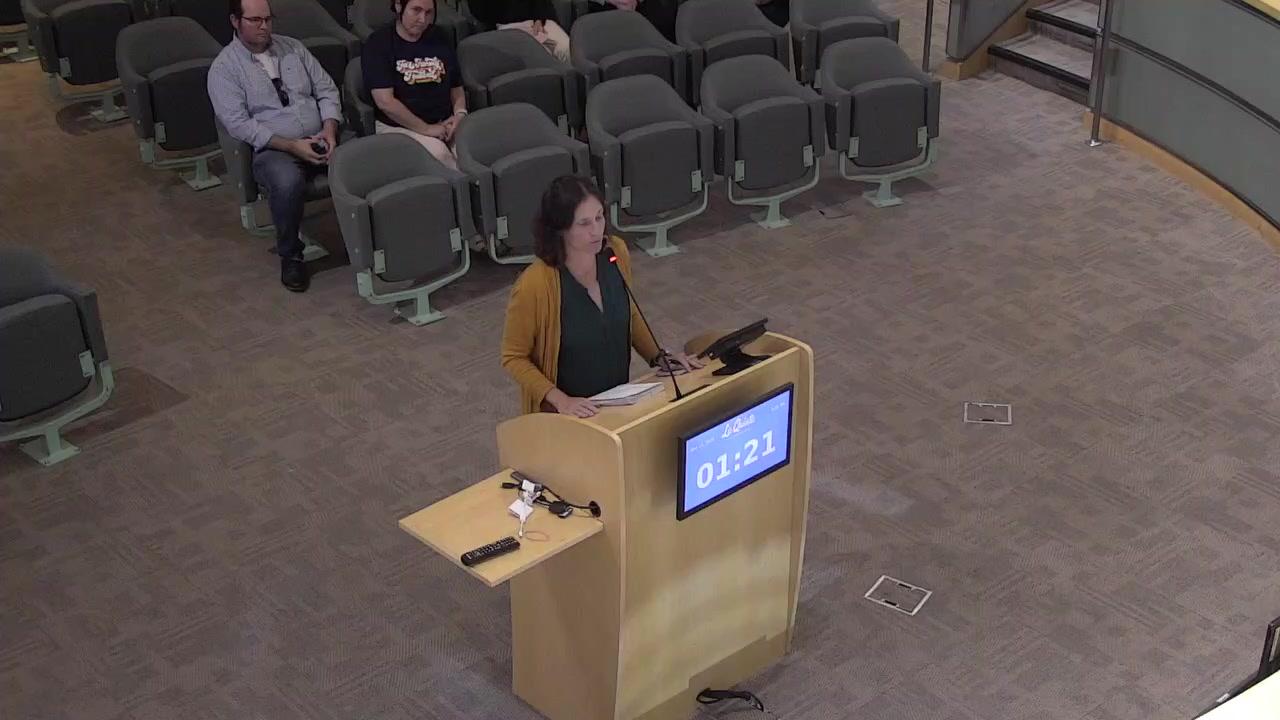
The other side: Public commenter Mary Mann said Planning Commission sentiment favored keeping the house historic. She called the developer's "request to take the Amundsen House off the historical register" a red flag. Mann urged the council to think harder about keeping city control and to consider landmark status for Coral Mountain.
Linda Williams of the La Quinta Historical Society accepted that alterations had changed the building. She asked for a different kind of recognition. "Historic preservation is the responsibility of the Historical Society," said Williams. She asked that the ranch-era history be commemorated on city property, such as Silver Rock Park, rather than at a private pro shop. "I prefer that it not be on private property," she said.
Councilmember Deborah McGarrey offered one option: a mural at the Silver Rock restroom building. "Why not maybe do a mural about that where you're able to tell a story," said McGarrey.
Decisions and stakeholder impacts: The motion to receive and file passed unanimously, according to Mayor Evans. Individual votes were not read aloud. Turnbridge Equities gains a cleaner path for the transfer. The two Mills Act landmarks keep their protections. Preservation advocates lost the listing but gained a public conversation about commemoration on city-owned land.
What's next: Watch the Silver Rock development agreement revisions. Staff identified them as the venue for remaining concerns, and for any commemoration commitment.
AI Records Requests Stall Lobbying Playbook
Why it matters: The legislative policy guide sets the positions La Quinta's lobbyists push in Sacramento and Washington. A councilmember said responding to public records requests could cost the city about $1 million a year, and the council wants that issue on the city's lobbying agenda.
Where things stand: Management Specialist Lori McKinley presented the update. Changes include:
- Six guiding principles
- New sections on artificial intelligence, the state and federal legislative cycle, and federal policy
- Removal of the year reference from the title
"We removed the year reference from the guide so it can serve as a living document from year to year," said McKinley. She said the city's state and federal lobbyists support the guide.
A councilmember said AI-generated Public Records Act requests are overwhelming staff and asked for guidance. The City Attorney proposed adding a bullet: "the city supports amendments to the California Public Records Act to require responsible use of artificial intelligence." He also noted that SB 1159 is already law. Council debated whether the language belongs under the transparency section or the AI section.
Decisions and stakeholder impacts: A motion to approve the guide as amended was withdrawn before a vote. That motion would also have authorized the mayor, mayor pro tem and city manager to send letters within the policy's scope. A motion to continue then passed by voice vote, with no opposition heard. Until the guide is adopted, the city's updated advocacy positions are on hold. Records requesters and transparency advocates should watch how the final language balances public access against staff workload.
What's next: The item returns at a future meeting so the city's state lobbyist can brief council.
Fencing Cuts Off Coral Mountain Loop
Why it matters: Temporary fencing at the Coral Mountain development is blocking a route that daily users rely on, pushing them onto the mountain itself.
Where things stand: Public commenter Mary Mann asked the city to secure a path around the fencing. She urged the city to work with the developer, the Coachella Valley Water District (CVWD) and other stakeholders.
At the mayor's request, City Manager Jon McMillen responded. He said he and the Public Works director visited the site and got one fence section pulled back, though not enough to restore a full loop. He explained the developer's position: "In order for their insurance policy to cover them, they have to be fully secured," said McMillen. He said the developer will expedite grading and then pull the fences back. There is no firm timeline.
The other side: Mann countered that the fenced area sits on the toe of the slope. She said the developer's documents state it "would not be encroaching onto the toe of the slope," and she questioned whether the fencing is consistent with the project's environmental impact report.
What's next: Restored access depends on the developer's grading schedule. No date was given.
Minor Items
- El Niño warning: Battalion Chief John Phillips of the Riverside County Fire Department said, "El Niño is here and it is strong." He cited a 79% chance of a stronger, wetter winter, urged residents to pick up sandbags at three stations and sign up for Alert La Quinta, Alert Rivco and Genesis Protect, and noted the Avenue 50 low-water crossing is in design.
- Library and museum: Branch Manager Sarah de la Cruz reported just over 93,000 patrons and about 173,000 items circulated from January through October. Museum Director Sharla Fox said the community is eager for a timeline on the cultural campus, which the mayor said is in design.
- Post office: Council members responded to a petition claiming city inaction. They said the city never owned the post office property, has no jurisdiction over it, and had proposed alternative sites; Congressman Ruiz was identified as having more jurisdiction.
- Habitat fee: Mayor Evans reported the Conservation Commission adopted a modified 25% fee increase. The underlying nexus study had gone 15 years without an update despite an eight-year requirement, and the commission will revisit the fee in 18 months.
- Procedural: A three-item consent calendar passed unanimously. The city attorney said a May 19, 2026, authorization to pursue anticipated litigation still stands, with defendants undisclosed.
Looking Ahead
The legislative policy guide returns with the state lobbyist and new Public Records Act language. The mayor said an update on the cultural campus is coming.