
Investigators Blame Refinery's Lax Contractor Oversight for Four-Day Martinez Fire
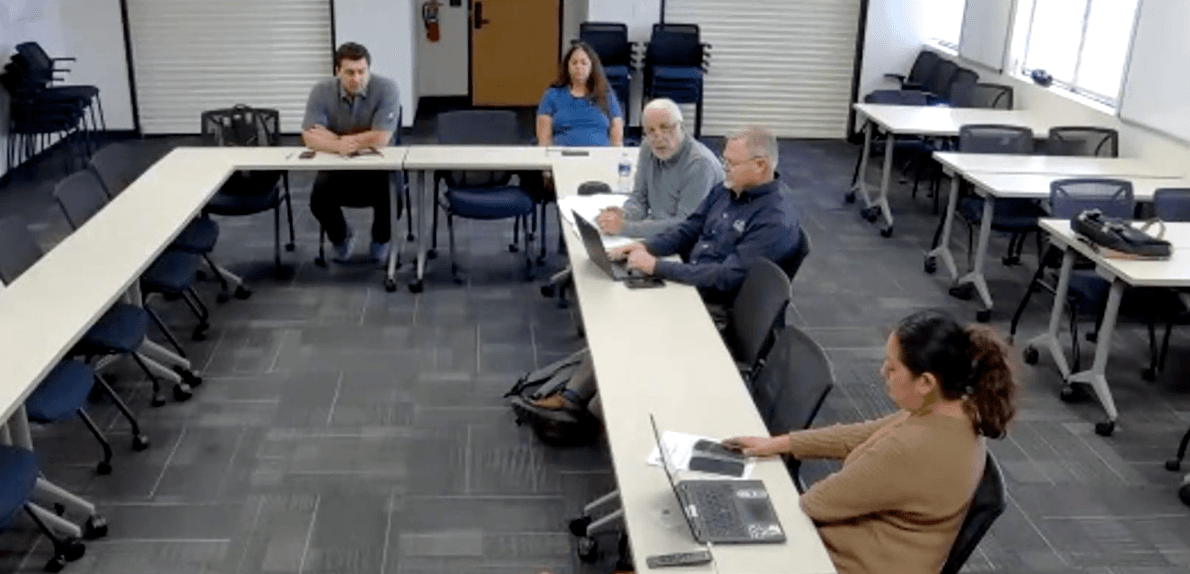
Industrial Safety Ordinance/Community Warning System Ad Hoc Committee • Contra Costa CountyOctober 8, 2025
Locunity is an independent informational service and is not an official government page for this commission. All information is sourced from public footage and an analysis of official agendas with the aid of responsible, fact-checked AI. to report an error or omission.
The Contra Costa County Industrial Safety Ordinance Ad Hoc Committee received two major reports Wednesday on the February 2025 Martinez Refining Company fire: independent investigators determined that the refinery's failure to properly oversee contract maintenance workers was the root cause of a four-day blaze that hospitalized six people, while a separate environmental assessment found no lasting contamination in the surrounding community's soil, air, or water. Both findings now set the stage for a full facility audit beginning on-site this week — with potential enforcement consequences.
- Investigators find MRC's inadequate oversight of contractors led workers to open the wrong flange, igniting a four-day fire
- Environmental risk assessment clears soil, air, and water near fire site — but cumulative health impacts from repeated industrial incidents remain an open question
- Full facility audit of Martinez Refining Company begins on-site Oct. 6, with enforcement authority under the Industrial Safety Ordinance
- Controversial SB 54 reference removed from final root cause report after public and oversight committee pushback
- Unidentified chemical odor reported Friday night across Crockett and Martinez, source still unknown
Wrong Flange, Four-Day Fire: How a Simple Maintenance Job Went Catastrophically Wrong
The centerpiece of Wednesday's meeting was a detailed, hour-long presentation from Tom Hanson and Rex Kenyon of JEM Advisors, who led the independent root cause investigation into the Feb. 1, 2025, fire at the Martinez Refining Company, owned by PBF Energy.
The basics: During a scheduled turnaround — the periodic shutdown when refineries perform major maintenance — contract steam fitters were tasked with installing a metal blind on a specific flange (Flange 3) to isolate a section of a hot oil system. Instead, they opened Flange 4, releasing approximately 600-degree catalytic cracker intermediate reflux fluid that immediately ignited. The fire burned for four days. Six workers were transported to hospitals for observation, but none required medical treatment.
Why it matters: The investigation drew explicit parallels to a fatal incident at a Houston refinery where workers opened the wrong flange just five feet from the intended one — a chilling reminder that the same class of error, under slightly different circumstances, can kill. The systemic failures JEM identified are not unique to Martinez and reflect broader industry challenges around contractor oversight during turnaround maintenance.
A Chain of Missed Warning Signs
Where things stand: JEM's root cause finding was unequivocal: MRC's operations and control of maintenance work was inadequate for the current maintenance contractor's capability level. Multiple layers of safety protocols failed simultaneously.
"We believe that MRC did not provide the proper operations oversight to ensure that the work was being done on the correct flange," said Tom Hanson, JEM Advisors lead investigator.
The failures cascaded. Handwritten permits-to-work were difficult to read and lacked critical process information. The job safety analysis prepared by the contractor received no review from MRC operations — a gap MRC attributed to co-employment legal concerns. A blind tag had been installed on the correct flange, but workers did not notice or use it. And a zero-energy verification performed a week earlier with the original contractor, Global Scaffolding, was never repeated when the job was transferred to a different contractor, Timec, on the day of the incident.
Rex Kenyon, JEM Advisors investigator, emphasized that workers ignored multiple physical cues that should have stopped them:
"When they tried to open up Flange 4, they realized that the power tools wouldn't work there and they had to use hand tools. There were so many things that should have triggered the thought process — hey, we brought these tools, now we can't use them. What changed?"
Hanson underscored why owner presence matters: "If you don't have somebody there that owns the plant and is very familiar and knows what's on the other side of that valve, somebody coming in to put a blind in, he's not familiar with the process. He's got no idea that there's 600-degree oil on the other side of that valve."
Recommendations and the SB 54 Controversy
JEM's recommendations call for increased MRC operator presence during contractor maintenance, operations review of contractor job safety analyses before permit approval, improved permit readability with enforcement of the 90-minute revalidation rule, reinforced blind tag procedures, improved zero-energy verification with worker involvement and personal lock requirements, and a complete review of MRC's processes for auditing contractor training, competency assurance, and journeyman certification.
A notable point of contention: a contributing cause in earlier drafts referencing the impact of SB 54 — a state refinery safety bill — on experienced turnaround worker availability was removed from the final report after objections from the public and the oversight committee. JEM noted that the root cause recommendations would address experience gaps regardless of their origin. The report received 66 oversight committee comments and 18 public comments, all addressed in appendices.
Supervisor John Gioia, chair, used a medical analogy to make the safety verification failures tangible for the audience: "I'd equate it when you're in a hospital room and in a medical procedure, sometimes it's like two medical professionals verifying — one reading back the medicine they're giving and the other one double checks and says, yes, that's correct."
Supervisor Shanelle Scales-Preston, member, asked whether the permitting system itself could be modernized: "Is there a way to do permits where it's to make sure they're legible, like if they were typed up on the computer, then print it to hand over a permit?"
The Worker's Training Background
During public comment, Tony Semenza, a public commenter, asked whether the investigation examined the steam fitter's training background, noting the job was straightforward and questioning whether certification-by-testing without a full apprenticeship may leave training gaps. Hanson confirmed the journeyman fitter had not completed the local apprenticeship program: "When we interviewed the journeyman fitter, he told us that he had worked in other places and that he had not been through the apprenticeship program here. He had tested in as a journeyman."
Heidi Taylor of Healthy Martinez praised the investigators' thoroughness but expressed disappointment that the SB 54 contributing cause was removed, calling it a politicization of the work. She advocated for listening to steelworkers — the operators on campus — rather than the Building Trades Council, and demanded accountability for MRC as a process safety management failure.
Kathy Ivers, a public commenter, raised a different concern: the conduct of a previous oversight committee meeting, where she said one individual was allowed four minutes to berate the hired investigators with profanity and accusations.
Enforcement Authority and What Comes Next
Supervisor Gioia pressed staff directly: "MRC — what's our sort of authority on requiring them to implement the changes?"
Nicole Heath, Contra Costa Health Hazardous Materials Division, outlined the county's enforcement path: "That would come through the Industrial Safety Ordinance. This is an evaluation that we were given the authority to do because this was a major chemical accident or release. We will be upholding them to completing their action plan."
She added that if regulatory violations under CalARP or the Industrial Safety Ordinance are identified and not corrected, enforcement may follow.
What's next: Heath told the committee a full facility audit is imminent: "I do want to remind everyone online and our supervisors that we do have the full facility audit coming up. The on-site portion for that will be starting on October 6th." That audit will provide a deeper assessment of MRC's contractor programs and will test whether the refinery is implementing the sweeping changes recommended by JEM.
No Lasting Contamination Found — but Cumulative Health Questions Linger
Jenny Phillips of TRC presented the final screening-level human health risk assessment for the February 2025 fire, which burned for four days and released hydrocarbons, diethanolamine, and sulfur dioxide.
Why it matters: Air samples from three locations were below short-term screening levels for all compounds except naphthalene, which exceeded only the short-term threshold. Surface water samples from the Martinez and Mallard reservoirs showed no detectable analytes. Soil samples from five locations showed metals within regional background ranges; silver and zinc slightly exceeded background at one site but remained well below residential health screening levels. Arsenic exceeded its screening level but fell within natural background — a common finding in California soils.
"Based on those findings, TRC did not recommend additional sampling or further evaluation of this event," said Phillips, TRC consultant.
Supervisor Scales-Preston expressed relief: "I'm happy to hear the results because I know a lot of community members have been very worried. So it's good to hear that our water, soil and air are below the levels that they need to be." She requested the final report link be shared for constituent distribution.
The Cumulative Exposure Question
Supervisor Gioia pushed beyond the reassuring topline, drawing attention to the gap between single-incident assessments and the long-term reality for communities near refineries:
"It is always really important to acknowledge that while in some incidents, depending on what was released, there may not be an increase above some established threshold — that's short term — there can be health impacts over cumulative exposure to various pollutants over a period of time."
Heath acknowledged the county is beginning to address this: "We do recognize a need to start looking into that question. And we have had discussions with our health officer on that." She said Contra Costa Health is in an early exploratory phase working with TRC and the county health officer to formulate a plan, and committed to bringing updates to a future ad hoc meeting.
What's next: The final risk assessment report will be posted publicly on the county website. The cumulative exposure study remains in early stages with no firm timeline.
Minor Items
- July 16 meeting minutes approved by voice vote, 2-0 (Supervisor Scales-Preston moved; Supervisor Gioia seconded).
- Unidentified chemical odor reported Friday night across Crockett and Martinez. Heidi Taylor of Healthy Martinez described a "horrible smell" believed to have originated in Benicia. Nicole Heath confirmed the county's hazardous materials office was not contacted directly but was notified by the Bay Area Air Quality Management District, which received complaints originating in Benicia. Supervisor Gioia committed to following up with the Air District — highlighting a gap in inter-agency complaint tracking near industrial sites.