
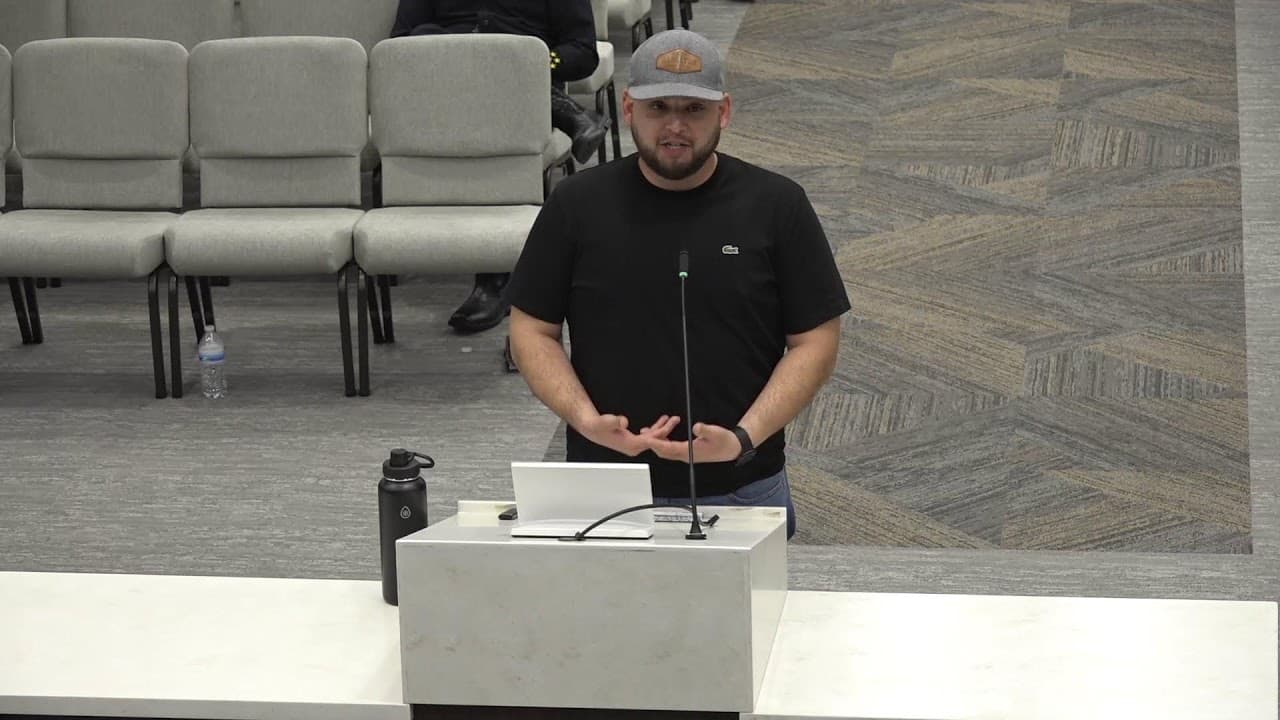
Indio Council Balks at 1.8M Sq Ft of Warehouses, Moves to Delay
City Council • IndioSeptember 17, 2026
Locunity is an independent informational service and is not an official government page for this commission. All information is sourced from public footage and an analysis of official agendas with the aid of responsible, fact-checked AI. to report an error or omission.
After a hearing that ran past midnight on Sept. 16, 2026, the Indio City Council made clear it will not accept the Oasis Specific Plan's 1.8 million square feet of light industrial space as proposed. Mayor Pro Tem Waymond Fermon moved to continue the item to a date to be determined, and the motion was seconded. The result had not been announced when a late speaker intervened and the meeting adjourned, so official minutes will confirm the outcome. Every member who spoke asked for changes, most of all less warehouse space.
- All five council members asked for changes to the Oasis plan, most pressing for less industrial space
- Motion to continue moved and seconded; the vote outcome is unconfirmed pending minutes
- Applicant pitches 1,272 permanent jobs and $861,000 a year in net city revenue; council and residents call the figure small
- Staff's claim of 31,505 daily trips versus 99,100 under current zoning arrived days before the hearing, drawing skepticism
- 105 emails opposed, 6 supported; dozens of residents and an environmental law firm urged denial
Council to Oasis: Come Back Smaller
Why it matters: The Oasis Specific Plan, from BH Properties, would reshape North Indio with up to 3,240 homes and 1.8 million square feet of light industrial space. The Planning Commission recommended denial 3-2 on May 27. The council did not overturn that recommendation, and it did not adopt it.
Where things stand: Councilmember Oscar Ortiz argued the applicant's revisions since the Planning Commission hearing were cosmetic. "There's still no significant change in the warehouse space besides bringing it down in height to a size that is already a legal requirement under the current zoning," said Councilmember Oscar Ortiz. He also said the 88% emissions-reduction comparison reached the council only two days earlier and could not be verified. He asked the applicant to return with apples-to-apples comparisons and less warehouse space.
Councilmember Glenn Miller questioned the fiscal case but stopped short of rejecting it. "The $861,000 to me is not a lot of money when you start talking about the impacts," said Councilmember Glenn Miller. He added: "I'm not willing to throw it out until we have more information."
Councilmember Benjamin Guitron IV said something will eventually be built on the site. "What will be built is how it affects our quality of life for our community," said Councilmember Guitron, who added that "we have to have a balance."
Fermon offered the most detailed list of conditions. He asked for reduced light industrial space, more affordable housing than the 5% offered, more engagement with SunLine Transit and the school district, and infrastructure first. "We have to massage this project, bring it back, and not focus on light industrial," said Mayor Pro Tem Waymond Fermon.
Mayor Elaine Holmes set the boundaries of the debate. "I think that 1.8 of industrial is just — it's daunting," said Mayor Holmes. Then: "I also do not want to give up on this project."
Decisions and stakeholder impacts: Fermon moved to continue the item and have it return to the council rather than the Planning Commission. An unidentified member seconded, and Holmes called the vote. No tally was announced before adjournment.
The procedural route matters. "A significant reduction in industrial space would have to go back to the Planning Commission," said the City Attorney, while noting the council has discretion. Fermon preferred to bring a revised plan straight back to the council. For BH Properties, the message is to shrink the industrial footprint. For opponents, the fight is paused, not won.
What's next: The item returns at a date to be determined. Watch whether a revised plan goes back to the Planning Commission first.
The Pitch: Jobs, Fees and Fewer Trips
The basics: A specific plan sets land-use "envelopes" for a large area. Individual buildings still need separate approvals. Oasis would replace current zoning under the Gateway Specific Plan, which allows mixed use and regional commercial development, with an estimated 1,300 units and 4.4 million square feet.
Where things stand: The applicant team cited 2,150 construction jobs, 1,272 permanent jobs, $613 million in project spending and a $150 million annual economic impact. Its offered benefits include:
- 3 acres for an Imperial Irrigation District (IID) substation
- Land, a travel lane and a bike lane on Avenue 42
- Storm drain upgrades
- 1,500 square feet for a police presence
- 3 acres of parkland
- A $3.5 million share of the Monroe interchange
"Indio has the people, but you don't have the jobs yet," said Bob Mara, an analyst with Greater Palm Springs Market Intel. Mara said Indio holds 22% of the valley's population but 12% of its jobs.
Presenter Jeremy of EPD said current zoning would generate about 99,100 daily trips, compared with 31,505 under Oasis. That figure includes truck traffic equal to 1,720 passenger-car trips, or about 343 trucks. Measured against the general plan's 147,700 trips, staff called Oasis a 79% reduction. Staff also acknowledged that the environmental impact report (EIR) found significant, unavoidable air quality and greenhouse gas impacts. That comparison slide was never shown to the Planning Commission. "What I would like to see and what I'm used to seeing on large projects are assumptions," said Mayor Holmes.
The applicant said it cut building heights from 100 feet to 65 feet, widened freeway setbacks to 35 feet and raised landscaping from 10% to 15%. On housing, the applicant made a notable concession. "The likelihood that we build 3,240 homes here is remote," said John, an applicant team representative. An equivalency standard could swap homes for commercial uses such as a hotel.
The other side: The applicant acknowledged it cannot say what will be built. The Monroe interchange and the IID substation must come first, and build-out could take about 10 years. "BH Properties would have to come back with specific projects," said City Manager Jonathan Nicks. Asked whether any existing Indio warehouse compares in scale, Nicks replied: "Not of that size." Community Development Director Brian Halvorson noted that the Clinton Business Park allows 300,000 to 400,000 square feet of industrial space.
Staff projected about 2,060 students from the site. When asked about school district engagement, Mara said that was not his role.
A Packed Room Says No to Warehouses
Why it matters: Opposition was broad and organized. Speakers came from Sun City Shadow Hills, Four Seasons at Terra Lago and neighborhoods near Jackson Elementary. The clerk reported 105 opposing emails and 6 supporting. Apart from the applicant team, no in-person supporters were evident.
Where things stand: Many speakers framed their objection narrowly. "We're against the idea of warehouses," said Jerry Conrad, former board president of Sun City Shadow Hills, who said residents oppose warehouses, not development.
Speakers raised several concerns:
- Diesel emissions and asthma
- Prevailing winds carrying pollution east
- Congestion on I-10 and Golf Center Parkway
- Fire risk
- Falling property values
An employee of the Coachella Valley Mosquito and Vector Control District said the district is the closest property to the site and that truck traffic would slow its technicians.
Others went after the economics. "The less than $1 million in net positive to our general fund isn't worth the permanent long-term damage," said Jonathan Becerra, a local organizer. Kevin Ford, a North Indio resident, warned that approval alone "creates value, and that value can be sold with or without a tenant or a plan." Cecilia, a public commenter, challenged the applicant's Eastvale case study and the wages of warehouse jobs.
The legal angle: Carly Steele, an attorney representing Supporters Alliance for Environmental Responsibility (SAFER), said approval would require a statement of overriding considerations. Under the California Environmental Quality Act (CEQA), that is a formal finding that a project's benefits outweigh its unavoidable environmental harms. Steele also alleged EIR deficiencies in transportation, noise, hazards and biological resources, and asked the council to deny the project or revise the EIR. Planning Commissioner Megan Scarborough Echol also spoke against the project.
Decisions and stakeholder impacts: Nearby homeowners, the vector control district and environmental groups won a delay and a council aligned with their core demand to cut warehouse space. The applicant keeps a path forward, but it now faces two pressures: residents who distrust promises without a named tenant, and a legal record that SAFER has signaled it will contest.
What's next: Residents faulted the late agenda placement and limited outreach. Michael Slater, a public commenter, asked that the item return at a special daytime meeting with better notice.
- License plate readers: Barry Fisher, a retired crime laboratory director, urged written limits, data retention rules and audits for the Indio Police Department's readers. "We need rules, limited access, appropriate data retention, meaningful audits, accountability," he said. Another commenter, Sid, said he came to speak against Flock. No action was taken.
Looking ahead: The Oasis Specific Plan returns at a date not yet set. Council members said they want verified trip and emissions data, a smaller industrial footprint, more affordable housing and engagement with schools and transit. Several members also said future agendas should carry no more than two major items.