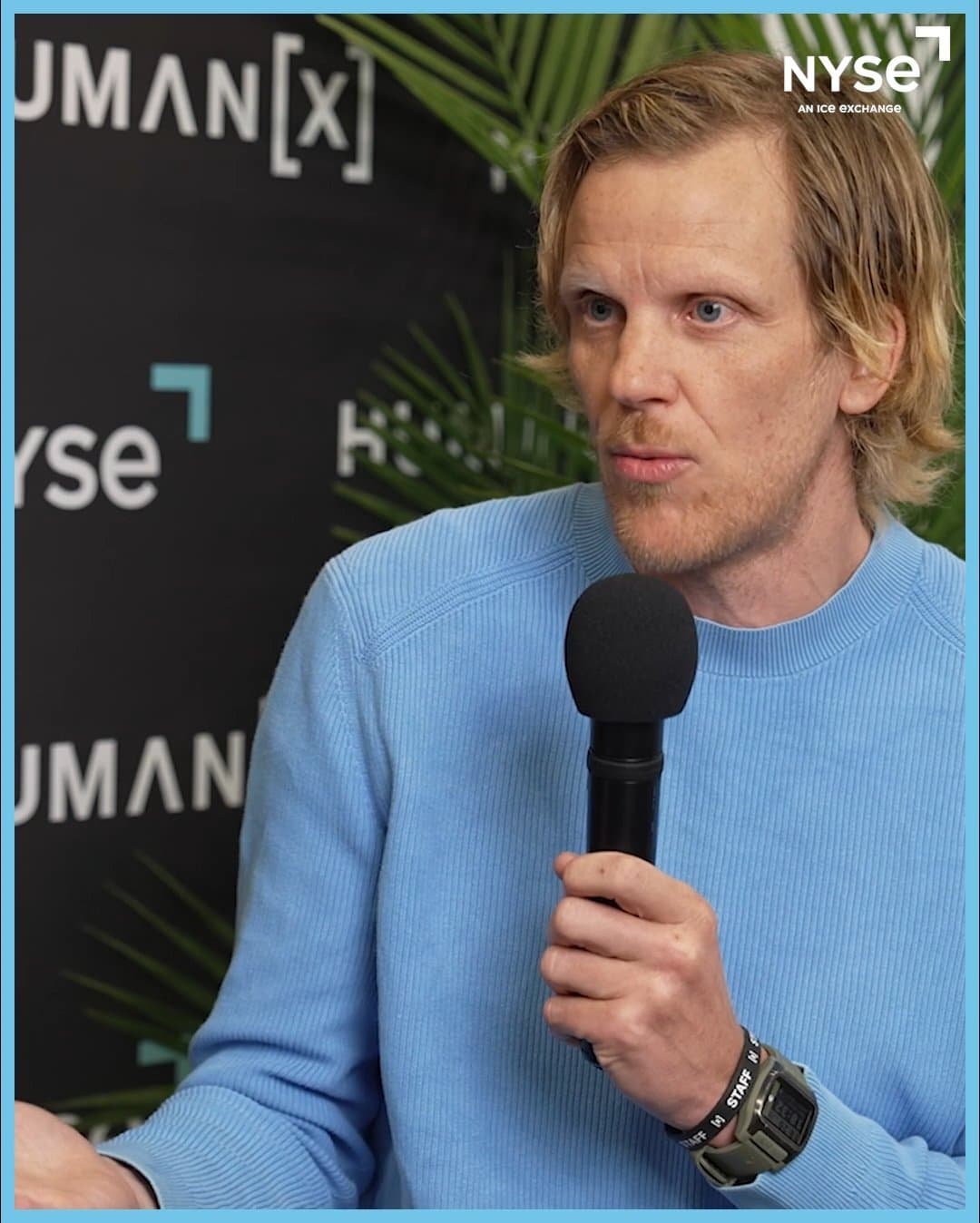
HumanX 2026: Nest Campus CEO Peter Gilmer on Partnership with HumanX
HumanX • United NationsSeptember 22, 2026
Locunity is an independent informational service and is not an official government page for this commission. All information is sourced from public footage and an analysis of official agendas with the aid of responsible, fact-checked AI. to report an error or omission.
NestX: AI Meets Climate Action in New York's Biggest Climate Week Event
The largest event at New York Climate Week is getting an AI upgrade. Peter Gilmer, CEO of the Nest Campus, announced NestX — a new partnership between his 10,000-attendee climate conference and HumanX, the AI conference — designed to be the first large-scale platform connecting AI startups, investors, and corporate sustainability leaders around climate and resilience solutions during Climate Week, set for Sept. 22–24.
- Nest Campus and HumanX launch NestX, a dedicated AI-climate track targeting 10,000 attendees during Climate Week NYC
- AI projected to cut global emissions by roughly 15% by 2035, but data center energy demands remain the "elephant in the room"
- Tech-enabled matchmaking at unprecedented scale aims to connect startups, investors, and Fortune 500 sustainability officers across 900+ competing Climate Week events
- More than 8,000 free tickets will be available through an application process
Biggest Investment Meets Most Powerful Technology
Why it matters: Climate Week in New York hosts more than 900 events, but organizers say too much networking is left to chance. NestX aims to change that by pairing HumanX's matchmaking technology with the Nest Campus's massive climate audience — creating a concentrated marketplace for deals, partnerships, and policy conversations at the intersection of AI and resilience.
Where things stand: Peter Gilmer, CEO of the Nest Campus, framed the partnership around what he called the "resilience economy" — a concept he said is intentionally broader than climate alone.
"So that's a broader capture than just climate. The resilience economy can consider things like supply chain security and AI and all kinds of things that don't as easily fit under the climate banner," said Gilmer.
He invoked BlackRock CEO Larry Fink's characterization of the green economy to make the case for the merger: "Larry Fink called the resilience economy or the green economy the biggest investment opportunity of our time. And what we want to do is bring in AI, which is arguably the most powerful technology of our time, together."
The three-day event, scheduled immediately after the UN General Assembly, will feature a startup showcase spanning seed-stage companies to pre-IPO ventures, corporate solution provider exhibitions, thought leadership sessions, and algorithmic matchmaking tools modeled on HumanX's platform. All 10,000 attendees will be housed on a single tech platform using recommendation algorithms to facilitate connections between investors, startups, and corporate partners.
Gilmer noted the conference has already secured speakers who are CEOs of companies that have raised $1 billion or more in areas including nuclear fusion, carbon capture, and sustainable aviation fuels.
"Too much is left to chance during Climate Week. It's a sea of 900 other events, which kind of sounds nuts," he said.
The Elephant in the Room: AI's Energy Problem
Why it matters: The partnership forces a confrontation with one of the central tensions in climate-tech: AI can accelerate decarbonization, but its own infrastructure — particularly data centers — is driving enormous new energy demand.
Where things stand: Gilmer cited projections that AI applications could reduce global emissions by approximately 15% by 2035 through advances in transport decarbonization, electrification, carbon capture, and carbon-to-fuel conversion for aircraft. But he was candid about the other side of the ledger.
"The elephant in the room for AI is the energy requirement for the data centers," Gilmer said. "It's solving the problem, but it's also creating this massive energy requirement on the other end. And we want to make sure that both of those conversations are being had."
He acknowledged the technology itself remains a work in progress: "AI is not a finished product. It's extremely problematic and we're not running away from that."
Gilmer argued that engagement, not avoidance, is the only viable path: "The AI train has left the station, like it or not. And so we want to make sure that we're utilizing it in a way that serves the climate."
The conference is designed to bring the right mix of stakeholders — policymakers, private sector leaders, innovators, and capital providers — into the same room to wrestle with both AI's promise and its problems.
Access and Tickets
More than 8,000 of the conference's tickets will be free through an application process, with premium tiers available for additional access. Applications and information are available at thenestclimatecampus.com.