19th Meeting - 63rd Session of Human Rights Council
Human Rights Council • United NationsSeptember 21, 2026
Locunity is an independent informational service and is not an official government page for this commission. All information is sourced from public footage and an analysis of official agendas with the aid of responsible, fact-checked AI. to report an error or omission.
Three Crises, One Council: UN Body Confronts Repression in Venezuela, Nicaragua, and Russia
The U.N. Human Rights Council devoted its 19th meeting of the 63rd session to three of the Western Hemisphere's and Europe's most acute human rights emergencies — each escalating in distinct and alarming ways. From Venezuela's denunciation of the Rome Statute to Nicaragua's formal abolition of elections to the first-ever U.N. report documenting Russia's global apparatus of transnational repression, the session underscored how authoritarian consolidation is outpacing the international community's tools to respond.
- Nearly 400 cases of Russian transnational repression documented in the first-ever U.N. country-specific report on the practice, with Special Rapporteur calling for a binding international convention
- Nicaragua abolishes elections and bans opposition participation as OHCHR documents the near-total shutdown of civic space, with 5,539 organizations closed since 2018
- Venezuela Fact-Finding Mission warns hundreds remain arbitrarily detained despite limited releases, and flags Rome Statute withdrawal as a blow to accountability
- Indigenous leader Brooklyn Rivera confirmed dead in Nicaraguan custody after three years of incommunicado detention, drawing broad international condemnation
- A cross-regional group of 46 countries rejects Nicaragua's democratic collapse, while China defends the Ortega government's sovereignty
- Russia's new Federal Law 284-FZ creates "civic death" for exiles, stripping substantive citizenship rights while the Rosfin Monitoring register ripples through global banking systems
Russia's 'Rule of Fear' Goes Global
The basics: Mariana Katzarova, Special Rapporteur on the situation of human rights in the Russian Federation, presented "Nowhere Is Safe: Exporting the Rule of Fear Beyond Borders" — the first-ever U.N. country-specific report dedicated to transnational repression. The report documents nearly 400 cases. Russia's delegation was absent, continuing its refusal to cooperate with the mandate.
Why it matters: The report reveals that transnational repression is not a series of isolated incidents but a systematized state apparatus. Russia now ranks third globally for direct physical attacks on exiles, behind only China and Türkiye, and the mechanisms documented — from Interpol abuse to digital compromise campaigns targeting 300-plus European politicians — affect governments, financial institutions, and diaspora communities far beyond Russia's borders.
Where things stand: The findings paint a picture of repression industrialized. Sentences in absentia against Russians abroad surged from four in 2022 to 157 in 2025. At least nine FSB departments are involved. The Rosfin Monitoring register, containing over 21,500 individuals — nearly one in four prosecuted on politically motivated charges — automatically feeds global compliance databases, effectively weaponizing the international financial system against dissidents.
"They retain the duties of citizenship and lose most of its substance," said Katzarova, describing Federal Law 284-FZ, enacted in August 2026, which authorizes 14 categories of restrictions on listed persons abroad. She called it "civic death."
The CIS wanted list, she reported, has no vetting procedure for politically motivated cases, and "roughly half of the Russia-related cases reviewed by Interpol's oversight body in 2024 were found non-compliant with its constitution."
Quoting human rights defender Natalia Arno, Katzarova underscored the lived reality: "We should not lose vigilance. Even after leaving Russia, it does not forget about us."
The other side: Belarus and Mali defended Russia and opposed the country-specific mandate. Venezuela objected to country-specific mandates generally. Eritrea called for consistent standards. Russia itself was absent and has never cooperated with the mandate.
A binding convention on the table: Katzarova's most consequential recommendation was a call for "a binding United Nations Convention on Transnational Repression" — what would be the first international instrument specifically addressing how states pursue critics beyond their own borders. Broad support came from the EU, Nordic-Baltic states, Switzerland, Ukraine, the U.K., Canada, and dozens of others. Multiple states posed concrete questions about protecting exiles, preventing Interpol misuse, safeguarding digital rights, and ensuring accountability.
What's next: The interactive dialogue was suspended and will continue in the afternoon session. The proposed convention would need to navigate complex multilateral negotiations, but the breadth of state support expressed during the morning session suggests significant political will.
Nicaragua: Democracy's Disappearance
Why it matters: Nicaragua has become the first country in the Western Hemisphere to formally abolish elections, a precedent that OHCHR officials warned could embolden authoritarian regression globally.
Where things stand: Maarit Kohonen Sheriff, Director of the Global Operations Division, Office of the High Commissioner for Human Rights, presented the High Commissioner's report documenting eight years of escalating repression since the 2018 crisis. The numbers are staggering: elections first postponed to 2028 and then effectively abolished; the governing party controls all 153 municipalities; 5,539 civil society organizations shut down since 2018; 56 media outlets closed; and at least 46 people remain arbitrarily detained, with 29 qualifying as enforced disappearances.
"The silence and fear within the population have taken root as a consequence of repression that has reached all sectors," Kohonen Sheriff told the Council.
The report documented that out of 185 plenary votes in the National Assembly analyzed during the review period, "not a single dissident voice was recorded, nor a single abstention." The latest constitutional reform extends presidential terms and bans opposition participation outright.
Brooklyn Rivera's Death in Custody
The death of indigenous Miskitu leader Brooklyn Rivera — confirmed after three years of incommunicado detention — became a focal point. Kohonen Sheriff noted that family members who sought his remains then faced their own repression, illustrating a cycle in which "those who seek truth and justice" face retaliation.
Organized International Response
A cross-regional group of 46 countries, led by Costa Rica, roundly rejected the regime's actions and called for unconditional prisoner releases, restored democratic participation, and resumed cooperation with OHCHR. The EU, Nordic-Baltic states, Benelux countries, and numerous individual states joined the condemnation. China defended Nicaragua's sovereignty and opposed the mandate. Nicaragua's own delegation was absent.
Civil Society Sounds the Alarm
Hillel Neuer of United Nations Watch challenged the Council directly: "How could you place a regime that shut down thousands of NGOs in charge of NGOs? How could you elect a regime that itself bans elections?" — a reference to Nicaragua's recent election to the U.N. Committee on NGOs.
Lusben Taylor Pekitle, an indigenous Mayanga leader speaking through Peace Brigades International, denounced forced displacement from ancestral lands, 63 mining sites operating on indigenous territories without consultation, and the arbitrary detention of eight forest guards and four indigenous leaders.
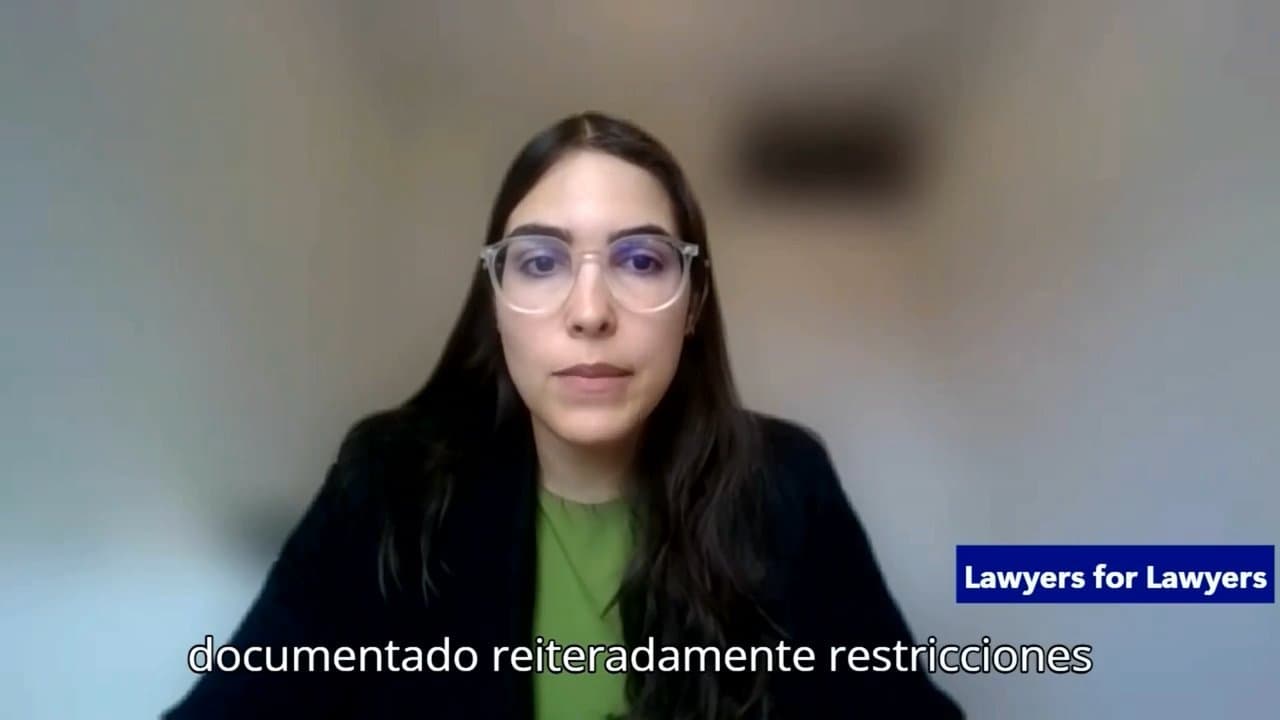
Multiple NGOs — Right Livelihood, CEJIL, Aula Abierta, OMCT, Lawyers for Lawyers, the International Bar Association, and FIDH — documented the removal of more than 2,000 lawyers from the registry, indigenous land dispossession, gender-based violence, and what they described as the worst academic freedom conditions globally.
Decisions: Mathias Behnke, OHCHR Regional Director interim for the Americas, concluded the dialogue with a warning: "Nicaragua is setting an alarming precedent about the limits on the exercise of power at the regional and global levels."
What's next: The Council will consider continued monitoring mechanisms. With Nicaragua refusing to engage — its delegation absent entirely — the question for member states is whether existing tools are sufficient to address what amounts to the complete dismantling of democratic governance.
Venezuela: Mandate Renewal on the Line
Why it matters: The Independent International Fact-Finding Mission on Venezuela remains the Council's primary accountability mechanism for alleged crimes against humanity in the country. Its mandate renewal, expected later this session, will determine whether independent investigation continues at a moment when Venezuela has moved to sever ties with the International Criminal Court.
Where things stand: The dialogue revealed a familiar but deepening divide. Western and Latin American democracies — Germany, Ireland, Switzerland, the U.K., Poland — urged unconditional release of all political prisoners, judicial independence reforms, and mandate renewal. Venezuela's allies — Belarus, China, Iran, Cuba-aligned states, Zimbabwe, Burundi, Yemen, Saudi Arabia, Ethiopia, Egypt, and Mozambique — rejected the country-specific mandate as a violation of sovereignty and called for the lifting of unilateral sanctions.
Sofía Macher, Chairperson, Independent International Fact-Finding Mission on Venezuela, acknowledged some recent prisoner releases but was unsparing in her assessment: "Despite the releases, hundreds of people remained arbitrarily detained, and we have also seen new detentions which reproduce already documented patterns."
She flagged Venezuela's withdrawal from the Rome Statute as a direct threat to justice: "The denunciation of the Rome Statute casts doubt about the process on accountability."
NGOs Push for Stronger Mandate
Civil society groups painted a detailed picture of ongoing repression. FIDH cited 300 political prisoners and a continuing repressive legal framework. Aula Abierta documented 38 legal instruments restricting civic space, including a law on electrical services carrying 16-year prison sentences, and counted over 400 political prisoners. The International Commission of Jurists condemned the Supreme Court reform as vulnerable to political manipulation.
Amnesty International and multiple organizations called for a two-year FFM renewal with sufficient resources and raised questions about evidence preservation for potential future prosecutions. Indigenous rights were also highlighted, with reports of 390 Yanomami deaths from malaria linked to illegal mining and continuing impunity for past massacres.
What's next: The mandate renewal vote will be the key test. Macher called for the judiciary and prosecution service to be reformed through transparent, merit-based processes — a structural change that would require political will currently absent in Caracas.
Minor Items
- Session logistics: The Russia interactive dialogue was suspended mid-session and will continue in the afternoon.
- Procedural note: Vice-President Tsegab Kebebew Daka presided over the meeting and managed transitions between the three Item 4 dialogues.