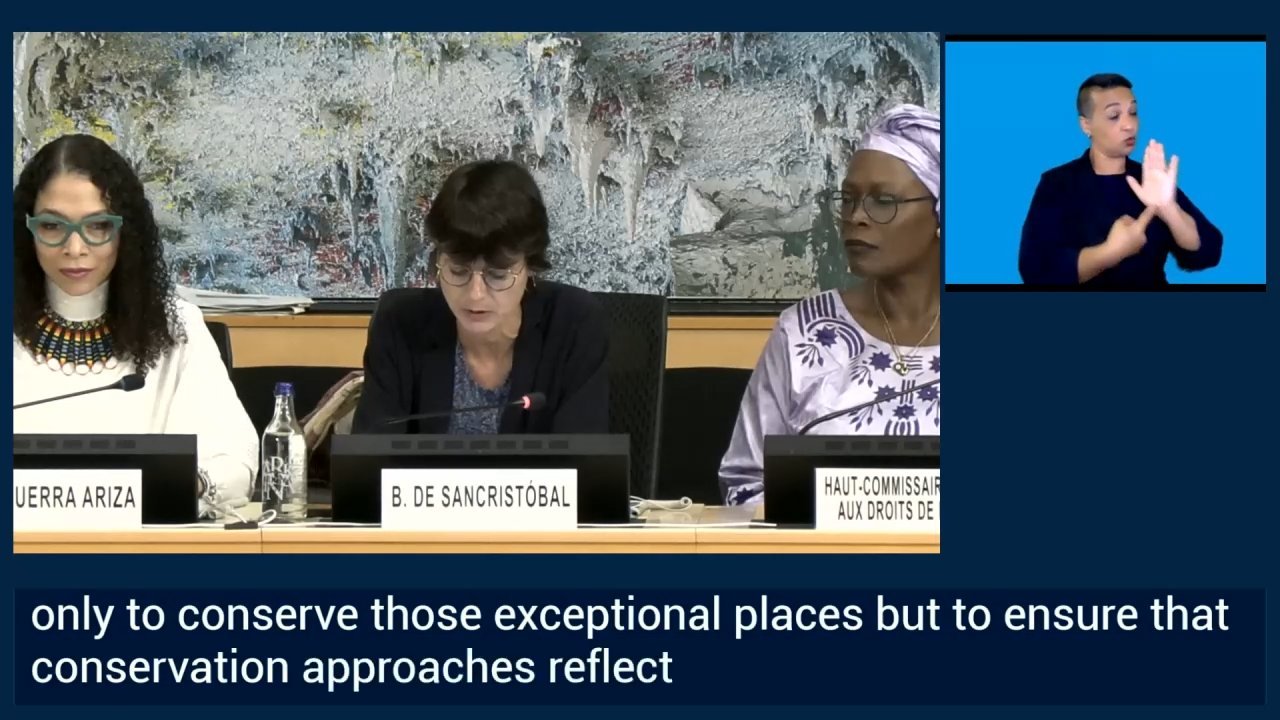
23rd Meeting - 63rd Session of Human Rights Council
Human Rights Council • United NationsSeptember 23, 2026
Locunity is an independent informational service and is not an official government page for this commission. All information is sourced from public footage and an analysis of official agendas with the aid of responsible, fact-checked AI. to report an error or omission.
Indigenous Leaders Demand Binding Consent in UNESCO Heritage System
The U.N. Human Rights Council's annual panel on Indigenous peoples' rights laid bare a fundamental tension at the heart of global heritage preservation: roughly one quarter of the world's UNESCO World Heritage Sites sit on Indigenous lands, and many were inscribed without the consent — or even the knowledge — of the people who have lived there for centuries. The session then pivoted to a contentious Item 4 general debate that ended with 13 rights of reply from 11 delegations trading accusations on Kashmir, Cyprus, wartime history, and political imprisonment.
- Panel demands binding free, prior, and informed consent before any new World Heritage nominations on Indigenous lands
- Indigenous leaders document murder, forced relocation, and cultural destruction at heritage sites from Tanzania to Australia
- Mexico presents 30-year Wixárika Route collaboration as a model for Indigenous-led heritage governance
- UNESCO acknowledges sites inscribed decades ago without due diligence, pledges review
- India-Pakistan, Türkiye-Cyprus, and China-Japan clash in extended rights of reply to close the session
The basics: The 1972 World Heritage Convention created the framework for designating and protecting sites of "Outstanding Universal Value." But the convention predates the 2007 U.N. Declaration on the Rights of Indigenous Peoples (UNDRIP), and its governance structures were not designed with Indigenous participation in mind. The panel, held under Council Resolutions 18/8 and 16/13, brought together UNESCO officials, Indigenous leaders, and state delegates to confront that gap.
Get reports in your inbox
Follow this commission for free and get the next report delivered by email. You'll be able to access the full archive, get real-time updates, and track the topics or keywords you care about most.