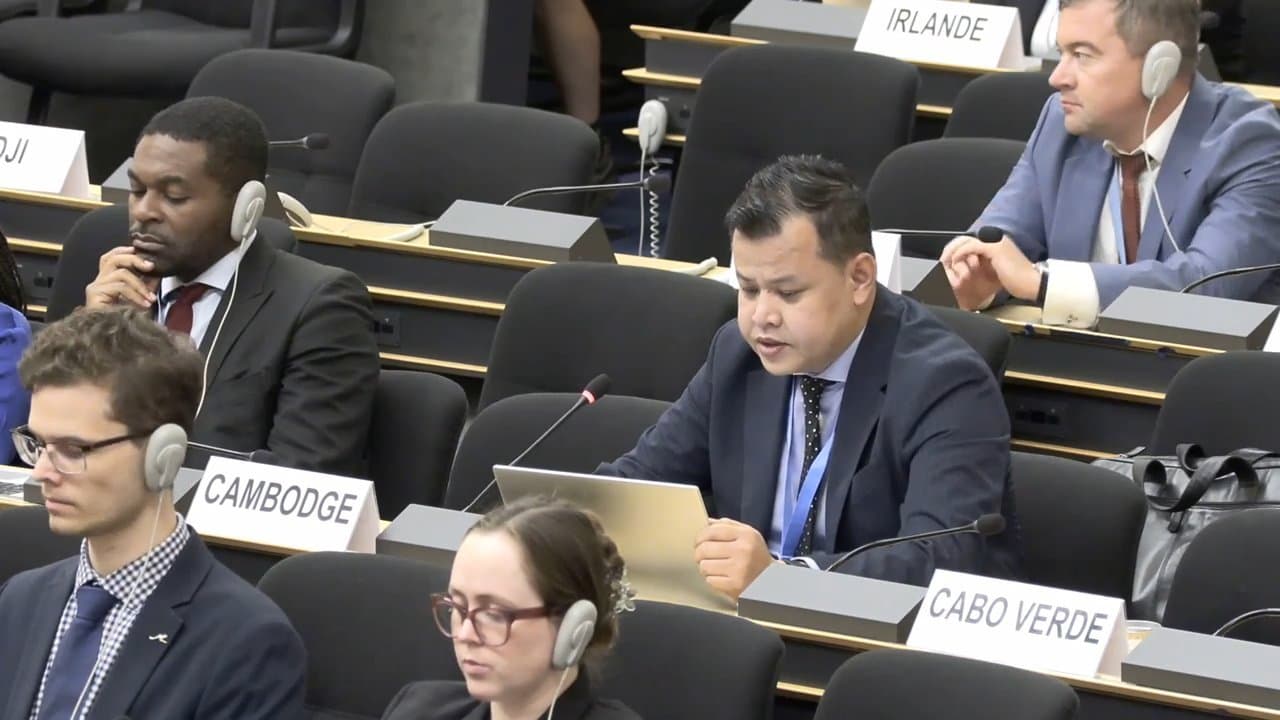
24th Meeting - 63rd Session of Human Rights Council
Human Rights Council • United NationsSeptember 23, 2026
Locunity is an independent informational service and is not an official government page for this commission. All information is sourced from public footage and an analysis of official agendas with the aid of responsible, fact-checked AI. to report an error or omission.
UN Report Documents Sweeping Violations of Indigenous Women's Reproductive Rights
The Human Rights Council's 63rd session turned a spotlight on two systemic crises: the ongoing assault on Indigenous women's bodies and health worldwide, and the escalating intimidation of anyone who dares cooperate with the United Nations itself. Together, the two dialogues painted a picture of states that publicly champion human rights while quietly permitting — or perpetrating — some of the gravest abuses documented in the international system.
- Special Rapporteur documents forced sterilization, criminalized midwifery, and environmental contamination still devastating Indigenous women globally — calls for emergency decriminalization of traditional health practices
- Botswana announces plans to ratify ILO Convention 169 and establish a presidency office dedicated to Indigenous peoples' rights
- Marshall Islands links U.S. nuclear testing legacy to "jellyfish babies" and lasting reproductive health harm among Marshallese women
- Secretary-General's report finds reprisals against human rights defenders in 32 states, with 9 current Council members cited
- Transnational repression and digital surveillance escalate sharply; half of documented cases anonymized due to safety fears
- China, Russia, and Cuba push back forcefully on cooperation report, calling it defamatory and politically motivated
Indigenous Women's Bodies as Targets: The Rapporteur's Unflinching Account
The basics: The Special Rapporteur on the Rights of Indigenous Peoples is a UN-mandated expert who investigates and reports on conditions facing Indigenous communities. This thematic report focused specifically on sexual and reproductive health and rights — encompassing forced sterilization, bans on traditional midwifery, environmental contamination from extractive industries, and the legacy of boarding schools that forcibly separated Indigenous children from their families.
Why it matters: Special Rapporteur Albert Cuoco Barume framed the violations not as historical footnotes but as ongoing, systemic attacks on Indigenous survival. His central argument: because Indigenous women are the primary transmitters of language, culture, and identity, states and extractive industries have historically targeted their reproductive capacity as a tool of erasure.
"Indigenous women are life-givers, knowledge holders, caregivers, and transmitters of languages, cultures, and identities. And because of the central role that Indigenous women play, their bodies and reproductive capability have historically been and continue to be the second primary target after Indigenous peoples' land for those seeking to eradicate Indigenous people as distinct nations, peoples, and identities," said Special Rapporteur Albert Cuoco Barume.
Where things stand: The report found that while some states have initiated redress — public apologies, national inquiries, truth-telling processes, and reparations — the response remains sporadic, uneven, and partial. Key recommendations include establishing intercultural health systems that integrate traditional practices, decriminalizing Indigenous midwifery, collecting disaggregated health data, and ensuring accountability for crimes against Indigenous women.
More than 30 delegations, UN agencies (UNFPA, UN Women), national human rights institutions, Indigenous peoples' organizations, and NGOs participated. Broad support emerged for intercultural health systems, traditional midwifery recognition, and culturally appropriate healthcare. Guatemala, Ecuador, Mexico, Peru, the Philippines, and others described domestic programs. UNFPA and UN Women underscored the importance of disaggregated data and culturally sensitive service delivery.
But tensions surfaced. The delegate from Mali and the delegate from Bangladesh contested the applicability of the "Indigenous peoples" concept in their national contexts. Japan's delegate disputed characterizations of Okinawa residents as indigenous people. And China's delegate turned the lens back on Western states, highlighting colonial violations by Canada and the United States against their own Indigenous populations.
The other side: Russia's delegate called for the Special Rapporteur's work to take broader geographic scope examining colonial legacies, while Japan maintained that the Ainu are the only recognized Indigenous people of Japan and that characterizing Okinawa residents as Indigenous is inaccurate.
Canada, notably, did not deflect. Delegate Sharon Peake acknowledged her country's record directly: "Canada's history of residential schools, forced and coerced sterilization, and discrimination in health systems reflects these patterns. Such violations are neither isolated nor confined to the past."
One of the session's most powerful moments came from the delegate from the Marshall Islands, who connected the U.S. nuclear testing program to reproductive devastation that persists generations later: "For indigenous people, 67 known nuclear tests were conducted on our atolls between 1946 and 1958. Their legacy impacted the reproductive and maternal health of the Marshallese women through cancer, birth defects, and what used to be called the jellyfish babies."
Civil Society Raises Alarm on Specific Cases
NGOs used their speaking time to press specific country situations. The representative of the Anishinaabe Business Professional Association called on the Special Rapporteur to examine financial oversight gaps in Canada, where securities regulators allow mining companies to raise capital without disclosing that Indigenous communities have revoked free prior informed consent in the Ring of Fire area on Treaty Number 9 territory. The representative of the Crimean Tatar Youth Center urged the Rapporteur to include Ukraine's Indigenous peoples — Crimean Tatars, Crimean Karaites, and Krymchaks — in future work, particularly regarding land rights under Russian occupation. The representative of the Global Alliance for Indigenous Peoples raised concerns about Fulani and Tuareg women in Burkina Faso facing climate-driven threats to their community survival.
Decisions: The interactive dialogue was completed. In his concluding remarks, Special Rapporteur Barume issued two direct calls. First, he pushed back firmly against states that resist the concept of Indigenous peoples: "The concept Indigenous Peoples is not a concept to fear, is not a concept that divides states, is not a threat to states. On the contrary, the concept enables inclusive governance."
Second, he called for emergency action: "Where those practices remain criminalized, they have to be decriminalized as a matter of emergency. Violations of rights should become a priority and states should ensure that there is accountability for crime committed against Indigenous women and girls."
What's next: The report's framing — linking reproductive rights violations to the right to life and self-determination — could reshape how states approach these issues in the lead-up to the 20th anniversary of the UN Declaration on the Rights of Indigenous Peoples.
Reprisals Report: 32 States Cited, Fear Spreading
The basics: Each year, the UN Secretary-General produces a report documenting cases where individuals or groups face intimidation or reprisals for cooperating — or attempting to cooperate — with the United Nations, its representatives, and its mechanisms. The report covers verified cases, tracks trends, and names states.
Why it matters: The report found that 9 current Human Rights Council members are among the 32 states cited. Half of all cases in the report's main annex had to be anonymized because the individuals were too afraid to be identified. That alone signals a systemic crisis in the Council's ability to protect the people who engage with it.
Where things stand: Assistant Secretary-General for Human Rights Claudia Fuentes Julio presented the report, identifying four escalating trends. Transnational repression — intimidation that crosses borders — was documented in nearly half of the states covered, spanning all regions. Online and offline surveillance appeared in almost half of states, a significant jump from one-third the prior year. More than half of states were found to be misusing counterterrorism, cybercrime, and national security laws to deter cooperation with the UN.
"Digital technologies are playing a growing role in intimidation and reprisals through surveillance, harassment, coordinated disinformation campaigns, and the targeting of individuals across borders," said ASG Fuentes Julio.
She singled out vulnerable populations: "It is particularly alarming and entirely unacceptable that specific groups, including young activists, women, environmental defenders, and Indigenous Peoples, face heightened risk of being targeted for engaging with the United Nations."
The delegates from Australia, Canada, and New Zealand highlighted specific cases in Nicaragua, Russia, China, Iran, Afghanistan, and Palestine. They drew particular attention to Jimmy Lai, the Hong Kong media publisher sentenced to 20 years. The delegate from Ireland, speaking for the Reprisals Core Group, emphasized the chilling effect these cases have on civil society worldwide. The Benelux delegation cited specific detained defenders: Chow Hang-tung in Hong Kong, Roberto Pérez Fonseca in Cuba, Pham Duong Trang in Vietnam, and Alexei Gorifnov in Russia.
The other side: Pushback was sharp. China's delegate rejected the report outright: "China expresses its strong dissatisfaction with and firmly opposes the report's disregard for authoritative information provided by member states. It's defamation and smear of China based on false information regarding specific judicial cases and its interference in China's judicial affairs."
Russia contested the report's impartiality. Cuba, Belarus, India, and Egypt similarly challenged the characterizations applied to them.
Decisions: The dialogue was suspended midway through the speaker list and will continue at the next meeting.
What's next: The Council will resume the interactive dialogue at its next session. The finding that transnational digital surveillance is accelerating — and that it targets the very people the UN system depends on for ground-truth information — poses a fundamental challenge to the credibility of international human rights monitoring.
Minor Items
- Transitional justice resolution postponed: The Council deferred presentation of the draft resolution on human rights and transitional justice to Sept. 25 at 13:00.
- Right of reply — Indonesia: Indonesia's delegate exercised right of reply regarding allegations about West Papua, condemning violence by separatist groups and detailing government healthcare investments in Papua provinces.
- Right of reply — Japan: Japan's delegate reiterated that the Ainu are the only recognized Indigenous people of Japan.
- Ukrainian Parliament Commissioner Dmytro Lubinets addressed the Council during the Indigenous rights dialogue, raising concerns about Indigenous peoples under Russian occupation, including Crimean Tatars.