
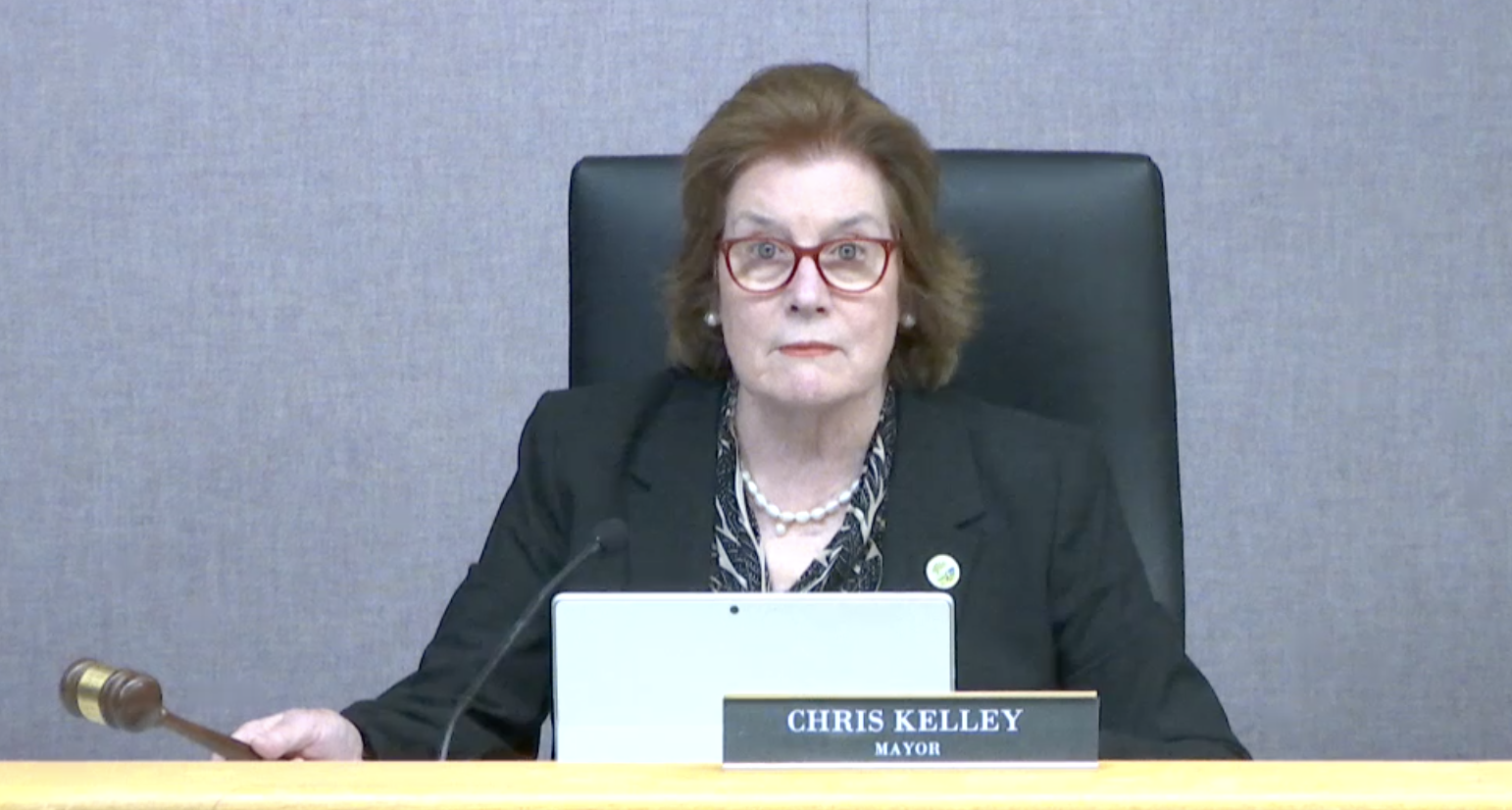
City Council - Mar 24, 2026 - Regular Meeting

City Council - Mar 24, 2026 - Regular Meeting

City CouncilHerculesMarch 24, 2026

Sources:

Locunity is a independent informational service and is not an official government page for this commission.We use AI-assisted analysis and human editorial review to publish information.

BART's $370M Crisis Looms Over Hercules as City Confronts Its Own Infrastructure Gap

The Hercules City Council got a double dose of fiscal reality on March 24: first from BART, which warned that without a November ballot measure the transit agency will slash 63% of its service, and then from its own staff, who laid out a 10-year capital plan with more than half its needs unfunded. In between, the council postponed a landscape assessment increase, placed liens on delinquent garbage accounts, and heard a personal plea for disaster preparedness from an Oakland Hills fire survivor.

  • BART faces $370M annual deficit by 2027; without a regional sales tax, service would be cut 63%, fares hiked 30%, and 600 workers laid off

  • City's 10-year capital plan identifies $76.6M in infrastructure needs — $41.9M of it unfunded — as pavement conditions continue to decline

  • John Muir Parkway safety project stalls after bids come in at nearly double the $258K budget; residents have been waiting since FY 2024-25

  • Council delays Hercules Village landscape assessment increase to FY 2027-28 for better cost data and community outreach

  • Liens approved on 187 properties for $114,120 in unpaid garbage fees


BART's Fiscal Cliff Hits Home for Hercules

Hercules has no BART station, but its residents depend on the system. WestCAT feeder buses — funded in part through BART — connect the city to the regional rail network. When BART Board Director Bernali Ghosh told the council that the agency is staring down a $370 million annual structural deficit, the implications were local.

Why it matters: If BART can't close its funding gap, Hercules commuters face a cascade of service cuts: longer waits, earlier closures, higher fares, and potentially reduced feeder bus routes.

Where things stand: Director Ghosh explained that remote work cratered BART's farebox revenue from 71% of operating expenses to roughly one-third. Despite real progress — a 41% reduction in crime, new fare gates generating $10 million in additional revenue, and 89% rider satisfaction — efficiency alone cannot bridge the gap.

"We're looking at a $370 million per year deficit," said Director Ghosh. Without new revenue, the agency's contingency plan includes 9 p.m. closures, three-line service at 30-minute frequencies, a 30% fare increase, parking fee hikes, $30 million in cuts to police and cleaning, and roughly 600 layoffs. A second phase could close 10 to 15 stations and push fare increases to 50%.

The lifeline is SB63, which authorizes a 0.5% sales tax in Alameda, Contra Costa, San Mateo and Santa Clara counties — and 1% in San Francisco — on the November 2026 ballot. Backers need 200,000 signatures by the end of May. If voters approve it, BART would receive approximately $310 million annually starting in FY 2028. Gov. Gavin Newsom signed a $590 million bridge loan for all transit agencies, contingent on the measure passing.

"We saved $400 million in project costs for Fleet of the Future. We did a lot of the work in house," Director Ghosh said, making the case that BART has already tightened its belt.

The other side: Councilmember Dion Bailey pushed on the financial burden for Hercules taxpayers. He noted residents already pay property taxes that flow to BART through WestCAT and questioned layering a half-percent sales tax on top of a possible 1% local sales tax increase. Director Ghosh offered a key clarification: if the measure passes, four small transit operators that connect to BART — including WestCAT — would receive $25 million directly, independent of BART's allocation.

Mayor Christine Kelley reminded the room that WestCAT took over feeder bus service from BART precisely because it was more cost-effective. She urged BART leadership to be transparent about its savings. "I think it is incumbent upon maybe the inspector general, maybe your new CFO, to come out and give people honest answers about how BART is saving money," Mayor Kelley said. "Because without that, a lot of people may just not be supportive."

Vice Mayor Alex Walker-Griffin expressed support for the ballot measure and offered the city's assistance.

Councilmember Dilli Bhattarai asked about a prior proposal to sell BART's parking lot at the Hercules Transit Center. Director Ghosh confirmed it is off the table for now: "I think staff understood that it wasn't the right discussion to have at that time. And hopefully we will not have to have that discussion if the measure passes."

What's next: The signature-gathering campaign for SB63 runs through the end of May. If it qualifies, the measure goes before voters in all five Bay Area counties in November 2026.


$42M Funding Gap Shadows Hercules Capital Plan

Finance Director Gatto and Public Works Director Dombeck walked the council through the city's FY 2026-27 capital projects budget and 10-year Capital Improvement Program in a workshop session — a sobering counterpoint to BART's regional woes.

The basics: The CIP covers facilities, parks, streets, sewer and the Hercules Hub transit center. Total 10-year need: $76.6 million. Funded: $34.7 million. Unfunded: $41.9 million — 54.7% of the total.

"Of this $41.9 million, or 54.7%, remains unfunded and will require future appropriations, grant awards or other financing and strategies," said Public Works Director Dombeck.

Where things stand: The FY 2026-27 funded program totals $3.77 million. Finance Director Gatto confirmed that roughly $5 million in combined general fund capital and unrestricted reserves covers the near-term work, but long-term reserve accumulation is unlikely given limited surpluses.

The biggest gaps by category:
- Parks: $35.5 million total need, 96% unfunded. Refugio Lake Restoration and Beechnut Park Improvement are the exceptions — both fully funded.
- Facilities: $8.3 million unfunded. Active projects include life safety, ADA, and operational improvements at City Hall, the Community Swim Center, the Senior Center, the Library, and Foxborough Community Center.
- Streets: $16.8 million program. The priority for FY 2026-27 is Foxborough Neighborhood Street Rehabilitation Phase 1. Gas tax revenue is declining statewide.

John Muir Parkway: Safety Promises, Budget Reality

The most pointed exchange came over the John Muir Parkway safety project. Bids arrived at $400,000 to $500,000 — nearly double the $258,000 budget — forcing a postponement.

Councilmember Bailey was not satisfied. "Those residents were told it would be resolved in fiscal year 2024-25. They were told it would be taken care of in 25-26, and now we're saying it's further out," he said. He catalogued visible hazards: "Missing center lines. Down the center of the street there's a bike lane which was kind of designed kind of wonky because it needed to protect line of sight — that's gone. People are now parking in the bike lane. Crosswalks are no longer visible."

Public Works Director Dombeck acknowledged the bid overruns and said the matter would be discussed at the Traffic Subcommittee meeting the following evening.

Other capital highlights: The Lower Sycamore Trunk Sewer project was completed in June 2025. FY 2026-27 sewer work focuses on pre-design for 8- to 14-inch sewer rehabilitation under Highway 4 and lift station condition assessments. For the Hercules Hub, the city applied for $21.7 million in federal railroad grant funding and $3 million from the Contra Costa Transportation Authority. Approximately 80% of hub expenditures come from competitive grants.

What's next: This was a workshop with no vote. The full budget process continues through the spring.


Council Delays Landscape Assessment Hike for Better Data

Hercules Village's Landscape and Lighting Assessment District is running $40,000 to $60,000 annual operating deficits — driven by drought-related irrigation costs and mature tree maintenance — and the council had two paths forward.

Why it matters: Homeowners in the district face an eventual assessment increase. The question was timing: act now with uncertain numbers, or wait a year for the real cost picture.

Where things stand: Staff presented two options. Option 1 would launch Proposition 218 proceedings immediately for the FY 2026-27 tax roll, recommending $50 per year for 10 years to cover potential landscape contract cost increases. Option 2 would postpone to FY 2027-28, allowing time for community outreach and calibrating the assessment after the new landscape maintenance contract is priced. The district would absorb an approximately $50,000 cumulative deficit, extending recovery by one to two years.

Interim City Manager Patrick Tang made the case for patience: "If we were to go forward now, there's a strong argument that the pricing won't match given that we're going to be looking at a new landscape maintenance contract."

Vice Mayor Walker-Griffin argued the political calendar was equally important: "In my past life as a political consultant, you design a mailer that someone can read on the way to the trash can. And when we did advertisements, 30 seconds and you bombard somebody all night and day. So I think if we're not going to be able to compete with that." A June 2026 primary election, she argued, would bury the city's outreach amid a flood of political mail.

Councilmember Bailey supported the delay but urged the city to develop a clear marketing plan and begin community engagement in fall 2026. He also flagged a cost-effectiveness concern: "There's a $50,000 deficit and then we're spending almost $20,000 to collect the $50,000. And that sometimes frustrates residents when we explain that to them."

Mayor Kelley asked consultant Ed Espinoza of Francisco and Associates whether assessments could be stretched beyond 10 years. Espinoza confirmed there is no legal prohibition.

Decisions: Councilmember Bailey moved for Option 2; Vice Mayor Walker-Griffin seconded. The motion passed 4-0 (Councilmember Tiffany Grimsley absent).

What's next: Staff will begin community outreach ahead of formal Prop 218 proceedings in FY 2027-28, with the goal of aligning the assessment to actual landscape contract pricing.


Minor Items

  • Garbage liens approved: Council adopted a resolution placing assessment liens on 187 properties with $114,120.21 in delinquent garbage collection charges from May–December 2025. Payments made before Aug. 10 will remove properties from the list. Passed 3-0 (Vice Mayor Walker-Griffin abstained, Councilmember Grimsley absent).

  • Consent calendar: Six items approved 4-0, including an appointment to the Contra Costa County Library Commission alternate seat. Councilmember Grimsley absent.

  • Red Cross Month proclaimed: Mayor Kelley read a proclamation recognizing March 2026 as Red Cross Month. Diana Graham, a local Red Cross preparedness lead, accepted and shared her experience surviving the 1991 Oakland Hills fire: "My house burned down in the Oakland Hills fire in 1991 with everything in it, and we weren't dead. And I have to say it was touch and go." An April 16 blood drive at the Van Domsler room was announced.

  • Closed session: Council met in closed session on existing litigation (Bruce v. City of Hercules) and public employment (City Manager); nothing was reported out.

  • City manager updates: Interim City Manager Patrick Tang announced the Horizon 2050 General Plan kickoff, with a project website launching soon and a citywide mailing to follow. He also noted the Emblem Residential project — 162 market-rate and 18 low-income units — at the Loop.

BART's $370M Crisis Looms Over Hercules as City Confronts Its Own Infrastructure Gap | City Council | Locunity