
City Council - Mar 18, 2026 - Special Meeting

City Council - Mar 18, 2026 - Special Meeting

City CouncilHalf Moon BayMarch 18, 2026

Sources:

Locunity is a independent informational service and is not an official government page for this commission.We use AI-assisted analysis and human editorial review to publish information.

Council Advances 555 Kelly Farm Worker Housing Despite Unresolved Legal Questions

Half Moon Bay's City Council held a special meeting dominated by emotional public testimony and tough questions about draft legal agreements for a 40-unit senior farm worker housing project — then unanimously extended the developer's exclusive negotiating window through the end of 2026.

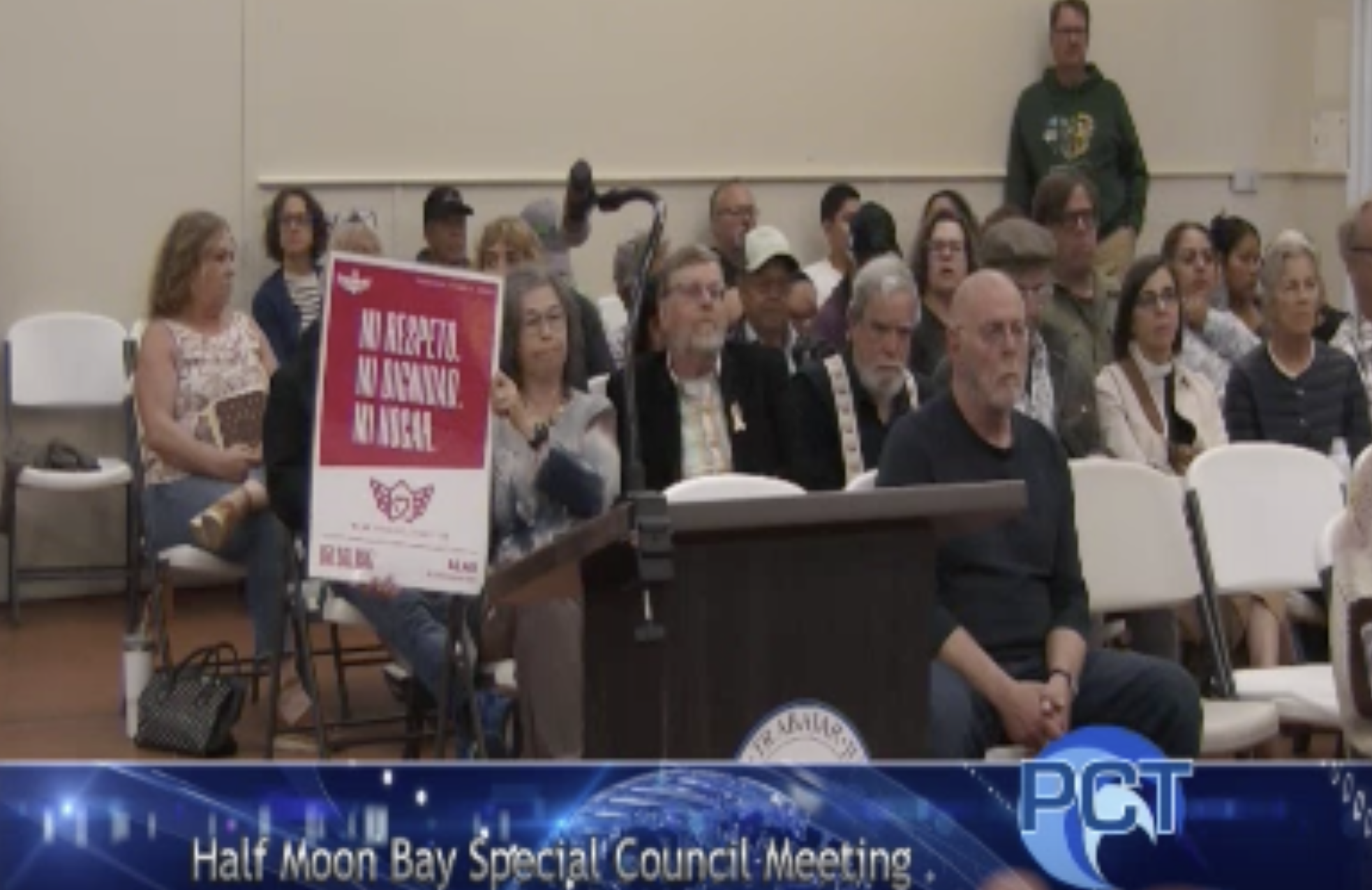
  • Dozens of farm workers, faith leaders and advocates pack special meeting to urge council to approve the long-delayed 555 Kelly Avenue affordable housing project

  • Council flags major legal and governance gaps in draft 99-year, $1/year ground lease with Mercy Housing, including a potential referendum requirement

  • Council votes 4-0 to extend exclusive negotiations with Mercy Housing through Dec. 31, 2026, preserving the project's path to state and county funding

  • $43.9 million price tag draws fire from opponents, who call the $1.1M-per-unit cost and 99-year lease a giveaway of city assets

  • $2 million state earmark from Sen. Becker to be structured as a reimbursement grant and brought back for approval at a future meeting


Farm Workers Deliver Emotional Plea for Dignity

More than 30 speakers turned the public comment period into a two-hour marathon, with the vast majority urging the council to move forward on the 555 Kelly Avenue project — a 40-unit affordable housing development for senior agricultural workers on city-owned land near Shoreline Station.

Why it matters: The project, developed in partnership with Mercy Housing California, has been in negotiation since a 2022 request for proposals. It is among the most significant affordable housing proposals in Half Moon Bay's recent history and carries deep emotional weight — tied in part to the community's response to a 2023 mass shooting at local farms.

Where things stand: Spanish-speaking farm workers, many elderly, gave translated testimony describing overcrowded housing, forced family separations and decades of low-wage agricultural labor. Representatives from ALAS, Second Harvest of Silicon Valley, the Housing Leadership Council of San Mateo County, Peninsula for Everyone, Faith in Action Bay Area, and UC Berkeley's Labor Occupational Health Program all spoke in support.

"You have made commitments to the state via your housing element, which is three years overdue, by the way, to advance this project. Your delay and other actions have already invited significant scrutiny from both the governor and Attorney general," said Jordan Grimes, Peninsula for Everyone.

Belinda Hernandez-Arriaga, leader of ALAS, connected the project to broader issues facing the Latinx community and four years of advocacy, urging the council to act without further delay.

Ken Chan, senior organizer with the Housing Leadership Council of San Mateo County, said the 40 affordable homes near downtown would let residents patronize local businesses and age in place.

The other side: A smaller but vocal group of opponents challenged the project's economics and scale. Steve Hyman, a real estate broker and self-described pro-growth critic, called the $1.1 million per studio unit cost and $1/year lease terms unreasonable. Mike Ferreira criticized the five-story design in a city with a three-story height limit and questioned the site's designation as a major transit stop.

Hale Bogner, representing the group Let Half Moon Bay Voters Decide, reported collecting 1,000 signatures in three weeks for a ballot measure.

"I believe establishing a five-story building in a city with a three-story height limit will not be the first, the only five-story building. If it's approved and built, there will then be very little reason to not have more five-story buildings approved," he said.

A public commenter named Chad urged the council to drive a harder bargain:

"Negotiate for the city, not for the project. Mercy will come to this project, even if some demands are put on it."

He called for a detailed cost breakdown, a project impact review and a 65-year lease instead of 99.


Legal Gaps and Governance Concerns Cloud Draft Lease

The study session that followed public comment revealed deep unresolved questions about two draft documents at the heart of the deal: the Affordable Housing Property Disposition Agreement (AHPDA) and the Ground Lease.

The basics: The AHPDA governs development conditions and terminates at certificate of occupancy. The Ground Lease is a 99-year agreement at $1 per year, signed only when Mercy Housing has secured all financing and is ready to build. A third document — the regulatory agreement recording affordability covenants — is still being finalized. City Manager Matthew Chidester described the proposed unit mix as three studios, 34 one-bedrooms and three two-bedrooms, with a maximum occupancy of 86 individuals.

Why it matters: The city would be committing publicly owned land for nearly a century.

Where things stand: Interim City Attorney Denise Bazzano and outside counsel Lisa Maxwell of Burke Real Estate walked the council through revisions meant to strengthen the city's protections. But the Mayor Debbie Ruddock and Councilmember Paul Nagengast raised a series of pointed concerns:

  • Referendum risk: Government Code 37380 may require the city to adopt an ordinance — subject to voter referendum — for any lease exceeding 55 years. Mercy Housing's counsel cited a separate code section (37364) for affordable housing as an exemption. Ruddock was unconvinced and demanded a written legal analysis before any binding vote.

  • Delegation of authority: The draft documents gave the Community Development Director broad power over construction decisions, financing modifications and mortgage approvals. The council unanimously rejected this approach. Ruddock argued the director lacks the appropriate authority and accountability, directing that the designation be changed to the City Manager with defined thresholds for council review.

  • Missing definitions: Key terms — "senior," "agricultural worker," "retired," "living/residing" — were absent from the drafts.

  • Budget transparency: Nagengast pushed for a full operating proforma showing revenue and expenses, not just the capital budget. "I would like to see a broken-down budget, not just, you know, answer," he said.

  • Document inconsistencies: The AHPDA described community space hours as "at least 16" while the Ground Lease said "up to 16." Insurance provisions lacked earthquake coverage discussion. Sublease terminology needed clarification.

Councilmember Robert Brownstone praised the review and asked staff to research how other cities handle delegated landlord authority.

"I'd be interested in what other cities do. You need a point of contact because we are the landlord," he said.

What's next: Staff and Mercy Housing agreed to provide written responses, redlined documents, an operating proforma, a legal analysis of the Government Code question and additional attachments at the next meeting. The council's demand for detailed documentation signals that final approval is at least one to two more meetings away.


Council Extends Mercy Housing Negotiations Through End of 2026

After the study session, the council turned to its sole action item: extending the Exclusive Negotiations Agreement (ENA) with Mercy Housing.

The basics: The original ENA from October 2022 expired in October 2024. A second ENA was signed in January 2025 and amended in April 2025, establishing the $1/year lease framework with a 65-to-99-year term. That agreement expires April 1, 2026. Staff had recommended extending through June with an optional six-month extension.

A Mercy Housing representative confirmed the organization's financing plan: county NOFA application in spring/summer 2026, followed by 9% tax credit application in early 2027, with a county operating subsidy also being pursued.

Why it matters: Without a valid ENA, Mercy Housing would lose proof of site control — a prerequisite for applying for approximately $7.7 million in county NOFA funds this spring and summer, and 9% low-income housing tax credits in early 2027. Losing that financing pipeline could effectively kill the project.

Decisions: The council opted for a single extension through Dec. 31, 2026, rather than the staff-recommended shorter timeline. The longer window accounts for the possibility that opponents could force a November ballot referendum. Councilmember Paul Nagengast expressed concern that a longer timeline invites delay, but accepted the extension given it is nonbinding. The motion was moved by Councilmember Robert Brownstone, seconded by Mayor Debbie Ruddock, and passed 4-0 (For: Brownstone, Nagengast, Penrose, Ruddock; Absent: Jonsson).

What's next: City Manager Matthew Chidester noted that a $2 million state earmark from Senator Josh Becker, currently sitting in the city's affordable housing fund, will be structured as a reimbursement-based grant agreement and brought back for council approval at a future meeting.

"Mercy had never requested these funds previously because they had funding through the county through ARPA funds. Those funds have now expired, and so now they are seeking these funds so they can continue the work," Chidester explained.


Minor Items

  • Councilmember Jonsson absent from the special meeting due to illness; the council proceeded with four members present.

  • Nagengast disclosed a prior appeal he filed on the 555 Kelly project as a private resident, confirmed he has no personal or financial interest, and stated he would evaluate the documents on their merits.

Council Advances 555 Kelly Farm Worker Housing Despite Unresolved Legal Questions | City Council | Locunity