Uganda Demands Permanent Security Council Seats for Africa at UN General Assembly
General Assembly - Debate • United NationsSeptember 23, 2026
Locunity is an independent informational service and is not an official government page for this commission. All information is sourced from public footage and an analysis of official agendas with the aid of responsible, fact-checked AI. to report an error or omission.
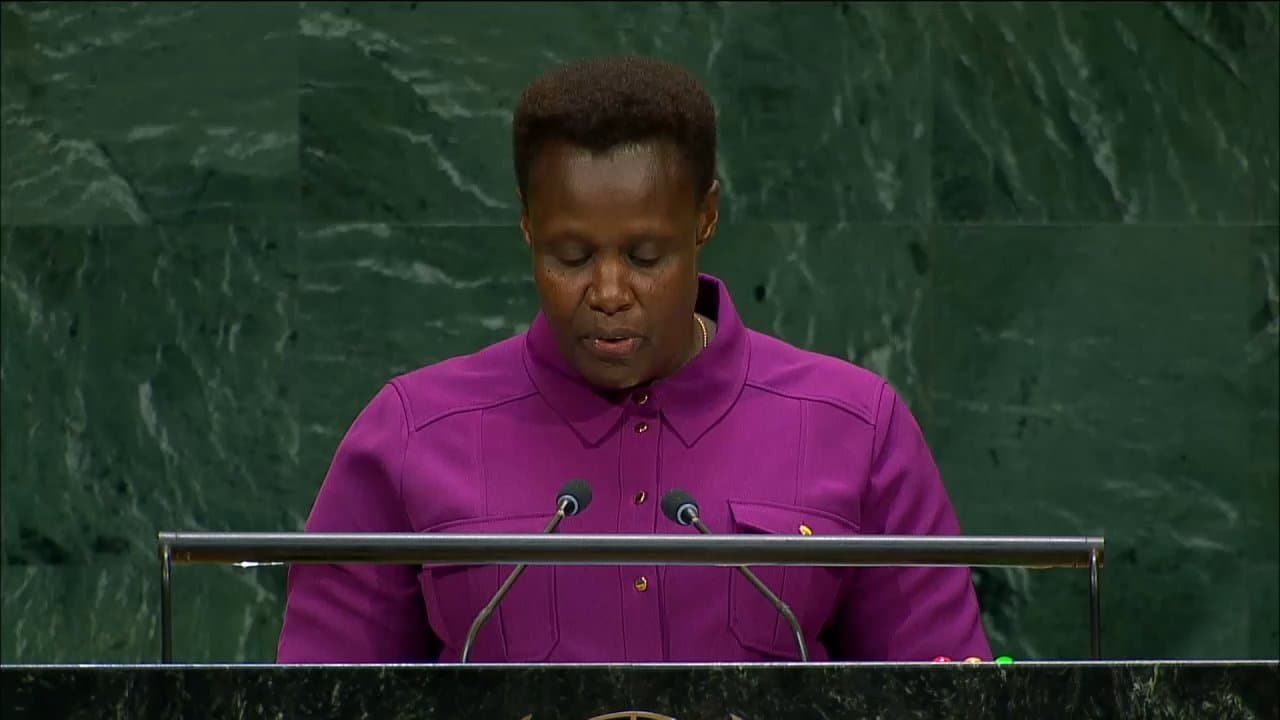
Uganda's delegate used the 81st United Nations General Assembly General Debate to press for structural reform of the Security Council, calling for permanent African representation to correct what the delegate called historical imbalances in global governance. The address, delivered largely in Swahili on Sept. 23, 2026, also covered sustainable development progress, pandemic preparedness and a tribute to a prominent Ugandan diplomat.
Uganda demands permanent and non-permanent Security Council seats for Africa, citing the Ezulwini Consensus and Sirte Declaration
Only 36% of SDG targets met as Uganda highlights financing gaps facing developing nations ahead of the 2030 deadline
Delegate calls on multilateral institutions to bridge pandemic preparedness gaps and ensure equitable access to diagnostics, medicines and vaccines
Uganda reaffirms commitment to Non-Aligned Movement principles and its stabilizing role in the Great Lakes region
Africa's Seat at the Table: Uganda Presses for Security Council Reform
Why it matters: Africa remains the only continent without permanent representation on the UN Security Council. Uganda's demand reflects a unified continental position that has gained momentum across successive General Assembly sessions, with African states arguing the body's current structure reflects a post-World War II order that no longer matches global realities.
Where things stand: The Delegate framed the call as both a matter of principle and a practical necessity for a more effective multilateral system. The delegate argued the UN must evolve to address contemporary challenges across human rights, humanitarian affairs and sustainable development.
"We believe the United Nations must remain agile and adaptive to evolving global realities," said the Delegate.
The delegate then turned directly to the structural question: "We demand Africa's rightful representation in both the permanent and non-permanent categories to correct historical imbalances, in line with the common African position articulated in the Ezulwini Consensus and the Sirte Declaration."
The Ezulwini Consensus, adopted by the African Union in 2005, calls for at least two permanent Security Council seats with veto power for African nations, plus additional non-permanent seats. The Sirte Declaration reinforces that position. Together, they represent the continent's unified negotiating stance on UN reform — a stance Uganda invoked explicitly from the General Assembly podium.
What's next: Security Council reform requires the support of two-thirds of General Assembly members and ratification by two-thirds of UN member states, including all five current permanent members — a formidable threshold that has stalled previous reform efforts. Uganda's statement adds to growing pressure from the African bloc, but no timeline for action was outlined.
Development Goals Falling Short: Uganda Reports 36% of SDG Targets Met
The basics: In 2015, UN member states adopted 17 Sustainable Development Goals with 169 targets to be achieved by 2030. Countries regularly report on progress toward these benchmarks.
Why it matters: With fewer than four years remaining before the 2030 deadline, Uganda's self-reported figure — approximately 36% of 139 tracked targets achieved — illustrates the scale of the gap facing developing nations. The delegate pointed to ongoing financing challenges as a central obstacle, echoing concerns raised by many Global South countries about insufficient international support for SDG implementation.
What's next: The figures underscore calls from developing nations for expanded development financing, debt relief and reformed international lending mechanisms to accelerate progress before the 2030 deadline.
Pandemic Preparedness: Uganda Leverages Ebola Experience to Push for Global Health Equity
Why it matters: Uganda's experience managing Ebola outbreaks — including in the Bundibugyo district — has given the country credibility on pandemic preparedness issues. The delegate used that track record to press wealthier nations and multilateral institutions on a persistent concern: unequal access to health tools during global crises.
"Uganda has built a resilient public health framework. We call upon development partners and multilateral institutions to bridge financing gaps, enhance pandemic preparedness and ensure equitable access to diagnostic tools, medicines and vaccines worldwide," said the Delegate.
The statement echoes ongoing global debates over vaccine equity and health financing that intensified during the COVID-19 pandemic and remain unresolved in international negotiations.
Minor Items
Non-Aligned Movement: Uganda reaffirmed its commitment to NAM principles of unity, peace and solidarity, referencing its role as a host of NAM activities in Kampala and its contributions to regional stability in Africa's Great Lakes region.