Finance and Administration Committee - Jun 17, 2026 - Meeting
Finance and Administration Committee • Bay Area Air DistrictJune 17, 2026
Locunity is a independent informational service and is not an official government page for this commission.We use AI-assisted analysis and human editorial review to publish information.
Committee Moves to Loosen Remote Meeting Restrictions, Add Accountability
The Bay Area Air Quality Management District's Finance and Administration Committee spent the bulk of its June 17 meeting wrestling with a policy it helped adopt just two weeks earlier — and concluded the board went too far. Members reached consensus to recommend the full board roll back restrictions on where directors can participate remotely, while pairing any loosening with a new incident-reporting and accountability framework.
- Committee pushes board to reconsider ban on out-of-state and private-building remote meeting sites, calling restrictions more burdensome than state law requires
- New accountability framework proposed — incident logging, quarterly reports to board leadership, and potential escalation for chronic disruptions caused by remote locations
- 59-facility portfolio assessment underway, with major decisions on San Francisco headquarters at 375 Beale Street expected in 12–18 months as commercial vacancies erode building income
- Consent calendar advances $600,000 contract amendment with Oshyn, Inc. for enterprise technology services
Remote Meeting Policy: Adopted Under Pressure, Now Under Review
The basics: On June 3, the full board adopted six amendments to its Remote Teleconferencing Meeting Policy to comply with a July 1 deadline set by changes to the Brown Act and SB 707. Two of those amendments — restricting remote participation sites to publicly accessible government buildings and requiring they be located within California — went beyond what state law requires and passed with minimal discussion because the board was on the verge of losing quorum.
Why it matters: The Air District's 24-member board already struggles to assemble a quorum. Tighter restrictions on where directors can join meetings remotely could make that worse — a point multiple committee members drove home during a nearly 45-minute discussion that dominated the meeting.
Where things stand: General Counsel Alexander Crockett walked the committee through all six amendments. The first two — requiring multi-language agenda postings at remote locations and providing space for the public to post agendas in additional languages — drew no objection. But the restrictions on location type and geography ignited a sharp debate.
Director David Haubert led the pushback, arguing no other public agency he serves on imposes rules stricter than state minimums. "I've never heard of an agency that wanted to make rules more restrictive than the state rules. The state doesn't have this rule about California. It doesn't have this rule about publicly accessible buildings," he said. He was unequivocal: "I really would take out bullets three and four."
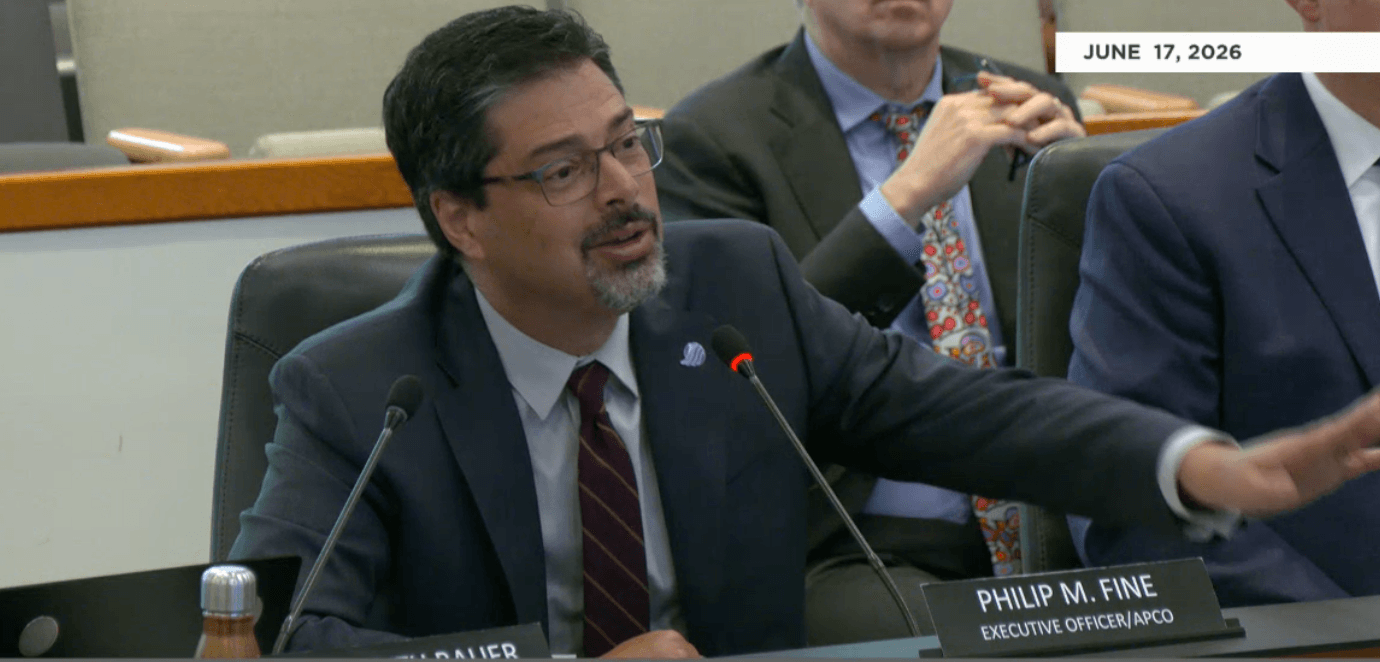
Executive Officer Philip Fine acknowledged the restrictions were rooted in real operational headaches — hotels relocating meeting rooms, improperly posting agendas, and the difficulty of troubleshooting technology problems at out-of-state sites. "These reflect a lot of behind-the-scenes angst," he said, while conceding that staff is uncomfortable policing board member behavior.
Chair Mayor Juan Gonzalez explained the time pressure behind the original vote: "We were short on quorum. We were literally losing quorum. And legally, we needed to adopt these before July 1st." But he made clear his preference going forward: "My personal preference is that there be some actual written policy about the number of tardies and missed meetings where a remote location is the core underlying cause."
The other side: General Counsel Crockett offered the legal rationale for restricting private buildings: "Private locations actually retain the ability to bar members of the public for certain reasons" — a concern rooted in First Amendment access. Director Noelia Corzo acknowledged the tension, describing it as a catch-22: "The more restrictions we create for directors to participate, the more likely we are to not have as much buffer."
Vice Chair Lynda Hopkins proposed a graduated accountability framework: staff would log incidents — not just absences, but delays and near-misses — and report quarterly to the board chair and vice chair, who would have direct conversations with offending members before escalating. She paired that with strong enforcement language: "If we have consensus around opening up the opportunity about remote locations and remote meetings outside of California, that maybe that be paired with potentially an actual one strike and you're out goal."
Director Linda Sell suggested a simpler mechanism: "I would agree to a written document of some items that the board agrees to and then the board members sign it so they all know it and return it back to the administration."
Decisions: No formal vote was taken — this was a discussion item — but the committee reached clear consensus: bring a revised proposal to the full board at the July meeting that would reconsider the California-only and public-buildings-only restrictions while adding accountability and incident-reporting language. Executive Officer Fine confirmed the path forward: "We'll come back with a proposal for board approval, for amendments that reconsider bullet points three and four." Staff will develop the language in coordination with the chair and vice chair.
What's next: Revised policy amendments are expected on the July board meeting agenda.
Air District Launches Assessment of All 59 Facilities
Why it matters: The Air District operates across 59 locations — three headquarters buildings (San Francisco, Richmond, Sacramento), 15 field offices, and 46 monitoring and technical sites — and is shifting from evaluating them individually to managing the portfolio as an integrated system. Major financial decisions loom, particularly around the San Francisco headquarters at 375 Beale Street.
Where things stand: Karen Schkolnick, Director of Administrative Resources, presented a three-phase assessment running through mid-to-late 2027. Phase 1, already underway, establishes a baseline inventory and conditions assessment. Phase 2 will analyze findings and develop options. Phase 3 will produce a comprehensive real estate strategy. Early wins include renegotiated leases with landlord-funded upgrades and standardized assessment tools.
Executive Officer Philip Fine flagged the most consequential piece: "There's going to be some bigger decisions around this headquarters, this building because of the commercial real estate market — a lot of it is vacant. So a lot of the income this building had is not there." He said major decisions are expected in 12–18 months and noted the board has a designated reserve for capital improvements to facilities and real estate that could be accessed if needed.
Chair Mayor Juan Gonzalez praised the approach: "This whole concept of working things at a system level, portfolio level — that's all about efficiency, transparency, line of sight, effectiveness, operation at scale."
What's next: Staff will return with options and recommendations as the phased assessment progresses. No action was requested at this meeting.
Minor Items
- Consent calendar approved 5-0 (For: Corzo, Haubert, Sell, Hopkins, Gonzalez; Absent: Colbert, Jue, Veenker), covering April 15 meeting minutes, Hearing Board quarterly report, Q3 vendor payments report, Q3 financial report, and authorization to recommend the full board approve a $600,000 amendment to the Oshyn, Inc. contract for enterprise technology services, bringing the total contract ceiling to $1,754,568.
- July committee meeting canceled; next Finance and Administration Committee meeting set for Sept. 16, 2026 at 1:00 p.m.