City Council - Sep 15, 2026 - Regular Meeting
City Council • El CerritoSeptember 15, 2026
Locunity is a independent informational service and is not an official government page for this commission.We use AI-assisted analysis and human editorial review to publish information.
Council Adopts Vision Zero Plan to Eliminate Fatal Crashes by 2035
El Cerrito's City Council approved a sweeping road safety plan that commits the city to ending all traffic fatalities and serious injuries within a decade — but the 4-1 vote exposed a fault line over community engagement that echoes past controversies. The same evening brought good fiscal news, a unanimous rejection of a statewide anti-housing resolution, and a $13 million state grant for the city's most dangerous corridor.
- Vision Zero road safety plan adopted 4-1, targeting zero fatal and serious-injury crashes by 2035 through speed reductions, a backbone bikeway network, and quick-build safety improvements
- State approves $13 million to repave and add safety improvements to San Pablo Avenue, with construction starting early 2027
- General fund finishes fiscal year $2 million better than budget, with reserves reaching 40% — well above the 30% policy floor
- Council unanimously rejects Cal Cities housing resolution, calling it an anti-housing measure disguised as local control
- Ohlone Greenway speed crisis intensifies as residents describe near-misses with e-scooters and staff reveals no formal speed limit exists on the city's portion
- $200,000 federal grant accepted for swim center ADA locker room improvements at zero net new city cost
A City Plans for Zero Traffic Deaths — but One Vote Says Not So Fast
The basics: The Local Road Safety Plan, developed with consultant Kittleson using data analysis and more than 1,000 community questionnaire responses, establishes a Vision Zero policy committing El Cerrito to eliminating all fatal and serious-injury crashes by 2035.
Why it matters: The plan's High Injury Network — just 5% of city roads — accounts for 72% of injury crashes. The adopted measures will reshape how residents drive, park, and bike across the city, touching every neighborhood.
Where things stand: Public Works Director Yvette Ortiz presented nine crash countermeasures including speed humps, speed tables, road diets, flashing beacons, and mid-block crosswalks on San Pablo Avenue. The plan establishes a citywide 25 mph maximum speed limit and pursues 20 mph limits on local streets.
"The goal is to eliminate all fatal and serious injury crashes by 2035. And we do think this is achievable in El Cerrito given our roadway network," said Public Works Director Yvette Ortiz. "Most of our roads are narrower, lower volume, but we do have corridors that we need to focus on."
The plan's most consequential element may be the backbone bikeway network, which would repurpose roughly half of on-street parking on designated corridors and exempt those changes from the city's existing parking removal appeal process — the provision that drew the sharpest opposition.
The Bikeway Divide
Councilmember William Ktsanes cast the lone dissenting vote, drawing a direct line to the controversy over Richmond Street bike lanes that divided the community in recent years.
"I can't support it because I think that I am concerned about community engagement," Councilmember Ktsanes said. "If we don't have a role going forward with this, I think it's going to lead to the same acrimony that happened with Richmond Street."
His concern centered on removing the council's role in adjudicating parking removal disputes — a mechanism he argued is the most direct way residents engage with their elected officials on street-level changes.
Councilmember Carolyn Wysinger pushed back, pointing to the human cost of inaction: "It's always concerning when we have this data that's telling us that people are getting hurt and or dying on our streets and we still have to defend creating infrastructure that protects lives."
Mayor Pro Tem Rebecca Saltzman pressed for even faster implementation of speed reductions, citing Emeryville's success with lower limits and questioning the logic of restricting Greenway bike speeds to 15 mph while allowing cars to travel 25 mph on streets.
Councilmember Lisa Montoyama supported the plan, sharing a personal perspective on how traffic calming on her own street improved quality of life. "I imagine if we can do all these things in this plan, that people will realize how unsafe things have been," she said. "But we've just taken it for granted that that's the way it is."
Community Voices Rally for Action
Six public commenters spoke on the plan — all supportive, though several pushed for more. Janet Byron, speaking for El Cerrito Richmond Annex Walk and Roll, urged the city to establish a community transportation task force, update the active transportation plan within two years, and take immediate action on Greenway signage and e-moto enforcement. Jerry Figone argued Calusa Avenue should be added to the backbone bikeway network as the city's second-busiest bikeway and flagged GPS apps routing traffic onto narrow residential streets like Plumas. Rebecca Kenney called Central Avenue and Carlson Boulevard crossings "frightening" for neighbors with small children.
Decisions: The plan was adopted 4-1 (For: Quinto, Saltzman, Montoyama, Wysinger; Against: Ktsanes). Staff will begin implementing quick-build countermeasures and the city will pursue additional grants for mid-block crosswalks not covered by the $13 million San Pablo Avenue project.
What's next: The plan calls for forming an interdepartmental safety task force, monitoring state e-moto legislation, reactivating the neighborhood traffic management program, and conducting crash analysis at Cutting and Central crossings on the Ohlone Greenway.
No Speed Limit, No Enforcement: Greenway Safety Gap Exposed
Why it matters: The Ohlone Greenway is a critical pedestrian and cycling corridor through El Cerrito — but the city has no established speed limit on its portion, making traffic-court enforcement of dangerous e-bike and e-scooter speeds effectively impossible.
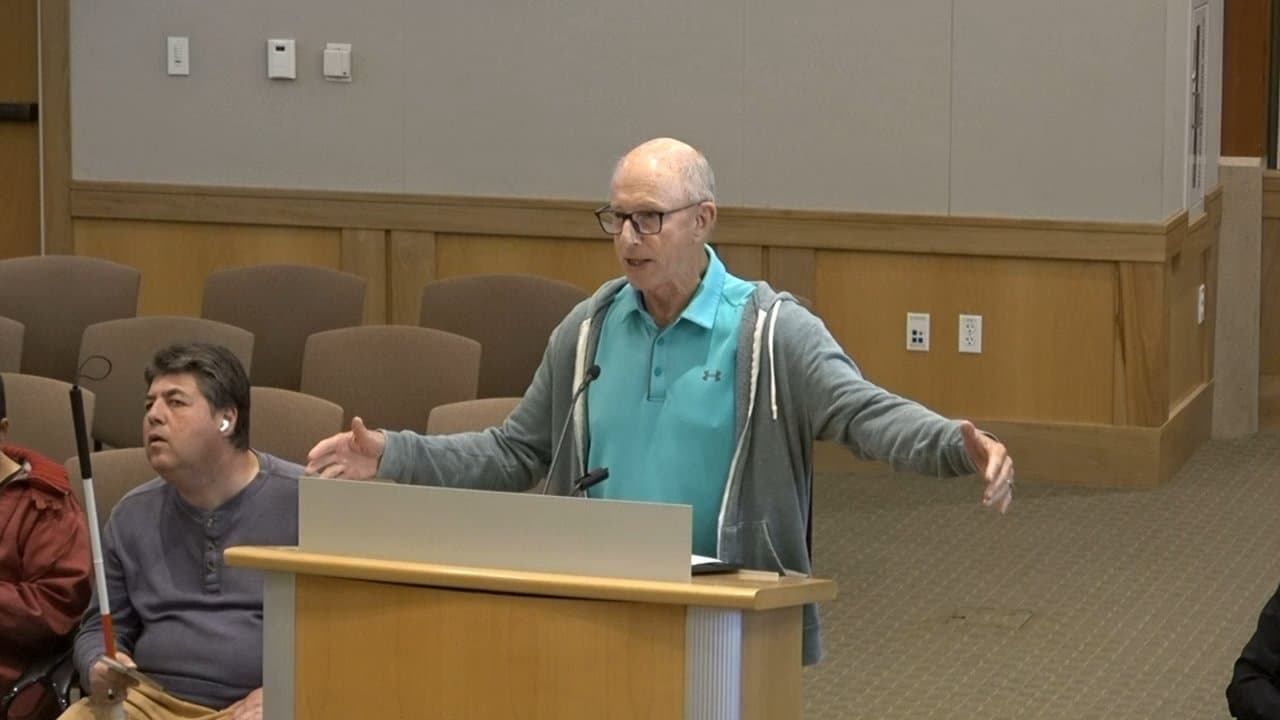
Where things stand: The issue surfaced in public comment and dominated portions of the road safety plan discussion. Joshua Saunders, a legally blind resident, described near-misses with speeding e-scooters and abandoned devices blocking sidewalks. MJ Diwili noted a 15 mph speed limit is posted but unenforced. Public Works Director Ortiz clarified that establishing an enforceable speed limit requires a council resolution and engineering study.
Captain Caputo of the El Cerrito Police Department reported officers have two e-bikes and conduct periodic education patrols, but acknowledged enforcement is limited. Mayor Pro Tem Saltzman recommended patrols during school commute times near Fairmont Elementary. Councilmember Montoyama noted Class 3 e-bikes can reach 28 mph — exceeding even the proposed 25 mph street speed limit.
What's next: The road safety plan includes monitoring state e-moto legislation and conducting crash analysis at key Greenway crossings, but establishing the formal speed limit will require separate council action.
City Ends Fiscal Year With $23.2 Million in Reserves
Why it matters: El Cerrito's general fund finished FY 2025-26 with revenues 3% above and expenditures 1% below budget — a $2 million positive variance that pushes total reserves to 40% of expenditures, well above the 30% policy minimum that the council had worried about breaching.
Where things stand: Budget Manager Claire Coleman presented the preliminary results: "Revenues exceeded budget by 3% — $1.7 million above what was budgeted. On the expenditure side, expenditures were at 99% of budget, $450,000 below budget."
Key revenue drivers included higher building permit activity, elevated interest income, rising franchise fees and utility taxes from higher energy rates, and growing cannabis and EV charging revenues. Fire department revenue fell below budget due to fewer Cal OES mutual aid responses, and recreation revenue dipped because of the pool closure for repairs.
On the spending side, police and fire departments exceeded personnel budgets due to overtime from vacancies and leaves, while most other departments came in under budget. Coleman also noted a milestone: the successor agency dissolution process is complete, meaning all property taxes at the full 22 cents now flow to the city.
Reserve Philosophy Under Review
Councilmember Ktsanes raised a broader question about whether the city's reserve target adequately accounts for disaster risk. "We actually have a fairly high risk exposure — earthquakes, fires in the hills," he said. "Does it make sense to revisit what's an appropriate reserve level?"
Mayor Pro Tem Saltzman praised staff's fiscal discipline and suggested a mid-year budget re-evaluation at the upcoming council retreat. Councilmember Montoyama asked about using discretionary reserves to bolster the Section 115 pension trust. The total $23.2 million fund balance breaks down to 13% in the Economic Development Reserve Fund, 22% unassigned (vs. 17% policy minimum), and 5% in the pension trust.
What's next: Final audited numbers are expected in January.
$13 Million State Grant Will Rebuild San Pablo Avenue
Why it matters: San Pablo Avenue accounts for one-third of El Cerrito's fatal and serious-injury crashes and serves as the city's primary commercial corridor — but it is owned by Caltrans, making improvements dependent on state partnership and funding.
City Manager Karen Pincos announced the state has approved $13 million for repaving and safety improvements from the city's southern border to Cutting Boulevard, with groundbreaking planned for early 2027. She credited council and community advocacy with Caltrans for securing the funding.
During the road safety plan discussion, Public Works Director Ortiz clarified the funded scope will upgrade existing crosswalks with rapid rectangular flashing beacons but does not include new mid-block crossings — additional grant applications are being pursued separately.
Council Rejects Cal Cities Anti-Housing Resolution
The basics: A group of League of California Cities member cities proposed a resolution calling for a working group to pursue a state constitutional amendment that would give cities final authority over housing and land use decisions — effectively overriding state housing mandates.
Why it matters: All five council members opposed the resolution in unusually direct terms, signaling El Cerrito's firm alignment with the state's pro-housing framework.
Mayor Pro Tem Saltzman called it "dead on arrival" because "there is no way to get the legislature to agree on something that would take away their authority."
Councilmember Ktsanes went further: "I read it as an anti-housing initiative cloaked as local control. It reminded me of growing up in the south and people talking about states' rights. It had nothing to do with states' rights and this has nothing to do with local control."
Councilmember Montoyama noted the Housing and Community Economic Development Policy Committee already provides a venue for these discussions and called the approach unworkable. Councilmember Wysinger agreed, noting some sponsor cities want to resist state housing mandates.
Decisions: Council directed voting delegate Councilmember Wysinger to vote no at the Cal Cities conference.
Ten Interns, Seven Departments: EC STARS Returns for Ninth Year
The council celebrated the ninth year of the EC STARS program, a partnership with West Contra Costa Unified School District that placed 10 paid El Cerrito High School interns across seven city departments — the highest departmental participation in the program's history. Interns earning the city's $18.82 minimum wage presented their work, which ranged from fire attack drills and advanced life support training to social media policy development, pharmaceutical recycling data analysis, and summer camp planning.
WCCUSD Superintendent Cheryl Cotton congratulated the interns and promoted Measure V, the school district's parcel tax renewal on the ballot.
Minor Items
- Consent calendar (Items A-I) approved 5-0; Item J approved 4-0-1 with Councilmember Ktsanes abstaining on the Vermont Services recreation registration software agreement because the contract was provided the same afternoon.
- Hispanic Heritage Month proclamation amended to strike the word "citizen," passing unanimously on a motion by Councilmember Montoyama.
- Halloween block party pilot program approved, allowing neighborhoods to close streets on Halloween — championed by Mayor Pro Tem Saltzman to address safety concerns about crowded trick-or-treating streets.
- Peregrine police analytics software contract at $44,999: Police Chief Paul Keith explained he negotiated the price down from over $80,000 by keeping it under the city manager's spending authority.
- Marc43 dispatch software renewal drew concern from Councilmember Ktsanes over an auto-renewal clause that obligates the city to new rates without a cap; Chief Keith noted the city can exit before renewal and the company has been a partner since 2017.
- Fire command vehicle purchase confirmed at approximately $60,000 plus $40,000 for radio and Code 3 outfitting, within the $100,000 budget.
- $2.5 million in purchase order rollovers approved 5-0, primarily for capital projects with only $70,000 impacting the general fund.
- $200,000 CDBG grant accepted 5-0 for swim center ADA locker room improvements, using $50,000 in leftover project funds as the required local match — zero net new city cost.
- Candidate forum announced for Oct. 8 at Veterans Hall, sponsored by El Cerrito Trail Trekkers and Walk and Roll, focusing on walkability, safe streets, and parks. Free pizza and childcare provided.