
City Council - Jul 21, 2026 - Regular Meeting

City Council - Jul 21, 2026 - Regular Meeting

City CouncilEl CerritoJuly 21, 2026

Sources:

Locunity is a independent informational service and is not an official government page for this commission.We use AI-assisted analysis and human editorial review to publish information.

AC Transit Warns 16% Service Cuts Loom as El Cerrito Tackles Cameras, Fire Safety and District Maps

The El Cerrito City Council's July 21 meeting was dominated by a sobering presentation from AC Transit, which laid bare a $200 million four-year deficit that could slash bus service across the East Bay and cut 300 jobs — unless voters approve a regional transit measure this November. The council also wrestled with how to get deactivated surveillance cameras physically removed, debated why the fire department can't go electric, and finalized the district election map that will reshape city politics starting in 2028.

  • AC Transit faces $200M deficit; contingency plan would cut service 16% and lay off 300 workers if November ballot measure fails
  • Council presses Flock to physically remove deactivated license plate reader cameras as residents raise data privacy concerns
  • Fire department rejects EV option for $100,000 command vehicle, citing disaster deployment realities
  • District election ordinance adopted on consent, but critics warn scheduling renter districts for midterms could suppress turnout by 20 points
  • Council softens fire hazard abatement letters after members flag cultural barriers and intimidating tone

AC Transit's Fiscal Cliff: "Without Sustainable Funding, 16% Cuts Could Become Unavoidable"

Why it matters: El Cerrito's already thin bus network — a lifeline for seniors, students and low-income riders — could shrink further if a regional transit ballot measure fails this fall, potentially stranding entire neighborhoods.

Where things stand: Ryan Lau, AC Transit external affairs representative, and Carissa Lee, AC Transit transportation planner, presented the agency's bleak financial picture. Federal pandemic relief is exhausted, regional sales tax revenue has flattened, and costs have surged — fuel up 28%, parts up 14%, new buses up 35%.

"We're looking at a $200 million deficit over the next four years, which translates to roughly $50 million beginning in 2027. So without long-term sustainable funding, our service reduction of 16% could become unavoidable," said Lau.

AC Transit has already cut $9 million through hiring freezes, reduced temporary staffing and bringing services in-house. A $55 million state bridge loan buys one year of breathing room, but the structural deficit remains. The contingency service plan would preserve the primary route network — Line 72 on San Pablo Avenue at 15-minute frequencies — but reduce many secondary routes to 40-minute intervals with service hours trimmed to 7 a.m.–7 p.m. Line 7 on Arlington Boulevard would keep its 60-minute frequency but lose early-morning and evening hours. Line 70 weekend service would be shortened to end at Richmond BART instead of Del Norte BART.

The agency's main hope is the Connect Bay Area Act (SB63), a regional transit measure on the November ballot that would generate $980 million annually across five Bay Area counties, with AC Transit receiving approximately $52 million per year.

The other side: Mayor Pro Tem Rebecca Saltzman delivered an extensive critique of how west Contra Costa County has already been hollowed out by prior service reductions. "I moved to El Cerrito and now it became like once a month just because we have almost no bus service. And then the 72R went away and I don't — now I don't even ride the bus even once a month," she said. Saltzman urged the agency to think bigger about service restoration if new funding materializes, and flagged the CCTA transportation expenditure plan process as another opportunity, warning that "it's going to be critical for west county to champion transit operations funding because often there's shiny big capital projects and those can take up a lot of the air in the room."

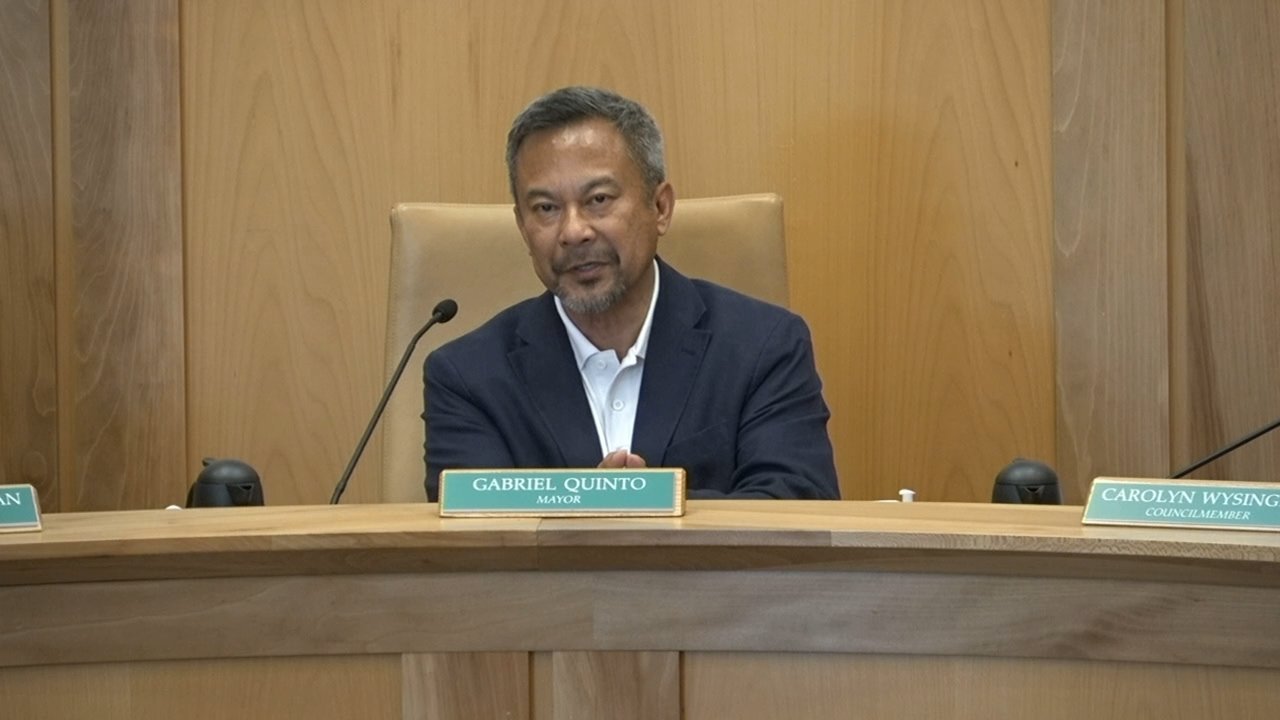
Mayor Gabriel Quinto recalled decades of transit ridership: "I've been taking a bus since I was like 5 years old and everyone took the bus here. It went up to the neighborhoods and all that disappeared in the 2008 crisis. So looking at the Contra Costa side, it is truly a shell of what it used to be." He warned of complete freeway gridlock if the measures fail. No vote was taken; the item was informational.

What's next: The Connect Bay Area Act goes before voters in five Bay Area counties this November. If it passes, AC Transit would receive roughly $52 million annually — enough to avoid the contingency cuts and potentially restore service. If it fails, the 16% reduction and 300 layoffs move forward.


Flock Cameras Off but Not Gone: Council Demands Updates Until Hardware Comes Down

Why it matters: El Cerrito is now the only East Bay city without a Flock license plate reader contract, but residents fear the deactivated cameras may still collect data until they are physically removed from city streets.

Where things stand: City Manager Karen Pinkos reported that Flock cameras have been turned off and neighboring agencies confirmed they do not have access, but the hardware has not been physically removed. A work order has been submitted and the city has asked Flock to expedite. The contract prohibits the city from removing the cameras itself, creating a frustrating dependency on the company's timeline.

Mayor Pro Tem Saltzman pushed for accountability: "Can we commit that at minimum, we'll have updates at every council meeting until they come down? And also, is there anything residents can do besides continuing to email us?" Captain Loren Caputo committed to continuing follow-up with Flock and offered his direct email address to concerned residents. Pinkos confirmed: "I'm happy to commit to updating the council every time during staff communications until they come down. Absolutely."

Three public commenters weighed in. Catherine Kimsey noted that in other cities where Flock delayed removal, government employees put plastic bags over the cameras. Rebecca Kenney recommended future contracts include clear timelines for hardware removal and give the city the right to remove equipment if the vendor fails to act. Megan Steffen thanked staff for the follow-up.

Mayor Quinto reminded residents of the broader context: "We are the only city in the East Bay that does not have Flock. So the importance of neighbors looking out for each other is so important."

What's next: Staff will provide Flock removal updates at every council meeting until the cameras are physically taken down.


Why the Fire Department Can't Go Electric — Yet

Why it matters: The council's approval of a gas-powered fire command vehicle exposed a fundamental tension between El Cerrito's climate commitments and the realities of emergency response, where electric infrastructure fails first.

The basics: The consent calendar included a $100,000 purchase of a replacement command vehicle for the fire department.

Where things stand: Public commenter Howdy Gowdy urged the council to postpone the purchase and consider an electric option, noting the Chevy Silverado EV costs less ($53,000 vs. $57,000) and the city already bought one for Public Works.

Fire Chief Eric Sailors shut down the comparison firmly. "They're response vehicles. So they're being called to an area of disaster and the first thing that happens in those areas is electricity gets turned off. So when you think about the Palisades fire, they had electricity off for five weeks, Eaton fire, three weeks," he said. Cal OES and Cal Fire write specifications for these vehicles to ensure mutual aid compatibility across the state. The chief reported reviewing all 10 vehicles line by line and finding no candidates for electrification — every one is either a response vehicle or tows rescue trailers.

Sailors also described years of deferred replacement: "The challenge was that we froze most of these replacements for so many years that we're sitting on a bunch of 2007, 2006 vehicles and some of them are hitting 300,000 miles." The plan is to replace one vehicle per year over 10 years.

Councilmember Lisa Montoyama asked whether the city uses biodiesel; Pinkos clarified it uses renewable diesel, a different product. Mayor Quinto discussed hydrogen as a potential future fuel for heavy-duty emergency vehicles, citing his work with the Air Board and noting recent state grants and legislation from Senator McNerney to expand hydrogen funding.

Decisions: The purchase was approved as part of the consent calendar (For: 4, Against: 0, Absent: 1 — Councilmember William Ktsanes).


District Maps Are Final, but Will Renters Actually Get to Vote?

Why it matters: El Cerrito formally adopted the ordinance establishing district-based elections, but the sequencing of which districts vote when could systematically disadvantage the renter communities the new map was designed to empower.

Where things stand: The consent calendar included final adoption of the district election ordinance using Map A2, with a revised version in the supplemental packet correcting only the voting block on the final page. November 2026 will be El Cerrito's last at-large election before the switch to districts in 2028.

Public commenter Wally Nowinski raised the sharpest objection: the council created two districts (2 and 4) specifically to capture renter communities of interest but scheduled them for the 2030 midterm election. He cited a roughly 20-percentage-point drop in voter turnout among renters between midterm and presidential elections — meaning the districts designed to amplify renter voices will first be contested in the election cycle where renters vote least.

Rebecca Kenney criticized the map selection rationale, saying the only stated reason for choosing Map A2 involved a councilmember looking at the borders of their own district, and that earlier arguments focused on giving more power to the upper middle class. Gerald Fagoni praised the redistricting work and suggested council members informally adopt unrepresented districts until elections begin.

Decisions: Adopted on consent (For: 4, Against: 0, Absent: 1 — Councilmember Ktsanes).

What's next: The council nomination period for the November 2026 at-large election opened July 13 and closes Aug. 7, 2026.


Fire Hazard Letters Getting a Friendlier Tone

Why it matters: Council members worried that the city's threatening abatement letters discourage compliance rather than encourage it — particularly among elderly residents, non-English speakers and people unfamiliar with municipal processes.

Where things stand: Fire Marshal Chase Beckman presented a resolution declaring an expanded list of properties as public nuisances for fire hazard abatement. He acknowledged the list is longer than prior years but noted many involve minor deficiencies caught by thorough inspectors.

Mayor Pro Tem Saltzman, referencing the Community Safety Committee's recommendation to extend the compliance period to 45 days, pushed for overhauling the notification letter. She noted the current version is intimidating and doesn't indicate extensions are routinely granted.

Councilmember Montoyama agreed, citing cultural barriers: "If my mom got this letter, she would never ask for an extension because she would think this is what you have to do. And I think we need to be thinking broader about putting it on the website and saying extensions are possible on a case-by-case basis."

Fire Marshal Beckman committed to adjusting the language and adding information about availability. Mayor Quinto delivered firm remarks about the importance of compliance, citing insurance implications, liens and the recent Mount Diablo fire.

Decisions: The resolution with revised exhibit passed unanimously (For: 4, Against: 0, Absent: 1 — Councilmember Ktsanes). A second fire hazard abatement resolution was also adopted with the same vote.


Residents Sound Alarm on Dangerous Speeding

First-time public speaker Karen Robinson, a 20-year El Cerrito resident, described four car crashes directly in front of her Elm Street house in three and a half years. Her own parked car was totaled first — the at-fault driver had no insurance and no valid license. A neighbor's car was totaled by a drunk driver. The most recent crash, on a Sunday, involved a high-speed driver whose car ended up on the sidewalk. Robinson expressed fear that the $8 million Richmond Street renovation project could push more traffic onto her street.

MJ Jawili, a Richmond Street resident, supported the complete streets project despite losing two parking spots, noting cars routinely travel over 40 mph on the half-mile stretch. Rebecca Kenney reported that at the HAWK signal at San Pablo Avenue and Eureka, four cars drove through a solid double red while she was in the crosswalk, and called for clearer signage on uncommon traffic signals.


Minor Items

  • Consent calendar approved 4-0 (Ktsanes absent), including approval of minutes, Environmental Quality Committee appointment, June disbursement register, quarterly cash and investment report, and certification of June 2 special election results.
  • Section 115 Trust investment has returned an average 12.86% since inception; a public commenter flagged a typo listing the quarterly report as "third quarter" instead of fourth.
  • Microsoft 365 upgrade approved at $65,000/year — nearly triple the previous $25,000 — for enhanced cybersecurity; years 2-3 will cost roughly 10% more due to SB122, a new state sales tax on software-as-a-service.
  • Arts and Culture Commission reported it is actively seeking a poet laureate, has created an artist registry, decorated utility boxes at Harding School, partnered with schools and the library on student art projects, and is planning October Arts Month and Messy Art Day.
  • New Community Development Director Claudia Garcia was introduced to the council.
  • National Night Out is set for Aug. 4 with 40 block parties registered.