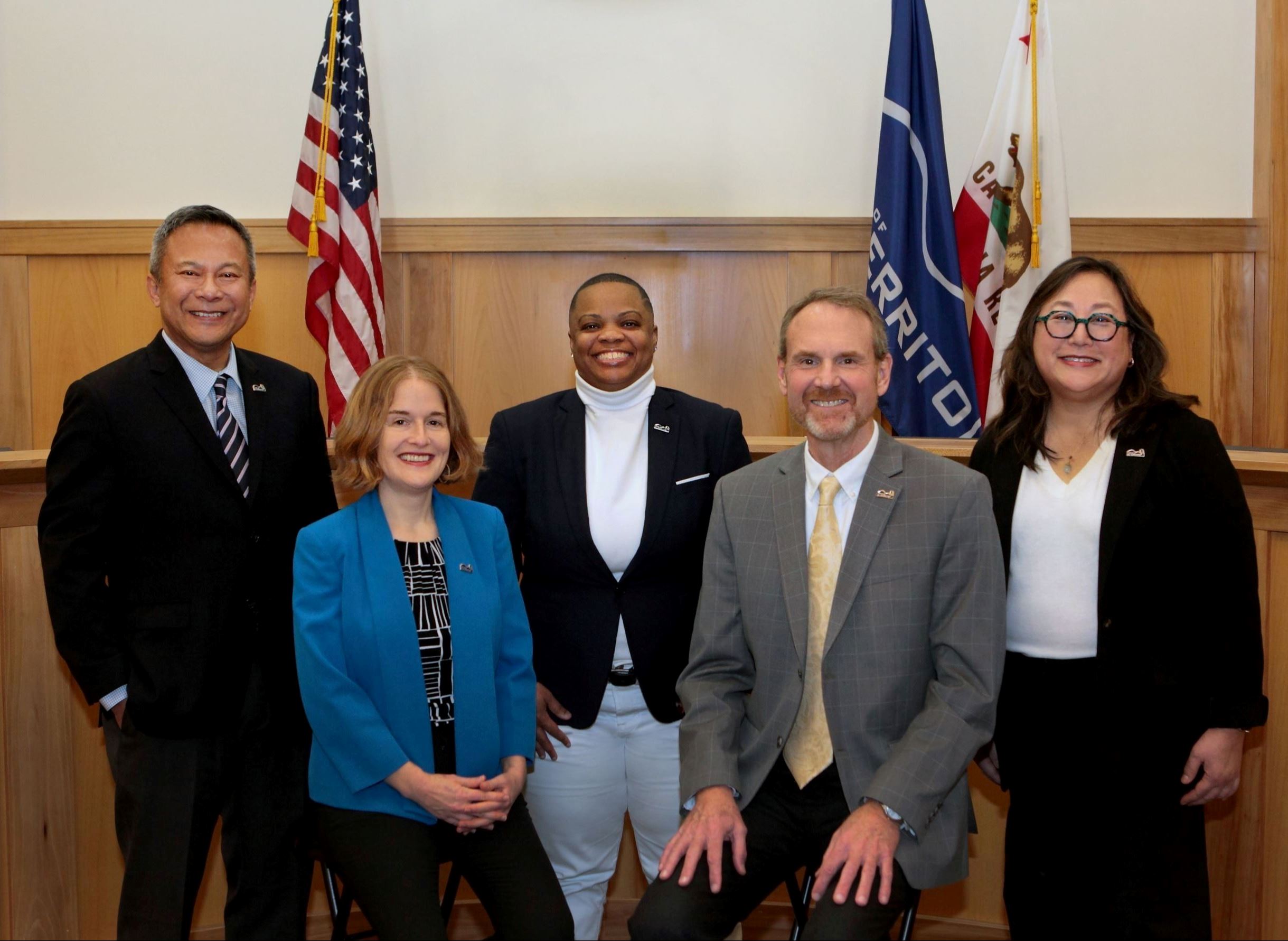
City Council - Mar 03, 2026 - Special Meeting

City Council - Mar 03, 2026 - Special Meeting

City CouncilEl CerritoMarch 3, 2026

Sources:

Locunity is a independent informational service and is not an official government page for this commission.We use AI-assisted analysis and human editorial review to publish information.

Police Audit Exposes Federal Access to El Cerrito License Plate Data

A sweeping audit of El Cerrito's Flock Safety surveillance system, a state senator's first-ever presentation at City Hall, and a mounting credibility fight over the June library tax measure dominated a packed special meeting that laid bare the tensions between the city's progressive values and its operational realities.

  • FBI, ATF among federal agencies with unauthorized access to El Cerrito license plate reader data during 2023 installation; police chief commits to monthly audits ahead of April 21 contract renewal

  • State Senator Jesse Arreguín pledges same-day action to prevent a two-year delay of San Pablo Avenue pedestrian safety improvements

  • Families and children testify about dangerous school crossings while a road safety survey showing 90% support for slower streets sits unpublished for over a year

  • Council votes 4-0-1 to examine disputed "senior exemption" language on library parcel tax ballot before June election

  • Richmond Street project grows to $12.9M — fully grant-funded — but key dangerous intersection dropped from scope

  • Financial Advisory Board pushes to make 17% reserve floor binding as residents warn of structural budget gap


Sanctuary City Meets Surveillance Tech

Police Chief Paul Keith delivered a detailed and at times uncomfortable audit of the city's Flock Safety license plate reader system, prompted by data sharing problems uncovered at neighboring agencies including Richmond, Mountain View, and Los Altos.

Why it matters: El Cerrito is a sanctuary city. The audit revealed that during the initial camera installation period from June to August 2023 — before the police department took administrative control — the Flock system defaulted to sharing data outside California, including with four federal agencies: the FBI, ATF, National Park Service, and GSA.

Where things stand: After the department set its own sharing controls in August 2023, access was significantly restricted. But two additional federal access incidents occurred afterward: the U.S. Postal Inspector's Office exploited a loophole allowing federal agencies to search in-state databases from September to November 2023, and the VA Loma Linda Healthcare System Police conducted two searches in May 2025 after being misidentified as a California agency due to human error.

Keith emphasized no immigration agency access was found and noted sharing such data would violate California law. But he did not sugarcoat his frustration:

"I was very disappointed in the system. You really hate to see that — have great intents going into a system and to see the way that it was set up and the way that it was executed not up to our standards."

The other side: Keith credited the system with significant law enforcement wins, including solving a Capitola homicide, a fatal hit-and-run on San Pablo Avenue, and a home invasion robbery, along with a 40-year low in burglaries and stolen vehicles in 2025.

Councilmember Carolyn Wysinger pressed on whether the loopholes had been permanently closed:

"The concern would still be continuing to make sure whatever this loophole is has been patched. It's not something that can recur, is something that someone can find and make bigger."

Councilmember Lisa Montoyama raised a scenario in which a federal agency could disguise itself as a California agency and slip through the system's screening.

What's next: A public meeting is scheduled for March 10. The Flock contract renewal comes to council April 21, with Flock representatives present. Keith announced monthly audits will become standard practice.


Senator Pushes to Fast-Track San Pablo Avenue Safety

State Senator Jesse Arreguín — the former mayor of Berkeley and the first state senator to present at El Cerrito City Hall in many years — delivered a wide-ranging legislative update that touched housing, transit, immigration, public safety, and climate.

Why it matters: The senator committed to immediate, tangible action on El Cerrito's most dangerous corridor — San Pablo Avenue (State Route 123) — by sending a letter the same day to the California Transportation Commission to prevent a two-year delay of pedestrian safety improvements under the SHOP program.

Transit funding: Arreguín detailed SB 63, which would enable a regional sales tax ballot measure in November — a half-cent in four Bay Area counties and a full cent in San Francisco — to provide 14 years of transit funding with performance benchmarks and up to 10% funding withheld for agencies that don't comply. Mayor Pro Tem Rebecca Saltzman used the exchange to highlight the devastating effects of AC Transit's recent realign on west county service:

"I think West Contra Costa county really got the short end of the stick in the AC Transit realign... The new data just came out last week on the ridership and how that was impacted. And you can see the biggest drops were in West Contra Costa."

Housing and infrastructure: As the new chair of the Senate Housing Committee, Arreguín highlighted El Cerrito's $34.9 million award from the Strategic Growth Council's Affordable Housing and Sustainable Communities (AHSC) Program for transit-oriented development at El Cerrito Plaza and described work on a statewide housing bond, extending Multifamily Housing Program and Homeless Housing, Assistance, and Prevention funding, and cleanup language for SB 79 (BART station upzoning).

Councilmember Carolyn Wysinger pressed on a broader tension:

"We're building housing, but our infrastructure is being far outpaced by the rate that we're building housing. Do you ever anticipate a time where with those housing mandates we will also get a lot more funding for infrastructure such as parks, such as libraries?"

Arreguín offered support for centralizing the application process and funding for housing projcets:

"Fundamentally, I think we need to go back to bringing back some form of redevelopment in California so that the Communities have the tools, but obviously with a very clear focus and having clear guardrails to make sure that we have ongoing sources of revenue to help fund affordable housing, critical infrastructure improvements.

Immigration and public safety: Arreguín detailed $50 million in emergency state funding ($25 million for attorney general lawsuits, $25 million for rapid response and legal defense), SB 81 protecting hospitals from ICE, SB 627 prohibiting law enforcement from wearing masks, and $100 million in Prop 36 implementation funding. Councilmember Lisa Motoyama raised concerns around state-level discussions about property transfer tax going away, noting it represents a significant portion of El Cerrito's general fund.


Families Plead for Traffic Action as Studies Gather Dust

A coordinated family appeal during public comment delivered some of the meeting's most compelling testimony — and exposed a widening gap between resident urgency and city follow-through on traffic safety.

Where things stand: Stuart Sonatina described the daily terror of crossing Carlson Boulevard and San Pablo Avenue on the school commute and invited council members to walk with his family. His son Zilvano Sonatina testified that cars never stop at Carlson and speed through yellow lights on San Pablo. Gaia Sonatina argued dangerous streets rob children of independence and autonomy.

Sonatino proposed adopting Oakland's predetermined stop-sign map model to speed up decisions and called for quick-build traffic circles rather than paying outside traffic consultants.

Janet Byron reminded the council that 125 people signed a North El Cerrito traffic calming petition two years ago with no visible results, and that a local road safety plan survey conducted over a year and a half ago — showing 9 out of 10 residents want slower streets — has never been published.

Mayor Pro Tem Rebecca Saltzman shared her own harrowing experience:

"Just last week I almost was killed when a driver came barreling down Richmond more than 40 miles per hour driving in the wrong direction. And I was crossing with a green light through Moeser, across Moeser."

Decisions: No formal action was taken, but State Senator Jesse Arreguín did mention the testimony when discussing his letter to the California Transportation Commission. The Richmond Street Complete Streets project (see below) addresses some, but not all, of the corridors residents identified as dangerous.


Library Tax Under Fire as Task Force Takes Shape

The June library parcel tax ballot measure and the formation of the library task force generated the meeting's most sustained debate — spanning public comment, policy discussion, and a late-meeting motion.

"Senior Exemption" Credibility Challenge

Why it matters: Multiple residents challenged the ballot description's reference to "senior exemptions," arguing the language is misleading. Resident Michael pointed out that the Gonsalves-Deukmejian-Petris Senior Citizens Property Tax Assistance Law has been inactive since 2009 and the California State Controller’s Property Tax Postponement Program places a lien on the homeowner's property — making it a loan, not an exemption. He called the language "disingenuous."

Resident Loree, a senior who signed the library petition, said she did so believing there was a real senior exemption and expressed feeling deceived. She also criticized the $80,000 cost of a June ballot, saying the council is losing community trust. Bill Barish separately challenged the city's characterization that it would "own" the proposed BART Plaza library, noting the $1/year lease arrangement makes the city a lessee, not an owner.

Decisions: Councilmember Montoyama moved to schedule a study session on the senior exemption at the next possible council meeting. The motion passed 4-0-1, Mayor Pro Tem Rebecca Saltzman abstained.

Task Force Design

The council gave detailed direction on the seven-member task force that will advise on the library's future — regardless of whether the June measure passes.

City Manager Karen Pinkos framed the stakes bluntly:

"If it doesn't pass, I'm going to need this task force to try to help me come up with what we're going to do next because we have a substandard, decrepit, falling-apart building that we need to deal with, that we know will cost upwards of $10 million just to fix it."

The council agreed on a mission statement focused on the library's future (not the ballot measure itself); enhanced applications including education/experience, a statement of candidacy, and local references; a modified selection process where all council members review applications and submit ranked preferences; retention of the owner/renter question; and Saltzman as council liaison. The task force will not convene until after the June election.


Richmond Street Hits $12.9M — Fully Funded, Key Intersection Dropped

Public Works Director Yvetteh Ortiz explained that the Richmond Street Complete Streets project budget grew from an initial $10 million in September 2023 to $12.9 million through supplemental SB1 Local Partnership Program funds, AHSC funds, and East Bay MUD funding. The additional money covers expanded scope — curb bulb-outs, raised intersections, and speed tables — as well as cost escalation. Ortiz confirmed the project has no general fund support and no funding gap.

The other side: The protected intersection treatment at Richmond and Moeser — proposed as an alternative if AHSC Round 9 funding was secured — was dropped because that funding was not awarded. Mayor Pro Tem Rebecca Saltzman highlighted that the intersection remains extremely dangerous, noting many students cross there near El Cerrito Preschool Cooperative. She questioned AHSC's scoring transparency:

"We scored really high in the AHSC process last year. We outscored almost all of the projects that got funding. So the points aren't the problem."

Decisions: Approved unanimously (5-0) as part of the consent calendar. Ohlone Greenway improvements funded through AHSC remain in the pipeline but have not yet kicked off.


Budget Guardrails Tighten

FAB Recommends Binding Reserve Policy

Financial Advisory Board Chair David Carvel presented a recommendation to change Section 3.2 of the city's comprehensive financial policies from using the word "goal" to "policy" for the 17% general fund reserve threshold. When the projected reserve falls below 17%, the city would be required to adopt a formal restoration plan during the next budget cycle. Mayor Pro Tem Rebecca Saltzman indicated she would have extensive comments when the policy returns for full discussion on March 17.

Resident Sounds Alarm

Kimberly White delivered a pointed public comment about the city's structural revenue-expense imbalance, arguing the council swings between extremes of doing nothing and relying on reserves versus "nuclear options" like layoffs or cutting health care. She urged "credible, data-driven steps that protect our employees, protect our services, and restore financial stability."

What's next: A community budget workshop is scheduled for March 7, with an online budget survey also available, as the two-year budget process gets underway.


Minor Items

  • American Red Cross Month Proclamation approved 5-0; a Red Cross volunteer noted the organization responded to two multifamily fires in El Cerrito in 2025, serving 144 residents with relief and financial assistance.

  • Municipal Pooling Authority JPA updated and approved 5-0; the nearly 50-year-old, 21-city self-insured risk pool provides general liability coverage up to $1 million, workers comp up to $500,000, and an on-site wellness program. MPA has raised its funding level from approximately 75% to 90% over the past decade. A new captive insurance layer launched in July 2025.

  • Electrify My Block: The Environmental Quality Committee recommended the city endorse PG&E's pilot targeting approximately 96 addresses near the Potrero area, offering roughly $35,000 per household for electrification by retiring aging gas infrastructure. City Manager Pinkos acknowledged the program's value but cited staff shortages preventing active co-branding. Approved as part of consent.

  • Economic Development Committee appointment, Arbor Week proclamation, and Women's History Month proclamation approved 5-0 on consent.

  • January 2026 disbursement and check register report approved on consent after brief discussion.

  • Trail Trekkers president Brian Richmond reported volunteers were blocked from building on public paths for liability reasons; he advocated for $35,000–$40,000 in public path signage, citing both recreation and emergency evacuation value.

  • Council liaison assignments: Mayor Pro Tem Saltzman was elected CCTA primary alternate and appointed library task force liaison.