
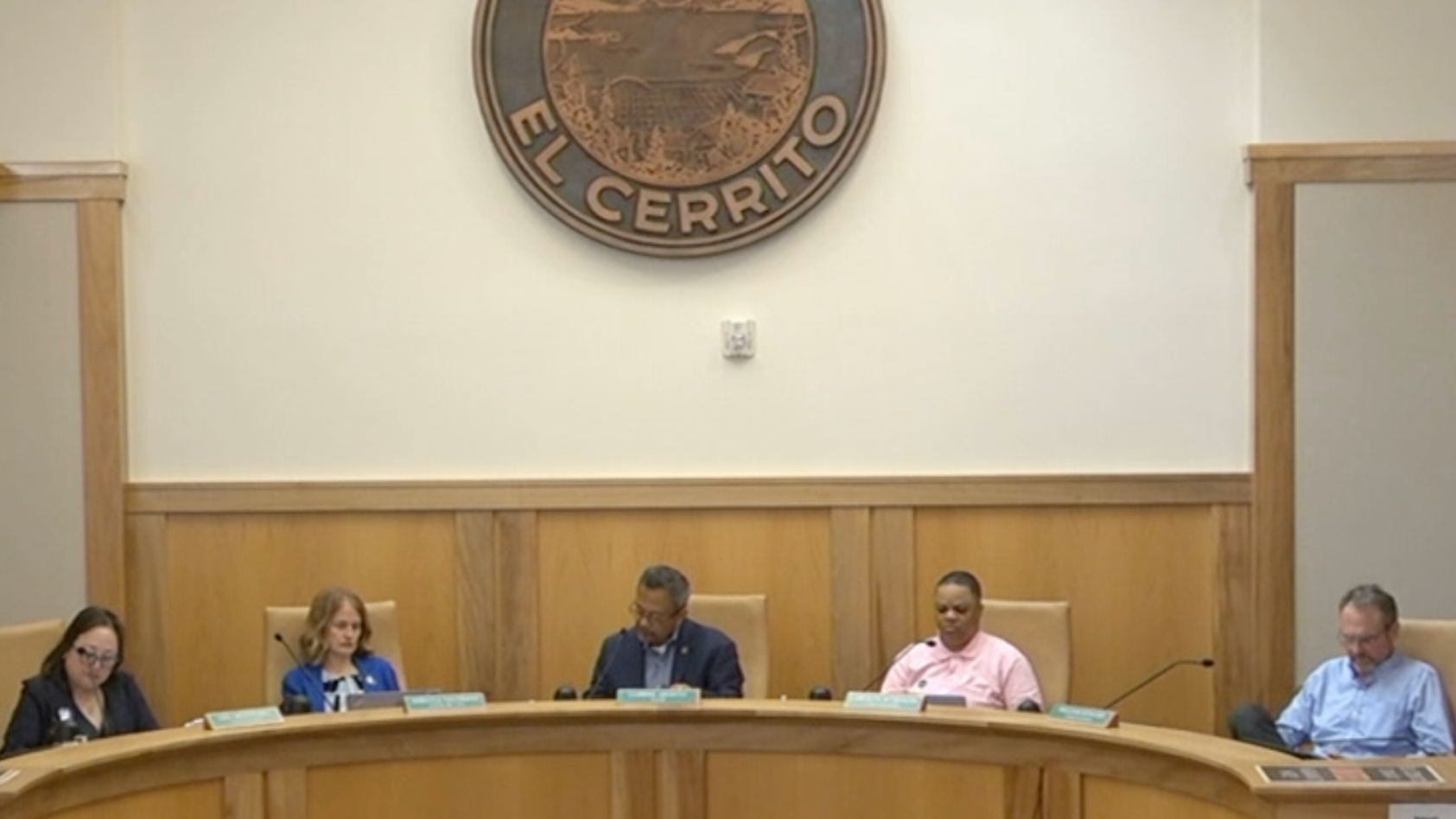
City Council - Jun 02, 2026 - Regular Meeting

City Council - Jun 02, 2026 - Regular Meeting

City CouncilEl CerritoJune 2, 2026

Sources:

Locunity is a independent informational service and is not an official government page for this commission.We use AI-assisted analysis and human editorial review to publish information.

Residents Demand Hearing on Police Data Tool as City Unveils Balanced Budget

El Cerrito's council meeting laid bare two defining tensions: how to rebuild community trust around police technology after the divisive Flock experience, and how to fund aging infrastructure with constrained revenues. At least six residents pressed the council to formally agendize a planned police data software purchase, while staff presented a balanced biennial budget that preserves core services but reveals deferred maintenance and zero dollars for playground equipment over five years.

  • Residents demand formal hearing before city buys Peregrine Technologies police data tool, weeks after council killed the Flock camera contract

  • Balanced biennial budget preserves library hours, landscape maintenance while launching new internal service funds for equipment replacement

  • $10 million capital plan dominated by transportation grants but $0 for playground equipment sparks council concern

  • AC Transit warns of 16% service cuts and 300 job losses by June 2027 due to $200 million deficit

  • Cyclists push for stop signs at Ohlone Greenway crossings, saying 90% of drivers already stop voluntarily

  • Districting workshops set for June 3 and June 9 as city draws five-district election map


After Flock, Residents Say: Not Again

Weeks after the El Cerrito City Council voted to end its contract with Flock Safety's license plate reader cameras, Police Chief Paul Keith and City Manager Karen Pinkos used the staff communications segment — not a formal agenda item — to make an extended case for Peregrine Technologies, a data integration tool the department wants to purchase. The preemptive briefing drew sharp pushback from residents who called it a procedural end run.

Why it matters: The community's deep distrust of police surveillance technology, freshly stoked by the Flock debate, means any new tool risks eroding public trust if adopted without transparent deliberation. Because the item was presented during staff communications rather than as an agendized action item, no formal council vote or public hearing was required — a distinction that frustrated multiple speakers.

Where things stand: Keith described Peregrine as a search engine for the department's existing siloed data systems — not surveillance, not generative AI, not predictive policing, and not connected to federal agencies or affiliated with Palantir. He said the tool would save at least $35,000 annually by enabling digital case filing with the Contra Costa County District Attorney's office and would eliminate an estimated 53,000 pages of paper. He cited endorsements from police chiefs in Hercules, San Pablo, and Richmond.

"Peregrine Technologies is not a surveillance system. It's not a mass surveillance company. It does not collect data except on agency users. It is not generative AI," said Keith.

He added that he had spent four years negotiating the price down from a six-figure amount to within the city manager's spending authority.

Pinkos acknowledged the tension.

"We understand that people are absolutely concerned about technology, especially when it comes to the police department. We understand the times we live in," she said, while distinguishing Peregrine from the Flock cameras.

The other side: At least six public speakers pushed back, demanding the contract be placed on a future council agenda for formal community input rather than approved administratively.

Public commenter Megan Steffen criticized the process, arguing that Keith heard public comment at the Community Safety Committee and did not pursue additional community outreach. She asked that compassion be extended to residents who feel less safe with military-origin technologies.

Public commenter Bill Barish called the contract "son of Flock" and asked the council to delay and formally agendize it.

Public commenter Jiggy Geronimo noted that Peregrine has a predictive policing option and asked whether the city could find a vendor without that feature. Public commenter Cindy McPherson expressed concern about the company's military-grade surveillance origins and its investors, citing billionaire backers and former Palantir executives.

Public commenter Ry Crawford asked for formal council discussion with community input. A public commenter identified as Nakisha echoed process concerns, arguing that the chief's presentation is inherently biased toward his operational needs and that the community should hear from independent experts.

One speaker did not align with the other public commenters. Public commenter Denise Sangster spoke in favor of the canceled Flock contract, citing a survey of her 2,000-member Arlington Neighbors email list that showed 1,579 in favor and only 16 opposed.

What's next: Because this was staff communications and not a formal agenda item, no action could be taken. The sustained public pressure may force the council to agendize Peregrine for a future meeting. Pinkos encouraged residents to contact the chief directly.


Balanced Budget Marks Fiscal Turnaround

City Manager Karen Pinkos and Budget Manager Claire Coleman presented the proposed FY 2026–28 biennial budget in a study session, painting a picture of hard-won fiscal stability — with lingering structural risks underneath.

The basics: This is El Cerrito's first biennial budget using target-based budgeting, a shift away from incremental inflation-based spending. Personnel costs represent approximately 75% of the general fund.

Why it matters: The city avoids layoffs and preserves library hours and landscape maintenance despite a volatile economy, marking a significant turnaround from near-bankruptcy conditions several years ago. But a projected $250,000 annual draw on fund balance in each year signals the margin is thin.

Where things stand: Property tax revenue is projected at $19.2 million (a 5% increase), sales tax at $12.4 million (2% increase), and utility users tax at $4.9 million — a significant jump partly attributable to recalibration and a Santa Barbara court ruling that extended the tax to streaming services. General fund reserves are projected at 31% in year one and 29% in year two, combining a 13% economic downturn reserve fund and 16% unassigned.

Major one-time expenditures include self-contained breathing apparatus (SCBA) equipment and a fire engine, funded through newly created internal service funds — roughly $890,000 for vehicle and equipment ISFs and $300,000 for capital projects. Budget reductions include decreased council retreat facilitator spending, reduced council travel, a 50% cut to the Fourth of July contribution, and cancellation of the advisory board dinner, holiday lights, and some recreation events.

Pension costs are approaching a peak around 2032, but employees under the lower-cost PEPRA formula now make up over 50% of public safety staff, promising long-term savings. Insurance costs were moved to a non-departmental line for transparency.

Staff and council offered praise for the budget process.

"I've worked for the city for 25 years. I feel like this budget is the best that we have done to date to plan for the future that I've been involved in," said Pinkos.

Mayor Gabriel Quinto praised the presentation:

"In my 12 years in office here, this is the most transparent presentation that I've seen," he said.

Councilmember Carolyn Wysinger credited years of fiscal discipline:

"Even the reason that we're able to have this conversation today is that at least going back to the time that I came on council four years ago, we were already saying in 2026, that's when we're going to have to start making hard decisions."

During public comment, Financial Advisory Board Chair David Carvel noted that salaries across almost all departments are increasing 10 to 20% in the budget and urged the council to hold the city accountable, as high salaries also affect pension liabilities. Financial Advisory Board Member Michael McDougall pushed back against recurring public narratives that city management is overpaid, arguing the numbers show responsible management.

Decisions: No action was taken; budget adoption is scheduled for June 16.


$10 Million Capital Plan Reveals Infrastructure Gaps

Public Works Director Yvetteh Ortiz presented the five-year capital improvement program alongside the budget — the city's most comprehensive CIP in over five years — showing $10 million in first-year spending across 30 active projects.

Why it matters: Transportation projects dominate, funded through Measure A street improvement funds, SB1, and major state grants including funding for improvements around El Cerrito Plaza BART station and the Richmond Street Complete Streets project. But the plan reveals stark tradeoffs: zero dollars allocated for playground equipment over five years, and reduced street repaving frequency as rising costs force a shift to biennial paving.

The full unfunded list of potential future infrastructure needs reaches roughly $200 million over 50 years to a century — a figure staff characterized as normal for public infrastructure.

Mayor Pro Tem Rebecca Saltzman flagged the playground gap.

"I think some residents will be very unhappy to see that over the next five years we have $0 allocated for playground equipment," she said.

She also noted a significant dip in street improvement spending in FY 2029 and FY 2031 and requested a more robust public and council process for CIP prioritization.

Councilmember Lisa Montoyama suggested color-coding projects by health, safety, and legal requirements versus discretionary spending to help the public and council understand what is mandatory and what is optional.

What's next: The CIP was published using ClearGov software with interactive project details. Staff will return with updates tied to the mid-cycle budget review.


FAB Pushes for Equipment Savings Rules and Performance Metrics

The council unanimously approved Financial Advisory Board recommendations aimed at preventing future budget shocks from large equipment purchases.

Where things stand: Financial Advisory Board Chair David Carvel presented four recommendations: support continued internal service fund development; have staff return by year-end with a complete inventory including contribution schedules, target balances, drawdown rules, and asset replacement schedules; develop key performance indicators; and acknowledge staff's improved CIP and budget book.

Budget Manager Claire Coleman supported the goals but cautioned against moving too fast on formal policy.

"Developing a very strict council-adopted policy at this time could really hamstring staff's ability to actually determine the best path forward," she said.

Coleman noted the ISF program is being built from scratch and needs flexibility. On KPIs, she was blunt:

"I would much rather do fewer things well than many things poorly because I don't think that gives you any information."

She cited San Rafael's two full-time data scientists as an example of the staff investment required.

Mayor Pro Tem Rebecca Saltzman requested staff return before the mid-cycle budget update with progress on an administrative ISF policy and contribution schedules. Councilmember Lisa Montoyama supported giving staff leeway on implementation details.

Decisions: Approved unanimously (For: 5, Against: 0, Absent: 0) as part of the consent calendar by voice vote.


AC Transit Warns of Steep Service Cuts

Ryan Lau, a representative of AC Transit, warned during public comment that the transit agency's board of directors would consider service reductions on June 10 due to a four-year, $200 million deficit beginning in FY 2027–28. A state loan has stabilized next year's budget, but without new sustainable revenue, a 16% service reduction and 300 personnel losses are possible, potentially taking effect as soon as June 2027. No decisions have been made about specific routes.

Why it matters: El Cerrito residents rely heavily on AC Transit bus service. A 16% cut would reduce transit options for commuters and transit-dependent residents across the city.


Cyclists Call for Greenway Stop Signs

Public commenter Henry Pinkard, who rides the Ohlone Greenway daily with his daughter on a cargo bike, urged the council to add stop signs for cars at street crossings. He noted that over 90% of drivers already stop voluntarily, creating confusion about right of way, and flagged a broader systemic concern: staff told him that even a single stop sign requires a consultant traffic study. Public commenter Jiggy Geronimo echoed the request, describing the difficulty of navigating crossings with children.

Why it matters: The speakers highlighted a disconnect between common-sense safety fixes and the bureaucratic process required to implement them — a frustration with implications beyond the Greenway.


Minor Items

  • Loving Day Proclamation: Human Relations Commission Chair Champagne Brown presented the Loving Day proclamation, approved unanimously on the consent calendar.

  • Economic Development Committee Appointment: Approved on the consent calendar.

  • Electric Paratransit Van Purchase: The council approved the purchase of an electric paratransit van to replace a Class B vehicle that has been idle for two years due to driver licensing issues. Recreation Director Chris Jones explained the smaller Class C van will be easier to staff. The existing bus will be auctioned.

  • Golden Gate Fields: Mayor Quinto announced support for the East Bay Regional Park District's acquisition of Golden Gate Fields as open space.

  • Districting: A community workshop is scheduled for June 3 from 6–7:30 p.m. in council chambers; a special council meeting to review draft maps is set for June 9 at 6:15 p.m. Public commenter Michael McDougall cautioned that a school-district-based map proposal may not align well with census blocks because the West Contra Costa Unified School District draws boundaries at the county level.

  • Crime Update: Chief Keith reported a May 27 assault on the Ohlone Greenway in which an elderly woman was beaten with a box wrench, suffering traumatic injuries. The suspect was charged with robbery, attempted murder, mayhem, and torture. He shared data showing El Cerrito had the fifth-highest violent crime rate among 19 Contra Costa County cities in 2024. He noted that the Flock cameras would go dark within days following the council's May 5 vote.

  • Pride Month and Juneteenth: Council members and the mayor recognized Pride Month and announced a planned first-ever Juneteenth flag-raising ceremony.

Residents Demand Hearing on Police Data Tool as City Unveils Balanced Budget | City Council | Locunity