
Dixon Extends Data Center Moratorium to 2027 in Unanimous Vote
City Council • DixonNovember 3, 2026
Locunity is an independent informational service and is not an official government page for this commission. All information is sourced from public footage and an analysis of official agendas with the aid of responsible, fact-checked AI. to report an error or omission.
The Dixon City Council voted 5-0 on Nov. 3, 2026, to extend its pause on data centers through Sept. 30, 2027. Staff said the extra time will be used to write rules for a land use the city's code doesn't currently recognize. The council also adopted a new 45-day freeze on large battery storage facilities, even after staff warned the state can override it. Water staff, meanwhile, laid out a costly and deadline-tight path to meeting California's chromium-6 standard.
- Data center moratorium extended to Sept. 30, 2027, 5-0, over a trade group's legal objections
- Chromium-6 compliance could cost about $4.5M per treated well; a new deep well may not be ready until after the deadline
- 45-day moratorium on battery storage facilities of 1 megawatt or more passes 5-0 despite the state override risk
- Residents warn water customers could face about $13M in compliance costs
Data Centers Lose Their Open Door, for Now
The basics: Dixon's zoning code has no data center category. Without one, a project could seek approval as an unlisted use, potentially by right, meaning without a discretionary public hearing.
Why it matters: The extension blocks any data center approvals for 10 more months while staff drafts standards for power, water, operations and land-use compatibility. The pause comes as data center proposals are testing small-city utility systems across California.
Where things stand: The council unanimously adopted a 45-day urgency moratorium on Sept. 30. That moratorium would have expired Nov. 15. Community Development Director Raffi Boloyan asked for an extension of 10 months and 15 days, through Sept. 30, 2027.
"This again is a time-limited action, not a decision on whether data centers should ultimately be permitted or prohibited," said Boloyan.
Staff cited seven state bills that take effect Jan. 1 as one reason more time is needed. Staff is also preparing a request for proposals in case consultants are needed, and any RFP would come to the council first. Boloyan said a further one-year extension is possible afterward. He said no CEQA review is required, the costs are unknown and the extension needed a four-fifths vote.
The City Attorney described the goal as a shift to a permit process that would require developers to disclose their technology, water use and electrical impacts. "We're trying to take it from a use by right, which wouldn't give the city council or the public an opportunity to go and comment on it," said the City Attorney. The attorney added that the choice of technology changes a project's impact: "If you use fuel cells versus semiconductors, there's a major difference."
The other side: A representative speaking for the Western Steel Council and contractors urged a no vote. The representative argued that Government Code 65858, the state law that authorizes urgency moratoriums, and related case law require a current and immediate threat. The representative said the city has no data center applications or inquiries, which makes the moratorium legally invalid. "This can be done without a moratorium," the representative said, and offered peer-reviewed studies on heat, water and power.
Another speaker also opposed the extension. That speaker called the agenda description inadequate, said no urgency had been shown and argued for a quicker permanent code fix rather than a long pause. A third speaker supported the extension, citing noise, ultrasonic noise and utility costs.
Decisions and stakeholder impacts: The extension passed by roll call (For: 5, Mayor Steve Bird, Vice Mayor Jim Ernest, Councilmembers Thom Bogue, Don Hendershot and Kevin Johnson; Against: 0; Absent: 0). The vote cleared the four-fifths threshold. Residents get a future permit process with public review. Construction and trade interests lose near-term opportunities and signaled that the legal basis could be challenged.
What's next: Staff will draft data center standards and bring any consultant RFP to the council before the moratorium ends Sept. 30, 2027.
Chromium-6: A $4.5M-per-Well Problem
Why it matters: California's 10 parts per billion limit on hexavalent chromium puts Dixon out of compliance, with detections ranging from 12 to 24 ppb. Residents warned the cost will likely land on water customers.
Where things stand: The state standard took effect Oct. 1, 2024, with three years to comply. "We must be in compliance by Oct. 1st of 2027," said Josh Hudson, Operations Supervisor, Water Distribution Division. The state approved Dixon's compliance plan, which requires three water sources in compliance.
Staff piloted strong-base anion exchange treatment at well DW54, then paused that work to test reduction coagulation filtration (RCF) at the Homestead well, DW55. The vendor AMS began its pilot the day before the meeting, and ATEC is expected to start around Dec. 1. Staff called reverse osmosis unrealistic.
The money is substantial:
- Anion exchange: about $4.5M per site, plus $150,000 to $300,000 a year to operate.
- RCF: costs are still unknown.
- New production well: estimated at $2.5M. Staff is targeting a driller in early 2027, with the well in service around early 2028.
Deep-well doubts: A 2,200-foot monitoring well on Fitzgerald showed no chrome-6. Other deep wells, however, have shown poorer water quality and lower yields. Hudson said nearby wells "were anticipating getting 1,200 to 1,500 gallons per minute, and they're a little bit lower, more like 800 to 1,000." One councilmember asked, "Should we actually just start looking at treatment versus digging deep well?"
Funding: Staff plans to reallocate capital funds and has asked IB Consulting to review the finances. Hudson said the city has "received $500,000 in funds from our local representative Lori Wilson to help offset some of this exploration work."
The other side: Two public commenters pushed back. One questioned the cancer-risk basis for the standard, asked about other contaminants in deep wells and called the $4.5M per-site cost the price of a state mandate. A second noted that the deep well's early 2028 service date falls after the October 2027 deadline, asked about penalties and said customers face roughly $13M in costs.
Decisions and stakeholder impacts: The council took no vote. Officials said the city lost its lawsuit over the issue and is funding an appeal. Council members noted the city's rate study had flagged that a loss would require a new rate study, which puts ratepayers squarely in the path of the cost.
What's next: The ATEC pilot begins around Dec. 1. Updates are presented quarterly.
Battery Storage Pause Faces a State Workaround
Why it matters: Concerns about fire, toxics and the electrical grid drove the council to pause large battery projects. Staff warned, however, that the state can bypass the moratorium.
Where things stand: The 45-day moratorium covers standalone battery energy storage system (BESS) facilities of 1 megawatt or more. Residential and smaller accessory systems are excluded. Like data centers, BESS facilities have no category in the city code, so a proposal could be treated as a utility or industrial use.
Boloyan said staff had earlier recommended against a moratorium. Developers can opt in to a state permitting process through the California Energy Commission, which can override local governments. "Battery energy storage could still come in and circumvent our process," said Boloyan. He pointed to the Corby facility on county land, which is now going through the state process after Solano County adopted its own moratorium.
The other side: Both public commenters wanted stronger action, not less. One asked what the point of a moratorium is if the Energy Commission can override it, called lithium battery fires dangerous and urged the city to find a legal way to stop the facilities. A second cited acquaintances near the Moss Landing fire and smoke carrying heavy metals.
Decisions and stakeholder impacts: The ordinance passed by roll call (For: 5, Mayor Steve Bird, Vice Mayor Jim Ernest, Councilmembers Thom Bogue, Don Hendershot and Kevin Johnson; Against: 0; Absent: 0). It applies only to projects under the city's permitting authority. Developers who use the state opt-in path are unaffected.
What's next: The moratorium expires Dec. 15. Keeping it in place will require an extension hearing and another four-fifths vote.
A Bench for PFC Tanner Rubio
On Oct. 27, the Parks and Recreation Commission unanimously approved a memorial bench at Veterans Park for Private First Class Tanner Rubio, a Dixon resident and U.S. Marine. The bench will sit beside the basketball court where he played. The commission also granted a variance from a policy that limits memorials to small flush plaques, allowing engraving and a bronze Marine Corps seal.
Dixon residents Mary Lou and Jack Batchelor are funding the bench, working with the Rubio family. Linda Babb, Senior Admin, Public Works Department, said the donation itself costs the city nothing. The city's only expense is under $300 for concrete. The 2,000-pound bench will take 12 to 16 weeks to build. Speakers said a Marine Color Guard is expected at the ribbon cutting.
"And this bench, in honoring him, means the world to us," said Jill Rubio, Tanner's mother. She noted the meeting fell exactly 11 months after his death.
- Bureau Veritas fire marshal and life safety contract raised from $235,000 to $465,000 on consent.
- West Yost stormwater amendment of up to $46,648 and the 2026 Storm Drain Master Plan approved on consent (consent calendar passed 5-0).
- Matrix Consulting Group hired for a comprehensive fee study of up to $29,000, which could lead to updated city fees.
- West A Street: City Engineer Christopher Fong said consultant DKS will present data and options Dec. 1 and a costed left-turn recommendation Jan. 5. Businesses have reported lost customers since a new median changed access.
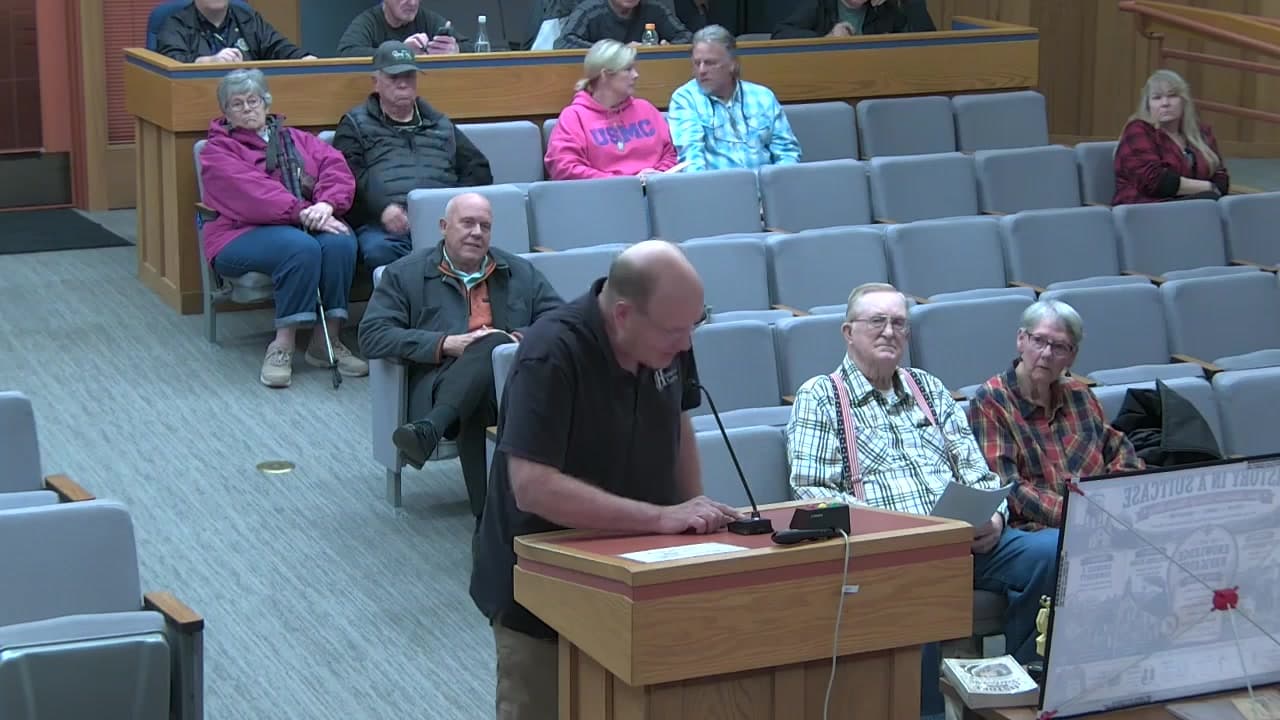
- History in a Suitcase: The Dixon Historical Society unveiled a 24-object talking history kit for fourth graders, funded in part by a $5,000 city donation.
Looking ahead: The Planning Commission meets Nov. 10, the City Council meets Nov. 17, Parks and Recreation meets Nov. 24, and the council meets again Dec. 1, when DKS is scheduled to present West A Street options.