United Nations – Devex – Sep 20, 2026
Devex • United NationsSeptember 20, 2026
Locunity is an independent informational service and is not an official government page for this commission. All information is sourced from public footage and an analysis of official agendas with the aid of responsible, fact-checked AI. to report an error or omission.
Gates Foundation Bets $1B That AI Can Be the Great Equalizer
As the UN General Assembly convenes this week, the global development community faces a defining question: will AI widen the gap between rich and poor countries, or close it? Devex's pre-UNGA briefing mapped the stakes — from billion-dollar pledges and leadership races at the UN and WHO, to the community health workers and farmers who will determine whether any of it matters on the ground.
- Gates Foundation pledges up to $1 billion over two years to bring AI to the Global South in health, education, agriculture, and digital equity
- Two front-runners for WHO Director-General head to the Devex stage as the organization navigates post-U.S. funding crisis and the DRC's largest Ebola outbreak
- UN Secretary-General race narrows, with conventional wisdom favoring the first woman to lead the world body — likely from Latin America
- OpenAI commits $60 million to AI-powered smallholder farming, but panelists warn that technology without local trust, data, and language support will fail
- Pandemic preparedness faces a credibility test as Friday's UN high-level meeting arrives amid an Ebola outbreak that went undetected for months
The $1 Billion Down Payment on AI Equity
Why it matters: The AI industry is worth hundreds of billions of dollars. The Gates Foundation's pledge is an explicit bet that without deliberate intervention, the Global South will be left behind — and people will die as a result.
Where things stand: The Gates Foundation's 2026 Goalkeepers Report, focused entirely on AI, announced up to $1 billion over two years to widen AI access across the Global South in health, education, agriculture, and digital equity. The pledge builds on a January $50 million Gates-OpenAI partnership and arrives alongside a wave of AI-and-development commitments ahead of UNGA.
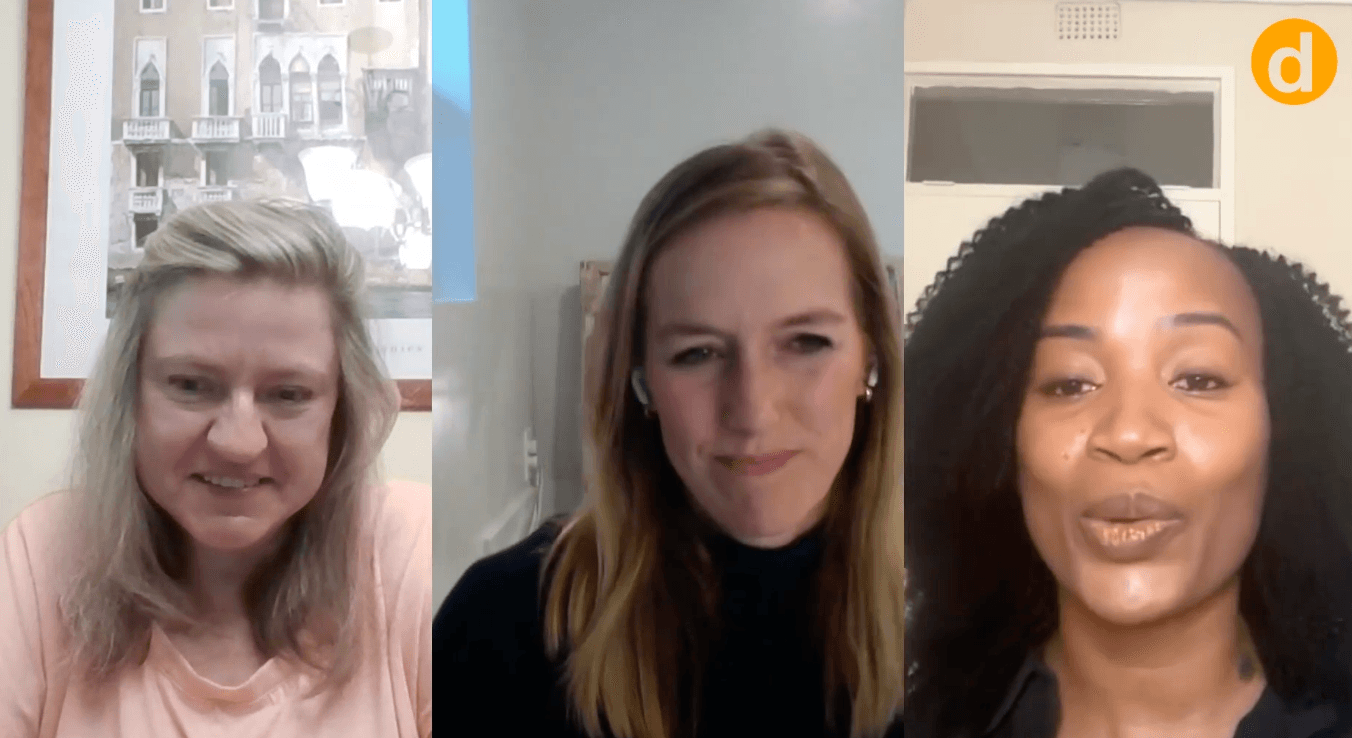
Devex Reporter Anna Gawal, who interviewed Gates Foundation CEO Mark Suzman, reported that the foundation sees the pledge as a starting point, not a market play. "Mark Suzman said the pledge is meant to be not competitive, but complementary," she said.
Bill Gates himself had previously published an essay warning that AI could be "the great equalizer of our time or the worst source of injustice." Gates outlined three priorities: ensuring AI works across languages, is grounded in local data and realities, and comes with investment in people's ability to use and access it.
Reporter Catherine Chaney invoked former Taiwanese Digital Minister Audrey Tang's framework distinguishing the "vertical race" — AI labs racing toward ever more powerful models — from the "horizontal race" — ensuring humans benefit from and control AI. "My call to action for our community is to get involved in this conversation because again, it's not just about the tech and the stakes are really high here in terms of who's involved," she said.
The tension at the heart of the pledge is scale. A billion dollars is significant for the development sector but modest relative to the hundreds of billions flowing into commercial AI. The foundation is betting that targeted, early investment — paired with partnerships and advocacy — can nudge the trajectory before it hardens.
What's next: More details on the pledge and its implementation are expected during UNGA week, with Devex Impact House sessions featuring AI practitioners, philanthropic leaders, and government officials.
From Pledges to Practice: AI for Farmers, Health Workers, and Classrooms
Why it matters: Billion-dollar commitments mean nothing if the tools don't work for the people who need them. This discussion moved from the macro to the ground level — and the gaps are significant.
Where things stand: OpenAI has committed $60 million to AI-generated weather and crop disease advice for smallholder farmers, led by Ana Makhanju of the OpenAI Foundation. But Reporter Catherine Chaney cautioned that technology alone won't solve the problem. "Yes, it's the tech, but also what data trains these systems, whether that advice is localized, what languages are used, whether farmers trust it, whether governments integrate tech into their systems," she said.
The stakes extend beyond agriculture. Host Rumbi Shakamba previewed her upcoming UNGA panel pairing Margaret Odera, a community health worker, with Jonathan Jackson of Dimagi to explore whether AI saves frontline workers time or simply adds another app to manage. "I think really bringing the conversation to the people who are expected to use these tools and finding out what are the best benefits," Shakamba said.
The education question may be the most unsettling. Chaney is organizing a session with Anthropic, the Gates Foundation, and UNICEF on AI in classrooms, asking: "How can we ensure that AI is a tool that advances learning and doesn't just become a crutch for children?"
Shakamba made it personal, describing her daughter's discovery of Google's Gemini AI and questioning whether schools are teaching children to think independently. Many countries, including her home country of Botswana, lack formal AI education policies — leaving the terms of engagement to tech companies rather than governments.
Buddy Shah, CEO of the Clinton Health Access Initiative and chair of Anthropic's Long-Term Benefit Trust, was cited as a key voice warning that countries excluded from the AI wave will see preventable deaths as a direct consequence.
What's next: Shannon Farley of Fast Forward will lead a practical UNGA workshop on AI decisions for social impact leaders. The World Bank's "small AI" concept — targeted, locally adapted tools for low- and middle-income countries — will be debated at the Bank's October Annual Meetings in Bangkok, with Kate Callo of Amini pushing back on whether the framing is useful.
Who Will Lead the UN and WHO? Two Races, One Week
The Secretary-General Race
Why it matters: Antonio Guterres's 10-year tenure ends in December 2026. His successor will inherit an institution under pressure from declining U.S. engagement and rising geopolitical fragmentation.
Approximately eight candidates are running. Straw polls have shown Rebecca Grynspan and Caroline Burkett of Guyana trading places at the top. Michelle Bachelet and Raphael Grossi are also in the field. "The conventional wisdom is that it will be a woman. And rotationally from Latin America," Reporter Anna Gawal said. Another straw poll is expected Friday.
Devex's UN expert Colm Lynch is interviewing candidate Maria Fernanda Espinosa at UNGA and moderating a pro briefing on "What to Expect at UNGA." His coverage also extends to the UN's internal development architecture, including the Resident Coordinator System and turf battles between UNDP and the Secretary-General's office.
The WHO Director-General Race
Where things stand: Host Rumbi Shakamba previewed interviews with two front-runners: Hanan Balkhi, who leads WHO's Eastern Mediterranean region and is currently on leave to campaign, and Budi Sadikan of Indonesia, described as a front-runner. The next Director-General inherits an organization that has been forced to restructure after the U.S. — formerly its biggest funder — pulled its funding.
"WHO has been through it. The US pulled funding for WHO. It used to be WHO's biggest funder. And as a result, they had to go through staff cuts. They had to go through program cuts as well and sort of rethink what their team should look like," Shakamba said.
Devex previously reported that WHO essentially needs a "unicorn" — a leader who can rebuild financing, maintain scientific credibility, and navigate geopolitical headwinds simultaneously.
What's next: Both races will play out through UNGA week and beyond. The WHO election will determine how the organization responds to the DRC Ebola outbreak and whether it can regain financial stability. The UN Secretary-General selection could produce the first woman to lead the world body.
Pandemic Preparedness Meets the DRC Ebola Test
Why it matters: The UN's Friday high-level meeting on pandemic preparedness, prevention, and response arrives at exactly the wrong moment — or exactly the right one.
Post-COVID attention and funding for pandemic preparedness have waned. Meanwhile, the Democratic Republic of Congo is experiencing its largest Ebola outbreak, which Host Rumbi Shakamba noted had been "circulating for months before it was actually identified." She suggested funding cuts may have played a role in the delayed response.
Shakamba also flagged a pattern worth watching: whether the U.S. will object to the meeting's high-level declaration, as it did at last year's NCD high-level meeting and was the sole objector to a UN vote on resizing Africa on the world map.
What's next: The high-level meeting takes place Friday. Whether it produces meaningful recommitments — or another round of aspirational language — will signal how seriously governments take preparedness outside of active crises.
Minor Items
- Impact Alliance preview: Michelle Nunn (CARE), Tjada McKenna (Prosper Global), and Yanti Sarepto (Save the Children US) are merging certain organizational functions and plan to use AI to streamline operations; they will appear at Devex Impact House.
- AI philanthropy wealth: GiveWell CEO Ellie Hassenfeld and leaders from GiveDirectly and IDinsight are expected to discuss how organizations can tap into AI-driven philanthropic funding.
- World Bank Annual Meetings: The October meetings in Bangkok will focus on development finance, AI, philanthropy, and jobs under President Ajay Banga, as traditional bilateral aid declines and multilateral development banks face pressure to scale up. "Everyone's looking toward development finance," Reporter Anna Gawal said.
- GSK sponsor segment: Dr. Harmony Gargis, Chief Global Health Officer at GSK, highlighted the Last Mile Health program in Liberia and Sierra Leone, which trained over 3,500 healthcare workers and helped more than 40,000 children receive malaria vaccines. ViiV Healthcare's Medicine Patent Pool partnership enabled generic manufacturers to supply affordable HIV medicines to more than 26 million people across 129 countries. ViiV is also advancing generic versions of long-acting HIV treatment and prevention.