
City Council - Aug 31, 2026 - Meeting

City Council - Aug 31, 2026 - Meeting

City CouncilCity and County of DenverAugust 31, 2026

Sources:

Locunity is a independent informational service and is not an official government page for this commission.We use AI-assisted analysis and human editorial review to publish information.

Council Slams DEA Drug Enforcement Partnership as Overdose Deaths Surge

Denver City Council held an emotionally charged session Aug. 31, adopting proclamations on overdose grief, historic preservation, childhood cancer and gun safety — but the sharpest moments came when multiple council members and a leading harm reduction advocate used the dais to publicly denounce a new Denver Police-DEA enforcement operation targeting drug users. Separately, council formally opposed a proposed federal gutting of historic preservation rules, citing Denver's own destructive urban renewal past as a warning.

  • Council declares Overdose Grief Day; blasts new Denver police-DEA enforcement operation as Denver overdose deaths buck the national downward trend
  • Rules suspended to redirect ARPA funds to the Harm Reduction Action Center before the federal spending deadline
  • Denver opposes proposed federal rewrite of Section 106 historic preservation rules that would make community consultation optional
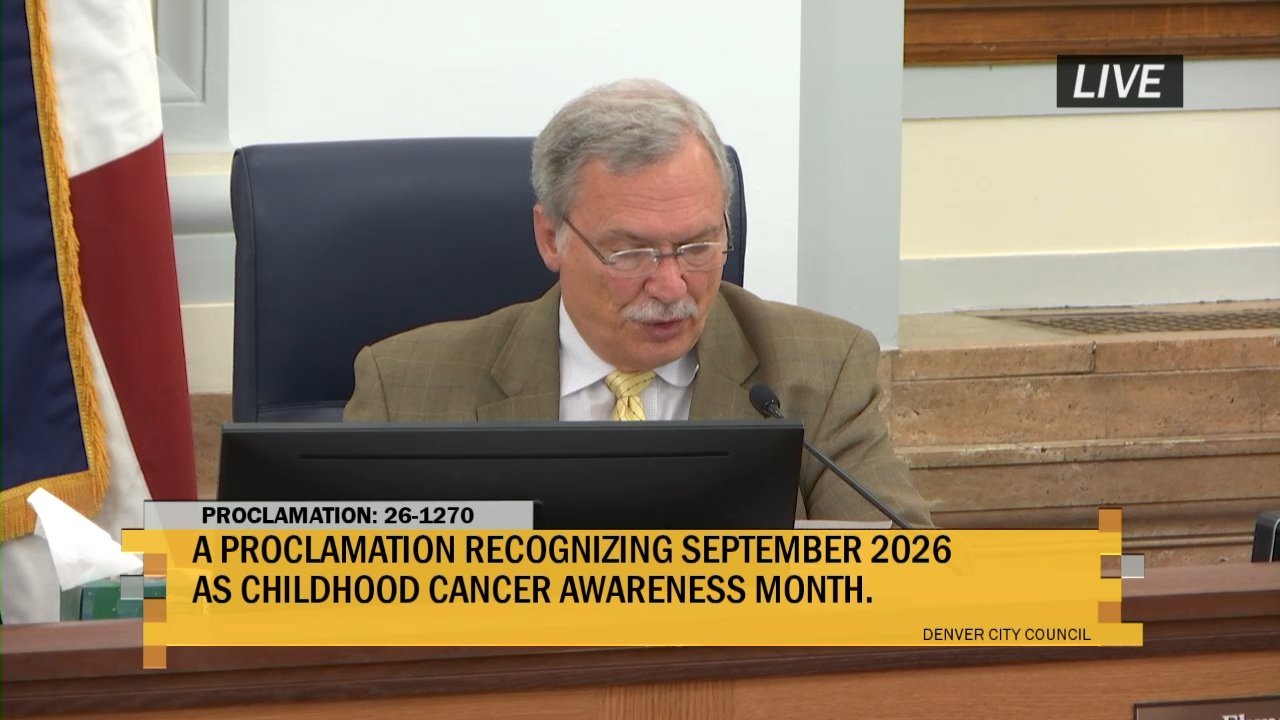
  • Council Member Flynn reads Childhood Cancer Awareness Month proclamation for the final time, urging restoration of federal research funding
  • Be Smart Week proclaimed as firearm injuries remain the leading cause of death for U.S. children and teens
  • 2026 city settlement spending hits $4.1M, with $120,000 tied to Denver Police in the latest batch

Denver Lost 563 People to Overdose in 2025. Council Says the City's Response Is Making It Worse.

Why it matters: Denver is moving against the national trend — overdose deaths fell across the country but rose in Colorado to more than 1,813 statewide, with Denver recording 563 deaths in 2025 alone. March and May each saw 63 drug-related deaths, the highest monthly totals in the city's history. Council used a proclamation recognizing Aug. 31 as International Overdose Grief Day to mount a sustained, public critique of the administration's enforcement approach.

Where things stand: Council Pro Tem Serena Gonzales-Gutierrez led the discussion with an extensive policy broadside against a newly announced partnership between the Denver Police Department and the Drug Enforcement Administration to conduct roughly 100 enforcement operations per week for eight weeks targeting drug users.

"I'm concerned about some recent partnerships that are happening between the City of Denver and the DEA on an alarming enforcement escalation that is now underway," she said.

Gonzales-Gutierrez explicitly warned that the partnership carries immigration enforcement risks: "Federal law enforcement has been explicitly directed to also participate in immigration enforcement actions." She argued the operations will push drug users away from the services that keep them alive, and called for overdose prevention centers, expanded syringe access programs, and the elimination of archaic requirements blocking those tools from operating in Denver.

"OPCs are a solution that will truly reduce public drug use, reduce public overdose deaths, and increase public safety. These are proven strategies," she said.

Councilmember Stacie Gilmore spoke about the stigma of overdose and the reality of relapse, noting that "nobody goes to rehab, gets clean and then is clean forever."

Councilmember Chris Hinds offered a practical counterpoint, urging residents to obtain naloxone: "Naloxone is free. Our health department will mail it to your door along with fentanyl test strips, at no cost. It's in our libraries. It's in more than 470 pharmacies across Colorado. No prescription needed." He praised Lisa Rayville, Executive Director of the Harm Reduction Action Center, telling her directly: "You are the reason we're here today. You're the reason why so many people are alive today."

The other side: Rayville accepted the proclamation and delivered a pointed critique of enforcement-based approaches, invoking the "iron law of prohibition" — the principle that harder enforcement produces more potent drugs.

"This will create barriers to calling 911 for an overdose emergency. This makes the drug supply more toxic and more volatile," she said. "We will never treatment or incarcerate our way out of an unregulated drug supply. We just simply won't."

She also flagged an underreported crisis: "It is to be noted that construction workers are dying at very high rates of overdose right here in Denver and also in the state of Colorado."

Decisions: The proclamation passed unanimously, 11-0. In a related action, council unanimously suspended its rules to introduce Council Resolution 261273, which redirects ARPA funds originally earmarked for the Harm Reduction Action Center's building purchase to operational expenses. The organization has been unable to find a suitable building before the federal ARPA spending deadline, and the amendment prevents those dollars from being lost.

What's next: The ARPA fund redirection preserves federal resources for the Harm Reduction Action Center's operations. The broader policy fight over the DEA enforcement partnership — and whether Denver will move toward overdose prevention centers — is likely to intensify at future council sessions.


Denver Warns Federal Government: Don't Repeat Our Urban Renewal Mistakes

The basics: Section 106 of the National Historic Preservation Act requires federal agencies to consult with communities, tribes and preservation organizations before funding projects that could affect historic properties. On July 24, the Advisory Council on Historic Preservation voted to advance a sweeping rewrite that would make that consultation discretionary.

Why it matters: Denver lived through what happens when communities have no voice. Twenty-seven blocks of downtown were demolished during the Skyline Urban Renewal era. The Auraria campus displaced an entire neighborhood. I-70 severed Globeville, Elyria and Swansea. Council adopted Proclamation 261193 to formally oppose the proposed rewrite and add Denver's voice to the federal public comment period.

Where things stand: Councilmember Jamie Torres sponsored the proclamation, citing reporting from the Colorado Sun that consultation would become optional, with decision-making power residing almost solely with federal agencies. She drew a direct connection to tribal rights: "Sand Creek wouldn't be what it is today without the consultation process with the tribes. This removes those protections and those obligations to tribal voices."

Councilmember Amanda P. Sandoval called the proposal "a betrayal to section 106 and all of the work that I've done over the years working on historic preservation in community with my community, not solo." She emphasized that Section 106 mandates public engagement, bringing non-experts and experts to the same table.

John Deffenbaugh of Historic Denver accepted the proclamation and connected the proposed rollback to structural racism in Denver's infrastructure history: "It's no surprise that our higher education campus sits on a traditionally Asian and Latino part of the city because that decision was based on structural racism." He noted that I-25 is roughly 30 miles longer than necessary because it was routed through communities of color.

Jay Olmstead, also of Historic Denver, drew parallels between the proposed rollback and Denver's destructive urban renewal history, underscoring that the consultation process is the primary safeguard preventing a repeat.

Decisions: The proclamation passed 10-0 (one member not recorded in the roll call). It urges the Advisory Council on Historic Preservation to withdraw or substantially revise the proposal and encourages residents to submit public comment during the open federal comment period.


Flynn Reads Childhood Cancer Proclamation for the Last Time

Why it matters: Only 6 of 34 FDA-approved childhood cancer drugs were originally designed for children. Federal funding cuts are now limiting doctors' ability to order basic diagnostic scans for pediatric patients.

Where things stand: Councilmember Kevin Flynn, in his final year on council, read Proclamation 261270 recognizing September as Childhood Cancer Awareness Month — a tradition he has carried annually. He shared the story of his brother Dennis Flynn, who died at age 15 in 1964 of cancer.

"I want to urge that the federal government reinstate funds for childhood cancer research that have been reduced because this is an area that is so very important to invest our efforts, our funding, our science," Flynn said.

Councilmember Amanda P. Sandoval shared the story of a neighbor oncologist she called "Dr. John," who is losing federal funding and being denied MRIs and CAT scans for patients — bringing the national funding fight to a neighborhood level.

Rita Contreras of Team Nathaniel accepted the proclamation. Her son Nathaniel addressed city council 11 years ago before dying of cancer in September 2015. Joan Slaughter of the Morgan Adams Foundation echoed the call for more research, noting that children's cancers are fundamentally different from adults' and require different treatments.

Decisions: The proclamation passed 9-0 (two members not recorded). The city and county building will be lit in gold for Childhood Cancer Awareness Month.


Be Smart Week: Secure Your Firearms, Ask Your Neighbors

Why it matters: Firearm injuries are the leading cause of death for U.S. children and teens. An estimated 6.7 million children live in homes with loaded, unlocked firearms, and more than half of gun owners do not lock all their weapons.

Councilmember Amanda P. Sandoval read Proclamation 261200 recognizing Aug. 24–28 as Be Smart Week in Denver. The Be Smart framework — Secure, Model, Ask, Recognize, Tell — provides practical steps for preventing child gun deaths. Sandoval shared a constituent's story about a 15-year-old who accidentally shot himself with his brother's gun, and spoke about her own experience growing up during Denver's violent early 1990s: "I personally grew up in the summer of violence in '93 in Denver and went to more funerals than anyone in high school should go to. I think I went to five my junior year."

Council President Diana Romero Campbell shared the loss of her great-nephew Dalton Robinson.

Sheila Wheeler, a Be Smart volunteer and DPS parent, accepted the proclamation and urged adults to ask other parents a specific question when arranging playdates: "How do you store firearms in your home or vehicle?" She emphasized that Colorado law requires firearms to be stored unloaded, locked, with ammunition stored separately.

Decisions: Passed 9-0 (two members not recorded).


Settlement Tracker: 2026 City Payouts Top $4.1 Million

Councilmember Shontel M. Lewis called out Council Resolution 261268 to publicly disclose settlement spending. Her office tracks every settlement dollar by department and as a running total. With this $125,000 settlement against the Denver Police Department (related to the Silva/Figenblatt Velasquez action), the 2026 total for taxpayer-funded city settlements reached $4,117,000. Lewis emphasized the funding comes from a liability claims pool, not agency-specific budgets, and urged close attention in the current budget environment.


Minor Items

  • Fire Station 23 turns 75: Proclamation 261269 celebrated the station at 850 South Federal Blvd., established Sept. 1, 1951. Fire Chief Desmond Fulton said Station 23 handles more structure fires and saves than any other company in the city. Passed 11-0.
  • DIA 7th runway contracts advance: Three contracts with AECOM, HNTB Corporation and Jacobs Engineering Group for program management, environmental analysis and design were adopted in the consent block. Councilmember Stacie Gilmore flagged strong community concern from Green Valley Ranch and neighboring Adams and Arapahoe counties about the proposed runway location.
  • Gilmore Construction contract (CR 261069): Approved 10-0 with one abstention. Councilmember Gilmore disclosed a family conflict of interest — "This is my brother-in-law's company" — and abstained per the Denver ethics code.
  • Career service pay plan postponed: Council Bill 261190 amending the classification and pay plan for career service employees was postponed to Sept. 14 at the request of Council Pro Tem Gonzales-Gutierrez, who needs more time to reconcile employee concerns with the Office of Human Resources. Passed 11-0.
  • Cuernavaca Park facility contract (CR 261176): Postponed one week by Councilmember Gilmore under Rule 3.6.
  • ARPA fund redirection (CR 261273): Rules suspended 9-0; resolution redirecting Harm Reduction Action Center ARPA funds from building purchase to operations introduced before the federal spending deadline.
  • Denver Health sales tax implementation (CB 261186): Introduced for publication; implements the 0.34% sales tax approved by voters in November 2024 to fund emergency, trauma, primary, mental health and pediatric care.
  • West Colfax rezoning (CB 261185): Introduced for publication; public hearing set for Sept. 28.
  • Downtown Development Authority boundary amendment (CB 261187): Introduced for publication.
  • Data Center Working Group: Councilmember Darrell Watson announced applications close Sept. 4; interested residents can email downtown9@denvergov.org. First meetings planned for mid-October.
  • Consent block: Dozens of resolutions, proclamations and bills on final consideration passed 11-0.
Council Slams DEA Drug Enforcement Partnership as Overdose Deaths Surge | City Council | Locunity