
Civil Society Presses Guterres on Fossil Exit at His Final COP
COP 31 Special Events • United NationsNovember 13, 2026
Locunity is an independent informational service and is not an official government page for this commission. All information is sourced from public footage and an analysis of official agendas with the aid of responsible, fact-checked AI. to report an error or omission.
Indigenous, labor, youth, women's, farmer, Afro-descendant and disability advocates lined up at COP31 on Nov. 13, 2026, to put their demands to UN Secretary-General António Guterres at what organizers framed as his final climate summit. No decisions were made. Guterres answered with a blunt message on overshoot, windfall taxes and global finance reform.
- Eight civil society constituencies pressed Guterres on a just transition, land rights and a fossil fuel treaty
- Disability advocates sought recognition as a 10th official constituency in UN climate talks
- Guterres warned current pledges point to 3.5 degrees of warming and urged 6% annual emissions cuts
- Windfall profits in focus: Guterres cited $95 billion in quarterly profits at nine firms
- Adaptation finance meets only 29% of needs, Guterres said, calling for Bretton Woods reform
A Minute Each to Make the Case
Why it matters: The session showed the coalition's priorities ahead of a UN leadership transition. The asks included a fossil fuel treaty, polluter-pays policies and a formal seat for people with disabilities.
The basics: In UN climate talks, civil society participates through recognized "constituencies," which are blocs representing groups such as Indigenous Peoples, labor, youth and women. A "just transition" refers to moving away from fossil fuels without leaving workers and communities behind.
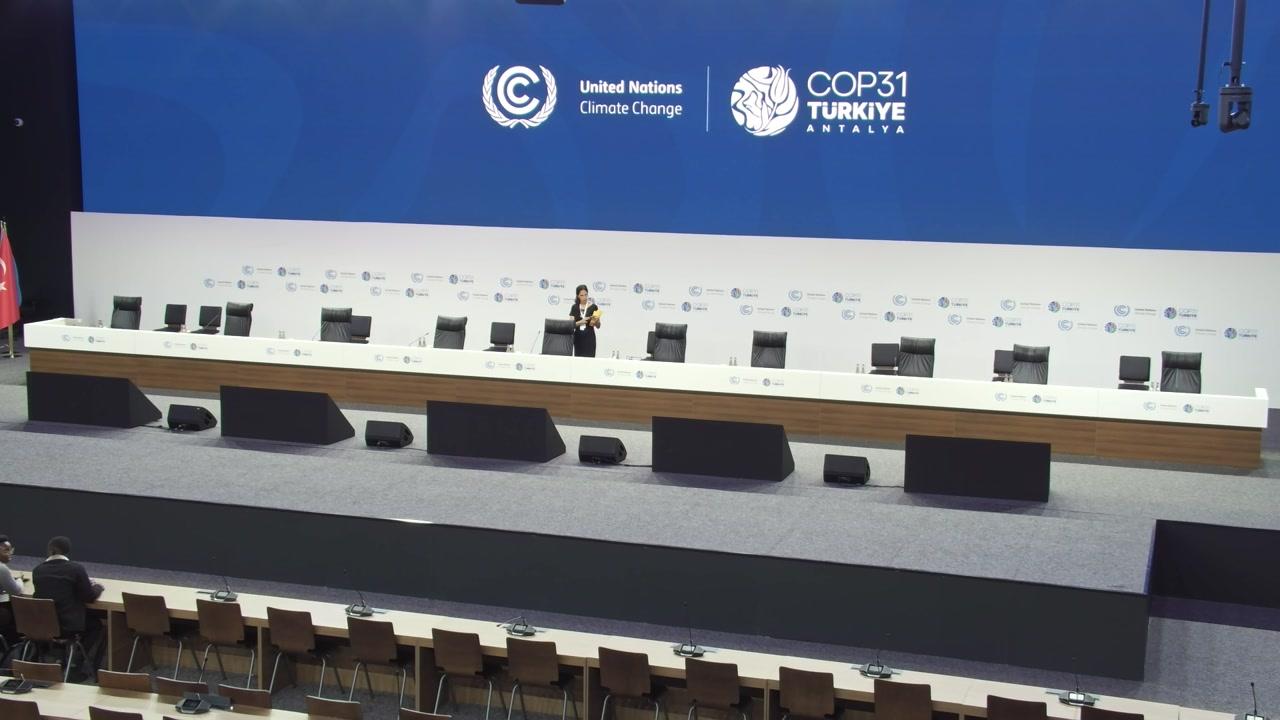
Where things stand: A civil society moderator identified as Tasneem ran the session. Representatives each had about a minute to make demands and thank the Secretary-General. Their themes ranged widely:
- Just transition and labor rights
- Protection of Indigenous land and environmental defenders
- Gender equality and youth participation
- Climate finance, land rights and racial justice
- Disability recognition, a fossil fuel treaty and polluter-pays
Groups named during the session included the International Trade Union Confederation (ITUC), Climate Action Network, YOUNGO, the Disability Caucus, the Fossil Fuel Treaty Initiative and the Make Polluters Pay campaign.
The sharpest asks: An Indigenous representative raised the just transition, forests and the UN Declaration on the Rights of Indigenous Peoples. The representative urged protection of a detained Russian Indigenous leader, putting a human rights case squarely before the UN's top official.
A Fossil Fuel Treaty Initiative representative invited Guterres to back a fossil fuel treaty. The proposal would create a binding framework to wind down coal, oil and gas production, which goes beyond the emissions-focused approach of the current talks.
Disability advocates used their time to push for recognition as a 10th constituency. That would give them a formal channel into negotiations rather than relying on allies' platforms.
Decisions and stakeholder impacts: No action was taken. For Indigenous communities, workers and frontline groups, the session served as a show of coordinated priorities. It set an advocacy agenda that will outlast Guterres's tenure. Speakers also referenced COP32 in Ethiopia, signaling that the coalition is already looking to the next summit.
Guterres: Make Polluters Pay
Why it matters: In his final-COP message, the Secretary-General set public expectations for negotiators on emissions cuts and finance. His framing aligned closely with the demands he had just heard.
Where things stand: Guterres opened by citing a UN Environment Programme (UNEP) report. He said the world needs 6% annual emissions cuts and that current national pledges point to 3.5 degrees of warming. He warned of overshoot above 1.5 degrees, the warming threshold that has anchored global climate goals.
He turned to money. He cited $95 billion in quarterly profits at nine firms and called for taxing fossil fuel windfall profits.
"We must make polluters pay," said Secretary-General Guterres.
The finance gap: Guterres said adaptation finance covers only 29% of needs. Adaptation finance is the money that helps communities withstand floods, heat and drought. He called for reform of the Bretton Woods institutions, the World Bank and International Monetary Fund system that shapes how developing countries borrow and invest.
Decisions and stakeholder impacts: The remarks carried no binding force. Still, by tying windfall taxes to the adaptation shortfall, Guterres gave frontline communities and negotiators from climate-vulnerable nations a talking point backed by the UN's top office. Fossil fuel producers face rhetorical pressure but no new obligation from the session.
What's next: Guterres signaled he will stay in the fight after leaving office.
"I will never, ever give up," said Guterres.
Looking Ahead
The event closed with a group photo and chanting. Advocates' next test comes as the UN changes leadership and COP32 in Ethiopia comes into view. Watch whether the disability constituency bid and the fossil fuel treaty push gain traction with the next Secretary-General.