
Women Leaders Press COP31 to Fund Fossil Phase-Out, Lock In Just Transition
COP 31 Press Conferences • United NationsNovember 16, 2026
Locunity is an independent informational service and is not an official government page for this commission. All information is sourced from public footage and an analysis of official agendas with the aid of responsible, fact-checked AI. to report an error or omission.
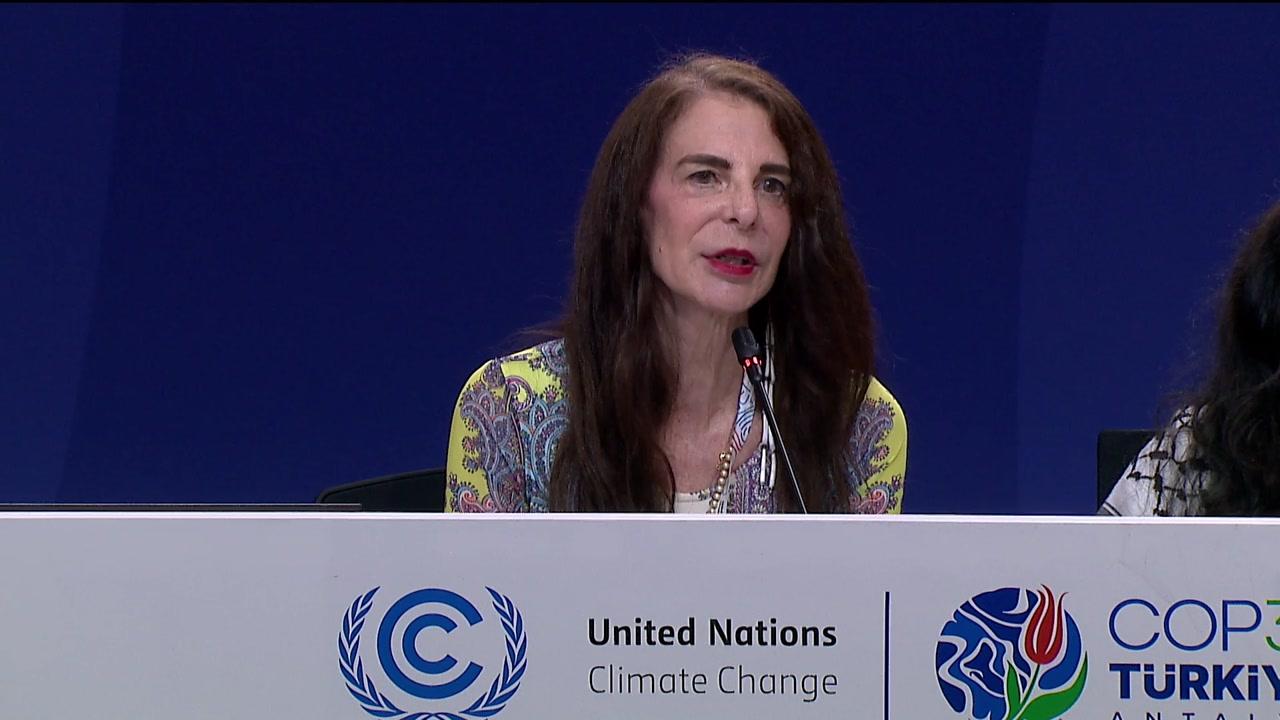
Women climate leaders at COP31 warned on Nov. 16, 2026, that the summit's final text could drop fossil fuel language entirely, even as current policies point to about 2.8 degrees Celsius of warming. At a press conference hosted by the Women's Earth and Climate Action Network (WECAN), speakers from Africa, Türkiye, Canada and global advocacy networks called for a time-bound, funded phase-out, a permanent just transition mechanism and a coal exit date from the summit's own host country.
- Fossil fuel phase-out: Advocates demand no new coal, oil or gas projects and a credible phase-out roadmap.
- Treaty bloc grows: More than 25 countries are working toward a Fossil Fuel Treaty, with a 2027 follow-up co-hosted by Tuvalu and Ireland.
- Just transition text called "disappointing": The draft offers no new constituted body, only a 3-to-5-year work plan.
- Host under scrutiny: Climate Network Türkiye urges COP31's host to set a coal phase-out timeline.
- $906B in bank financing for fossil fuels in 2025 frames the accountability push.
Phase-Out Pressure: Treaty Bloc Builds Outside COP
The basics: A Fossil Fuel Treaty is a proposed agreement, pursued by a coalition of countries alongside the United Nations climate talks, to end fossil fuel expansion and manage a global phase-out.
Why it matters: Speakers said fossil fuel language may not survive in COP31's final text. That would leave the gap between national pledges and the Paris Agreement's goals without a clear mechanism to close it.
Where things stand: Osprey Orenstein, executive director of WECAN, moderated the session. She opened with the money: banks financed fossil fuels to the tune of $906B in 2025. She cited projections of about 2.8 degrees of warming under current policies and called for clear timelines and accountability rather than open-ended commitments.
Zipporah Berman, founder and chair of Fossil Fuel Treaty Canada, said the most concrete momentum is building in a parallel track. She described a conference in Santa Marta, Colombia, that drew 57 countries, and a bloc of more than 25 nations now working toward a treaty. That process continues in 2027 with a meeting co-hosted by Tuvalu and Ireland.
Berman framed the climate crisis as a political choice rather than a technical one.
"You can't phase something out by building more of it," said Berman.
Marina, coordinator of the African Just Transition Network, carried that argument to the continent most exposed to new extraction. She called for no new coal, oil or gas in Africa and for transition finance to replace it.
"Africa must not become the world's large fossil fuel frontier," said Marina.
Speakers paired the phase-out demand with financial conditions: debt relief and grant-based finance, not loans, for countries asked to leave fossil revenue in the ground.
Decisions and stakeholder impacts: This was a press conference, and no votes or formal decisions were taken. The positions map a clear divide. Frontline communities and Global South advocates want binding timelines and grant-based money. Financial institutions, whose fossil lending the moderator singled out, face growing pressure. The treaty bloc offers smaller, climate-vulnerable nations a venue outside the consensus-bound COP process, where any single country can water down language.
What's next: Watch whether fossil fuel language survives in COP31's final text. The treaty bloc reconvenes in 2027 under Tuvalu and Ireland.
Just Transition Fight: Permanent Body or More Talk
The basics: A "just transition" means protecting workers and communities as economies move off fossil fuels. At COP30 in Belém, Brazil, negotiators mandated a mechanism to deliver it, now known as the Belém-Antalya mechanism.
Why it matters: The mechanism's design will determine whether workers and communities get real support or only more rounds of dialogue.
Where things stand: Aishka Najib, campaign coordinator and just transition lead at the People's Climate Diplomacy Program, called the latest negotiating text disappointing. She said the Turkish presidency favored folding the mechanism's functions into existing workstreams rather than creating anything new. The draft contains no new constituted body, only a work plan spanning three to five years.
Najib pointed to the track record of the UAE Just Transition Work Program, the dialogue-based process that came before.
"We've seen … with the work program and the 3 years of it and just dialogues, what changed on the ground?" asked Najib.
Marina of the African Just Transition Network backed her up, urging negotiators to institutionalize the Belém-Antalya mechanism.
The other side: The presidency's approach, as Najib described it, favors working through existing UN climate structures over building new institutions. Advocates counter that this approach has already run for three years without visible results for affected communities.
Decisions and stakeholder impacts: Advocates want a permanent body with formal stakeholder participation. Without one, workers, women and frontline communities would have no standing institution to hold governments to transition commitments. A time-limited work plan instead points them back toward dialogue-based processes.
What's next: The final text will show whether the mechanism becomes a permanent body or a fixed-term work plan.
Host Country Under Scrutiny: Türkiye's Coal Problem
Why it matters: Türkiye hosts COP31 and leads just transition negotiations, yet it is pursuing new coal investments.
Where things stand: Özlem Altaparmak, representative of Climate Network Türkiye, turned the spotlight on the host. She grounded her case in local conflict: the Soma mining area, mining protests and the Akbelen and Ikizköy communities.
Türkiye has a new National Just Transition Strategy. Altaparmak said it needs three additions:
- A clear coal phase-out timeline.
- Care services funded within transition budgets.
- Regional transition plans led by local stakeholders.
Decisions and stakeholder impacts: Her demands center women and coal-region communities, who often absorb the unpaid care burden when mines close. Including care services in transition budgets would treat that burden as a transition cost rather than a private one. For the presidency, the critique cuts close: the country steering just transition talks is being asked to apply the standard at home first.
What's next: Advocates will watch whether Türkiye attaches a coal exit date to its new strategy.