
SEE Foundation Credits Green Procurement With 20 Million Tons of CO2 Cuts
COP 31 Press Conferences • United NationsNovember 19, 2026
Locunity is an independent informational service and is not an official government page for this commission. All information is sourced from public footage and an analysis of official agendas with the aid of responsible, fact-checked AI. to report an error or omission.
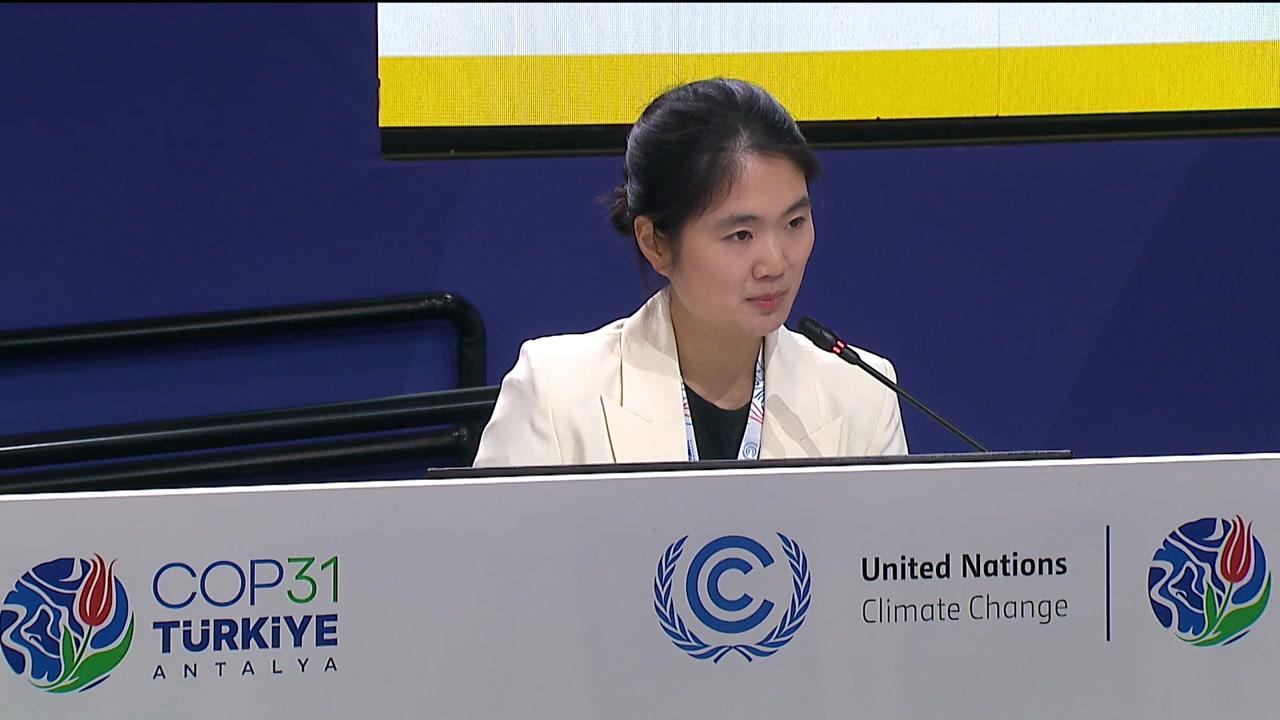
At a COP31 press conference on Nov. 19, 2026, China's SEE Foundation argued that developers' purchasing power can decarbonize a heavy-emitting supply chain, citing about 20 million tons of CO2 reductions through 2025. The session included no votes or formal decisions. Presenters also showcased leopard and porpoise recoveries and released a report that gave mid-cap consumer brands low marks on sustainable packaging.
- About 20 million tons of CO2 cut through green building-materials procurement, according to the foundation
- $5.9 billion in green procurement under the Green Supply Chain Action, begun in 2016
- Yangtze finless porpoise count reaches 1,426 by 2025, with former fishermen now on river patrols
- 50 listed consumer brands averaged a score of 1.85 on sustainable packaging, and 26% scored zero
- Bring Leopards Home Initiative deploys 1,100 infrared cameras and a 20-member patrol team
Buying Power as Climate Policy
The basics: The Green Supply Chain Action began in 2016 with HSBC China and Tencent Charity. It uses "whitelists" and "green lists" to steer large property developers toward lower-carbon building-material suppliers.
Why it matters: The foundation's pitch is that a handful of big buyers can push emissions cuts upstream into cement, steel and other materials without waiting for new regulation. Procurement, not mandates, is the mechanism.
Where things stand: Gladys, moderator for the Climate Change and Business Sustainability team at SEE Foundation, said the program now covers standards for 28 types of material. She cited $5.9 billion in cumulative green procurement. The foundation attributes about 20 million tons of CO2 reduction through 2025 to developers' green purchasing. Those figures are self-reported by the presenters.
Dr. Jiyao Lu, Director of the Climate Team, SEE Foundation, described a second effort, the Carbon Neutrality Accelerator, launched with HSBC China in 2025. It targets the automotive, aluminum and cement sectors. It also produces training manuals for banks, a sign the foundation wants lenders to price decarbonization into credit decisions.
Rural energy pilots: The accelerator includes rural energy pilots in Shanxi and Shandong provinces. Lu framed that work as an economic development play as much as an emissions play.
“For us, a just energy transition is not only about reducing emissions, it is also about creating local economic opportunities,” said Lu.
Decisions and stakeholder impacts: No action was taken. Developers that meet green-list criteria gain a reputational edge. Material suppliers face pressure to meet the 28 material standards or risk losing large buyers. Banks are being positioned as enforcers through the training manuals. Rural communities in the pilot provinces are the intended beneficiaries of the energy work.
What's next: Presenters did not announce new targets or dates. Readers should watch for independent verification of the 20-million-ton figure and for results from the Shanxi and Shandong pilots.
Leopards and Porpoises: Conservation as Jobs Program
Why it matters: Presenters framed biodiversity recovery and community livelihoods as part of climate action. That argument matters to nature-finance investors and conservation funders weighing where to put their money.
Where things stand: Jenny Zhang, Founder and CEO of ECO Education and a SEE Foundation board member, described the Bring Leopards Home Initiative, which focuses on the North China leopard. The project runs 1,100 infrared cameras and a 20-member patrol team. Presenters reported that the leopard's range has expanded in Hoshan County.
Liu Xin, Founder of Eclara, presented on the Yangtze River. River patrols there employ former fishermen, and the patrol force has grown to more than 23,000 officers. Liu reported that Yangtze finless porpoise numbers rose to 1,426 by 2025.
The labor angle: Hiring former fishermen as patrol officers turns people who once depended on the river's catch into its protectors. That model addresses a familiar conservation conflict: protection that cuts off local incomes tends to lose community support.
Youth pipeline: Liu also described the Youth Climate Leadership Action Program, known as YCLAP, and a COP31 Climate Action Casebook.
Decisions and stakeholder impacts: No formal action was taken. Fishing communities gain an employment pathway. Conservation funders get a case study that links species counts to local jobs. Young climate advocates gain a structured leadership program.
What's next: No dates were announced. The Climate Action Casebook is the most direct resource for readers who want program details.
Packaging Report Card: Mid-Caps Fall Short
The basics: Centaur Consulting and the SEE Foundation rated 50 small and mid-cap listed consumer goods companies on sustainable packaging under the Climate Companion Program.
Why it matters: Regulatory pressure, including the European Union's Packaging and Packaging Waste Regulation (PPWR) and Chinese ESG rules, is turning packaging into a compliance and market-access issue. Brands that sell into Europe face the sharpest exposure.
Where things stand: Fiona Lang, Partner at Centaur Consulting, reported that the companies averaged a score of 1.85. Some 26% scored zero because they lacked disclosure. The weakest areas were targets, internal governance, risk review and consumer outreach. The strongest were disclosure and action strategy among the companies that did report.
Decisions and stakeholder impacts: Lang recommended a seven-step improvement path for companies. Mid-cap brands that do not disclose risk falling behind as rules tighten. Investors and suppliers gain a benchmark for pressing companies on targets and governance.
What's next: No compliance deadlines were cited. Companies scoring zero face the most basic hurdle: publishing data.
Minor Items
- Bank training manuals: The Carbon Neutrality Accelerator is producing decarbonization training materials for lenders.
- COP31 Climate Action Casebook: Presenters released a casebook compiling civil-society climate projects.
- Format note: The event was a side press conference with informational presentations only; no motions or votes.
Questions to Watch
- Will outside auditors confirm the foundation's 20-million-ton CO2 estimate?
- Can procurement whitelists scale beyond developers to other heavy industries?
- How will the 26% of non-disclosing brands respond as PPWR obligations approach?