
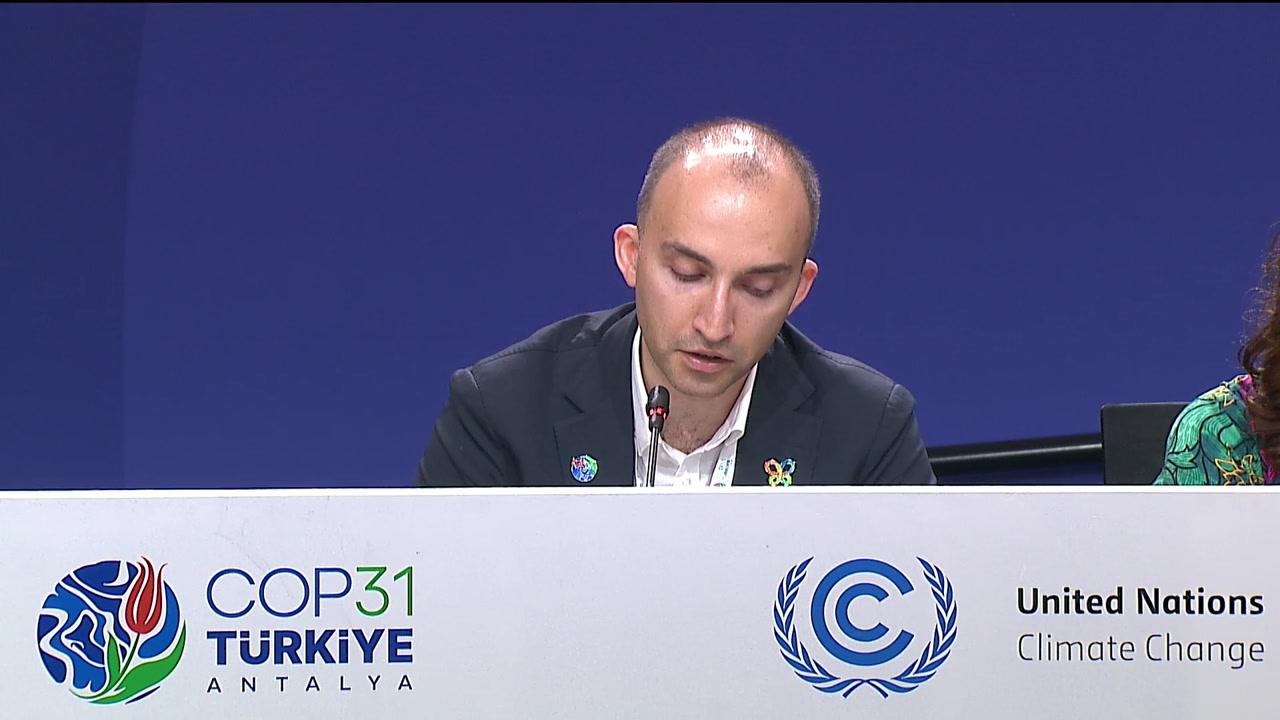
Grassroots Climate Network Asks COP31 to Showcase, Fund Local Action
COP 31 Press Conferences • United NationsNovember 20, 2026
Locunity is an independent informational service and is not an official government page for this commission. All information is sourced from public footage and an analysis of official agendas with the aid of responsible, fact-checked AI. to report an error or omission.
A coalition marking its third anniversary on Nov. 20, 2026, asked negotiators at COP31 to give community-led climate work its own stage in the official program and a dedicated stream of small grants. The press conference produced no formal action. It did expose a live split among the network's own allies over whether carbon markets help or hurt the communities the grants are meant to serve.
- Two asks to UNFCCC parties: a dedicated COP showcase and small grants for local climate projects
- Punjab tree-planting trust cited: 850,000 trees planted and 369 memorial forests
- Benin mayor pitches carbon credits to fund roads and women's groups
- Nigerian NGO speaker attacks carbon markets and calls for naming fossil fuels
Network Pitches a Stage and a Funding Stream
The basics: The Network on Climate Motivation and Mobilization, linked to the Sikh Human Rights Group, used its third-anniversary press conference to lobby UNFCCC parties, the national governments that negotiate at the COP. The group wants grassroots projects formally recognized inside the process rather than left to operate outside it.
Why it matters: Community projects such as tree planting currently run without institutional support. The network argues the proposals would give these projects both visibility and direct finance.
Where things stand: Albert Barserian, spokesperson for the Sikh Human Rights Group and the Network on Climate Motivation and Mobilization, laid out two requests. "First, to give community-led climate action a dedicated showcase in the official program of the COP," said Barserian. The second ask is a mechanism to recognize and support local initiatives, including small grants. That mechanism would run through the Convention's existing work on Action for Climate Empowerment, the UNFCCC stream focused on public education, awareness and participation.
Routing the request through an existing workstream is a deliberate choice. Advocates are asking parties to fund grassroots work through machinery that already exists, rather than to create a new institution.
Proof points: Speakers offered three examples:
- Khadur Sahib Conservation Trust in Punjab, which has planted 850,000 trees and 369 memorial forests.
- Sakété, Benin, where Mayor Alexis Onyegu described mini-forests designed to generate carbon credits. The credits would pay for local roads and support women's groups.
- China Association for NGO Cooperation (CANGO), which describes its role as connecting Chinese civil society with global climate dialogue.
Wang Xiangyi of CANGO made the case for flexibility in how money reaches local projects. "Funding should reach grassroots projects, whether directly or through effective intermediary channels," said Wang.
Decisions and stakeholder impacts: No action was taken. The event was advocacy only. If parties adopt the proposals, the winners would be community groups, faith-based networks and small local governments such as Sakété. Each would gain access to a program platform and grant money they currently lack. Parties would need to decide whether to expand the Action for Climate Empowerment work to include a finance role.
What's next: The network is asking parties to champion the proposals. Any outcome depends on future UNFCCC action. The group also said it is seeking funding and partners.
Carbon Markets Split the Panel
Why it matters: The same panel that asked for grassroots climate finance disagreed about one of its main funding sources. The debate reflects broader civil-society dissent over market-based climate mechanisms on the COP31 sidelines.
Where things stand: Sakété's plan relies on carbon credits to turn mini-forests into revenue for roads and women's groups. Mayor Onyegu presented it as a practical route to local development.
The other side: Odudu Abasi of the Health of Mother Earth Foundation in Nigeria rejected that approach. "The carbon market is becoming a very big thing, which is further putting frontline communities into more debt," said Abasi.
Abasi also argued that carbon markets lead to dispossession. Abasi warned that wildlife is being introduced into carbon markets at this COP. Abasi criticized greenwashing and urged negotiators to name fossil fuels as the root cause of the crisis, rather than leaning on nature-based offsets.
Decisions and stakeholder impacts: Nothing was resolved. The split matters for the network's own pitch. A small-grants mechanism could become an alternative to carbon-credit revenue for communities like Sakété. Without one, local governments in the Global South may keep turning to the markets that Abasi says harm frontline residents.
What's next: The disagreement remains open. How parties treat carbon markets and nature-based solutions during the COP31 negotiations will shape which funding model local projects can rely on.
Minor Items
- Youth question: A young attendee asked panelists what keeps them motivated despite discouraging COP outcomes.
- Accountability question: An attendee asked what panelists have personally done on climate and whether they receive funding.
Looking Ahead
The network's proposals now depend on whether any UNFCCC party carries them into negotiations. The group is still seeking funders and partners to expand its grassroots work.