
Young Speakers Press for Climate Literacy in Every School at COP31
COP 31 Press Conferences • United NationsNovember 19, 2026
Locunity is an independent informational service and is not an official government page for this commission. All information is sourced from public footage and an analysis of official agendas with the aid of responsible, fact-checked AI. to report an error or omission.
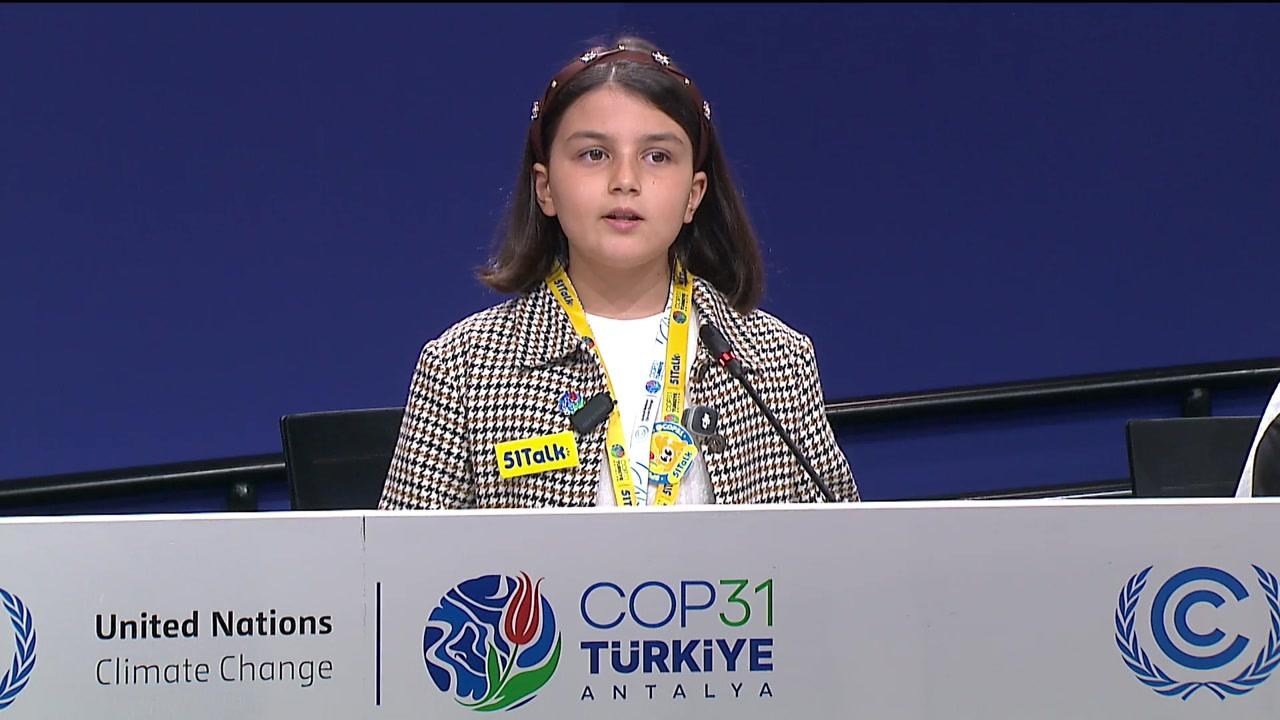
Four children from four countries took the microphone at a COP31 press conference on Nov. 19, 2026, asking adults to teach climate science in classrooms and give youth a real role in climate action. The informational session, hosted by the Applied Technology Alliance (PTA), included no votes. It was a direct appeal to the governments, businesses and schools whose decisions will shape the world these speakers inherit.
- Climate literacy in every school is the top demand from a 10-year-old speaker from Türkiye
- PTA presents 10 civil society-led climate education cases focused on China
- Children from Türkiye, Indonesia, Kuwait and China call for youth seats at decision tables
- A proposed "fourth R," rethink, targets how people use energy and AI
Kids to Adults: Teach Us, Then Work With Us
The basics: COP31 is the 31st annual United Nations climate summit. Alongside formal negotiations, organizations hold press conferences to promote their work. PTA's session centered on civil society-led climate education in China and presented 10 climate education cases before turning to four youth speakers.
Why it matters: The speakers framed climate education as a matter of justice and empowerment, not an elective. Their asks go well beyond the summit. They fall to school boards, education ministries and local governments, the bodies that set curricula and fund programs.
Where things stand: Ayça Aslan, a 10-year-old youth speaker from Türkiye, spoke about sea turtles and plastic pollution. She then laid out a clear policy ask.
"We need climate literacy in every school so that every child can understand the science and solution of our warming planet," said Aslan. She also called for youth seats at decision-making tables.
Muhammad Afardan Athariz, a 9-year-old youth speaker from Jakarta, Indonesia, relayed questions from Indonesian children to the adults in the room. His closing question was a direct request for partnership.
"Will you work with us on climate action in our schools and communities?" asked Athariz. No adult response was recorded at the session.
Hashama Rifai, a 12-year-old youth speaker from Kuwait, focused on tree planting as hands-on local climate action.
Rethinking the Old Mantra
Li Baiyi, a youth speaker from China, spoke about clean energy and artificial intelligence. He proposed adding a new principle to the familiar "reduce, reuse, recycle" framework.
"I propose a 4th R on behalf of Chinese youth: rethink," said Li. His proposal applies that rethinking to how people use energy and AI, an emerging concern as AI's energy demands draw more scrutiny.
Decisions and stakeholder impacts: No motions or votes were taken. The session's value is as a signal of growing civil society and youth demand for school climate literacy and green-skills pathways. Education systems face pressure to add climate science to their curricula. Employers and training programs are asked to build pathways into green jobs. Civil society groups like PTA are positioning themselves as partners that deliver climate education on the ground.
What's next: The speakers did not announce specific follow-up actions. For readers working in schools or local government, Athariz's question is a practical one to raise locally: who in your district is responsible for climate education, and how are students involved in shaping it?
Minor Items
- The session closed with a choral performance of the song "One Seed."