
UN Climate Chief Urges Speed on Hardest Issues as COP31 Turns Political
COP 31 Press Conferences • United NationsNovember 14, 2026
Locunity is an independent informational service and is not an official government page for this commission. All information is sourced from public footage and an analysis of official agendas with the aid of responsible, fact-checked AI. to report an error or omission.
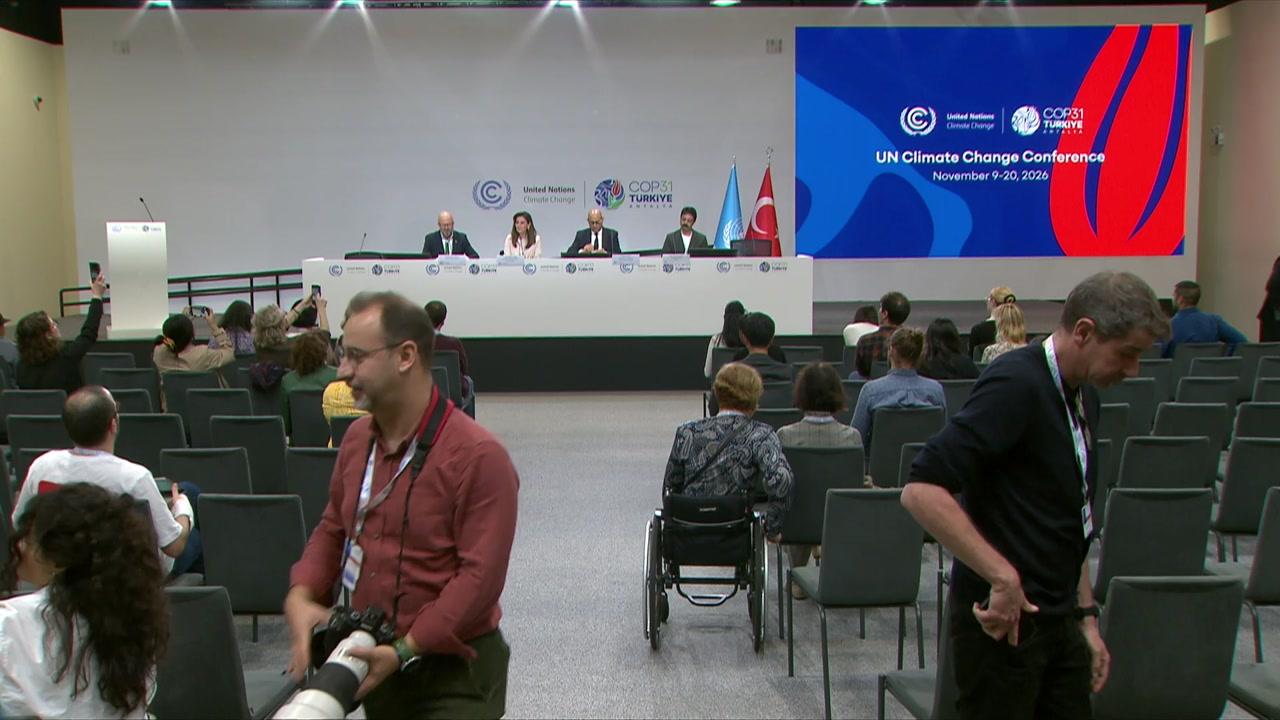
At the midpoint of COP31, UN climate chief Simon Stiell called the first week of talks constructive and told nearly 200 countries to stop stalling and take on the toughest questions before ministers arrive. At his Nov. 14, 2026, press conference, he declined to say whether the summit should produce a cover decision, signaled openness to changing how the UN climate process works, and gave the stage to two media voices who use the World Cup and Indian cinema to reach climate audiences.
- Talks are "constructive," Stiell says, with nearly 200 countries working through 165 mandates
- Hardest issues go to ministers in week two; Stiell warns against "tactical delays"
- Cover decision is up to the parties, Stiell says, declining to prejudge the outcome
- UN climate process reform under consultation, starting with a select group of countries
- Oceans expected in the outcome; IPCC impasse falls outside UNFCCC authority
- Telemundo and Indian film voices pitch sport and storytelling as climate messengers
Stiell: Week One Done, Now the Hard Part
Why it matters: COP negotiations traditionally shift from technical to political in week two, when ministers try to settle what negotiators could not. Stiell is setting expectations, and applying pressure, before that handoff.
Where things stand: Stiell said the agenda was adopted smoothly and that engagement across the 165 mandates on the table has been constructive. A stocktake of the negotiations will show where talks stand, he said, before the remaining political issues move to ministers.
His message to delegations was blunt. "I urge parties to move swiftly to the hardest issues and to avoid tactical delays," said Executive Secretary of UN Climate Change Simon Stiell.
The cover decision question: Reporters pressed Stiell on whether COP31 should produce a cover decision, a broad, top-line political text summarizing a summit's outcome. He described the choice as a bottom-up matter for countries, not the secretariat. "So it is for parties to decide, and I can't prejudge what direction that they will take," Stiell said.
Decisions and stakeholder impacts: No decisions were made at the briefing. The framing matters, though. By putting the cover decision squarely on parties, Stiell keeps the secretariat out of a politically loaded fight. His warning about delay tactics signals concern that some delegations may run out the clock on contested items. Countries pushing for ambitious outcomes gain a public ally on pace. Those who prefer narrower, mandate-by-mandate results lose nothing yet, since Stiell explicitly declined to endorse an overarching text.
What's next: Open political issues move to ministers during the second week of COP31.
Sport and Screen as Climate Messengers
Why it matters: The UNFCCC (UN Framework Convention on Climate Change) is betting that public buy-in for climate action requires reaching people through the sports and stories they already follow, well beyond the negotiating rooms.
Where things stand: Stiell opened the briefing by arguing that sport and culture connect climate impacts to everyday life. He then turned the floor over to guests from television and film.
Vanessa Hauc, a journalist and director of Planeta Tierra at Telemundo, described using World Cup hydration breaks to explain extreme heat to viewers. She was explicit about naming a cause on air. "I make sure also to explain them that this was happening because of the fossil fuel industry," said Hauc.
Tamseel Hussain, founder of Pluck TV, described a climate scriptwriting lab run with Netflix India. He also described a green production handbook co-created by 170 studios to make filmmaking more sustainable.
Decisions and stakeholder impacts: This segment was informational, and no action was taken. It shows the UNFCCC courting broadcasters, streaming platforms, and production studios as partners in climate communication. Hauc's comments go further than the secretariat's usual diplomatic language by tying heat directly to the fossil fuel industry on a mass-audience broadcast. The 170-studio handbook points to an industry-led approach to cutting production emissions, not a government mandate.
Reform, Oceans and the IPCC Standoff
Why it matters: Changes to the UN climate process could reshape how nearly 200 countries make decisions. Meanwhile, the dispute at the IPCC (Intergovernmental Panel on Climate Change) affects the science that will feed the second Global Stocktake, the Paris Agreement's periodic review of collective progress.
Where things stand: In response to a question from Ria Bhagwan, a reporter with Pacifica TV, Stiell addressed Pacific concerns about how the UN climate process functions. He did not defend the status quo. "Can the process be better optimized? Absolutely," said Stiell.
He said the secretariat is first consulting a select group of countries before opening the conversation to all parties. He did not say which countries are in that initial group or offer a timeline.
Oceans: Stiell said he expects ocean issues to be reflected in the COP31 outcome. That is a priority for Pacific island nations, who face some of the most direct threats from sea-level rise.
The IPCC impasse: Asked about the deadlock at the IPCC, Stiell said the matter falls outside the UNFCCC's authority. He added that he anticipates a strong signal on the issue.
Decisions and stakeholder impacts: No reform proposal was presented. However, the executive secretary's public acknowledgment that the process can be improved gives Pacific and other frustrated delegations an opening. Starting with a select group before consulting everyone may move faster, but it could raise transparency questions among countries left out of the first round. The IPCC dispute matters for scientists and for countries that rely on IPCC assessments in negotiations, since the second Global Stocktake depends on that work. Stiell offered expectations, not commitments.
What's next: Watch for whether the reform consultations expand to all parties and whether ocean language survives into the final COP31 text.
Looking Ahead
COP31 enters its political phase as ministers take up unresolved issues in week two. Key questions for observers include whether parties agree to a cover decision, which countries are in Stiell's initial reform consultations, and what form the "strong signal" on the IPCC takes.