
Scientists Call Climate a ‘Threat Multiplier’ for Mediterranean Migration
COP 31 Press Conferences • United NationsNovember 16, 2026
Locunity is an independent informational service and is not an official government page for this commission. All information is sourced from public footage and an analysis of official agendas with the aid of responsible, fact-checked AI. to report an error or omission.
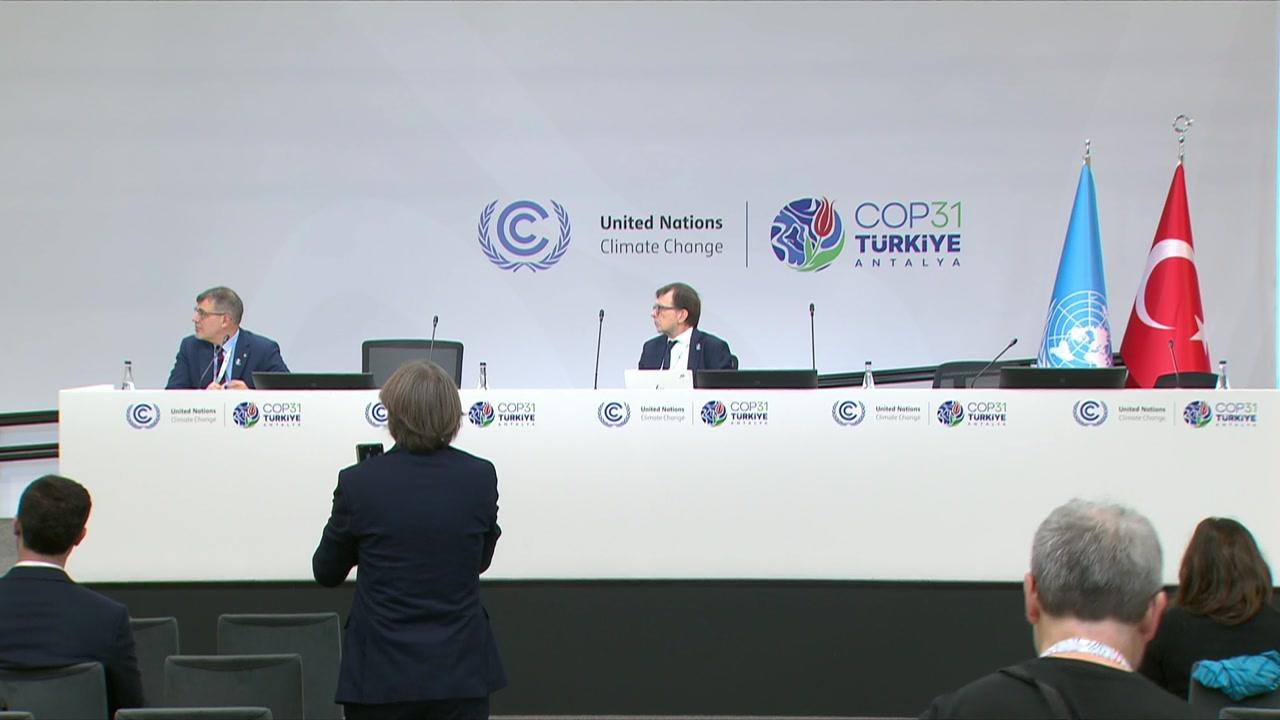
Environmental change is pushing more Mediterranean residents to move, but it rarely acts alone. That was the core finding scientists presented Nov. 16, 2026, at the Mediterranean Pavilion at COP31, where the Union for the Mediterranean and the MedECC scientific network released a report urging governments to invest in adaptation before crises force people from their homes.
- MedECC report finds climate a “threat multiplier,” not a sole cause, of migration
- Up to 20 million coastal residents potentially at risk of migration, report warns
- Most migration stays internal, moving people from rural areas to cities
- Union for the Mediterranean pushes region onto COP31 agenda with 43 member states
- Israeli, Cypriot and Turkish scientists cooperate despite regional tensions, officials say
Climate Stress Compounds Migration Pressure
The basics: The report, Environmental Change, Conflict, and Human Migration, comes from MedECC, a network of scientists studying the Mediterranean Basin. It draws on more than 1,000 articles, more than 50 authors and more than 600 reviewer comments.
Why it matters: The report estimates that up to 20 million coastal residents could face pressure to migrate. Its central argument is about money: investing in adaptation early costs less, financially and in human suffering, than responding after displacement begins.
Where things stand: Piero Lionello, MedECC coordinator and professor at the University of Salento, presented the findings. He described the Mediterranean as a climate-risk hotspot where environmental stress interacts with conflict and poverty rather than replacing them.
“Environmental change — I am a climatologist, I look at the environment — is a threat multiplier but can’t be considered a single cause,” said Lionello.
That framing matters for policy. It shifts the debate away from the idea of “climate migrants” as a distinct category. Instead, it pushes governments toward broader questions of vulnerability.
Who moves, and who can’t: The report finds that most migration in the region is internal and flows from rural areas to cities. It also flags a less visible group: people who cannot move at all. That puts pressure on two fronts. Cities must absorb newcomers, while rural communities that lack the resources to leave may face mounting risk in place.
The recommendations: The report lays out four priorities.
- Take a whole-system view of migration drivers.
- Reduce the vulnerability of exposed communities.
- Invest before crises hit.
- Cooperate across borders and sectors.
Decisions and stakeholder impacts: No formal action was taken. The briefing was informational. Still, the report sets the evidence framing for Mediterranean adaptation and migration talks at COP31.
The findings have different implications for different groups:
- Coastal residents are among the most exposed.
- Urban governments are on the receiving end of internal migration and may face growing demand for housing and services.
- Rural communities that cannot relocate stand to lose the most if adaptation spending arrives late.
- National governments and funders are being asked to front-load spending rather than pay for emergency response later.
What’s next: Whether governments act on the findings is an open question. Selena Verri, a freelance journalist, pressed that point directly during the question-and-answer session, asking whether decision-makers actually listen to the scientists’ conclusions.
UfM Makes the Case for Regional Clout
Why it matters: The Union for the Mediterranean is trying to give the region the kind of global profile that other climate hotspots already have in UN negotiations. With 43 member states, it is betting that coordinated advocacy carries more weight than individual national pitches.
Where things stand: Joan Borrell, deputy secretary general of the Union for the Mediterranean, said the organization works on three principles: a regional focus, evidence and results. The Mediterranean Pavilion is hosting more than 60 events at COP31. The UfM launched a climate action plan on Nov. 13 and is convening a ministerial roundtable chaired by Murat Kurum.
The MedECC report fits that strategy. It gives the UfM a peer-reviewed evidence base to bring into ministerial conversations, linking climate, migration and security in a single package.
The other side: The region’s political fault lines surfaced in the question-and-answer session. Selin Urtas, a journalist with Climate Desk, asked how conflicts between Mediterranean countries affect regional cooperation and what would be prioritized if those conflicts were absent.
Lionello declined to weigh in on political trade-offs, saying that setting “priorities is a political issue.” The answer drew a clear line between scientific findings and policy choices, the same gap Verri’s later question probed.
Science as a bridge: Borrell and Lionello pointed to ongoing cooperation among Israeli, Cypriot and Turkish scientists as an example of science diplomacy at work in a region marked by tension.
“Science diplomacy is not a substitute for political diplomacy, but in some cases, it’s the best start,” said Borrell.
Decisions and stakeholder impacts: No decisions were taken. The UfM’s approach elevates scientists as neutral conveners in places where formal diplomacy is stalled. That benefits research networks like MedECC and gives member governments a lower-stakes venue for engagement. The limits are just as clear, however. Scientists can document risk, but as Lionello acknowledged, deciding what to do about it falls to political leaders.
What’s next: The ministerial roundtable chaired by Kurum is the UfM’s main vehicle for turning the report’s findings into political commitments at COP31.
Looking Ahead
Watch whether Mediterranean ministers adopt the report’s call to invest in adaptation before crises, and whether the 20 million coastal residents it flags show up in COP31 funding commitments.