
Vulnerable Nations Demand Grants, Not Debt, as COP31 Statements Wrap
COP 31 Negotiations • United NationsNovember 18, 2026
Locunity is an independent informational service and is not an official government page for this commission. All information is sourced from public footage and an analysis of official agendas with the aid of responsible, fact-checked AI. to report an error or omission.
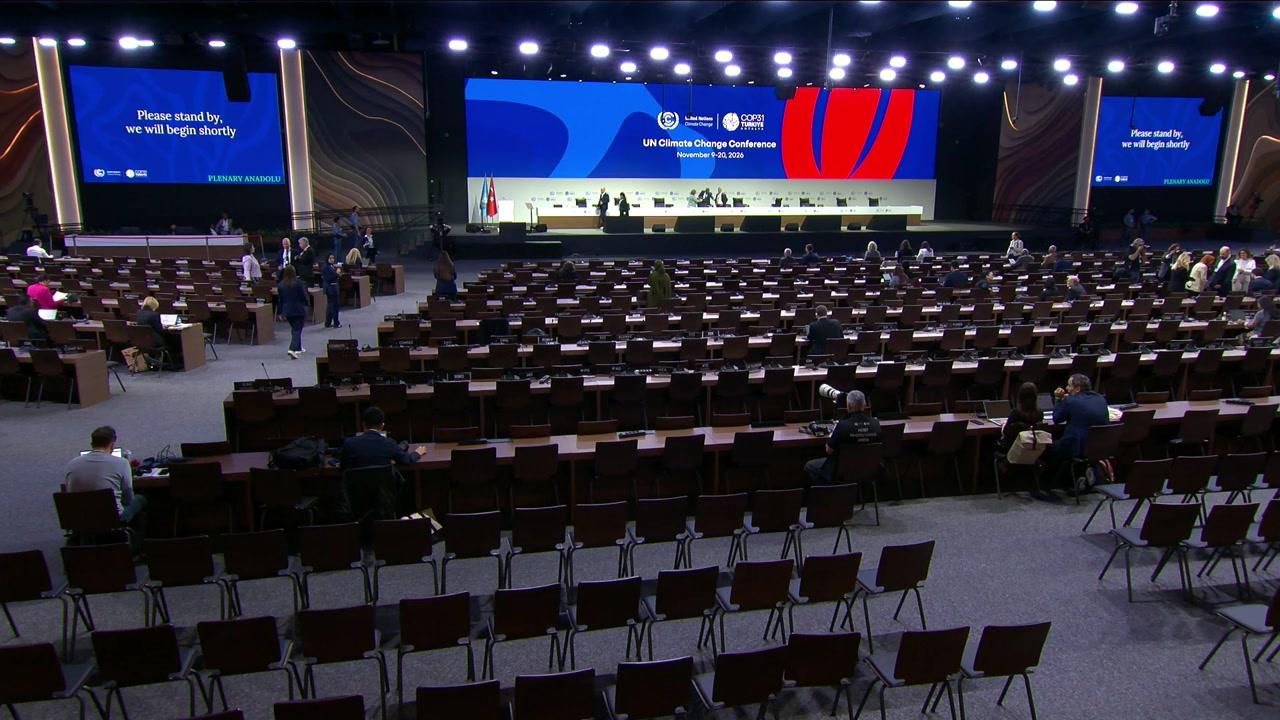
Climate-vulnerable governments used the resumed COP31 high-level segment in Antalya on Nov. 18, 2026, to demand that adaptation money arrive as grants and arrive before the next disaster. No decisions were adopted. The statements map the fault lines negotiators must close before the conference ends: finance, mountains, equity and trade.
- Kenya, Sierra Leone and Jamaica pressed to triple adaptation finance by 2035, mostly as grants.
- Sierra Leone said the loss and damage fund's $250M against $2.8B in requests falls short.
- Mountain Group and Nepal sought a dedicated UNFCCC work program on mountains and glaciers.
- India and Cuba pushed equity and opposed unilateral climate trade measures.
- Sweden and Australia backed tripling renewables and the 35 by 35 electrification goal.
Grants, Not Loans: The Adaptation Finance Ask
Why it matters: Speakers tied their national climate plans to finance reaching countries before disasters hit. They framed delivery as a test of trust in the UN process. For coastal and drought-exposed communities, the gap between pledges and payouts determines whether seawalls, early warning systems and resilient crops get built. Debt payments compete with those same budgets.
The basics: Adaptation finance pays for preparing for climate impacts. Loss and damage funding covers harms that preparation cannot prevent. The Global Goal on Adaptation is the Paris Agreement framework for measuring adaptation progress.
Where things stand: Cabinet Secretary for Environment, Climate Change and Forestry Deborah Barasa of Kenya called for:
- Delivery of the $300 billion finance goal.
- A pathway to triple adaptation finance by 2035 through grants and concessional finance.
- Real resources for both the Global Goal on Adaptation and the Loss and Damage Fund.
She put the debt argument bluntly:
"Africa must not borrow to survive a crisis it did not cause," said Barasa.
Sierra Leone's Minister of Environment and Climate Change argued that adaptation should come first, that finance should be grants rather than debt, and that loss and damage should be funded in full. The minister pointed to the gap in the fund's resources.
"$250 million against requests of $2.8 billion is not a response," said the Minister.
Jamaica's Special Envoy and Ambassador for Climate Change made the case with numbers from Hurricane Melissa and sought predominantly grant-based finance.
"Damage and losses now stand at $12.2 billion, equivalent to 56.7% of our GDP," said the Special Envoy.
A single storm erased more than half of a national economy's annual output. That figure explains why island states treat loan-based recovery finance as a debt trap rather than a lifeline.
The other side: Zambia's Minister of Green Economy and Environment asked for faster reform of the global finance architecture. The minister also cast Zambia as a supplier to the energy transition, not only a recipient of aid. "Zambia sits on the copper needed for global green transition," said the Minister. The pitch reflects a shift among resource-rich developing countries toward seeking value addition and investment alongside grants. No developed-country speaker in the record directly rebutted the grant demands.
Decisions and stakeholder impacts: No motions or votes were taken. The beneficiaries of a grant-heavy outcome would be finance ministries in heavily indebted, disaster-exposed states and the communities whose recovery budgets they control. Contributor governments would carry the cost. The Loss and Damage Fund's credibility rides on closing the shortfall Sierra Leone described.
What's next: The finance positions now move into negotiations over the Antalya outcome.
Mountains Want Their Own Track
Why it matters: Mountain regions supply water to billions of people downstream. Speakers said existing UN climate platforms do not address the specific risks mountain regions face, including glacier retreat and sudden disasters.
Where things stand: Diana Kemelova, Special Representative of the President of the Kyrgyz Republic on the Mountain Agenda, spoke for the Mountain Group. She proposed a mapping of existing work ahead of SB66, the next session of the UNFCCC's subsidiary bodies, and a UN decade on mountain resilience. The centerpiece was a new negotiating track.
"We therefore propose a party-driven process to consider a dedicated work program on mountains, including glaciers and the cryosphere, under the UNFCCC," said Kemelova.
Minister of Agriculture, Forests and Environment Geeta Chaudhary of Nepal urged support for draft decision text with four elements:
- A mountain work program.
- A high-level political dialogue.
- An annual mountain dialogue.
- A rapid response window under the loss and damage fund.
"Let Antalya be remembered as the COP that finally listened to the mountains," said Chaudhary.
Decisions and stakeholder impacts: No action was taken. The group framed its request as "party-driven," meaning governments rather than the secretariat would design the program. That framing aims to win over parties wary of new mandates. A rapid response window would shorten the time between a glacial flood or landslide and the arrival of grant money. Downstream farmers, cities and hydropower operators also have a stake in an outcome.
What's next: Mountain text in the draft COP decision is the immediate test. The proposed mapping exercise would precede SB66.
Equity and Trade: The Old Divide Returns
Why it matters: India and Cuba restated positions on mitigation duties and trade measures that could shape the Antalya decisions. Who cuts emissions first, and who pays at the border, remains the deepest split in these talks.
Where things stand: Minister of Environment, Forest and Climate Change Bhupender Yadav of India said the mitigation work programme must stay facilitative and non-prescriptive. In practice, that means no new targets imposed on countries. He also said the just transition mechanism must be anchored in equity.
"Unilateral trade measures must not penalize developing countries under the guise of climate action," said Yadav.
Cuba's Ambassador invoked common but differentiated responsibilities, the principle that wealthier, historically higher-emitting nations carry greater obligations.
"Developed countries must take the lead in reducing their emissions and support with means of implementation developing countries," said the Ambassador.
The ambassador also criticized unilateral coercive measures, including the U.S. embargo on Cuba.
Decisions and stakeholder impacts: No vote occurred. Exporters in developing economies face the most direct exposure if climate-linked trade measures spread. India and Cuba want that issue kept inside the negotiations rather than settled through unilateral policy.
Transition Champions Point to Results
Where things stand: Minister for Climate and the Environment Romina Pourmokhtari of Sweden called for implementing the Global Stocktake targets: tripling renewable energy and doubling energy efficiency by 2030. She urged a clear Antalya signal on moving away from fossil fuels and launched LEAD-IT 3.0 with India. "Every fraction of a degree matters," said Pourmokhtari.
Minister for Climate Change and Energy Chris Bowen of Australia, who also serves as COP31 President of Negotiations, described his country's uptake of rooftop solar and batteries. He announced a memorandum of understanding with Korea and backed the 35 by 35 electrification goal. "The Paris Agreement is working," said Bowen, who argued the agreement is bending the emissions curve.
Decisions and stakeholder impacts: Bowen's dual role matters. The official steering the final deal is publicly aligned with the energy-transition bloc. Meanwhile, vulnerable states say finance is lagging the progress he cites.
Minor Items
- Ukraine: The ambassador to Türkiye said Russia's war added about 311 million tons of CO2 equivalent since 2022 and caused more than $57B in climate damage, according to Ukraine's estimates. "Russia's war of aggression against Ukraine is not only a humanitarian and security catastrophe, it is a climate and environmental catastrophe with consequences extending far beyond our borders," said the Ambassador.
- China right of reply: A Chinese delegate rejected demands from unnamed countries for Taiwan's participation in the COP, citing the One China principle and UN General Assembly Resolution 2758. "Taiwan is an inalienable part of China's territory," said the Delegate.
Looking Ahead
The presiding officer closed national statements and adjourned the joint COP, CMP and CMA meeting until observer statements at 3 p.m. Watch whether the draft decision text includes grant-based adaptation finance language and a mountain work program.