
Developing Nations Press for Grant-Based Climate Finance at COP31
COP 31 Negotiations • United NationsNovember 17, 2026
Locunity is an independent informational service and is not an official government page for this commission. All information is sourced from public footage and an analysis of official agendas with the aid of responsible, fact-checked AI. to report an error or omission.
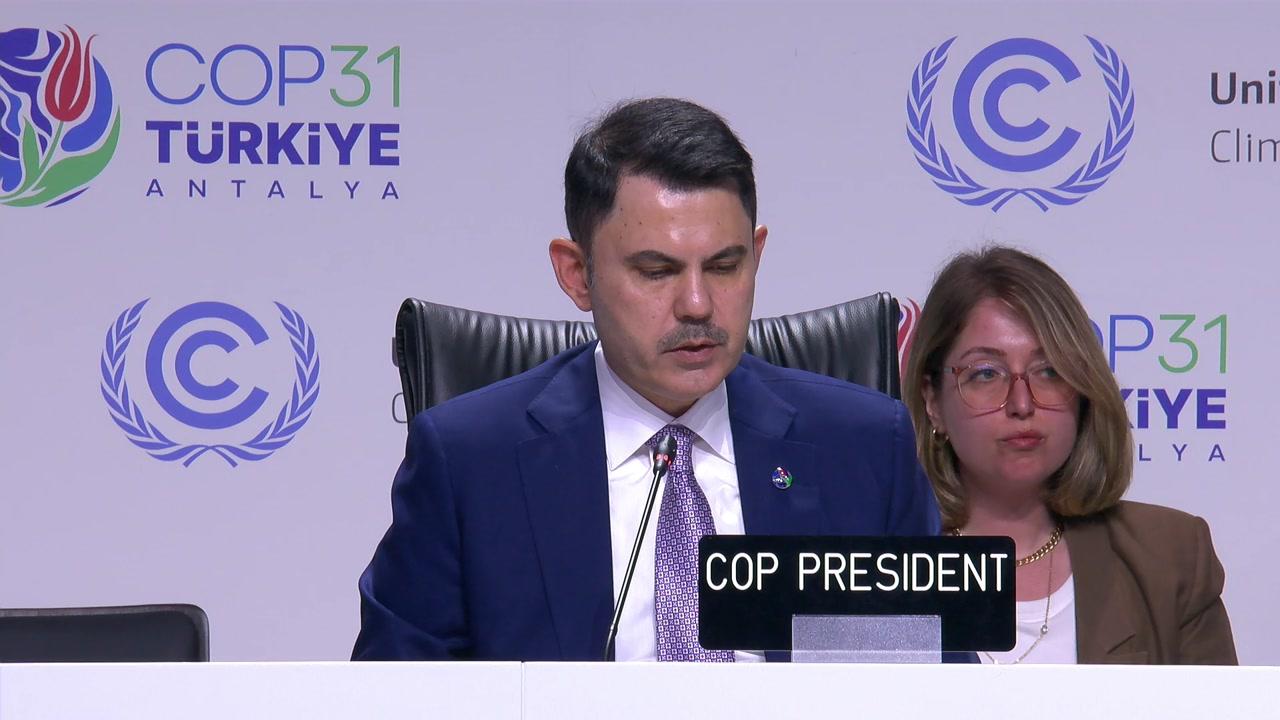
Climate finance dominated the first day of the resumed COP31 high-level segment in Antalya on Nov. 17, 2026. Delegations from Vietnam to Uganda said the money is too little, too fragmented and too loan-heavy. No votes were taken, but the statements marked where the hardest bargaining will happen: finance, the 1.5C threshold, carbon border measures and a draft cover decision the European Union warned could make the process "untenable."
- Developing countries demand predictable, grant-based finance, as Vietnam pointed to a $1.3T-a-year target by 2035
- Small islands and least developed countries warn 1.5C overshoot is now a real prospect
- EU endorses presidency's "35 by 35" electrification push but calls the draft cover decision a distraction
- BASIC group rejects carbon border measures as unilateral and protectionist
- Denmark plans to commit more than $120M to the Global Environment Facility
The Money Gap Takes Center Stage
Why it matters: Finance was the most repeated demand of the session. It drives every other fight at COP31, from adaptation funding to loss and damage, and decides whether national climate plans move from paper to projects.
The basics: The New Collective Quantified Goal (NCQG) is the post-2025 climate finance target set under the Paris Agreement. Nationally determined contributions (NDCs) are each country's climate plan.
Where things stand: Vietnam's delegation urged mobilizing finance toward $1.3T a year by 2035 and took aim at the quality of the money already flowing.
"Climate finance remains inadequate, fragmented, and insufficiently concessional, and it does not always translate into tangible results," said Vietnam's Deputy Prime Minister.
The Least Developed Countries Group pressed for follow-through on a COP30 pledge.
"Commitment to triple adaptation finance by 2035, championed by the LDCs at COP30, requires dedicated follow-up and effective delivery," said Timor-Leste's Vice Minister of Foreign Affairs and Cooperation, speaking for the LDC Group. The group also called for capitalizing the Loss and Damage Fund and the Least Developed Countries Fund.
The BASIC group called for a clear pathway to the NCQG goal and finance that is largely public and grant-based. Uganda's minister of water and environment cited a $28.1B need to carry out the country's NDC. He argued the Paris Agreement's credibility will be judged by real solutions rather than by the number of pledges announced.
The other side: Donor-aligned voices emphasized delivery over new targets. Grace Fu, Singapore's Minister for Sustainability and the Environment, urged parties to "prioritize delivery of existing climate finance commitments, with developed countries leading in providing and mobilizing finance." Singapore also launched a Green Cooperation Programme.
Samira Nawa, Denmark's Minister of Climate, Energy and Utilities, said Denmark intends to commit more than $120M to the Global Environment Facility. That was the largest specific pledge announced in the session's cited statements.
Decisions and stakeholder impacts: No decisions were taken. The demand for grants rather than loans matters most to heavily indebted, climate-exposed countries. It puts pressure on developed-country treasuries to show public money, not just mobilized private capital. Frustration with the process was blunt.
"Negotiations cannot remain bogged down in procedure whilst communities lose their harvests, their homes, and their biodiversity," said Fernando López, El Salvador's Minister of Environment and Natural Resources.
What's next: Finance language will feed into the COP31 outcome text. Statements continue Nov. 18.
1.5C Overshoot Moves From Warning to Baseline
Why it matters: Several speakers treated exceeding 1.5C as a real prospect rather than a distant risk. That shift raises the stakes for both emissions cuts and adaptation money.
Where things stand: The LDC Group called COP31 the first COP to confront imminent exceedance of the threshold. Small island states framed it as a matter of survival.
"1.5 degrees is not a negotiating position," said Fiji's Minister of Foreign Affairs and Trade, who also highlighted the International Court of Justice advisory opinion, the Pacific Resilience Facility and the ocean.
"For a small island state, 1.5 degrees centigrade is not a slogan," said Rajesh Bhagwan, Mauritius' Minister of Environment, Solid Waste Management and Climate Change. He listed five outcomes Mauritius wants:
1. Predictable finance
2. Progress on adaptation
3. A resourced loss and damage fund
4. Recognition of the ocean
5. A just transition
The EU urged correcting any overshoot quickly. Iceland said a lack of consensus must not excuse inaction.
The other side: No delegation in the cited statements disputed the science. Denmark pushed back on threats to its funding.
"Science must remain our guiding light. We should defend it, not defund it," said Nawa.
Decisions and stakeholder impacts: Small island and least developed nations gain leverage if overshoot becomes the working assumption. Their adaptation and loss-and-damage asks become harder to defer. The LDC Group also sought resolution of issues involving the Adaptation Fund and a global goal on adaptation task force.
What's next: How overshoot is described in the final text will signal how seriously negotiators take these demands.
EU Backs Electrification, Warns on Cover Text
Why it matters: The EU lent its weight to the presidency's leading mitigation theme. It also flagged the most serious procedural threat of the day.
The basics: A "cover decision" is the overarching political text that frames a COP's outcome.
Where things stand: Darragh O'Brien, Ireland's Minister for Climate, Energy and the Environment, speaking for the EU and its member states, confirmed the EU's endorsement of the COP31 presidency's "35 by 35" initiative. He also welcomed the COP30 fossil-fuel roadmap. The European Commission cited the EU's Electrify Now initiative.
Jóhann Páll Jóhannsson, Iceland's Minister of the Environment, Energy and Climate, described Iceland's geothermal shift. He said energy security and climate security are inseparable.
"We are not facing a trade-off between climate action, energy security, and affordability. We can achieve all three," said Jóhannsson. Denmark urged clean electrification and a transition away from fossil fuels.
The other side: Wopke Hoekstra, European Commissioner for Climate, Net Zero and Clean Growth, said this COP is about implementation. He called the draft cover decision a distraction, warning "we do run the risk to make the process untenable." He set out four EU priorities:
1. A strong clean-energy signal
2. The integrity of IPCC science
3. Finance that reaches the most vulnerable
4. A just transition
Decisions and stakeholder impacts: The EU's warning signals potential trouble for the final COP31 package. It sets up a test of whether the presidency revises the draft.
What's next: Watch for a revised cover text as negotiations move toward a final outcome.
BASIC Draws a Line on Carbon Border Measures
Why it matters: Trade could spill into finance bargaining if major emerging economies tie the two together.
The basics: Carbon border adjustment mechanisms charge imports based on their carbon content. Article 3.5 of the UN climate convention addresses climate measures that restrict international trade.
Where things stand: David Maynier, South Africa's Minister of Forestry, Fisheries and the Environment, spoke for the BASIC group. He invoked Article 3.5 and named border adjustment mechanisms specifically.
"BASIC opposes unilateral, punitive, discriminatory, and protectionist measures that are inconsistent with international law," said Maynier.
Vietnam asked that climate-related trade measures be applied in a transparent, rule-based way without creating new barriers.
Decisions and stakeholder impacts: Exporters in emerging economies are most exposed to border charges. BASIC's stance makes trade a live friction point alongside finance.
What's next: Whether trade language appears in the outcome text remains open.
Minor Items
- Session rules: The presidency capped statements at 3 minutes for parties, 5 minutes for negotiating groups and 2 minutes for observers.
- Holy See appeal: Cardinal Pietro Parolin, Secretary of State of the Holy See, said the talks concern people's lives and dignity. He urged cohesive multilateralism and an educational pact.
- Other speakers: Spain, Samoa, Mexico, Japan, Cambodia, Thailand, Belgium, Nicaragua, Tunisia and Monaco also delivered statements.
- Suspension: The joint COP/CMP/CMA meeting was suspended, and undelivered statements moved to the afternoon session.
Looking Ahead
The high-level segment continues Nov. 18. Readers tracking adaptation and loss-and-damage funding should watch three things: whether the draft cover decision is revised, how finance language reflects demands for grants, and whether Denmark's GEF pledge prompts others to follow.