
Nations Back Two-Tier Just Transition Mechanism, Split on Finance, Fossil Fuels
COP 31 Mandated Events • United NationsNovember 16, 2026
Locunity is an independent informational service and is not an official government page for this commission. All information is sourced from public footage and an analysis of official agendas with the aid of responsible, fact-checked AI. to report an error or omission.
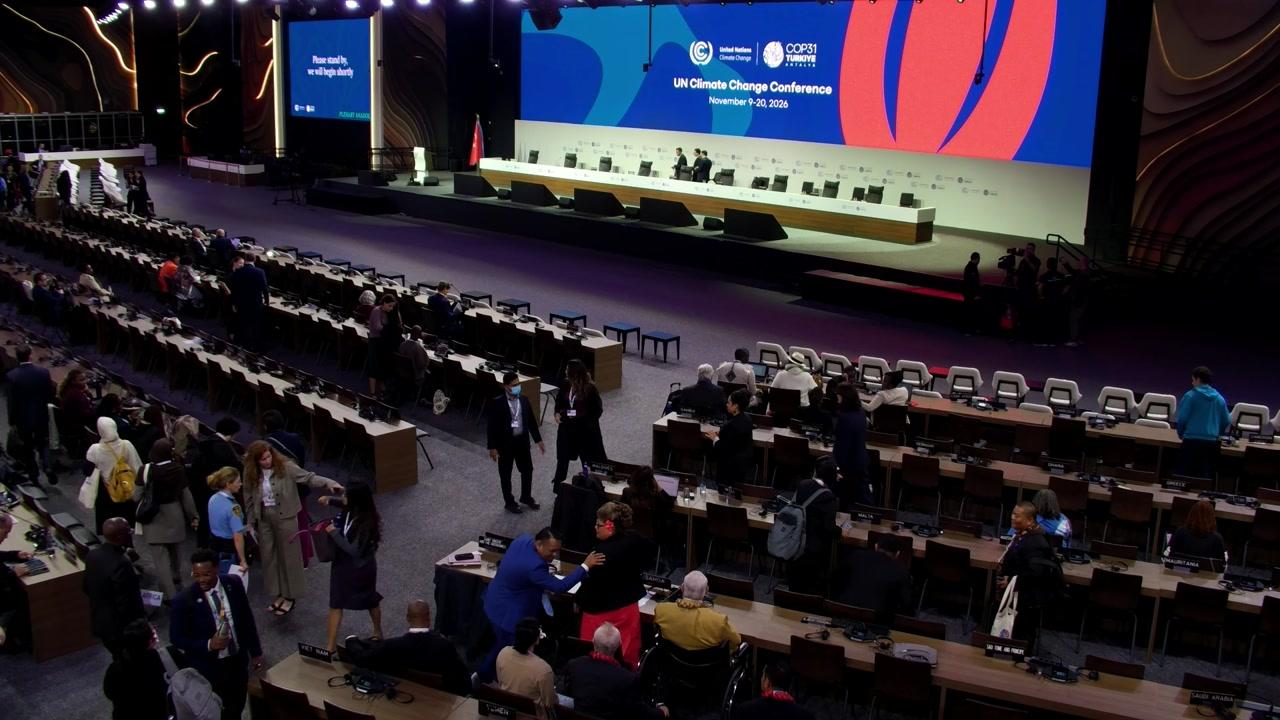
Negotiators at COP31 in Antalya broadly agreed Nov. 16, 2026, on the basic design of a new Just Transition Mechanism. They remain divided on who pays for it, how it relates to an existing work program and whether it should mention fossil fuels. The ministerial roundtable took no formal decisions, but the COP31 Presidency released a draft decision and gave Parties until the night of Nov. 17 to send written feedback.
- Two-tier mechanism gains traction: Brazil, AOSIS, the African Group and others backed a political tier plus a technical support tier.
- Observer groups demand governance seats: Workers, Indigenous Peoples, farmers, youth, women and local governments sought formal roles.
- Work Programme's future splits Parties: Proposals ranged from a three-year extension to merging it into the mechanism.
- Developing countries reject debt-financed transitions: The LDCs, the African Group and CARICOM pressed for grant-based support.
- Colombia, Iraq and the Arab Group resist prescriptive language, including any collective transition away from fossil fuels.
Mechanism Design: Broad Support, Competing Timelines
The basics: Last year's Belém decision (Decision 2/CMA.7) created the Just Transition Mechanism. In Antalya, Parties must set its functions, governance and timeline. The CMA is the Paris Agreement's governing body of member countries.
Why it matters: The design determines whether workers and communities get practical help or another forum. Simon Stiell, Executive Secretary of UN Climate Change, pressed delegates: "I urge parties to find common ground, seek compromise, and agree how to deliver on the promise of Belém here in Antalya."
Where things stand: Co-chairs José Luis Samaniego, Vice Minister of Mexico, and Minister Bolesta of Poland posed two questions. The first asked how the mechanism can support just transition pathways at local, national and international levels. The second asked how it relates to the UAE Just Transition Work Programme.
Ana Toni, CEO of COP30 (Brazil), backed a structure under CMA authority with a dedicated UNFCCC unit. "We see value in the 2-tier governance structure, one tier dedicated for political guidance and oversight, others dedicated to implementation and support," she said.
The Alliance of Small Island States (AOSIS), speaking through Samoa's delegate, proposed an advisory policy tier and a technical support tier on a fixed schedule. "By SB66 in 2027, the steering committee should be nominated and hosting arrangements agreed," the delegate said. SB66 is a 2027 session of the UN climate talks' subsidiary bodies. "By COP32, the rules of procedure and initial work plan should be adopted, making the mechanism fully operational."
The African Group of Negotiators, speaking through Ghana's delegate, wanted a faster start. It sought a constituted steering committee in Antalya and full operation by CMA 9 in Addis Ababa.
The other side: The EU, Canada and the UK favored coordinating existing institutions, including the International Labour Organization (ILO), over building new structures. "The mechanism should deliver a coordination unit which strengthens coherence with existing expertise and institutions," said the United Kingdom's delegate.
The host presidency took a similar line. "Rather than creating new structures, it would be more valuable to establish a system that better connects existing resources and responds to the needs and requests of countries," said Murat Kurum, COP31 President-Designate (Türkiye).
Decisions and stakeholder impacts: No vote was taken. In closing, the co-chairs noted broad agreement that the mechanism should be non-prescriptive and party-driven, and they acknowledged remaining differences. Small island and African states want a body with defined staff and deadlines. The EU, UK and Canada want a lighter coordination role built on existing institutions such as the ILO.
What's next: Kurum asked Parties to "submit your written feedbacks to us by tomorrow night at the latest so that we can give a signal to the entire world from Antalya." Chris Bowen, COP31 President of Negotiations (Australia), urged all Parties to support the co-facilitators in the second week. Samaniego closed the session: "We'll see you tomorrow for further consultations."
Observers Want a Seat at the Table
Why it matters: Observer groups were more unified on this point than on any other: they want formal roles in governing the mechanism, not just consultation.
Where things stand: Nine constituencies were invited to speak, and most pressed for governance seats. Labor was the most specific. "First, workers must be at the table in a governing body when decisions that affect them are made," said Bitumala Molette of the Congress of South African Trade Unions, speaking for the trade union constituency (TUNGO). "The ILO must be asked to take care of the labor dimension in the mechanism." TUNGO also urged avoiding added debt and including labor-rights references in the final decision.
A representative of the Indigenous Peoples' Organizations constituency said, "A mechanism that is fit for purpose should provide a dedicated seat for Indigenous Peoples in this constituted body." The constituency also sought alignment with UNDRIP, the UN Declaration on the Rights of Indigenous Peoples, and protection of free, prior and informed consent. It asked the mechanism to identify risks from mineral extraction and energy corridors.
Tamar Toria of the Georgian Farmers Association, speaking for farmers, asked for "co-design of pathways with farmer organizations at national levels and farmer-to-farmer knowledge sharing and peer learning at the heart of the mechanism's work." Farmers also asked for direct-access finance and readiness support.
The youth constituency put it more bluntly. "We came for a mechanism built with us, not for us," said a YOUNGO representative, who asked that human rights and critical-minerals language be retained, including on eliminating child labor.
The other side: Business groups took a more modest approach. Mr. Winblad of Business and Industry NGOs (BINGO) favored coordinating existing efforts and a voluntary toolbox. "We would welcome the creation of an open access repository for governments and non-party stakeholders to share best practice case studies," he said.
Decisions and stakeholder impacts: Environmental groups, women and youth tied their demands to paragraph 12 of Decision 2/CMA.7, the Belém text's rights language. Gina Cortés Valderrama of the Women and Gender Constituency said, "We need a permanent body to carry out the crucial functions of coordination, action, and support, and knowledge generation." Local governments, citing Shanghai, Accra and Western Australia, offered implementation support. CAN Africa said affected communities feel consulted last and impacted first.
What Becomes of the Work Programme
The basics: The UAE Just Transition Work Programme (Decision 3/CMA.5) runs dialogues and a ministerial roundtable. It is now under review.
Why it matters: The review will decide whether these forums continue as a separate, party-driven track or are folded into the new mechanism.
Where things stand: Most speakers called the two complementary, but they disagreed on structure. "The LLDC group supports continuing the work program for 3 years beyond CMA 8, with a review at CMA 11," said Botswana's delegate, speaking for the Landlocked Developing Countries. The UAE and the African Group also supported a three-year continuation.
The other side: Canada wants one consolidated track. "We should take one decision that concludes the review and operationalizes the mechanism into one coherent just transition work stream under the CMA," said Canada's delegate. The EU favored incorporating the dialogues and roundtable into the mechanism, and BINGO suggested integrating the Work Programme's modalities.
Russia cautioned against defining the Work Programme's future before the mechanism's functions are clear. Brazil said the review should serve as a bridge to the mechanism's full operation. The Women and Gender Constituency questioned whether the dialogues had produced projects at all.
What's next: Supporters of a merger and supporters of an extension will need to reconcile their positions in this week's consultations.
Finance: "No Transition at All"
Why it matters: For countries with limited fiscal space, the test is whether the mechanism can mobilize grants, not just advice.
Where things stand: Sudan's delegate, speaking for the Least Developed Countries, cited a 15% share of clean energy public finance in 2024 and debt service that has quadrupled since 2010. "Let me be clear, debt-financed transitions will only deepen our existing vulnerabilities," the delegate said.
The African Group sought a just transition financing framework with grant-based, highly concessional finance under Article 9.1 of the Paris Agreement. "A just transition financed by debt is no transition at all," said Ghana's delegate.
CARICOM and the LLDCs asked for non-debt-creating support, and Zimbabwe, Mauritius and Tonga made similar points. "We do not need another institution that simply identifies our challenges. We need a mechanism that helps us overcome them," said Saint Kitts and Nevis' delegate, speaking for CARICOM.
Decisions and stakeholder impacts: Finance remains one of the gaps the co-chairs flagged for further consultation. The countries pressing hardest on this point are those that would rely most on the mechanism.
Fault Lines on Fossil Fuels and Trade
Where things stand: Several Parties resisted prescriptive language. "Our government has decided to move beyond environmental hysteria and address climate variability and environmental challenges with scientific rigor rather than with ideological dogma," said Colombia's delegate. The delegate also warned that a poorly planned transition can undermine energy sovereignty.
Iraq drew a firmer line. "Iraq reaffirms that it refuses any text that could speak of collective transition away from fossil fuel," said Iraq's delegate. Saudi Arabia, speaking for the Arab Group, cautioned against top-down guidance that targets specific sectors. The African Group and others raised concerns about unilateral trade measures.
The other side: The EU and the LDCs tied just transition to action aligned with the 1.5-degree warming limit. The EU's delegate said the bloc "wants a just transition mechanism that catalyzes real action, ambitious action."
Why it matters: These objections show where consensus on the mechanism text could stall, particularly on fossil fuel references and national policy space.
Minor Items
- Poland's lesson: Bolesta said, "it's really, really difficult to deliver on just transition, but it is possible."
- Workers first: Bowen said energy workers "deserve our support in this transition, and that's what this work is all about."
- Trade alignment: BINGO called for trade rules better aligned with climate goals.
Looking Ahead
Written feedback on the Presidency's draft decision is due by the night of Nov. 17, 2026. Co-chair consultations resume Nov. 17, and second-week talks will test whether the broad agreement on a party-driven mechanism can bridge the gaps on finance, the Work Programme and fossil fuel language before Antalya closes.