
CCTA Backs $52.1M Grant Slate, $10M Youth Bay Pass Swap Amid Doubts
Authority Board • Contra Costa Transportation AuthorityOctober 22, 2026
Locunity is an independent informational service and is not an official government page for this commission. All information is sourced from public footage and an analysis of official agendas with the aid of responsible, fact-checked AI. to report an error or omission.
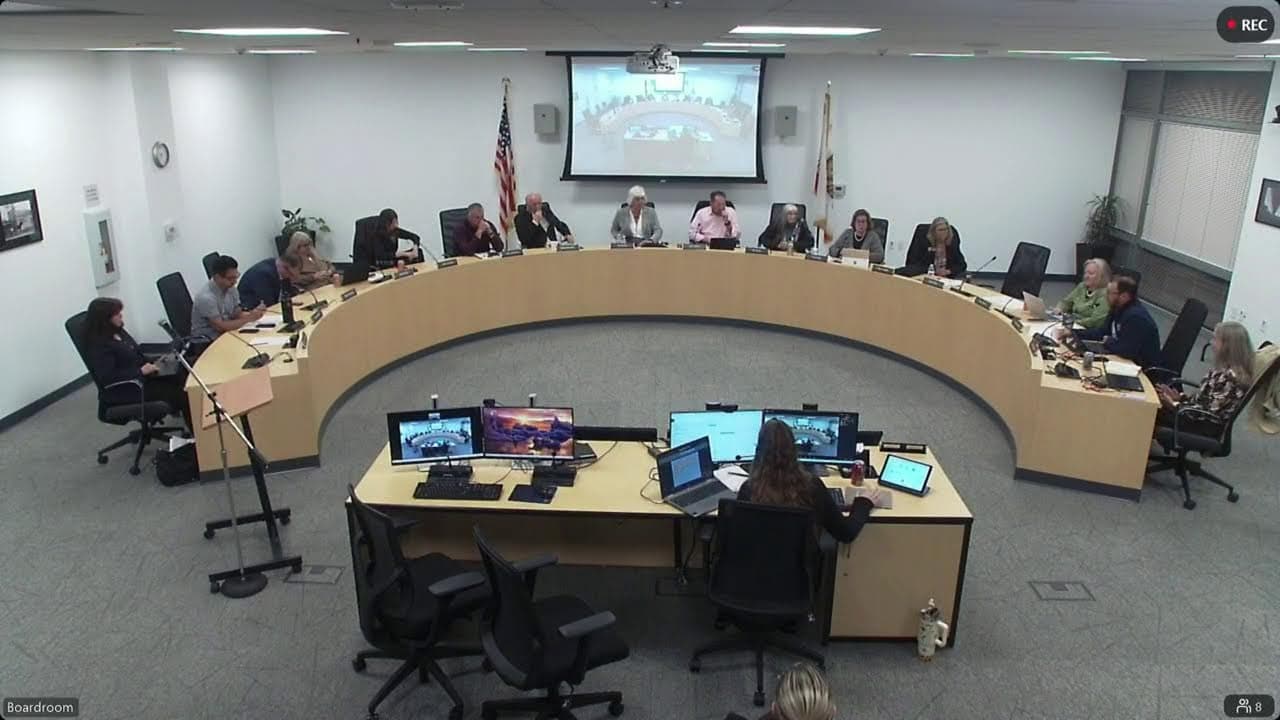
The Contra Costa Transportation Authority (CCTA) board spent much of its Oct. 21, 2026, meeting debating whether to put a quarter of its expected federal grant dollars toward a countywide student transit pass that members said had not yet been defined. The board approved that $10 million swap and every other action item unanimously. It also took a sobering look at the Caldecott Tunnel bore closures that will reshape East Bay commutes starting in August 2027.
- $52.1M OBAG 4 nomination slate approved, 11-0, including a $10M BART swap to fund a countywide student Clipper Bay Pass
- $2.04M for Central County student programs, including a $25-a-month Bay Pass pilot at Mount Diablo Unified
- Youth transportation subcommittee proposed, with a possible board item in December
- Caltrans details rolling Caldecott bore closures from August 2027, using reversible lanes to keep traffic moving
- Up to $105M in refunding bonds authorized to capture estimated savings of about $4.4M
Bay Pass Swap Rides Along With $52.1M Grant Slate
The basics: OBAG 4 is the fourth round of One Bay Area Grant federal funds, which the Metropolitan Transportation Commission (MTC) distributes based on county nominations.
Why it matters: The $10 million Bay Pass swap is roughly a quarter of the funds CCTA expects. It is the first dedicated funding for a countywide student transit pass.
Where things stand: In June, CCTA launched a coordinated call that pooled at least $90 million from five fund sources. Applicants submitted 39 proposals, one of them ineligible.
“We received $226 million in funding requests. That's 2.5 times our total amount,” said Director of Planning Matt Kelly.
Against a $43.4 million OBAG 4 target, staff nominated $52.1 million, or 120%. The slate includes three countywide programs: Smart Signals Phase 2, Safe Routes to Schools and the Clipper Bay Pass. San Pablo Avenue, Coggins Avenue and BART LED lighting ranked highest among competitive projects. CARE projects include BART wayfinding and a West Leland safety project in Pittsburg. Coggins Avenue and Cowell Road have backup funding through the Transportation for Livable Communities (TLC) program.
Geography shaped the list. East County submitted only four applications, mostly because of staffing limits, and had already committed its TLC share to eBART. Staff used countywide programs to balance the subregions.
The Bay Pass mechanics are indirect. OBAG funds cannot pay for Bay Pass directly, so BART will put up $10 million in local funds in exchange for $10 million in OBAG programming. Staff put pricing at about $25 per student per month.
The other side: Several West and Central County members questioned the program's cost and eligibility rules.
“And we have had no information on this board about exactly what that would be and who it would be for,” said one West County commissioner.
Supporters from East County and TransPac argued the swap is the only available funding source for a countywide program.
“It's a countywide full transit program. It's not just buses,” said Commissioner Ken Carlson. Funding it at the county level, he added, means regional transportation planning committees would no longer have to cover the cost.
“But right now we just don't put enough money into school student transportation anywhere in any part of the county,” said Amy Worth, ex officio bus operator representative.
Vice Chair Sue Noack, who also chairs MTC, noted that future regional subsidies depend partly on a pending regional transit measure. One commissioner framed the vote as a choice between $0 and a chance at $10 million.
Decisions and stakeholder impacts: The board approved the OBAG 4 and CARE lists and Resolution 26-60-G (For: 11, Against: 0). Students and East County gain a countywide program. Lower-ranked local projects absorb the trade-off.
What's next: MTC will add up to 35 points to CCTA's 75-point local scores before final funding decisions.
Central County Pilot Tests $25 Student Transit Pass
Why it matters: The pilot will test unlimited-ride passes for the most vulnerable students. Its results will inform the next transportation expenditure plan.
Where things stand: The board approved a $2.04 million Measure J Program 21A allocation (Resolution 2647G), which funds safe transportation for children in Central County. The money comes from TransPac's Sept. 10 recommendations:
- $1.3 million for a student transit pass pilot through the SOAR program at Mount Diablo Unified, launching January 2027
- $600,000 for Walk and Roll
- $80,000 for Bike Family Fest
- $50,000 for bike parking
“The price CCTA will pay for this Initial MDUSD pilot program is $25 per student per month,” said Director of Programs Nikki Paletta.
The other side: Members compared Bay Pass to West County's Measure J-funded paper pass program, which serves all students eligible for free and reduced-price lunch. They disagreed over whether Bay Pass costs scale by use or by enrollment.
“You pay per head. And you pay per head based on a defined universe,” said John Nemeth.
Members also asked whether TransPac had understood its 21A funds as local match for OBAG. Staff said TransPac committed funds only through fiscal year 2027-28.
Decisions and stakeholder impacts: Commissioner Carlson moved approval, and the board voted For: 11, Against: 0.
“I think we see a tremendous amount of opportunity for a countywide youth transit program,” said Executive Director Timothy Haile. He proposed forming a CCTA subcommittee focused specifically on youth transportation.
What's next: Haile proposed reporting back to the board in December and said an item to form the subcommittee that month was possible.
Caldecott Bores to Close in Turns Starting August 2027
Why it matters: The Caldecott Tunnel on State Route 24 carries about 200,000 vehicles a day.
Where things stand: On Sept. 28, Caltrans awarded the rehabilitation and ventilation/fire-life-safety contract to the Meyer Obayashi joint venture. The project uses construction manager/general contractor (CMGC) delivery. Construction begins this winter, and the closures will run in sequence:
- Bore 3: about five months, starting August 2027
- Bore 2: about three months, starting January 2028
- Bore 1: about three months, starting April 2028
The work totals about 542 working days. A movable “zipper” barrier will keep two bores open in the peak direction. Caltrans aims to divert up to 30% of traffic and plans tiered outreach, message signs, CHP enforcement and freeway service patrol.
“I think it's in the best interest of the project and also for the traveling public to proceed with this long-term closure,” said Kenneth Puth, Caltrans regional project manager.
“We're not calling these detours. We're calling them alternate routes,” said Joe Rouse, chief of the Caltrans District 4 Office of Highway Operations, because the tunnel will not fully close.
The other side: Commissioners pressed on several points:
- “Whatever you end up doing, make Sunday and Saturday the same,” one commissioner said of the weekend lane switchover times.
- Members asked whether the work could go faster. Puth said the contractor believes Bore 3 could take about 4.5 months.
- Vice Chair Noack asked about contingency plans if a possible BART service cut follows a failed regional transit measure.
- Other questions covered fire district coordination and self-driving vehicles.
Caltrans said the project scope does not allow new cross-passages between bores.
What's next: Commissioners suggested Caltrans also present to the Mayors Conference. No public comment was received.
Bond Refinancing Aims to Capture About $4.4M
Where things stand: The board authorized up to $105 million in 2026A bonds to refinance about $44 million in 2017A bonds and $58 million in 2018B sales tax bonds (For: 11, Against: 0). Staff described the deal as fixed-rate and tax-exempt, with the same final maturity and no added risk, much like refinancing a mortgage.
“So tonight we're looking for… the refinance of the Series 2017A and the 2018B bonds to achieve debt service savings,” said staff member Brian Kelleher.
Why it matters: Estimated present-value savings rose from about $3.6 million to roughly $4.4 million in a matter of weeks. That jump is why staff wanted authority to move quickly.
“We wouldn't move forward with the transaction unless we met or exceeded that threshold,” said Melissa Schick of KNN Financing, referring to the 3% net present value savings floor in CCTA's debt policy.
What's next: The bonds' optional call date is March 1, 2027, but the deal can close about 90 days earlier. Ratings are expected in early November, with pricing in mid-to-late November ahead of a December Federal Reserve meeting and closing by year-end. If savings fade, the sale would be deferred to early next year.
Minor Items
- Smart signals: DC Electric Group won the $1,479,745 La Mirinda signal contract (Resolution 2653P), with a $1,627,719.50 allotment. The bid came in about 25% under the $1.97M estimate, but a roughly $428,000 gap remains (For: 11, Against: 0).
- I-680 ramp metering: The board approved an agreement governing ramp meters on 16 northbound on-ramps, including CCTA's three-year demonstration from Alcosta to Willow Pass. The clerk declared the vote unanimous, and one written comment was received.
- Bikeways: The board awarded all $3,333,094 in Transportation Fund for Clean Air bikeway funds to eight projects (Resolution 2648G; For: 9, Against: 0, Absent: Meadows, Xavier).
- Staff news: Andy Dillard was promoted to engineering manager, and Bike Family Fest drew 2,400 attendees.
- Transit Ready: A new travel training program launched at San Pablo City Hall. Separately, a federal MegaGrant response awaits headquarters legal review.
Looking Ahead
Bond pricing is expected in mid-to-late November, and a youth transportation subcommittee item could come in December. Funding agreement amendments for the La Mirinda signals return within a month or two, with construction targeted for January to July 2027. Ramp metering construction is anticipated in spring 2027, with both systems on by early 2029.