
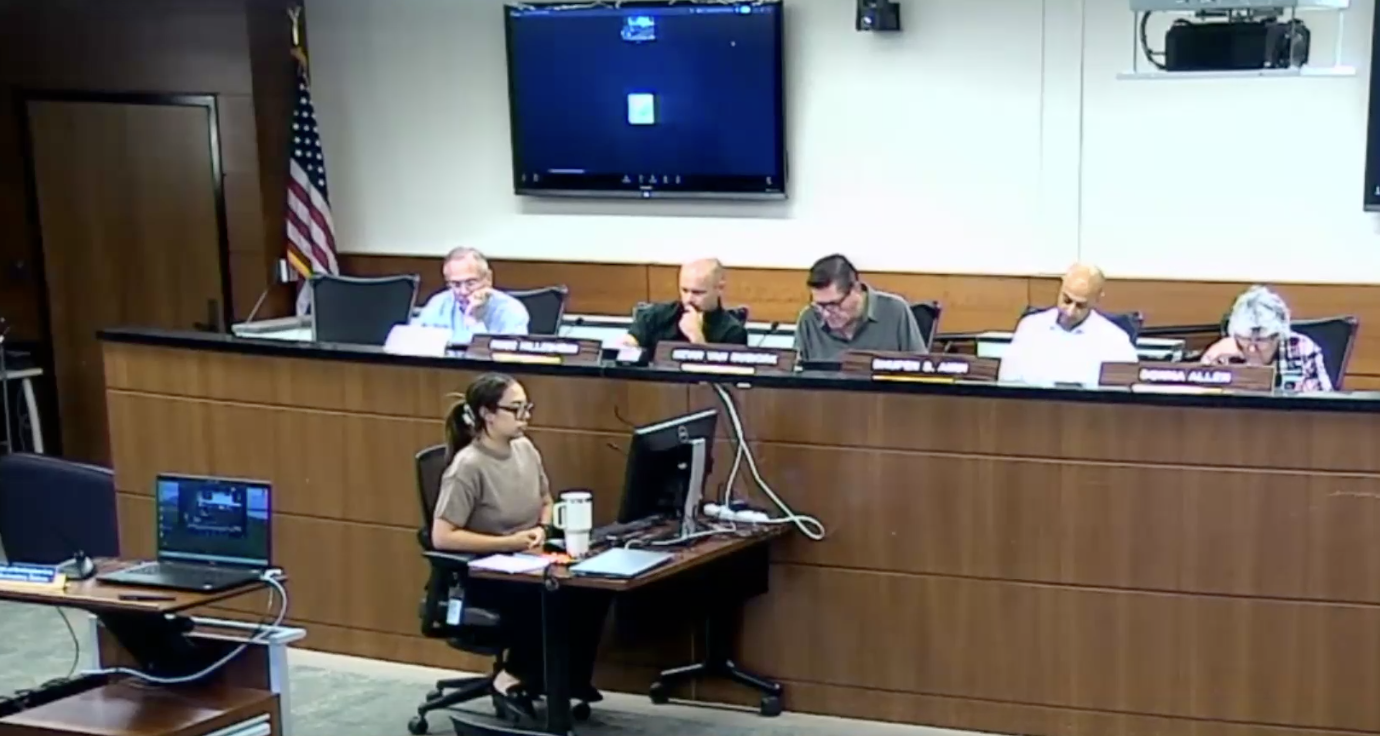
Planning Commission - May 13, 2026 - Meeting

Planning Commission - May 13, 2026 - Meeting

Planning CommissionContra Costa CountyMay 13, 2026

Sources:

Locunity is a independent informational service and is not an official government page for this commission.We use AI-assisted analysis and human editorial review to publish information.

Commission Unanimously Backs Removal of Three Ailing Valley Oaks

The Contra Costa County Planning Commission sided with safety over preservation Tuesday, voting 5-0 to deny a neighbor's appeal and allow removal of three code-protected valley oak trees in unincorporated Alamo — a case that took nearly 500 days to resolve. The decision arrives as staff previewed a long-awaited new tree protection ordinance expected before commissioners later this year.

  • Three valley oaks at 532 Hem Ave in Alamo cleared for removal after commission unanimously rejects neighbor's appeal on safety grounds

  • New tree protection ordinance years in the making headed to commission this year, with staff acknowledging it will likely be controversial

  • Assessor's parcel map error discovered during hearing flagged for correction

Editor's Note: Due to a technical issue, Locunity's systems missed the May 13, 2026, meeting. The issue is now resolved.


496 Days, Three Trees, One Answer

Why it matters: The appeal pitted a neighbor's environmental and habitat concerns against an arborist's safety findings on three valley oaks with documented decay, severe lean, and a history of dropping limbs weighing 30 to 40 pounds — the kind of quiet land-use dispute that shapes how counties balance tree preservation with private property safety.

The basics: Property owner Brad Wolf of 532 Hem Ave applied in January 2024 to remove three valley oak trees ranging from 15.4 to 50.2 inches in diameter. A licensed arborist found all three in poor health. The zoning administrator approved the permit (CDTP24-0080) in January 2025. Neighbor Ryan Brown of 70 Holiday Lane filed an appeal on four grounds: contribution to environmental health, wildlife habitat, water runoff mitigation, and adherence to tree preservation regulations.

Where things stand: Project Planner Diana Leka of the Community Development Division presented the staff recommendation to deny the appeal, methodically addressing each of Brown's four objections. On environmental health, she noted approximately 25 trees would remain along the creek. On wildlife habitat, she pointed to the surrounding oak woodland in the Las Trampas Regional Wilderness area. On runoff, she said the topography at the tree locations is relatively gentle. On regulatory adherence, she confirmed the applicant followed all requirements under County Code Chapter 816.6.

Mason Wadhams, architect for the applicant, presented photos showing the trees' severe lean and recent limb drops. "Whatever weight you put on these concerns, we feel they're far outweighed by the safety risk of not allowing the removal," said Wadhams. "The lean, the lack of care and maintenance and the overall age and condition produce a high probability of sudden limb drop." He added that Wolf had already planted more than 50 replacement trees, including 24 large 60-inch box trees along the property line.

Brad Wolf, speaking remotely, described a history of falling limbs that destroyed a shared fence with Brown. He argued that Brown himself recognized the trees' danger — Brown had topped a shared tree between the two properties over safety concerns. "The appellant, the person putting in the appeal, recognizes the danger that these trees have by effectively topping the tree," Wolf said.

The other side: Ryan Brown, a physician participating from John Muir Hospital, asked the commission to require more advanced testing before allowing removal. "It would be nice to see a level three advanced assessment, maybe including internal decay testing," Brown said, noting the arborist report did not include drilling, root excavation, or aerial inspections. He also raised concerns about creek runoff, describing "a large creek that runs very vigorously" through the area that "creates a floodplain, not only for me, but for the neighbors downstream." Brown acknowledged he is not an arborist.

No members of the public commented on the item.

Decisions: All five commissioners present systematically rejected the appeal. Commissioner Ross A. Hillesheim was the most pointed, noting the case had dragged on for 496 days. "It's been 496 days since this application came in — over three trees and probably hundreds of man hours and tens of thousands of dollars," Hillesheim said. He concluded the applicant had followed county regulations and none of the appeal points had merit.

Commissioner Calabrigo said the evidence of large limb drops was most compelling. "I've seen that happen with other valley oaks in the San Ramon Valley. And it's very unpredictable in terms of when that can happen," Calabrigo said.

Commissioner Bhupen Amin praised both parties for caring about their properties. "Nobody's looking to try to cut trees, to develop something or to try to clear land," Amin said.

Chair Kevin Van Buskirk reported visiting the site that morning and confirmed no construction was happening near the trees — only landscaping. "If I was the property owner and looking up at the big tree, the 50-inch tree, I wouldn't want to be under it. I wouldn't want my grandkids under it," Van Buskirk said.

Commissioner Amin moved to deny the appeal, find the project exempt from CEQA under Section 15301H, and uphold the zoning administrator's decision. Chair Van Buskirk seconded. The vote was unanimous: For: 5 (Amin, Van Buskirk, Calabrigo, Hillesheim, Allen), Against: 0. Commissioner Bob Mankin was absent.

What's next: The 10-day appeal window to the Board of Supervisors expires May 26, 2026. If no appeal is filed, Wolf may proceed with tree removal under the conditions of the approved permit.


New Tree Protection Ordinance on the Horizon

Staff used the communications portion of the meeting to preview a policy change directly connected to the evening's main event.

Reuben Hernandez of the Community Development Division told commissioners that a new tree protection ordinance — years in development — is expected to come before the commission this year. "We are working very hard on a new tree protection ordinance that's going to be coming to this commission this year," Hernandez said, adding that the goal is to minimize permit requirements and reduce the number of appeals reaching the commission and Board of Supervisors. He acknowledged the ordinance would likely generate controversy.

Chair Van Buskirk requested the study include information about what happens when unhealthy trees are found among healthy ones — a scenario that mirrored the evening's case.

Why it matters: After a hearing that consumed nearly 500 days and dominated the commission's only substantive agenda item, the forthcoming ordinance could reshape how property owners across unincorporated Contra Costa County navigate protected-tree removal — and whether disputes like Tuesday's ever reach this stage again.


Minor Items

  • New commissioner welcomed: Chair Van Buskirk formally welcomed new Commissioner Calabrigo to the Planning Commission. Staff had no update on filling the seat vacated by Commissioner Jeffrey Wright.

  • Assessor's map error flagged: Commissioner Donna Allen raised a concern that an assessor's parcel map incorrectly showed a scenic easement rather than the creek structure setback identified during the tree permit hearing. Hernandez said staff would notify the assessor's office but could not guarantee a correction.

  • Commissioner Hillesheim announced he would be absent from the next meeting.

  • Zoning ordinance update: Commissioner Allen asked about the status of the county's zoning ordinance update; staff said it is moving along.

  • Next meeting: The May 27, 2026, meeting was expected to be canceled due to no agenda items.