
Data Centers Emerge as Defining Climate Battleground at Climate Week NYC
Climate Week NYC • United NationsSeptember 24, 2026
Locunity is an independent informational service and is not an official government page for this commission. All information is sourced from public footage and an analysis of official agendas with the aid of responsible, fact-checked AI. to report an error or omission.
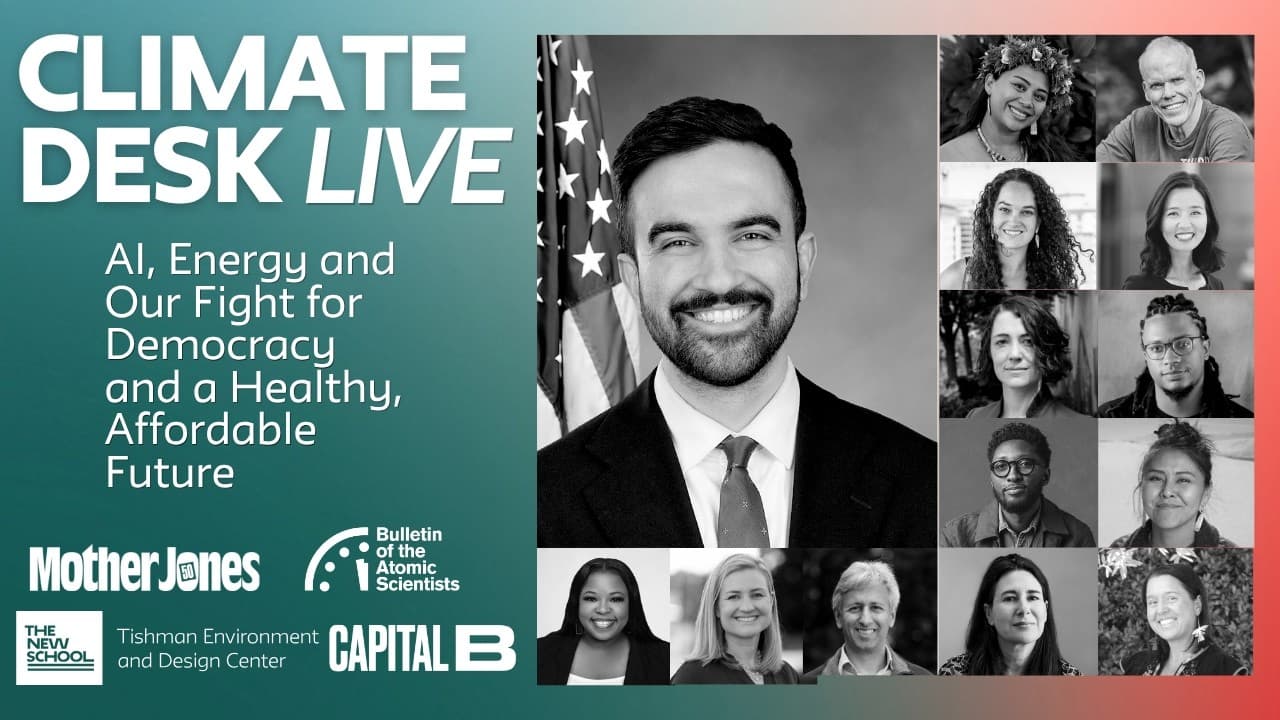
The New School's annual Climate Week gathering brought together mayors, scientists, Indigenous leaders, and organizers who converged on a single, urgent diagnosis: the artificial intelligence data center buildout — from Memphis to Phoenix to the Navajo Nation — is the most consequential energy and environmental justice fight of this decade. Across four panels and a mayoral interview, speakers documented illegal emissions, mapped 80 years of nuclear contamination as a cautionary parallel, and outlined replicable city-level programs proving that climate action and affordability can go hand in hand.
NRDC chief warns gas buildout to power data centers could erase 15 years of grid decarbonization, lays out four demands: transparency, community consent, 100% clean energy, and legal compliance
NYC Mayor Mamdani reveals the city has experienced a flash flood emergency one out of every three days since taking office, driving billions in sewer and coastal resilience spending
Memphis mother describes her son's asthma near Elon Musk's XAI supercomputer, a 2-gigawatt facility running dozens of illegal methane turbines
Phoenix mayor co-founds the Global Urban Data Centers Pact spanning all six populated continents to prevent a race to the bottom on siting standards
Researchers map nearly 4,000 nuclear weapons sites across all 50 states, drawing direct parallels to the data center rush
Navajo advocates report 524 abandoned uranium mines on Navajo land and warn ~20 new mining projects are being proposed to fuel AI nuclear power
Boston's municipal energy aggregation program has saved residents more than $250 million in four years while the city deploys 5,000 heat pumps and the nation's first net-zero carbon zoning code
Data Centers: The Defining Climate Fight of 2026
Across three panels and a mayoral interview, a unified picture emerged: the unregulated AI data center buildout is concentrating pollution in communities of color, threatening to reverse years of grid decarbonization, and generating rare cross-partisan opposition.
The basics: Data centers — massive server farms powering AI, cloud computing, and social media — require enormous amounts of electricity and water. To meet surging demand, energy companies are proposing new natural gas plants and, increasingly, nuclear reactors. Seven in ten Americans now oppose data centers in their communities.
Why it matters: If the gas buildout proceeds unchecked, it could erase 15 years of progress decarbonizing the U.S. electrical grid, according to NRDC CEO Manish Bapna. Residential electricity rates are already climbing to subsidize the facilities, and communities near them face heat, noise, and pollution burdens they never consented to bear.
Memphis: Ground Zero
A Moms Clean Air Force speaker from Memphis offered the starkest testimony of the day, describing life near Elon Musk's XAI data center — the world's largest AI supercomputer cluster. "This 2-gigawatt behemoth uses enough power for 1.5 million homes," she said, adding that dozens of illegal methane turbines were operating near historically marginalized neighborhoods. Her son developed asthma.
Latricia Adams, CEO of Young Gifted and Green, deepened the picture of Memphis zip code 38109, where the data center compounds pollution from a Valero refinery, a TVA power plant, Highway 55, and coal ash trucks. "When you get close to this facility, you smell it before you can even see it," she said. "Community needs to be treated as equal in negotiating processes. And that's just the bottom line."
Phoenix: 200 Data Centers and Counting
Mayor Kate Gallego of Phoenix detailed how Maricopa County now hosts roughly 200 proposed or existing data center facilities. Data center developers pay three times what housing developers pay, she noted, but the community costs are staggering: "A 170-megawatt data center in our region gives off as much heat as 180,000 homes, but in a very small area."
International private equity investors have driven the boom. "I have learned that some of them cannot find my city on a map," Mayor Gallego said. One firm, Macquarie, called landscaping requirements "overly burdensome." In response, Mayor Gallego co-founded the Global Urban Data Centers Pact with Melbourne's mayor — a coalition now spanning all six populated continents to establish race-to-the-top standards and prevent companies from pitting cities against each other.
She also noted the rare political alignment the issue has produced: "When Bernie Sanders and Ron DeSantis are going in the same direction, it is unusual."
The NRDC Framework
NRDC CEO Manish Bapna articulated a four-point accountability framework that could become the template for local and state moratorium movements:
No NDAs — full transparency on emissions, water use, and energy sourcing
Community consent — not just consultation, but the power to say yes or no
100% clean energy for every facility
Compliance with existing environmental and health laws
"The scale of what the gas buildout could be to power these data centers could erase the last 15 years of progress that's been made in decarbonizing the grid," Bapna warned.
What's next: The Moms Clean Air Force reported active organizing campaigns stopping data centers in Wisconsin, shutting down facilities in Ohio, and strengthening methane regulations in New Mexico. The Global Urban Data Centers Pact will continue recruiting mayor signatories worldwide.
Nuclear Legacy: 4,000 Contaminated Sites and a Warning for AI
The Nuclear Infrastructure panel drew a direct line from the Manhattan Project to the AI buildout, arguing that the impulse to deploy infrastructure at speed — without community consent or environmental review — has produced generational harm before.
Why it matters: Researchers have now mapped nearly 4,000 nuclear weapons production sites across all 50 U.S. states, many still contaminated. Panelists argued the pattern is repeating: new uranium mining projects are being proposed to fuel nuclear-powered data centers, with the same communities bearing the cost.
From Tinian to Today
Munyeka Di Oro, a Chamorro community advocate from the Mariana Islands, described how the U.S. military overlaid Manhattan's street grid onto Tinian Island during World War II to stage the atomic bombings of Hiroshima and Nagasaki. "What the military did was take the grid map of Manhattan and lay it over the island and create Manhattan in the Marianas. And so we have a Broadway, we have a Canal Street," she said. She recounted the nuclear-free and independent Pacific movement led by young people in the 1970s and '80s, culminating in Palau becoming the world's first nuclear-free country in 1985.
"We don't need artificial intelligence," Di Oro said. "What we need is ancestral intelligence."
524 Abandoned Mines, 20 New Proposals
A Navajo Nation and New Mexico communities advocate reported that of roughly 20,000 abandoned uranium mines nationwide, 524 sit on Navajo land. Now, approximately 20 new uranium mining projects are being pushed in New Mexico to fuel nuclear energy for AI data centers. "If we stop uranium mining, we can stop both nuclear energy and contribute to the peace movement by stopping nuclear weapons," she said.
She also highlighted Governor Hochul's push for five or more new nuclear reactors and up to 20 small modular reactors in New York, noting a public comment period was closing the day of the event. Every nuclear power plant requires water, she emphasized, tying the issue to broader water scarcity across the West.
A nuclear weapons map researcher drove home the scale: sites span every state in the union, and government narratives that nuclear weapons keep Americans safe persist while communities continue living with contamination.
What's next: Panelists urged audience members to engage in public comment periods on new nuclear proposals and to connect data center accountability campaigns to the broader anti-nuclear and environmental justice movements.
NYC's Flash Flood Reality: 1 in 3 Days
In a wide-ranging interview, Mayor Zoran Kwame Mamdani of New York City described a metropolis where climate change is no longer a future threat — it is a daily emergency.
Why it matters: New York's aging sewer system was designed for 1.75 inches of rain; the city now routinely receives five inches in 30 minutes. The infrastructure gap threatens millions of residents and billions of dollars in property.
Where things stand: "1 out of 3 days we have been in a flash flood emergency," Mayor Mamdani said of his first 10 months in office. The city is investing in multibillion-dollar sewer upgrades in Southeast Queens, roughly $100 million in cloudburst technology in Homecrest, the largest tree-planting campaign in a decade, and a Bureau of Coastal Resilience flood wall in Lower Manhattan. "This flood wall doesn't just prevent flooding in the immediately surrounding areas. It also decreases the cost of insurance for those who live in that surrounding area," he said.
Sunnyside Yard and Housing
Mayor Mamdani described "pitching the president on constructing what would be the largest housing development our city has seen since the early 1970s, be it Sunnyside Yard, 12,000 homes, 30,000 jobs." He also advocated for Haitian TPS holders' continued stability.
Climate as Cost of Living
The mayor pushed back on the framing of climate as an elite concern. "For too long it has felt like climate — the way that climate is treated in public discourse is almost as if it's a concern that some can afford to have, while others have to deal with more immediate crises. The reality is that climate is an immediate crisis," he said. He advocated for PM2.5-focused messaging to connect air quality directly to public health.
Mayor Mamdani also pointed to his administration's enforcement action against DoorDash — "holding DoorDash to account for having not paid their workers, 260,000 workers, $131.5 million" — as a model for corporate accountability in the climate space.
On data centers, he saw political opportunity: "It is one of the most bipartisan issues in this country right now, and that also shows that that too could be the coalition against the climate crisis."
Boston Proves Decarbonization Pays Off
Mayor Michelle Wu of Boston delivered the day's most concrete policy showcase, demonstrating that city-level climate programs can save residents money while cutting emissions.
Why it matters: With federal climate incentives frozen and environmental protections under rollback, Boston's model offers a replicable blueprint for mayors nationwide.
$250 Million in Savings
Boston's Community Choice Electricity program — a municipal aggregation model that negotiates greener, cheaper electricity contracts separate from the utility — has saved residents more than $250 million over four years. "We negotiate as a municipality a greener contract," Mayor Wu explained, adding that a 100% green option is available. The city is also pursuing state legislation to close loopholes exploited by predatory third-party energy suppliers.
The Boston Energy Saver program serves as a one-stop shop navigating complex federal, state, and utility incentive programs. By the end of next year, the city aims to deliver 5,000 new heat pumps and 10,000 weatherized homes, with over $300 million in decarbonization incentives unlocked.
Net-Zero Zoning and Free Transit
"Boston became the first city in the country to incorporate net-zero carbon zoning into our zoning code, so that all large buildings have to be net zero day one," Mayor Wu said. The city has also launched community planning academies where residents learn zoning language and become neighborhood ambassadors — a model for democratizing land-use power.
On free public transit across three bus routes, Mayor Wu offered a striking reframe: "It is the most capitalist investment you can make to take away barriers for people to go to work, shop at your local businesses, further their education, take care of their family, put dollars into the community."
She also noted 10-state balcony solar legislation enabling renters to participate in clean energy generation — an affordability and equity play targeting the millions of Americans who don't own rooftops.
Mobilization: Scientists Step Up, Organizers Go Local
The closing panel wove together threads of democratic erosion, scientific resistance, and grassroots organizing into an urgent call to action.
600+ Attacks on Science
Dr. Goldman of the Union of Concerned Scientists reported that her organization has tracked more than 600 attacks on science since the current administration took office, with a 50%-plus increase in scientists joining their network. She cited the Vaccine Integrity Project — created by scientists to replace a killed federal advisory council — and climate.us, a community-built replacement for climate.gov, as examples of researchers stepping into the breach.
In a moment of generational texture, Dr. Goldman shared a story of her child encountering the smell of gasoline for the first time at a gas station: "He got out of the RV and he said, what's that smell? And we realized he had never smelled gasoline in his working life because we have electric car, we have electric bike."
The People's Hearing Tour
Dr. Ana Baptista, Director of the Tischman Environment and Design Center at The New School, described the National People's Hearing Tour — a series of community hearings across the country producing a policy document now available at tishmancenter.org. "At all of those hearings, it was ordinary people, just everyday people and residents, not experts, not policy wonks, that came forward and talked about the things that were impacting their lives," she said. Testifiers included Black, brown, Indigenous, and white communities, as well as ranchers and conservatives — a cross-partisan coalition organized around contaminated water, unaffordable utility bills, and data center siting.
Her assignment to the audience was direct: "Go to your local representative. Find out who your local representative is. Talk to your mayor. Talk to your city council rep. And show them. Say, these are the things we want, and what are you doing to help get us there?"
El Niño Warning and Sunup
Bill McKibben, founder of Third Act, issued the day's starkest climate warning: "The El Niño now aborning in the Pacific is of a scale that will mean humans in the next year will experience temperatures that no member of our species has ever faced in the past." He urged rapid deployment of solar, wind, and battery storage and announced the global Sunup campaign launching at the summer solstice — a worldwide celebration of clean energy.
On the data center fight, McKibben framed it as the rare issue that connects local zoning boards to global energy policy: "This is the way that we have, the only way at the moment, to stand up to the insane oligarchs who are trying to rule our society."
Minor Items
Opening performance: Trinidad-born musician Etienne Charles performed excerpts from "San Juan Hill: A New York Story" and "Earth Tones," a Creative Capital-funded piece about climate-displaced communities including the Maldives, Houma, La., Galveston, Texas, and Jareales in Arecibo, Puerto Rico — a Bomba-practicing community displaced by highway construction and now underwater. Poet Elgin Ward-Daly performed a Lenape land acknowledgment.
New School President Joel Towers opened the event by framing the university's role during the climate crisis and democratic upheaval, marking the Tischman Environment and Design Center's 20th anniversary. Partners included Climate Desk Live, Mother Jones, Capital B News, and the Bulletin of Atomic Scientists.
Mayor Mamdani referenced conversations with the mayors of Rome and Paris at a U20 gathering, connecting NYC's climate infrastructure agenda to a global mayoral coalition.