United Nations – CEPI Public Health – Sep 21, 2026
CEPI Public Health • United NationsSeptember 21, 2026
Locunity is an independent informational service and is not an official government page for this commission. All information is sourced from public footage and an analysis of official agendas with the aid of responsible, fact-checked AI. to report an error or omission.
Norway, UK Pledge Over $200M to CEPI as Leaders Sound Alarm on Pandemic Amnesia
At the 81st United Nations General Assembly, CEPI convened a high-level side event that delivered the first major sovereign funding commitments toward its $2.5 billion pandemic preparedness strategy — and a blunt warning that the world is already forgetting the lessons of COVID-19.
- Norway pledges ~$100M and the UK pledges up to £100M, providing early momentum toward CEPI 3.0's $2.5 billion replenishment target
- Gates Foundation signals continued support, with a formal announcement expected in coming months
- Ethiopia and Senegal reaffirm partnerships, pushing for Africa's shift from vaccine recipient to producer and research partner
- GAVI-CEPI coordination tested in real time during the Bundibugyo Ebola response, with calls to scale up the First Response Fund for pandemic-level deployment
- Health leaders warn of "striking" collective amnesia since COVID-19, with few countries having conducted independent evaluations of their pandemic response
Two Anchor Pledges Land for CEPI 3.0
State Secretary Andreas Motzfeldt Kravik of the Norwegian Ministry of Foreign Affairs announced Norway's intention to provide 1 billion Norwegian kroners — approximately $100 million — to CEPI's next strategic period.
"I am also pleased to announce that Norway intends to provide 1 billion Norwegian kroners, which translates to about $100 million approximately, to CEPI for its next strategic period, reflecting our strong confidence in CEPI's unique mission and its essential role in the global health architecture," said State Secretary Kravik.
Norway, together with Senegal, has taken on a special role as an anchor country for the CEPI 3.0 replenishment — a diplomatic function designed to give other potential donors confidence that the fundraising effort has committed champions.
Minutes later, Parliamentary Under Secretary of State Chris Elmore of the United Kingdom's Foreign Office followed with a second major commitment: "That's why I'm pleased to announce that the UK will invest up to £100 million in CEPI's next strategy period." The UK has supported CEPI since 2018, and Elmore cited the organization's role in delivering COVID-19 vaccines and advancing clinical trials for Lassa and MERS vaccines.
Why it matters: CEPI 3.0 — the organization's next five-year strategy — aims to develop safe, effective, accessible vaccines within 100 days of identifying a pandemic threat. The price tag is $2.5 billion in new funding. These two pledges, totaling more than $200 million combined, represent the first publicly announced sovereign commitments and send a critical political signal at a moment when development budgets worldwide are under pressure.
Director Africa Paul Ambasinghe of the Gates Foundation added that the foundation would announce continued support "in the next couple of months," thanking Norway and the UK for their early leadership.
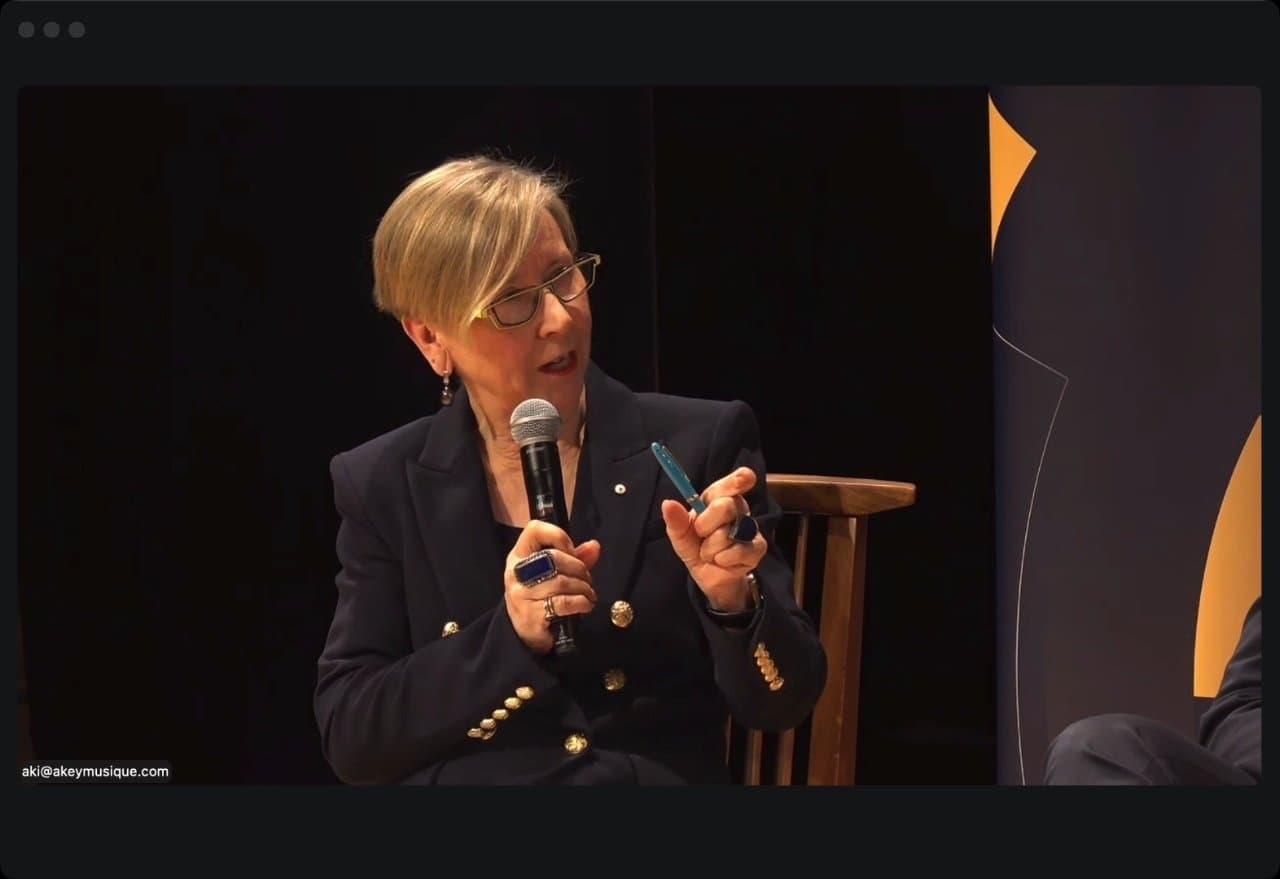
CEPI Board Chair Jane Halton framed the stakes plainly: "It requires $2.5 billion in new funding. Funded as one system, it buys the world speed."
What's next: CEPI will continue its replenishment campaign through the strategy period, with the Gates Foundation announcement expected in coming months. Ethiopia and Senegal both reaffirmed their partnership commitments during the event — Ethiopia as the first African country to invest in CEPI since 2018, and Senegal through its anchor country role and the Institut Pasteur de Dakar partnership.
Can Pandemic Partnerships Survive Hard Budget Years?
The event's first panel — moderated by Board Chair Halton with representatives from Norway, the UK, Ethiopia, and Senegal — turned from pledges to a harder question: how do you build health partnerships durable enough to survive changes in government, shrinking budgets, and declining public trust?
Where things stand: Multilateralism is under strain. Vaccine hesitancy is rising. Development budgets are tightening across donor countries. Board Chair Halton asked panelists directly what would make partnerships survive the next five years of shifting priorities.
State Secretary Kravik argued effectiveness is the key — that organizations must demonstrate concrete results to justify investment in domestic politics. "If you can show that we have this mandate and we're responding to that mandate with these programs and these are effective programs, I think that's how I can go back to my constituency and say, listen, this is a sound investment," he said, while acknowledging the geopolitical landscape is shifting toward multipolarity, making consensus on overarching frameworks more difficult.
Under Secretary of State Elmore offered a blunter framing: "Preparedness isn't a luxury, it's an insurance policy." He stressed that shared willingness to take on risk — across manufacturing, science, regulation, and finance — must be a collective endeavor.
Executive Director Abnet Zelleke of the International Institute for Primary Health Care in Ethiopia challenged the model of project-based funding entirely: "The partnerships that will last the next 5 years, that will survive the next 5 years, are those that are not based on funding cycles or funding for a project, but rather that are anchored in national institutions." He also acknowledged that COVID-19 exposed how fragile Ethiopia's health system was, with essential services halting as resources were redirected to emergency response.
Deputy Permanent Representative Mamdouh Ndiaye of Senegal called for moving beyond crisis-mode assistance toward long-term partnership, emphasizing the need to "connect surveillance to research, research to development, development to production, and production to timely and unhindered access. And at the heart of this entire chain must be, of course, equity."
Several panelists cited the Bundibugyo Ebola outbreak response as real-time evidence that prior preparedness investments are paying off, with candidate vaccines, trial protocols, regulatory engagement, and delivery planning advancing in parallel rather than in sequence — a marked improvement over response timelines five years ago.
The Machinery of Rapid Response: GAVI, PAHO, and the 100-Day Test
The second panel, moderated by CEPI CEO Richard Hatchett, moved from political commitments to operational mechanics — how vaccines actually get developed, manufactured, and delivered during the critical early weeks of an outbreak.
The basics: CEPI develops and stockpiles investigational vaccines for emerging threats. GAVI, the global vaccine alliance, maintains stockpiles for five vaccines and has a First Response Fund designed for rapid deployment when no stockpile exists. PAHO, the Pan American Health Organization, operates a revolving fund for pooled procurement across the Americas.
CEO Sania Nishtar of GAVI described the precise coordination between her organization and CEPI during the Bundibugyo Ebola response: "CEPI invested in the development of the vaccine and GAVI did an advanced market commitment signaling, and we coordinated very closely to the extent of positioning our press releases so that the market gets an appropriate signal." The goal was to de-risk private sector investment and accelerate production. She cited the mpox response in 2024 as another test case, when GAVI invoked its First Response Fund to secure and deliver doses to the Democratic Republic of Congo despite no existing stockpile. "We are making a case for the upscaling of the GAVI First Response Fund because it works," she said.
Director Africa Ambasinghe offered the Marburg response in Rwanda as a concrete benchmark for CEPI's 100-day mission: "When you look at the example of your engagement for Marburg in Rwanda, that was a very good test of your 100 days, because in 10 days you were able to actually start" clinical trials. He called for pandemic preparedness coordination to be elevated beyond health ministries to heads of state, arguing that "governments in every country need to really understand that pandemic preparedness is one thing that can actually stop a country."
Director of Health Emergencies Ciro Ugarte of PAHO described significant progress on regulatory harmonization across the Americas, with a Pan-American network of regulatory agencies enabling cross-country acceptance of assessments, integrated pharmacovigilance, and real-time risk-benefit reporting. The region now produces more than 65% of its influenza vaccines and more than 95% of COVID-19 vaccines domestically — a dramatic shift driven by the bitter experience of COVID-19, when the Americas received only 2–2.5% of global stockpiles despite having the highest transmission and lethality rates.
CEO Hatchett noted that PAHO's revolving fund model is being studied by Africa CDC and the African Union as a potential template for African pooled procurement — a cross-regional knowledge transfer that could reshape how the continent sources medical countermeasures.
Executive Director Chikwe Ihekweazu of WHO's Health Emergencies Programme, joining by pre-recorded video from Bunia in the DRC, grounded the discussion in field reality: "Progress happens when national and local authorities lead firmly, communities have genuine agency in the response, and international organizations coordinate behind a country-led strategy."
Africa's Push From Recipient to Producer
A recurring theme across both panels was the insistence — particularly from African representatives — that the continent must move from dependence on external vaccine supply to domestic research and manufacturing capacity.
Executive Director Zelleke was direct: "Africa must increasingly move from being primarily a recipient of health innovations to becoming a producer, investor, and partner in its creation." He cited Ethiopia's successful implementation of Marburg vaccine clinical trials through its partnership with the Armauer Hansen Research Institute (AHRI) as evidence that this shift is underway.
Deputy Permanent Representative Ndiaye highlighted the Institut Pasteur de Dakar as a concrete example of African research contribution, and argued that shared capacity makes outbreak response more effective: "If one country can or is really empowered to fight any outbreak of a disease, if that capacity is shared across the board with other countries and nations, I think the fight is just going to be quite more efficient and more effective."
Director Africa Ambasinghe stressed the importance of partnering with local institutions — naming INSP, INRB in the DRC, the Rwanda Biomedical Center, and the Institut Pasteur de Dakar — arguing that organizations closer to outbreak locations enable fundamentally faster response.
Why it matters: During COVID-19, the Americas depended on external supply for more than 90% of vaccines, treatments, tests, and PPE. Africa fared even worse. The push for regional self-sufficiency is no longer aspirational language — it is being backed by institutional investments, regulatory harmonization, and clinical trial infrastructure that did not exist five years ago.
The Amnesia Warning
Perhaps the sharpest exchange of the event came on the question of whether the world has actually learned anything from COVID-19.
Director Ugarte challenged the premise directly: "I think we haven't learned the lesson, actually. To learn a lesson, we need to see the evaluation. And how many countries in the world did an external independent evaluation of their response to COVID-19?" He contrasted this with PAHO's own external evaluation, which produced more than 90 recommendations — all accepted, nearly all implemented.
CEO Nishtar warned that the forgetting is already well advanced: "The scale of the amnesia we've had after the pandemic is really striking. We seem to have completely forgotten the economic devastation that was unleashed." She called for investment in simulations, readiness exercises, and standard operating procedures for coordination.
Executive Director Ihekweazu, from the DRC, delivered the starkest framing: "The world cannot afford another cycle of panic during emergencies and neglect between them."
CEO Hatchett summarized by pointing to "important opportunities deriving from institutional learning if we're honest and willing to engage in honest self-reflection about what we have done right, what we've done wrong."
Minor Items
- CEPI leadership transition: Board Chair Halton announced that CEO Richard Hatchett is departing CEPI and will be succeeded by Ibrahim Abubakar early in the new year. "It would be remiss of me if I didn't acknowledge this is Richard Hatchett's last UNGA," she said.
- State Secretary Kravik framed pandemic preparedness alongside climate change and artificial intelligence as "global action problems" that can only be addressed through multilateral cooperation, despite the shift toward multipolarity.
- The event was held at the Japan Society in New York on Sept. 21, 2026, as a side event of the 81st United Nations General Assembly.