
District 3 Rivals Draw Contrasts on Housing, Traffic and Campaign Cash
City Council • BurlingameOctober 7, 2026
Locunity is an independent informational service and is not an official government page for this commission. All information is sourced from public footage and an analysis of official agendas with the aid of responsible, fact-checked AI. to report an error or omission.
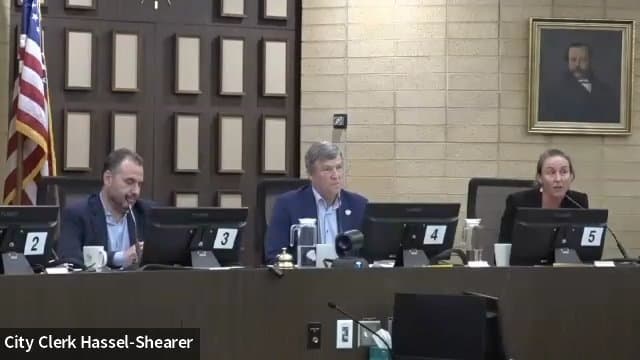
Burlingame's only contested City Council race came into focus Oct. 6, 2026, as District 3 candidates Howard Wetton and Jen Faber split on parking, police enforcement and campaign money, while agreeing on a hotel tax hike. At a League of Women Voters forum, the two candidates and District 5 Councilmember Peter Stevenson answered audience questions ahead of the Nov. 3, 2026, election. No council action was taken.
- District 3 contrast sharpens: Faber touts 137-plus donors and a sitting councilmember's backing. Wetton touts a $200 donation cap and no outside money.
- All three candidates back Measure D, which would raise the hotel tax from 12% to 15%.
- Lot H sale divides candidates: Wetton won't support a sale without a plan to replace parking.
- Broadway grade separation faces a $665M price tag and a projected $90M shortfall.
- Street safety splits candidates on police enforcement, e-bike rules and gas leaf blower fines.
Endorsements, Donors and Experience Define District 3
Why it matters: District 3 is the only contested seat on the ballot. Both candidates used their closing statements to define the race around who funds them and who vouches for them.
Where things stand: Faber framed her campaign around results and coalition. She cited more than 137 donors giving between $25 and $400. Her endorsements include Stevenson and Donna Colson.
Wetton drew a sharp campaign finance contrast. He cited a $200 limit on individual contributions and said he takes no money from outside Burlingame. He also cited endorsements from nearly 30 commissioners and five former council members, leaning on his commission experience.
Priorities: The candidates named overlapping but distinct top issues:
- Faber: traffic, resilience and financial stewardship.
- Wetton: safe streets and sidewalks, climate resiliency and the bayfront.
- Stevenson: housing affordability, safety and fiscal responsibility.
Decisions and stakeholder impacts: A sitting councilmember's endorsement of Faber signals where part of the current council's support lies. Wetton is instead building on commission and former-council networks. Voters weighing the two are choosing between a broad small-donor coalition with current-council ties and a capped, locals-only funding model backed by the city's volunteer commission ranks.
What's next: District elections mean only District 3 voters will choose between Wetton and Faber. The seats carry 4-year terms.
State Law Looms Over Mercy Site and Lot H
Why it matters: Housing drew the second-most debate of the night. State mandates now shape what can be built next to Burlingame's single-family (R-1) neighborhoods. Downtown parking and City Hall financing add local trade-offs.
Where things stand: On the Mercy property, Faber said R-1 zoning remains in place, but state law would let a seller build. A 160-unit senior facility is slated for the site.
"The state of California has taken local control away from municipalities like Burlingame with respect to housing," said Faber, District 3 candidate.
Wetton noted that Mercy has not submitted a plan. He said any project needs full commission review.
"I don't believe that any candidate or member of the City Council should in advance say that they would support it or oppose it," said Wetton, District 3 candidate.
Stevenson drew on his mother's experience living in a similar facility. He said neighbors' fears can outrun reality.
The other side: The candidates split more sharply on Lot H, the city parking lot at Ralston Avenue and El Camino Real. Wetton also criticized selling city property to pay for City Hall.
"I wouldn't support doing something at that lot without a plan to replace the parking," said Wetton.
Faber and Stevenson instead emphasized transit-oriented housing, such as North Rollins Road, and proactive planning, including the Bayside Specific Plan.
Decisions and stakeholder impacts: Neighbors near the Mercy site face a project the city may have limited power to stop. Downtown businesses and drivers have a stake in how Lot H parking is handled. Seniors seeking local housing could gain from the Mercy proposal.
Enforcement or Education? Candidates Split on Street Safety
Why it matters: Candidates said traffic and safety were the top concerns they heard from residents door to door.
The basics: Vision Zero is a policy framework that aims to eliminate traffic deaths and serious injuries through data-driven street design and enforcement.
Where things stand: Stevenson said Burlingame's Vision Zero effort is entering phase 2.
"We are specifically going to be addressing certain areas, whether it's more protected bike lanes, whether it is more regulation around e-bike use, and also in terms of speed limits," said Stevenson, Councilmember, District 5.
Wetton pushed for speed studies so police can write tickets, along with lower speed limits on narrower streets. He also called for vigorous code enforcement, including fines, against gas leaf blowers.
"I think we should consider additional ordinances to address minors on e-bikes, particularly Class 2 e-bikes that have throttles," said Wetton.
The other side: Faber tied added police traffic enforcement to Measure D revenue and cited her police association endorsement. She argued that ordinances without enforcement don't move the needle. Stevenson favored a balanced mix of education, incentives and enforcement.
California Drive check-in: All three candidates said the redesigned California Drive has slowed traffic. They criticized the bike lane's limited use and connectivity:
- Faber called it a bike lane to nowhere that needs to continue.
- Wetton said its success depends on outreach to Burlingame High School and the bike community.
- Stevenson said traffic calming was the main goal. He noted the council acknowledged outreach shortcomings and said an extension past Broadway is planned.
Decisions and stakeholder impacts: Youth e-bike riders, cyclists and landscapers using gas leaf blowers face the most direct exposure to the proposals. The police association's role in the race ties enforcement staffing to the outcome of Measure D.
Broadway Grade Separation Faces $90M Gap
Why it matters: Stevenson called the Broadway crossing the most dangerous intersection in California coming off a highway. The project's funding gap now drives its timing.
The basics: A grade separation splits a rail line from street traffic, typically with an underpass or overpass. This project involves Caltrain tracks at Broadway.
Where things stand: Faber said the project does not need every dollar in hand before moving forward. She put the cost at about $665M and expects construction to start no earlier than late 2028 or 2029.
"The cost of the project has ballooned to $665 million approximately," said Faber.
Wetton warned the project would still fall short even with expected funding, and he doubted a 2028 start.
"Even if everything comes through that we're hoping will come through, we'll be $90 million short," said Wetton.
In the meantime, Wetton urged near-term signal and lane fixes. He also called for implementing the parking removal already approved by the Traffic Safety and Parking Commission.
Stevenson, who sits on Caltrain's LPMG, described a federal-state-local funding portfolio.
"We think it's reasonable that we are in the 80% level of committed funds to be able to continue on," said Stevenson.
Decisions and stakeholder impacts: The debate centers on how much risk the city should accept before breaking ground. Drivers, pedestrians and Caltrain riders near Broadway face years of status quo either way. Wetton's interim fixes are the only near-term relief proposed.
Measure D Unites the Field
Why it matters: Hotel tax revenue fell from $28M to $6M after COVID. Measure D would raise the transient occupancy tax, a tax charged on hotel stays, from 12% to 15%. That would bring in roughly $5.7M to $5.8M a year. The measure needs a two-thirds vote.
Where things stand: Stevenson said the rate is low compared with peer cities.
"We're at 12% and haven't touched it for 17 years," said Stevenson.
Faber said she has endorsed, donated to and canvassed for the measure.
"I'm 100% supportive of Measure D," said Faber.
She suggested the new revenue could support workforce pay and a communications hire.
The other side: Wetton also endorsed Measure D, but with caveats. He said it would put Burlingame at the high end of the county, and he noted that hotels still need to recover. He wants the money spent on capital deficits rather than operating costs.
Decisions and stakeholder impacts: Hotels and their guests would bear the tax. City workers, police and communications staff could benefit depending on how the council allocates the revenue — a question on which the District 3 candidates already diverge.
- District 1 candidate absent: Andrea Pappajohn, the only District 1 candidate, was called away, the moderator said.
- District 5 uncontested: Stevenson is the sole candidate for his seat.
- Childcare gap: A county analysis shows Burlingame meets 53% of infant and toddler demand, a 104-space shortage. Candidates proposed partnerships, faster permitting and a business incubator to close it.
- Outreach pledges: Faber floated a Measure D-funded communications hire. Wetton flagged gaps in physical notices, and Stevenson said outreach is becoming permanent.
- Nonpartisan forum: "The League does not endorse or oppose candidates or political parties," said Cindy Robbins Roth, forum moderator, League of Women Voters of North and Central San Mateo County.
Looking ahead: Election Day is Nov. 3, 2026. The League pointed voters to Vote411.org for candidate information and noted Oct. 19 voter registration details.