
Burlingame Wants Cost, Wildfire Data Before Any Glyphosate Ban
City Council • BurlingameOctober 6, 2026
Locunity is an independent informational service and is not an official government page for this commission. All information is sourced from public footage and an analysis of official agendas with the aid of responsible, fact-checked AI. to report an error or omission.
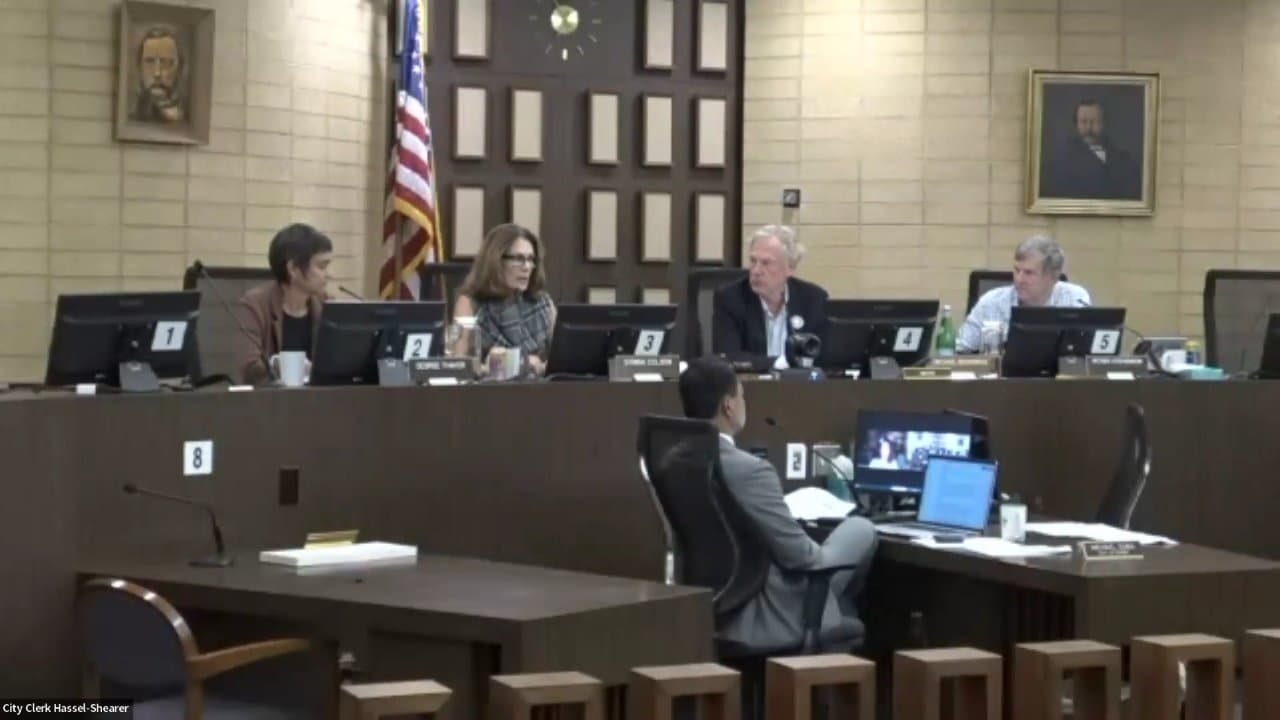
Burlingame's City Council signaled Oct. 5, 2026, that it may tighten limits on glyphosate in city parks and rights-of-way, but not yet. Councilmembers took no vote after a study session and asked staff to return with peer-city comparisons, wildfire analysis for Mills Canyon and budget estimates. A pesticide-free approach could cost about $1 million a year, based on Menlo Park's experience.
- Council majority wants the glyphosate item back with cost data and peer-city reviews. No ban for now.
- CAL FIRE help in Mills Canyon may depend on herbicide treatment of invasive regrowth, staff said.
- FAA wind shear lease approved 4-0-1 after the city attorney confirmed limits on use and corrected the term to 2045.
- Council backs exploring Caltrans art for the Rosalie O'Mahony Bicycle/Pedestrian Bridge.
Glyphosate: Limited Now, Possibly More Limited Later
Why it matters: Alternatives tested by experts cost far more and need re-treatment about every three weeks. Any shift away from glyphosate moves money and labor inside the Parks Division.
The basics: Integrated pest management (IPM) is a tiered approach that treats chemicals as a last resort. Burlingame follows that model, uses only products with caution labels and cut its glyphosate dilution to 1.56 ounces per gallon around 2010.
Where things stand: Glyphosate is gone from places where people and pets play. "We opted to remove their use from parks and facilities," said Richard Holtz, City Arborist and Park Superintendent. The city still uses it on traffic islands, in parking lots and in areas with woody invasive plants.
Kari Windbeel-Rojas, Assistant Director of Urban and Community IPM and Area IPM Advisor at UC Agriculture and Natural Resources, presented trial results. Contact alternatives saw weeds regrow after about 13 days. Glyphosate costs about $0.50 per 1,000 square feet, compared with almost $60 for acetic acid. Those figures did not include labor or protective equipment. Staff said steam and flame treatments did not work on established weeds.
Holtz and Windbeel-Rojas said runoff contamination comes mostly from residential overuse. They said county and state regulators do not list glyphosate as a pesticide of concern. In response to Councilmember Donna Colson, they said they knew of no city bans. "Glyphosate is actually not in Roundup products that are available to residents any longer," Windbeel-Rojas said.
Menlo Park went pesticide-free in 2018. Its weed-control budget started at $250,000. "That number is about $1 million a year for contractors and staff for weed abatement purposes," Holtz said.
The other side: Councilmember Peter Stevenson pushed hardest for change. He pointed to cities such as Davis that have banned glyphosate and called for public education about residential use. "Let's figure out how to do without it," he said.
Councilmember Desiree Thayer called current policy very good. She wants staff to look at further limits but would "not necessarily take the step of a ban right away." Colson favored a pilot program and pressed on the budget: "Where would we find the million dollars to do this work?"
Mayor Michael Brownrigg cited concerns about endocrine disruptors but called the issue not urgent. "I'm going to join the majority in believing that this should come back," he said. He framed the trade-off directly: "Is a weed-free parking lot worth the potential that we are increasing cancer rates in kids?"
Decisions and stakeholder impacts: No vote was taken. Parks crews, contractors and the general fund face the biggest effects of any change. No one spoke during public comment, but the council received emails before the meeting.
What's next: Staff will return with reviews of other cities, wildfire and Mills Canyon analysis, and budget estimates. No date was set.
Mills Canyon: The Fire Risk Complication
Why it matters: A glyphosate ban could cost Burlingame affordable CAL FIRE help in a high fire-risk area. The city would then need contractors, machinery or more staff.
The basics: The wildland-urban interface (WUI) is where homes meet undeveloped, fire-prone land.
Where things stand: Since 2013, the city has cleared invasive acacia and broom in Mills Canyon. It has used CAL FIRE hand crews, contractors and a grant-funded masticator, a machine that grinds brush. A 2024 CAL FIRE audit found that crews kept cutting the same plants. Holtz relayed the agency's message: "You need to treat the regrowth. If you don't treat the regrowth, we're not gonna come and help you."
Staff said one alternative herbicide, triclopyr (sold as Pathfinder 2), is expensive and applied at 100% concentration.
The other side: Thayer asked about mechanical and volunteer options and about Marin County's restrictions. Staff did not have information on Marin. Colson said poison oak and fire risk are her main concerns. She suggested a pilot that would end glyphosate use on parking lots, sidewalks and pavement cracks.
What's next: Mills Canyon analysis is part of the staff report the council requested.
FAA Lease Clears After Scope Check
Where things stand: Thayer pulled item 9d from the consent calendar. The item is a lease with the Federal Aviation Administration for a Low-Level Wind Shear Alert System facility on Gilbreth Road. The system supports safe aircraft approaches to SFO. Thayer asked whether the FAA could add other equipment at the site.
Michael Guina, City Attorney, said it could not without renegotiating. "Any other use independent or not associated with that wind shear detection system is outside of what's allowed under the lease," he said. Guina also corrected a typo in the staff report. The initial term runs Oct. 1, 2026, through Sept. 30, 2045, then continues month to month.
Decisions and stakeholder impacts: Thayer moved approval, and Stevenson seconded. The motion passed. For: 4 (Stevenson, Thayer, Colson, Brownrigg). Against: 0. Absent: 1 (Vice Mayor Andrea Pappajohn, who missed the meeting for a family emergency). Resolution and staff report
Bridge Art Could Test a Public Art Process
Where things stand: Brownrigg placed the Caltrans Transportation Art Program on the agenda. He noted that any art for the Rosalie O'Mahony Bicycle/Pedestrian Bridge would need underwriting, possibly from the Park and Rec Foundation. Colson and Stevenson suggested routing the project through the city's art task force and a possible arts commission. Thayer asked whether the program requires a community funding match.
Why it matters: The bridge could become a model for a repeatable city public art process.
What's next: No vote was taken. Staff will determine next steps. A study session on how to structure and fund the art task force is scheduled for Nov. 16.
Minor Items
- Consent calendar passed 4-0-1: The council approved three sets of minutes and the quarterly investment report for the period ending June 30, 2026. Stevenson moved the item, and Colson seconded.
- Parks & Recreation Commission: Jacqueline and Neha each received three ballot votes from a pool of six applicants. Staff will steer the other applicants to openings on the Traffic and Safety Commission.
- HEART housing buy: Brownrigg reported that HEART bought Azara, a 74-unit building in San Mateo, financed with about $45M in bonds. The building will "ultimately become all affordable for teachers in San Mateo County," he said.
- Regional funding: Thayer, who chairs C/CAG's Bicycle and Pedestrian Advisory Committee (BPAC), said the committee recommended $20M in OBAG 4 projects, including Chapin Avenue in Burlingame. The full C/CAG board must still approve the list.
- Proclamations: The council honored the Our Lady of Angels centennial, named October Domestic Violence Awareness Month in recognition of CORA's work and proclaimed Oct. 8 AgeUp Day.
Looking Ahead
Thayer asked for a future item on Super El Niño preparedness, including sign-ups for SMC Alerts and sandbag stations. Public works is already filling sandbags, and city management will decide whether the response comes as a memo or a full agenda item. The meeting closed in memory of Susan Smirnoff.