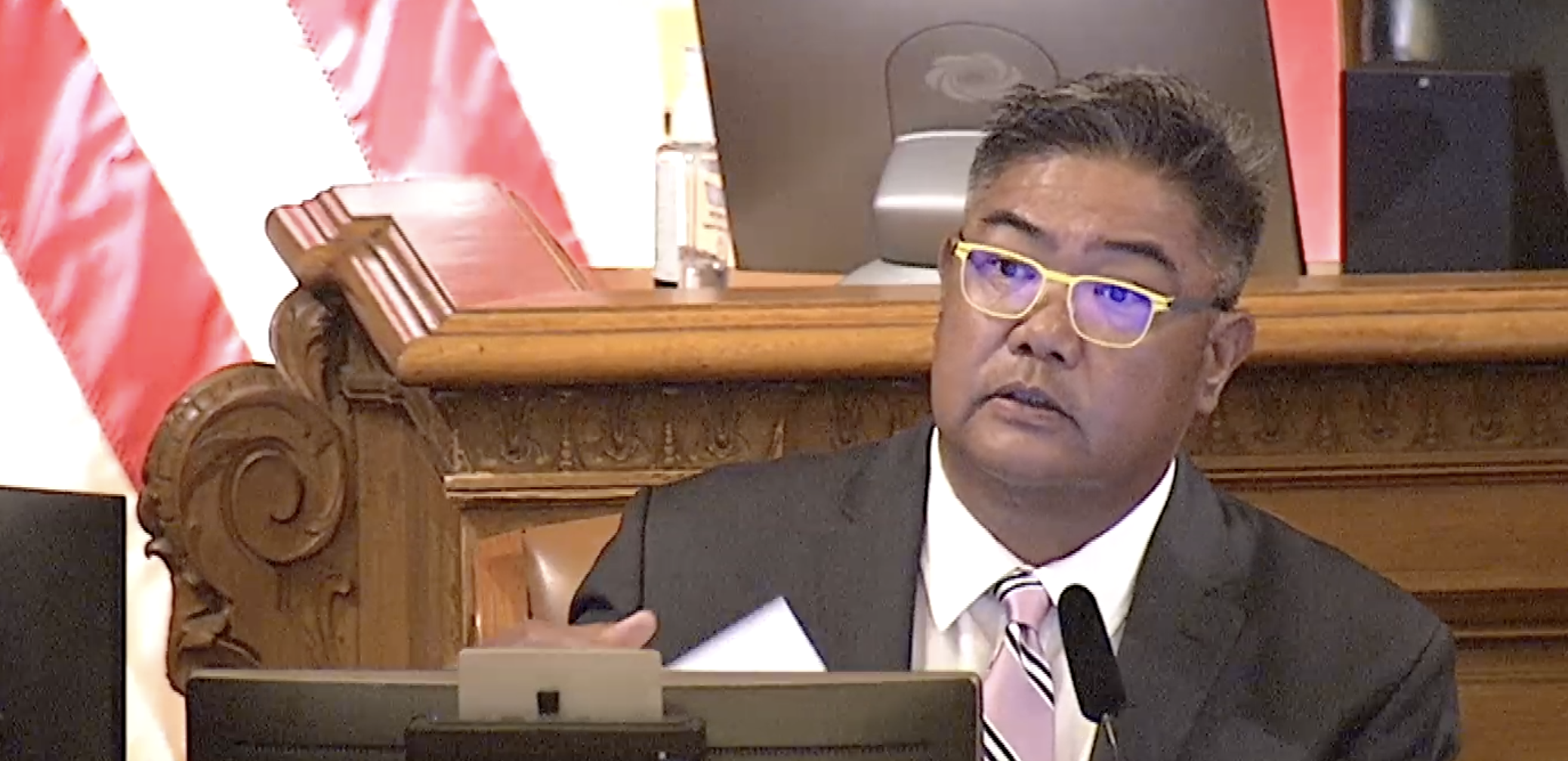
Budget & Finance Committee - Mar 18, 2026 - Regular Meeting

Budget & Finance Committee - Mar 18, 2026 - Regular Meeting

Budget & Finance CommitteeSan FranciscoMarch 18, 2026

Sources:

Locunity is a independent informational service and is not an official government page for this commission.We use AI-assisted analysis and human editorial review to publish information.

Committee Approves $1.4B Potrero Bus Yard After Losing 365 Affordable Housing Units

The San Francisco Board of Supervisors' Budget and Finance Committee advanced all eight items on its March 18 agenda, but two dominated the evening: a billion-dollar bus yard rebuild that jettisoned a community promise of hundreds of affordable homes, and a mobile food vendor ordinance that was voted on, rescinded, and retaken after over a dozen Spanish-speaking vendors arrived to testify.

  • $1.4 billion Potrero Yard modernization advances 3-0, but 365 planned affordable housing units are eliminated after a reinforced podium is cut to save $70M+; Chair Connie Chan demands a written commitment from SFMTA and the mayor before Tuesday's full board vote

  • Mobile food vendor ordinance sent to full board after committee rescinds initial vote to hear from Mission District vendors pleading for affordable cart financing, additional vending spaces, and Micro Enterprise Home Kitchen protections

  • SFPD shifts $34.3M in salary savings to overtime, signaling persistent staffing shortfalls even as academy applications hit record highs

  • $15.2M money management program extended for 2,000 supportive housing residents at a cost of $1,373 per tenant per year

  • HSA locks in $3M+ in lease savings by renegotiating rent at its Mission one-stop service hub


A Bus Yard Reborn, a Housing Promise Broken

The committee's longest and most charged debate centered on the project agreement for a new four-level bus storage and maintenance facility at 2500 Mariposa Street — and the 365 affordable housing units that won't be built above it.

The basics: The Potrero Yard, which ceased operations in February, is 111 years old and seismically unsafe. It served one-fifth of Muni ridership across five equity routes. The project agreement with Potrero Neighborhood Collective/Plenary totals $1.4 billion over 30 years: $65 million at financial close, $250 million at substantial completion (largely funded by $200 million from the June 2026 ESER bond), and $33.4 million in annual availability payments.

Why it matters: The original vision called for a reinforced podium atop the bus yard to support 465 units of affordable housing — or paratransit space. SFMTA cut the podium after a 30% cost overrun, saving more than $70 million upfront but eliminating all but 100 units planned for a separate Bryant Street site. The move saves money now but forecloses a once-in-a-generation opportunity to co-locate housing above transit infrastructure.

Where things stand: Judson True, SFMTA Chief of Staff, acknowledged the decision was painful. "We should have highlighted the challenges to the community earlier in the process. We want to be upfront about that and identify that learning moment where we wish we had improved our outreach and communication," he said. He framed the choice as binary: "For us, it's been a binary decision about moving forward with the project without the podium or not moving forward at all."

Budget and Legislative Analyst Nick Menard confirmed the restructured agreement saves approximately $1 billion compared with the prior version. "It removes operation and maintenance from this agreement, saving about $676 million. And it restructures the financing to essentially be equal to what the city would pay if it issued a bond to pay for these costs, saving about $283 million," Menard said. The BLA also recommended striking the word "estimated" from the contract and capping the not-to-exceed amount — amendments the committee adopted.

The other side: Chair Connie Chan, Supervisor, District 1, delivered an extended statement that set the tone for the evening. "I am disappointed that SFMTA had made this decision without allowing more thought specifically to say why we cannot build housing on top right now," she said. Chan drew a direct parallel to another San Francisco infrastructure project: "It's very similar to what we have done with Transbay Terminal. Instead of figuring out and being able to build out for the future, now we're stuck with $2 billion bus terminal at Transbay."

Supervisor Cheryl pressed the financial math, confirming that the podium would add roughly $200,000 per unit in construction costs.

Public comment split along clear lines. Labor and small business speakers strongly supported the project. Jesus Mendoza, field representative for North Coast States Carpenters Union Local 22, praised the collaboration with Plenary and Webcorp on labor commitments and local hiring. Trisha Gregory, a micro LBE owner from Bayview Hunters Point, commended SFMTA and Plenary for engaging the LBE/SBE community on an inclusion plan. Tristan Dion of Streamline Drywall supported the project but requested carve-outs and set-asides for small businesses — including on the housing portion.

Housing and community advocates struck a different chord. Mary Travis Allen, co-chair of the American Indian Cultural District and a member of the Potrero Yard Neighborhood Working Group, quoted the project's own website back to the committee: "Early in the project development, it was determined that while the modernization of the bus yard was crucial to keeping San Franciscans moving, there was a great need and opportunity to utilize the airspace above the facility for affordable housing." She demanded accountability for MOHCD's $35 million commitment and expenditures.

Peter Papadopoulos of Mission Economic Development Agency (MEDA), part of the Potrero Yard Affordable Development Team, said the development team accepts the project must move forward but needs a path to deliver the remaining units: "We want to see a path for our development team to complete the remaining 365 units somewhere in the Mission with the help of city agencies." He also requested reimbursement for out-of-pocket design costs incurred for the now-cancelled housing phase.

Marie Sorensen of Calle Veinte Cuatro called the housing reduction a "bait and switch." Natalie Ortiz, representing vulnerable populations at Oasis Family Shelter, urged the city to honor its original affordable housing commitment.

Decisions: The resolution passed 3-0 as amended with BLA and SFMTA amendments (For: Supervisor Dorsey, Supervisor Cheryl, Chair Chan).

What's next: Chan set a firm expectation before the full board vote: "Either we receive a letter or I'm happy to draft a further resolve clause that we can make into the resolution next week Tuesday." The committee wants a written commitment from SFMTA and the mayor to pursue financing for a reinforced podium and fulfill the 465-unit affordable housing obligation. Construction on the bus facility is expected to begin later this year.


Mission Food Vendors Force Committee to Rescind Vote and Listen

In a rare procedural move, the committee rescinded its initial vote on a mobile food vendor ordinance after more than a dozen Spanish-speaking food vendors arrived with an interpreter — too late for the first round.

The basics: The ordinance updates the Health, Business and Tax Regulations codes to align mobile food facility permit definitions with recent amendments to the California Retail Food Code. It establishes fees for new permit types including compact mobile food operations and auxiliary conveyance permits and expands Public Works' street vending authority.

Why it matters: For dozens of food vendors working the streets of the Mission District, the ordinance represents both an opportunity and a threat. Without provisions for Micro Enterprise Home Kitchen (MECO) operations, affordable cart financing, and additional permitted vending spaces, vendors say the law could criminalize rather than formalize their livelihoods.

Where things stand: The committee initially approved the ordinance with no public speakers. Chair Chan explained the procedural strategy: duplicate the file, send the original as amended to the full board, and continue the duplicate to the call of the chair so Supervisor Jackie Fielder can work with the community on amendments addressing MECO legislation. But after the vote, members of the Food Vendor Committee of San Francisco — a coalition of more than 60 vendors organized through Nuestra Causa — arrived and testified through an interpreter.

Vendor after vendor delivered a consistent message. Rosa asked for more permitted vending spaces, saying without them vendors cannot earn a living. Edgar argued the permitting system is inaccessible due to high cart costs and insufficient spaces, asking that the ordinance be paused until it includes those it's meant to support. Andrea said vendors want to comply but commercial kitchen costs may put them out of business without the MECO program. Felipe Reyes noted that compliant carts cost between $7,000 and $20,000 and said the ordinance cannot move forward without financing options.

Leila Ovando, Director of Food Access and Equity at Nuestra Causa, synthesized the vendors' position: "We are not here to stop the policy. We are here to ensure that it moves forward." She said vendors need MECO provisions, financial support for compliant carts, access to spaces, and safe harbor protections before the ordinance advances.

Natalie Ortiz, also representing Nuestra Causa, introduced the Food Vendor Committee and noted that vendors are ServSafe certified through the Mission Language Vocational School, warning the ordinance risks pushing existing food vendors out of legal operation.

Decisions: Chair Chan moved to rescind the original vote, reopen public comment, and retake the vote. The retaken vote passed 3-0 (For: Chair Chan, Supervisor Dorsey, Supervisor Cheryl, who had joined by this point). The original file advances to the full board as amended; the duplicate remains available at the call of the chair for future amendments.

What's next: Supervisor Fielder is expected to work with vendor organizations on amendments addressing MECO provisions, cart financing, and additional vending spaces. The full board will take up the original file.


SFPD Shifts $34M to Cover Overtime, but Staffing Gap Persists

Why it matters: The San Francisco Police Department is spending $100 million on overtime this fiscal year for the general fund alone — a reflection of a force that has 1,588 full-duty sworn officers against a recommended 2,257. The budget reallocation keeps the department from tapping general reserves, but the underlying math hasn't fundamentally changed.

Where things stand: SFPD CFO Kimmie Wu presented the budget-neutral shift of $34.3 million from permanent and premium salary savings into overtime accounts. The city projects $100 million in general fund overtime and $15 million for the airport bureau. BLA analyst Nick Menard confirmed overtime hours have declined from more than 800,000 two years ago to a projected 717,000 this year, and noted that "the police have ordered a 20% decrease in overtime for the remainder of the fiscal year to avoid having to draw on the budget reserves."

The staffing picture is improving at the margins: the department has added 60 net new officers year-over-year and received over 5,000 academy applications.

Chair Chan praised the improvement from three years ago, when SFPD needed a $25–$27 million mid-year supplemental from general reserves, but pushed for a comprehensive long-term plan. She flagged the RTIC lease, fleet upgrades, drones, ALPR equipment, and police station improvements as areas where the committee expects asset management projections — not just annual budget requests.

A public commenter cautioned against shifting salary funds to overtime at the expense of new academy graduates and criticized broader city spending priorities.

Decisions: Approved 3-0 (For: Chair Chan, Supervisor Dorsey, Supervisor Cheryl). The separate $537,000 reserve release was deferred to a future hearing after the city attorney advised it needed to be formally noticed.

What's next: SFPD must return before the committee to release the $537,000 overtime reserve. Chair Chan previewed that upcoming budget hearings will focus on a staffing-technology balance strategy and long-term asset management plans.


Minor Items

  • $15.2M supportive housing money management program extended: The committee approved (2-0; Supervisor Sauter excused) a second amendment to the Lutheran Social Services grant, extending the term through June 2028 and increasing the not-to-exceed amount to $15.2 million. The opt-in program, which manages rent and bill payments for 2,000 permanent supportive housing residents, costs $1,373 per tenant per year. Emily Cohen of HSH reported that "86% of people who participate have achieved one of their financial goals. 80% of clients have remained stably housed." Chair Chan flagged the program's 55% Prop C funding share and noted interest in upcoming conversations about the additional $19 million Prop C spending cap.

  • $100,000 gift accepted for Animal Care and Control: A donation from the Wilt Living Trust will fund food, treats, and enrichment at San Francisco's only open-admission animal shelter. Approved 2-0.

  • Dillon's Tours leases vacant Fisherman's Wharf building: The Port Commission lease puts a local, family-owned tour company into 490 Jefferson Street, vacant for 15 years. Terms include $6,000/month base rent with 3% annual increases, percentage rent over a $900,000 breakpoint, and a $320,000 tenant improvement allowance from the Port. Dillon's Tours plans to offer free shuttle service from Union Square to Fisherman's Wharf. Chair Chan praised the van/shuttle model as better suited for narrow Wharf streets than double-decker buses. Approved 2-0.

  • HSA Mission campus leases renewed, saving $3M+: Two lease amendments with KLW Investments for HSA office space at 3119–3127 and 3120 Mission Street reduce rent from $46 to $37 per square foot, with over $685,000 in annual rent reductions at the larger site alone. The 50,000-square-foot campus houses JobsNow (which has placed over 35,000 San Franciscans in jobs), BenefitsNet (serving Medi-Cal and CalFresh clients), Family and Children's Services, and CBO Seneca. Lease runs through September 2030 with a five-year option. Approved 2-0.

Committee Approves $1.4B Potrero Bus Yard After Losing 365 Affordable Housing Units | Budget & Finance Committee | Locunity